
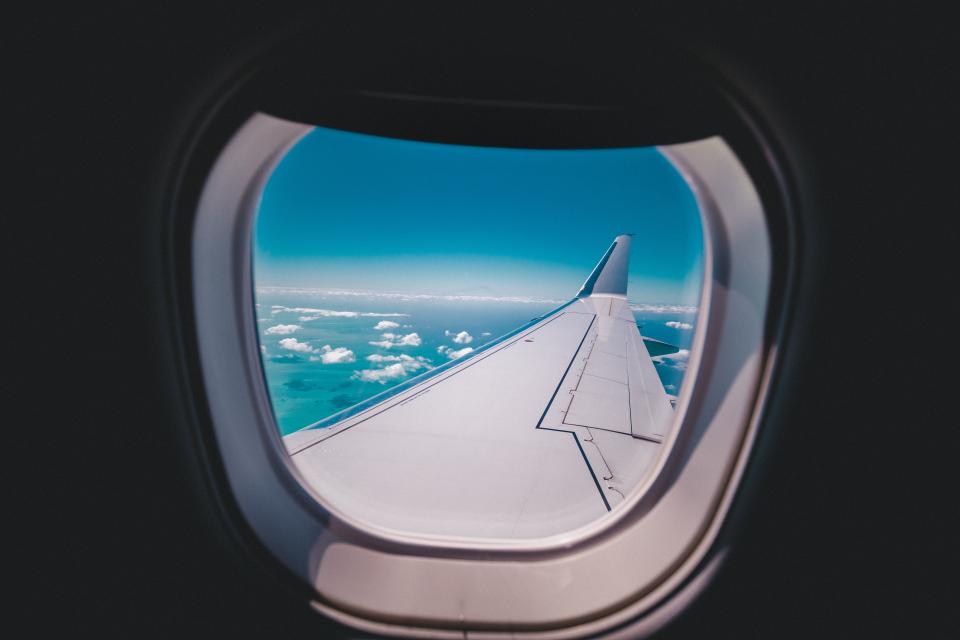
Most passengers who notice it assume something has gone wrong. It’s a small, almost inconspicuous hole at the bottom of the window panel, sitting there quietly at 35,000 feet. Far from being a flaw, it’s one of the more thoughtfully engineered details in the entire aircraft.
That little hole has a name, a purpose, and a surprisingly important role in keeping you safe. Understanding what it does reveals something genuinely interesting about how much engineering hides in plain sight during every commercial flight.
It’s Called a Bleed Hole, and It’s Deliberate
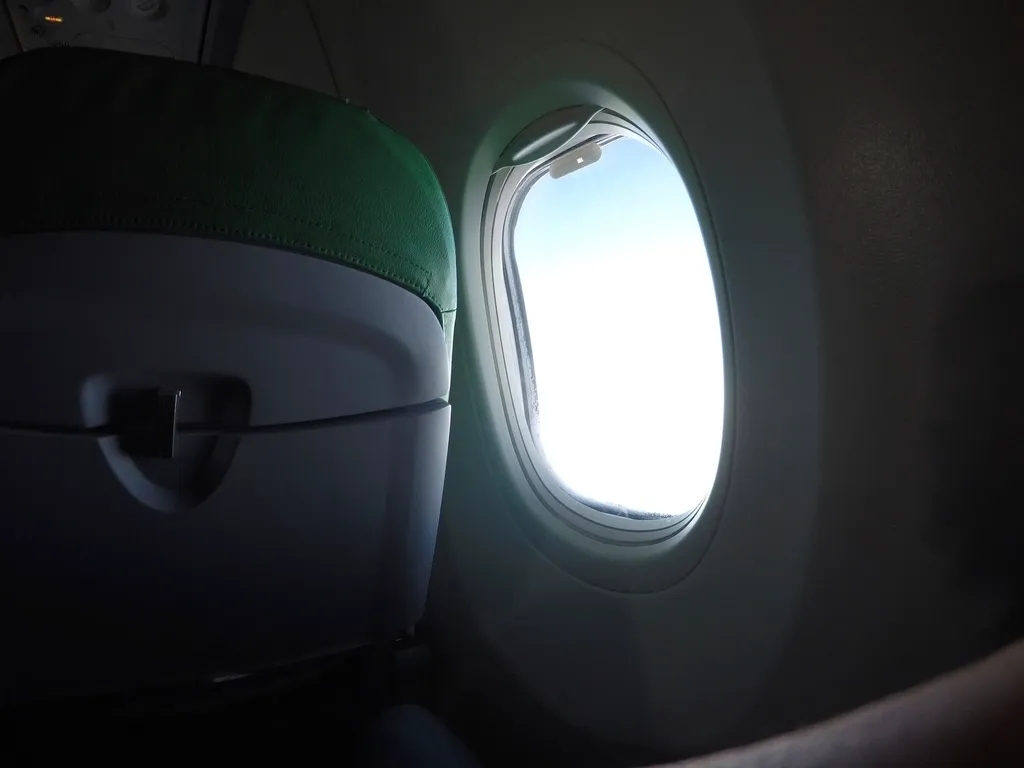
This tiny hole, known as a bleed hole or breather hole, is one of the most significant features in an aircraft window’s design. It sits in a specific position, not on the pane closest to you, and not on the outermost surface exposed to the sky.
The holes you see in airplane windows are called “bleed holes,” and airplane windows are comprised of three individual layers or panes of lightweight, flexible material such as Lexan polycarbonate or plastic acrylic. In the middle pane, there’s usually a single bleed hole at the bottom center.
It is not a manufacturing defect, but a deliberately incorporated safety feature. Every commercial aircraft window you’ve ever looked through has one, by design.
Three Panes, One Tiny Hole

Modern airplane windows have three layers of acrylic: a sturdy outer pane facing the external environment, a middle pane that serves as a safety backup, and an inner pane that protects against scratches and everyday passenger wear and tear.
The outer pane is the strongest and most functional, designed to handle the intense pressure difference between the cabin and the sky outside. The inner pane, the one closest to the passenger, mostly serves as a protective shield. Sandwiched between the two is the middle pane, which features the small bleed hole.
The outermost pane is the thickest and takes all the pressure from the outside, while the middle one is also thick and has a tiny hole used to equalize pressure and protect the inner pane. The one passengers face is the thinnest layer and only takes the relatively minor cabin pressure.
The Pressure Problem at Altitude

At 35,000 feet, the air pressure outside is roughly one-fourth of what it is at sea level, low enough to cause you to lose consciousness within minutes without pressurization. That extreme difference between inside and outside creates serious stress on every part of the aircraft structure.
Most airliners maintain a cabin altitude of 6,000 to 8,000 feet even while cruising at 35,000 to 42,000 feet, where the outside air pressure is roughly one-quarter of sea level. The aircraft’s pressurization system works continuously to maintain that breathable environment.
The interior cabin is pressurized to create a comfortable, safe environment for passengers and crew, and as a result, the high air pressure inside the cabin pushes against the windows in an attempt to balance itself with the low air pressure outside the airplane. Windows bear a significant share of that constant push and pull.
How the Bleed Hole Manages That Pressure
The hole actually reduces the pressure on the middle pane, so only the outer pane takes the force of the cabin pressure, and it experiences that pressure more gradually during flight. This is the core engineering logic behind the bleed hole’s placement.
Marlowe Moncur, director of technology at GKN Aerospace, a passenger window manufacturing company, explained that “the purpose of the small bleed hole in the middle pane is to allow pressure to equilibrate between the passenger cabin and the air gap between the panes, so that the cabin pressure during flight is applied to only the outer pane.”
Without a bleed hole, a window’s inner pane would be exposed to pressurized air. With a bleed hole, however, pressure is transferred to the outer pane, thereby alleviating the inner and middle panes of pressure. It’s a simple channel doing heavy structural work.
It Protects You If the Outer Pane Fails
While both the outer and middle panes are built to withstand the difference in air pressure, the bleed hole directs the strain onto the outer pane via an air gap, ensuring that the middle pane will remain intact in the unlikely event that the outer pane was to give out.
If the outer pane somehow was broken by debris, we’d still have the middle pane to protect us from the lack of air pressure outside. The bleed hole is precisely what keeps the middle pane ready to serve as that backup.
In the event that a cabin window cracks, the hole ensures that the inner pane breaks last. That sequencing of failure is intentional, giving time for the aircraft to respond to any emergency.
What Happens During a Rapid Pressure Change
The bleed hole’s role is to help ease the pressure on the windows as the plane climbs thousands of feet, especially in the case of an emergency with rapid changes in pressure. That’s when the design really earns its place.
Bleed holes come in especially handy during unexpected emergencies and help keep the plane structurally sound. In the event of an emergency that requires rapid descent or changes in cabin pressure, the bleed holes play a crucial role in preventing the cabin windows from failing.
The bleed hole ensures that the pressure between the inner and outer panes doesn’t build up to a dangerous level, and instead, it stays balanced with the cabin pressure. That balance is what prevents cracks from forming under sudden stress.
It Also Stops the Window from Fogging Up
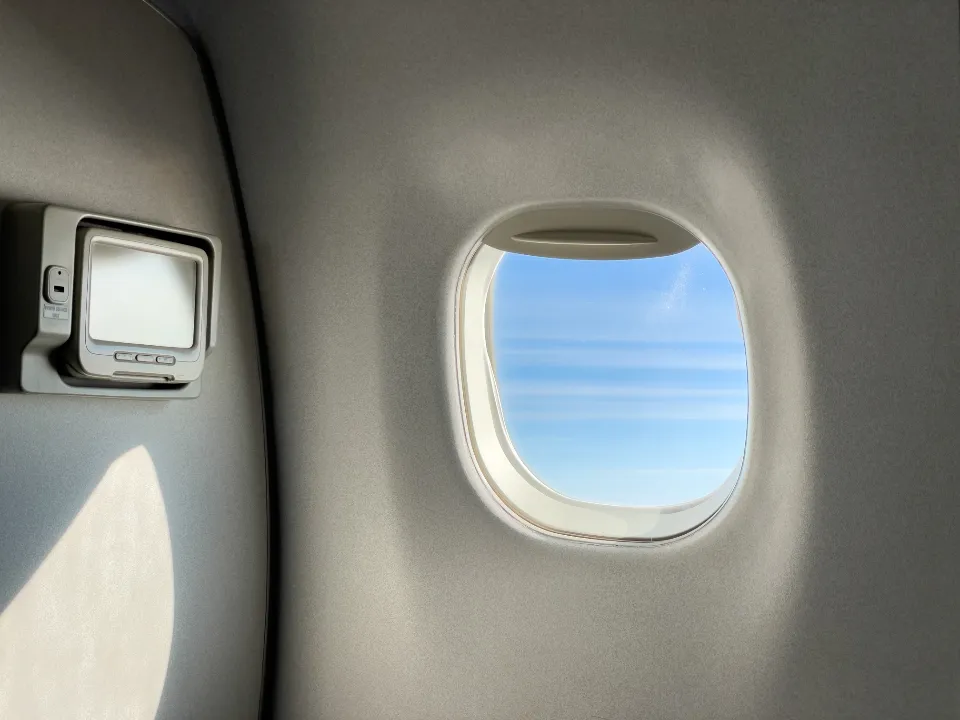
The secondary purpose breather or bleed holes serve is to keep windows clear. The hole allows moisture to evaporate. Without it, passengers in window seats would frequently find their views obscured, especially on longer flights where temperature differences between the cabin and the outside air are at their most extreme.
In addition to the brilliant engineering work, that hole keeps your window from fogging up between the panes. Without it, moisture would get trapped in that air gap and block your view.
In addition to equalizing air pressure, the bleed hole also helps to regulate the cold outside temperature with the warmer cabin temperature, and the air gap between the panes allows moisture to escape, therefore preventing fogging. That’s a meaningful secondary benefit for a feature less than half a centimeter wide.
The Materials Behind the Window
The plane window actually consists of three layers of stretched acrylic: the outer pane to withstand the harsh conditions of pressure changes, the middle one to act as a secondary barrier, and the scratch pane closest to the passenger. Each layer has a specific job calibrated to the demands of flight.
Airplane windows are comprised of three individual layers or panes of lightweight, flexible material, such as Lexan polycarbonate or plastic acrylic. These materials are chosen for their ability to flex slightly under pressure rather than fracturing under stress.
The space between the panes is conventionally connected to the interior of the cabin through a small diameter bore so as to provide a pressure equalization between the space between the panes and the interior of the cabin. That bore is the bleed hole, formalized in aviation engineering and patent literature dating back decades.
Why the Hole Doesn’t Let Air In or Out
If you’ve ever placed your finger over the hole, you’ll notice that no air comes in or out. That’s because the hole doesn’t go all the way to the outside. It’s just in the center pane between the inner and outer panes. Many passengers who notice the hole assume it connects to the outside atmosphere, which it does not.
The hole allows the pressure between the cabin and the space between the inner and outer panes to equalize, and it basically makes sure that the outer pane is doing the hard work, while the inner pane acts as a safety shield. The airflow through it is minimal and entirely internal to the window assembly.
The hole is small enough that it creates no draft, no whistling, and no noticeable airflow. Its influence is purely about distributing mechanical forces across the right layers at the right time.
A Small Detail That Reflects Serious Engineering

If that hole weren’t there, the window would actually be more vulnerable to blowing out altogether. Rather than being a weak point, it’s part of what keeps the window strong and reliable throughout the flight. That’s the quiet logic of aviation design: adding a small opening to make something stronger.
It’s a pressure valve, an anti-fog mechanism, and a structural safeguard all in one. Three functions from one small bore in one of three panes is the kind of efficient, layered thinking that characterizes the best aviation engineering.
The small hole in the aeroplane window is a prime example of the sophisticated technology and high safety standards in modern aviation. It’s easy to overlook, but it’s never optional.
The Takeaway
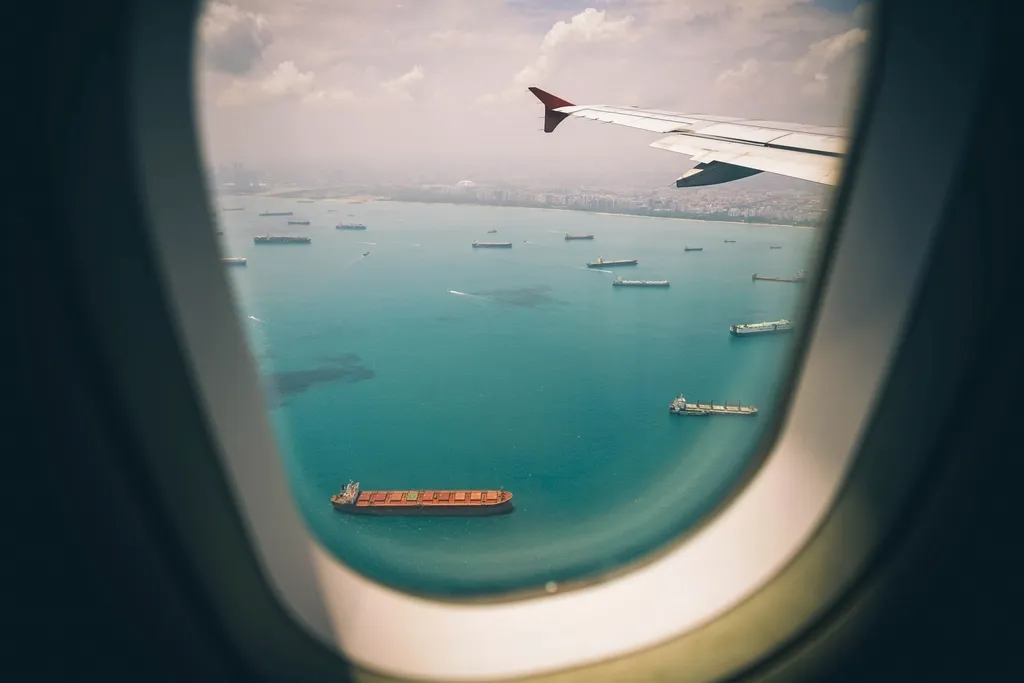
Next time you’re seated by the window and notice that small dot near the bottom of the panel, it’s worth a moment’s appreciation. It isn’t an accident, an afterthought, or a flaw that slipped through quality control.
That hole is doing three jobs at once: routing pressure to the right pane, keeping your view clear, and standing ready as a structural backup if the outer layer ever fails. It works every single flight, quietly and without any acknowledgment.
Aviation is full of details like this, features you’d never think to look for that are nonetheless essential. The bleed hole just happens to be one you can actually see with your own eyes, sitting right there at the bottom of the glass, doing exactly what it was designed to do.
AI Disclaimer: This article was created with the assistance of AI tools and reviewed by a human editor.