
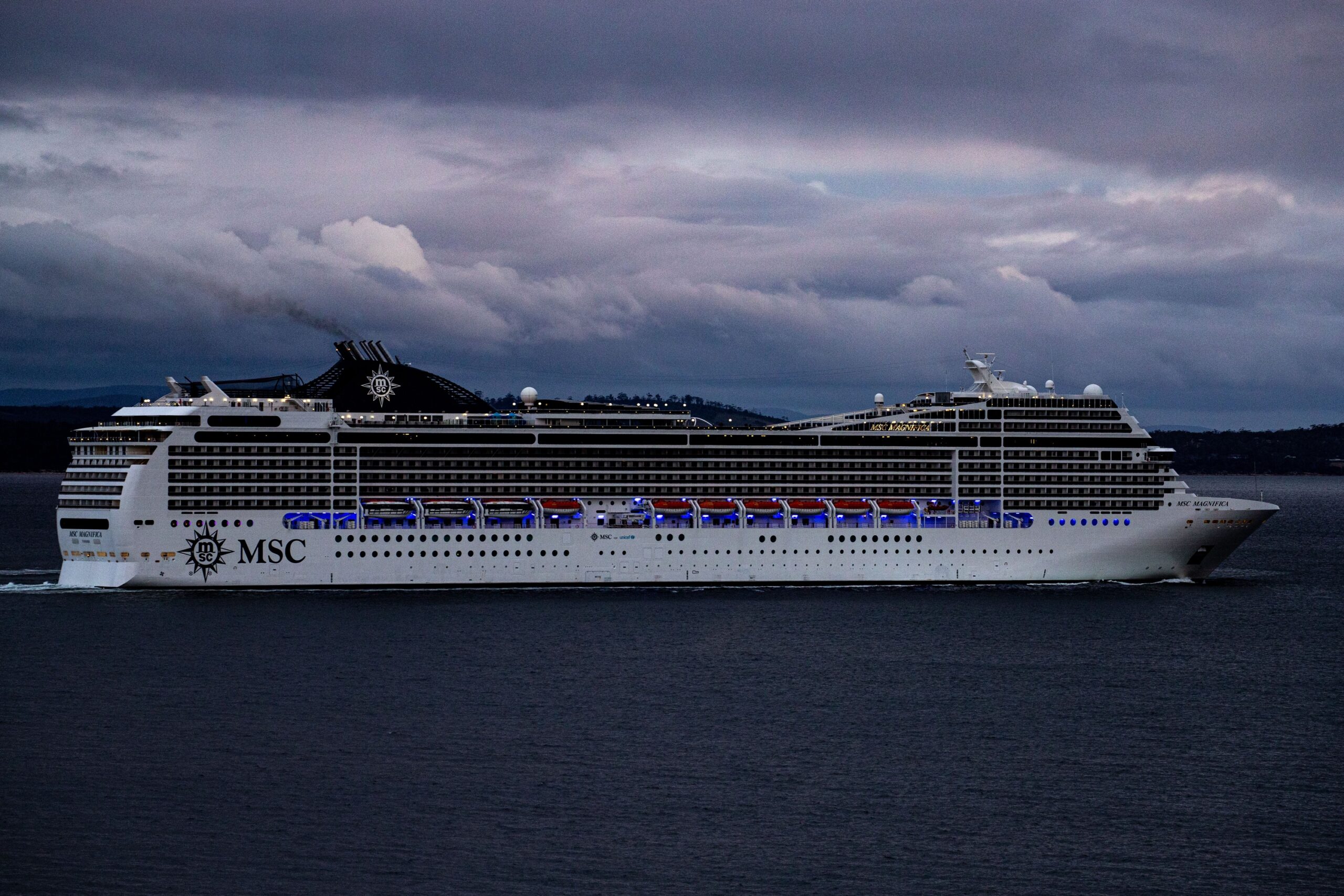

The Tradition of Ice Carving at Sea

At holiday buffets, Sunday brunches, and aboard cruise ships, ice sculptures have long been used to decorate and impress guests. Cruise ship buffets in particular are famous for their use of ice sculptures. The craft has roots that go back much further, though – culinary legend holds that Chef Auguste Escoffier once used an ice swan to present the dish now known as Peach Melba.
Ice carvings are still seen around ships at times, though they used to be an even bigger event. While the occasional ice carving now happens in the galley, or at least with little fanfare on deck, this was once an activity that drew big crowds. Talented chefs would come out, often in the late afternoon, and place large blocks of ice on the pool deck, then dazzle passengers as they turned those blocks into unicorns, dolphins, birds, or even cruise line logos using chainsaws and sharp knives.
What the Pool Deck Actually Does to Ice
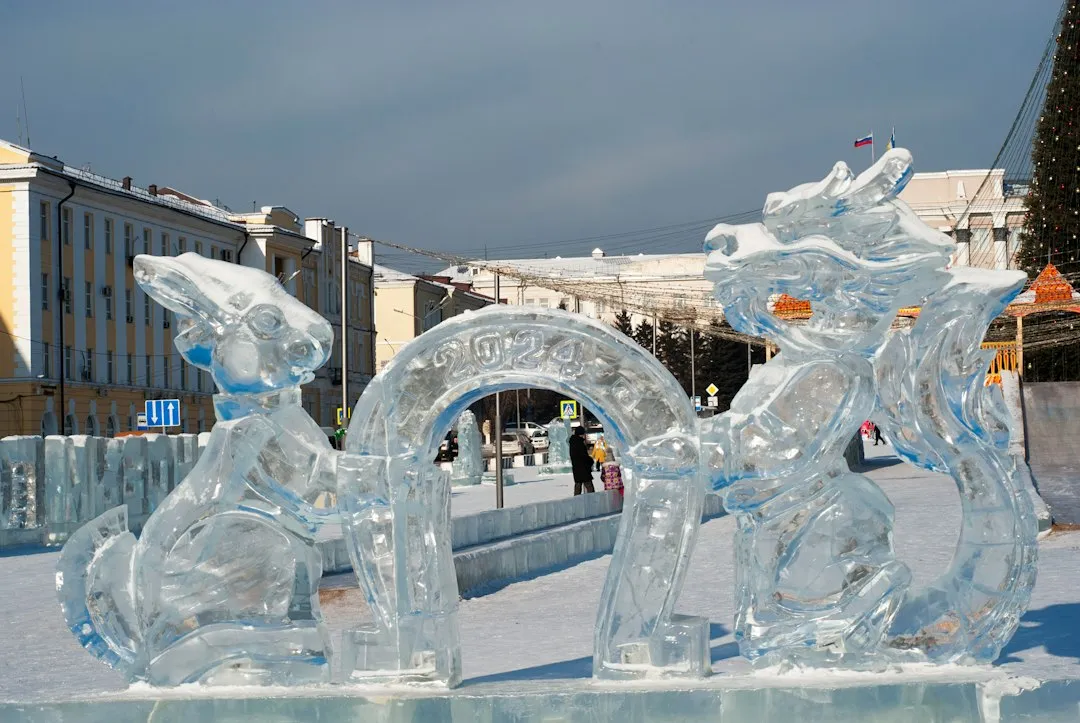
The lifetime of an ice sculpture is determined primarily by the temperature of its environment, meaning a sculpture can last from mere minutes to possibly months. On a cruise ship’s pool deck, you’re rarely dealing with favorable conditions. Heat, direct sun, salt air, and a constant breeze are almost always present.
On a breezy beachside patio or rooftop deck, a sculpture may last closer to two and a half to three and a half hours depending on conditions. A cruise ship pool deck sits in a very similar category – exposed, humid, and often drenched in tropical sun. That’s the realistic window a carver is working with once their creation leaves the cold of the galley.
The Role of Temperature: By the Numbers
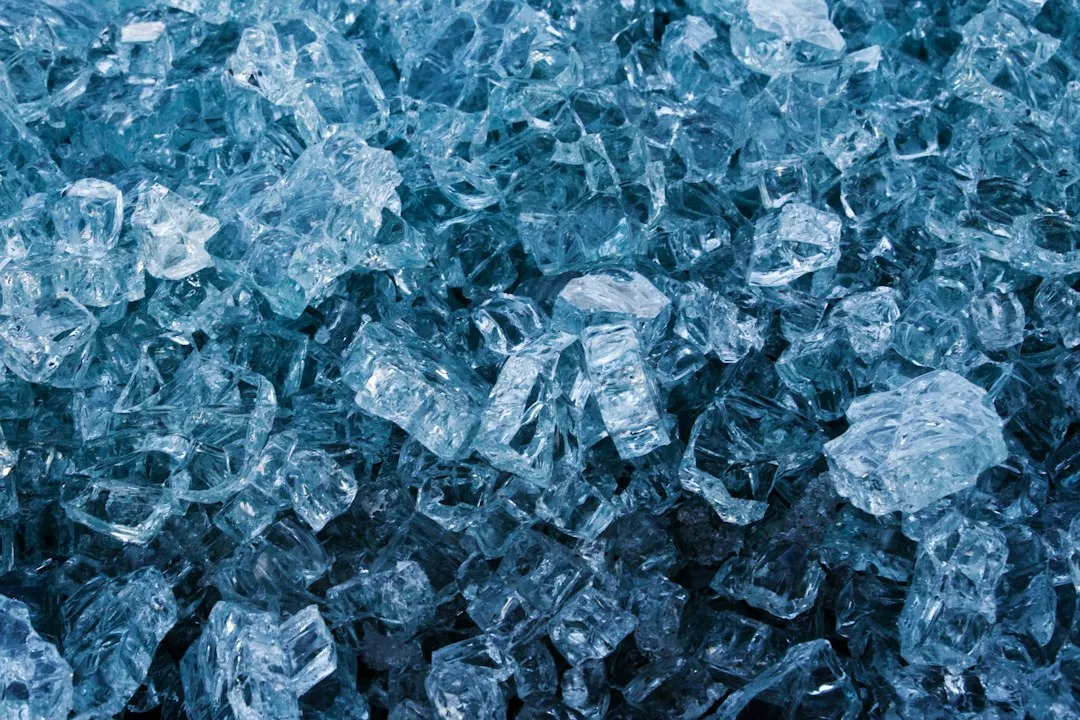
Temperature plays a big role in the longevity of an ice sculpture. In general, for every ten-degree decrease in temperature, you can expect a single-block ice sculpture to last one to two hours longer, though this rule doesn’t apply when temperatures drop below freezing.
At 50 degrees Fahrenheit, a single-block ice sculpture can last twelve or more hours. At 60 degrees, roughly ten to eleven hours. At 70 degrees, around eight to nine hours. At 80 degrees, expect seven to eight hours. Most cruise itineraries through the Caribbean and Mediterranean push well above 80 degrees on pool decks, which puts sculptures firmly in the shorter end of that range.
Wind and Salt Air: The Hidden Accelerators

Wind and air circulation play a huge role when it comes to the longevity of an ice sculpture. If your sculpture is outdoors on a warm, windy day, it will melt more quickly due to the passing air. On a ship moving through open water at speed, that wind effect is constant and impossible to avoid.
Wind and salt air affect melting more than direct sunlight. That’s a counterintuitive finding for many passengers, who assume the blazing tropical sun is the main culprit. Salt air works against the structural integrity of fine details first, softening edges and dulling surface textures faster than heat alone ever could.
Why Design Complexity Matters More Than You’d Expect
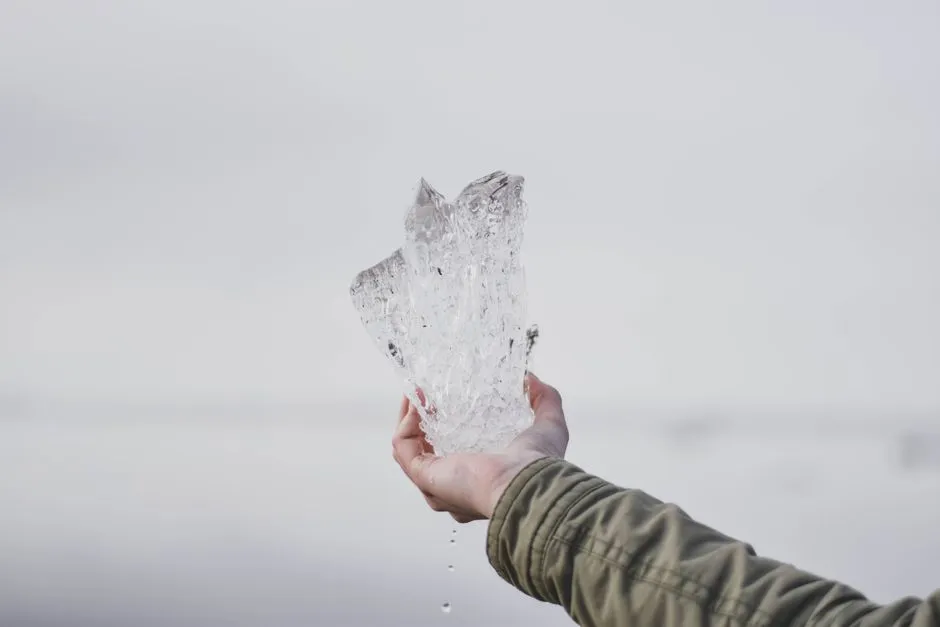
The overall melt rate doesn’t change based on design, but what disappears first does. Fine details fade first, thin sections collapse fastest, surface-etched logos dull as they melt, while internal logos embedded inside the ice stay crisp the longest.
The fine detail of a sculpture starts to disappear within the first four hours. The overall shape and form, however, lasts much longer. This is why experienced cruise ship carvers tend to favor bold, thick forms for outdoor displays rather than delicate, intricate designs. A dolphin with smooth curves will outlast an ornate peacock by a considerable margin on a hot deck.
Size and Block Weight: The Heavyweight Advantage

Starting with a large block of ice weighing hundreds of pounds, the artist chips with chisels until a beautiful sculpture emerges. That initial mass is actually one of the most important factors in how long the finished piece survives. Larger blocks simply retain cold longer.
The thicker the ice sculpture, the longer it will take to melt. Larger blocks retain cold longer – think of them as heavyweights that are slow to tire and slow to melt. A standard single-block carving used on cruise ships typically measures 40 inches tall, 20 inches wide, and 10 inches deep. That’s a substantial mass, which gives it more staying power than the smaller decorative pieces you might see at a hotel breakfast buffet.
How Sunlight Heats Ice from the Inside Out
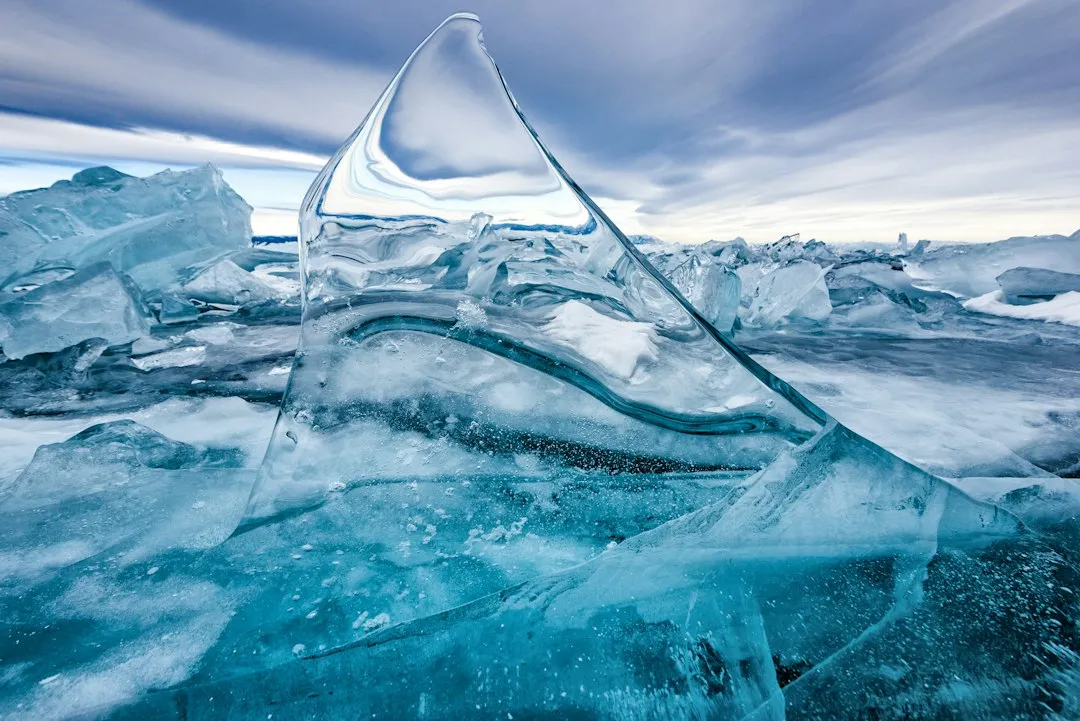
Sunlight and hot overhead lights can heat not just the outside of a sculpture, but the inside as well, causing the internal temperature to rise as the outer layers melt away. This inside-out melting is what causes a sculpture to suddenly appear to collapse or lose its structural form without obvious warning.
Sculptures typically melt about a quarter of an inch per hour, and it is especially important to keep them out of direct sunlight. On a pool deck with no shade canopy overhead, that quarter-inch-per-hour rate can accelerate quickly once the sun is directly overhead at midday. Experienced carvers time their demonstrations accordingly, often working in the late morning before peak sun intensity hits.
What Happens to the Sculpture After the Show
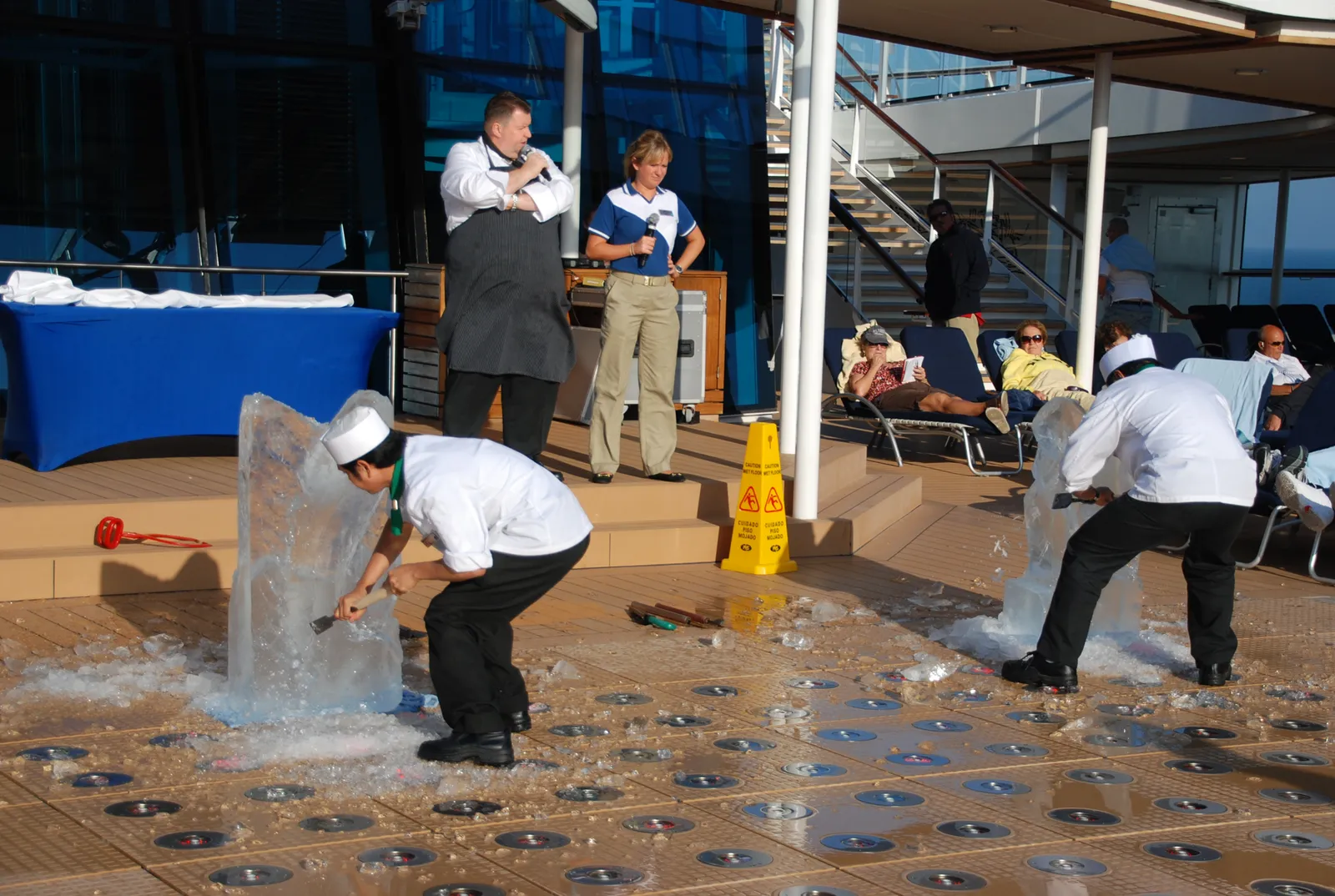
The demonstration is usually done on the pool deck during a day at sea. Starting with a large block of ice weighing hundreds of pounds, the artist carves the shape, and if the kitchen team is fast, they move the completed sculpture off the pool deck and into a freezer to use later at dinner, a cocktail party, or the midnight buffet.
If the team doesn’t retrieve it in time, the melting sculpture becomes a fantastic way to cool the pool down. That’s an honest and slightly amusing reality of open-deck ice carving. The sculpture’s fate is partly a question of logistics, timing, and how busy the galley team happens to be. Not every piece makes it back to the freezer.
Carnival, Holland America, and the State of On-Deck Carving Today
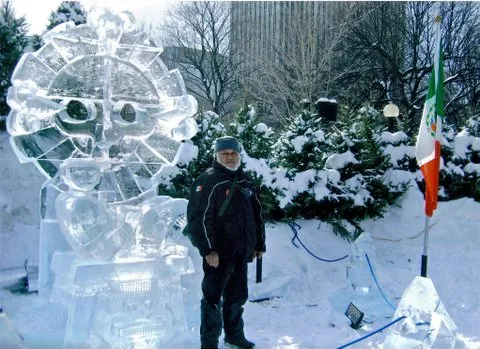
Poolside activities on Carnival cruise ships currently include ice carving demonstrations alongside towel animal invasions and charitable deck events. The tradition hasn’t disappeared entirely, but its role has shifted. It now competes with waterslides, live music, and a full calendar of organized games for passenger attention.
Modern cruise lines have elevated culinary demonstrations far beyond the basic watch-and-learn format of decades past. Today’s offerings range from complimentary poolside demos to hands-on classes in purpose-built culinary centers with individual workstations and intimate instruction from culinary school-trained experts. Ice carving sits within that broader culinary entertainment umbrella, respected as a craft but no longer the singular spectacle it once was at sea.
The Clarity of the Ice Itself Makes a Difference
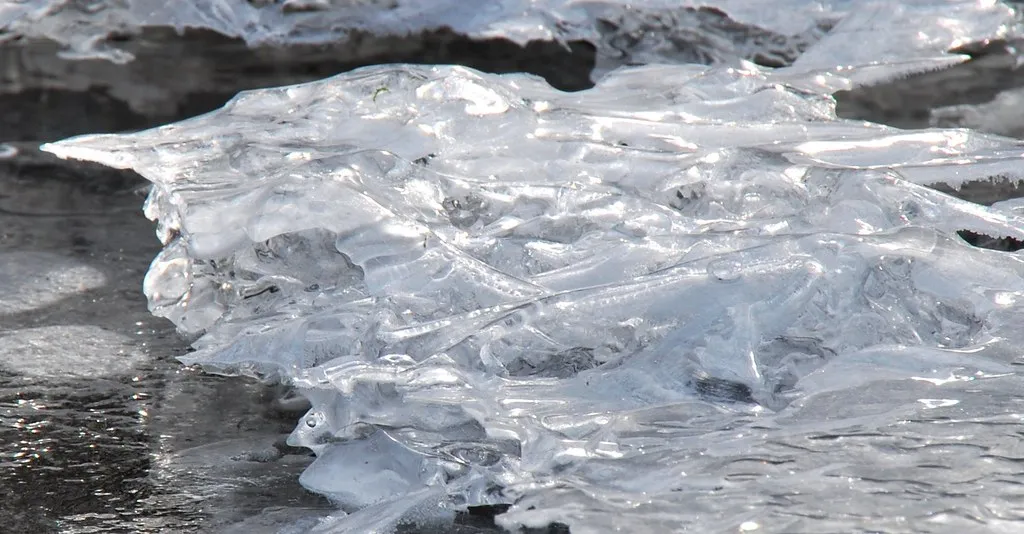
Clear ice blocks for carving require slow, directional freezing that prevents air bubbles. Artists making their own need controlled freezing conditions and patience. Cloudy ice from fast freezing or trapped air looks noticeably less impressive than clear ice. Cruise ship galleys that take their ice carving seriously maintain industrial freezers specifically calibrated to produce the clearest possible blocks.
Sculpting ice presents a number of difficulties due to the variability and volatility of the material. Ice may be sculpted in a wide range of temperatures, and the characteristics of the ice will change according to both its temperature and the surrounding temperature. A block that behaves perfectly in the cool of the galley will respond very differently once it’s moved into the humid heat of a Caribbean afternoon.
The Quiet Truth About Impermanence
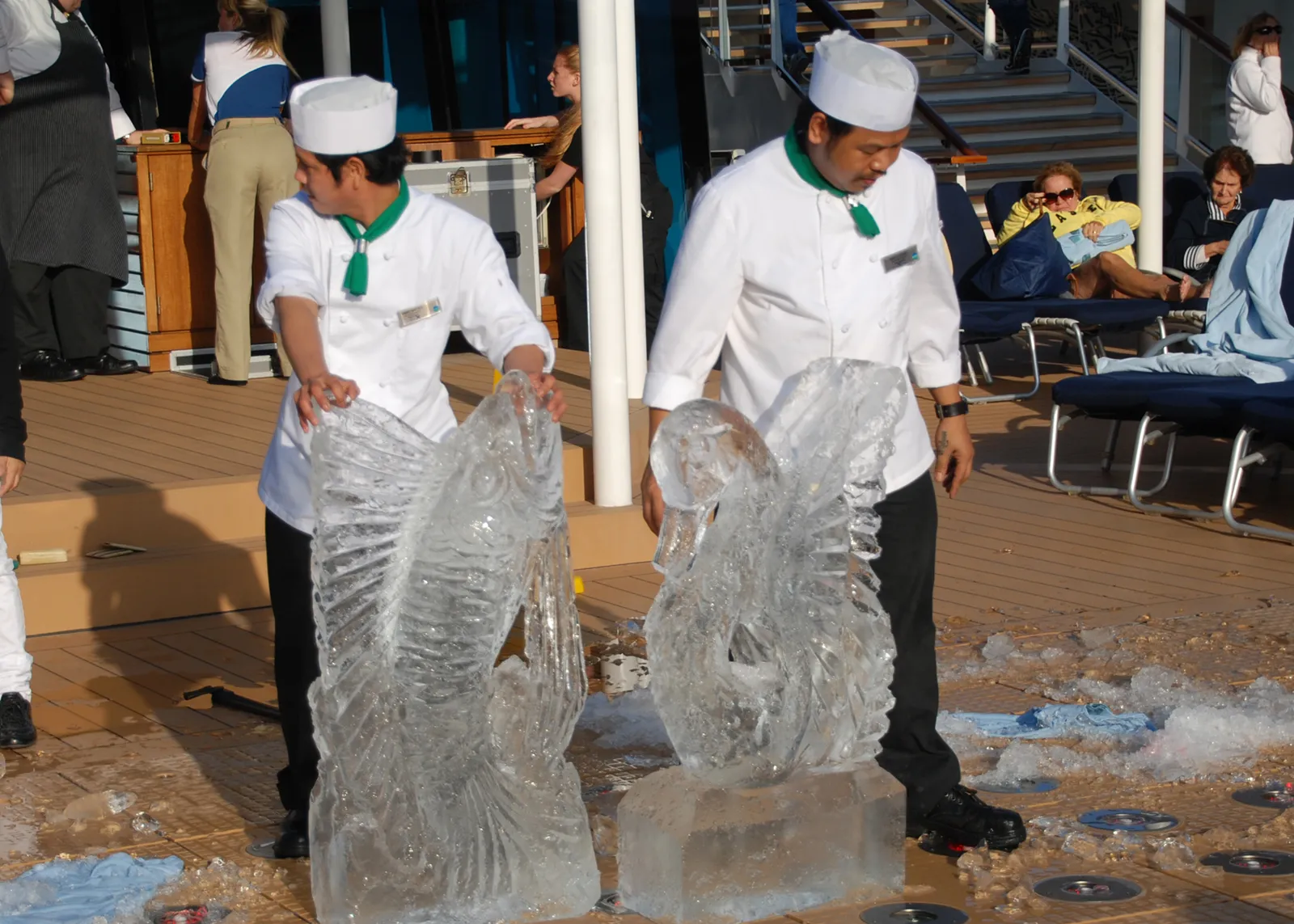
Ice sculptures are generally associated with special or extravagant events because of their limited lifetime. That limitation is precisely the point. A carved swan that lasts four hours on a cruise ship pool deck is not a failure – it’s a performance, a demonstration of skill, and a moment that exists only for the people standing there in that particular afternoon light.
The relatively short lifespan of an ice sculpture is partly the reason they are often used for celebrations. The design is tailored to a specified theme and lasts for the duration of an event, but no longer – making it a privileged sight that only the guests present will ever enjoy. There’s something genuinely generous in that. The carver puts hours of skill into something they know will be gone by sunset.
Final Thoughts
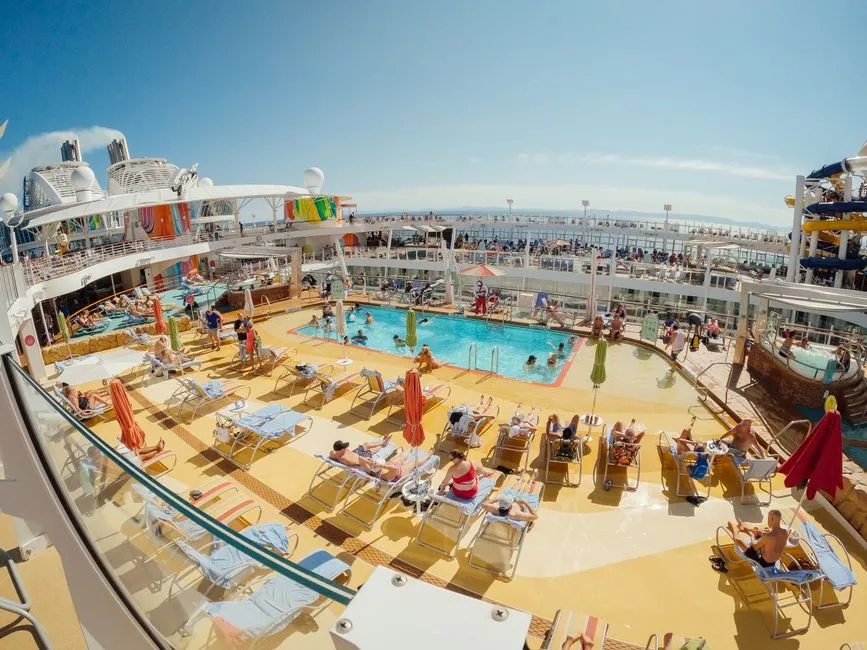
On a cruise ship pool deck in tropical heat, a well-carved sculpture carved from a standard block will typically hold its form for somewhere between two and a half and four hours, depending on wind, sun angle, humidity, and the thickness of its design. That’s the honest answer the carvers themselves would give you.
The more interesting truth, though, is that the sculpture isn’t really meant to last. It’s meant to be seen right now, by the people who happen to be standing there with a cold drink in hand. In that sense, it always succeeds perfectly – and then, quietly, it gives itself back to the sea.
AI Disclaimer: This article was created with the assistance of AI tools and reviewed by a human editor.