
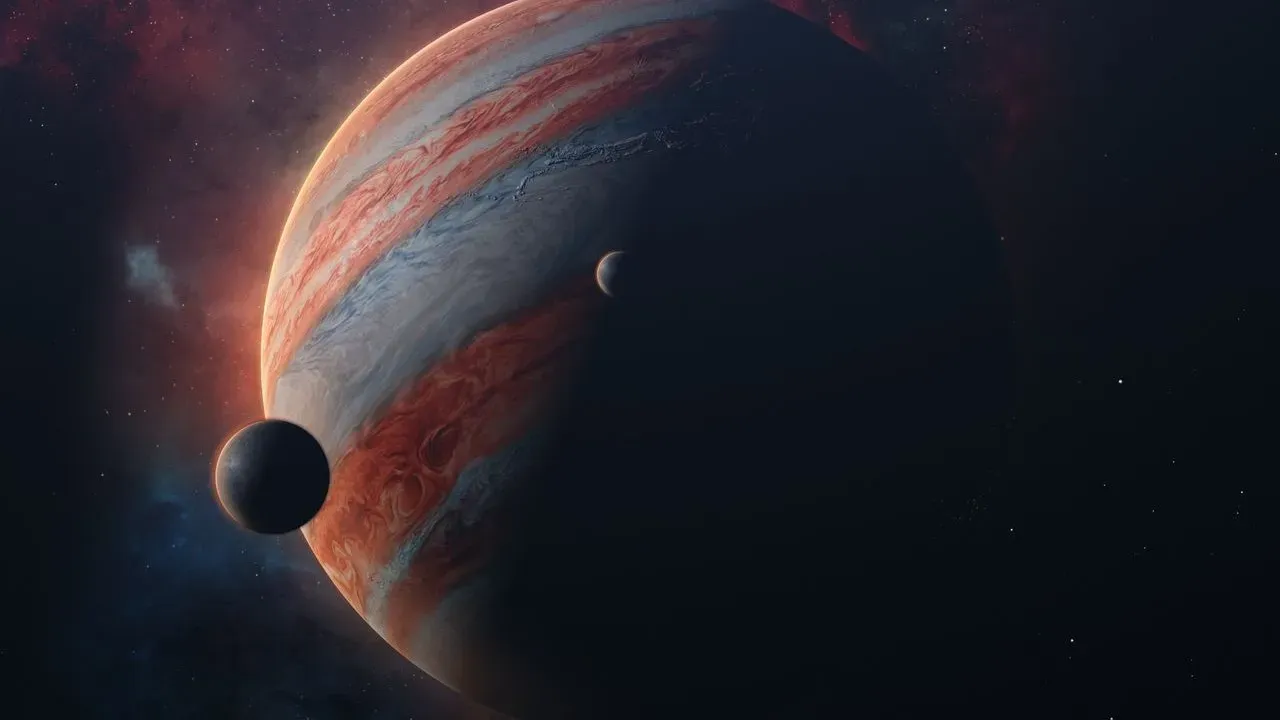

Astronomers have identified signs of a planet that formed after its host star had already died, offering a rare glimpse into planetary origins that differ from the familiar process seen in our own solar system. The finding centers on a white dwarf star whose ejected material appears to have gathered into a new world. This development, reported on October 11, 2026, expands the known possibilities for how planets can arise across the universe. ([1])
A Planet With an Unexpected Origin
The newly recognized world orbits the white dwarf HS 0209+0832. White dwarfs represent the dense cores left behind once a low-mass star exhausts its nuclear fuel and sheds its outer layers. Researchers detected chemical signatures in the star’s atmosphere that match elements produced only during the star’s final stages. These materials are thought to have coalesced into a gas giant roughly the size of Jupiter.
Contrasting With Typical Planet Formation
Most planets, including those in our solar system, emerge from the disk of gas and dust that surrounds a star at the moment of its birth. That standard pathway produces what astronomers classify as first-generation worlds. The object around HS 0209+0832 follows a different sequence, drawing instead from the debris released as the star reached the end of its life. The distinction highlights that planetary systems can experience more than one chapter of formation.
Evidence From Long-Ago Observations
The key data came from NASA’s Hubble Space Telescope, which first examined the star in 1999. At the time, roughly one hundred chemical features in the spectrum remained unexplained. Later analysis matched those features to elements that could only have been created and dispersed during the star’s death throes. The team concluded that the same material likely supplied the building blocks for the second-generation planet.
Looking Ahead for the Distant World
The planet is currently losing atmosphere, yet researchers expect it to endure as the white dwarf continues to cool. Once the star settles at a steady temperature, models suggest the planet could occupy a stable region where conditions might remain favorable for an extended period. Such longevity opens questions about how long worlds formed in this manner might persist. The discovery underscores how much remains to be learned about the life cycles of stars and the worlds that can accompany them. Each new observation refines our picture of the processes that shape planetary systems over cosmic time.
AI Disclaimer: This article was created with the assistance of AI tools and reviewed by a human editor.