

Three Rigs, One Goal: Getting to the Glass
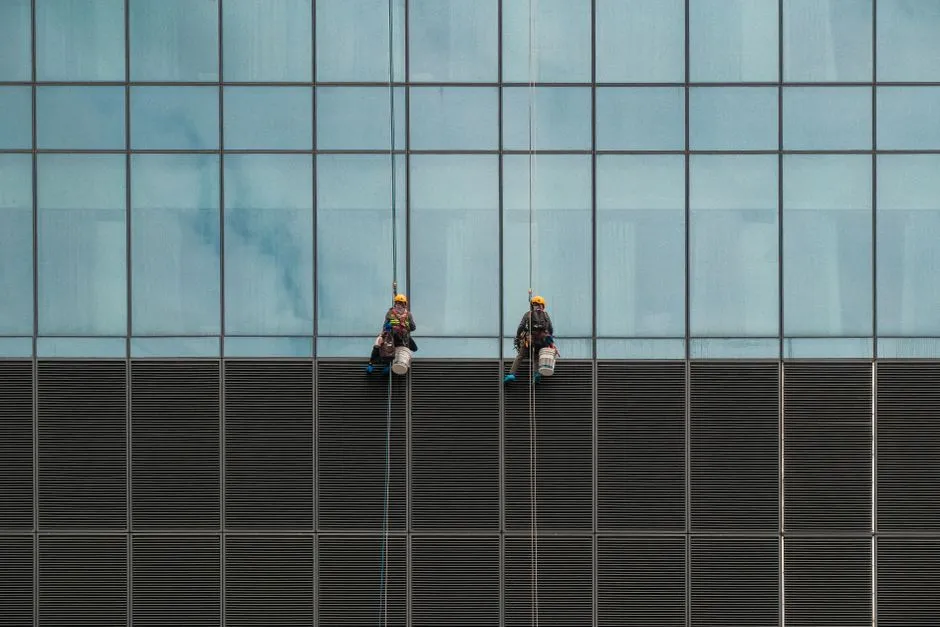
Skyscraper windows are cleaned by abseiling teams in Bosun’s chairs, suspended swing-stage scaffolds, and roof-mounted Building Maintenance Units, commonly known as BMUs. Each method suits a different type of building facade, and professionals choose their approach based on architectural complexity, height, and the specific layout of the hotel’s exterior. The wrong choice of rig for a given facade can create serious inefficiencies or safety problems, so pre-job planning is treated with the same seriousness as the cleaning itself.
For tall and architecturally complex buildings, the modern standard is a BMU – a permanent crane-like structure mounted on the roof, where a telescoping boom swings out over the parapet and the whole assembly rolls along a rooftop monorail so the cradle can reach every face of the building. BMUs are built into almost every supertall tower at the design stage.
The Scale of the Task at the World’s Tallest Buildings
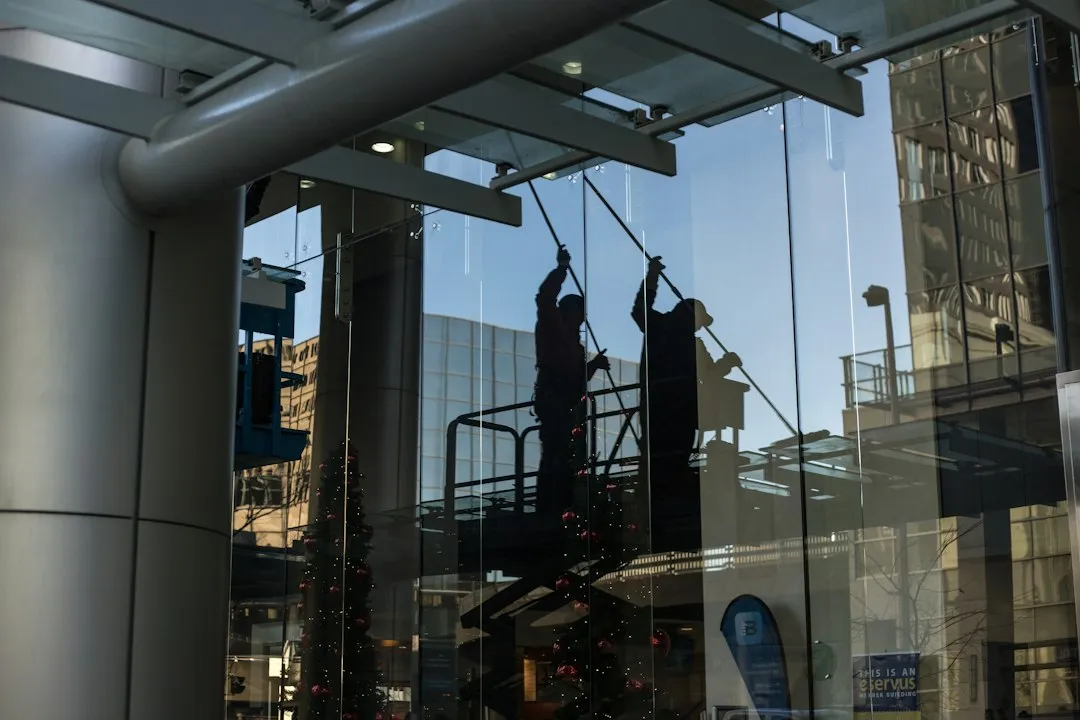
The 828-metre Burj Khalifa, with 24,348 windows, has a custom BMU system and a roughly 36-person team that takes three to four months to clean every pane. That figure gives a sense of what hotel maintenance crews at large properties are dealing with, particularly in cities where towers routinely exceed 50 or 60 floors. A single pass of a skyscraper hotel’s facade is not a matter of an afternoon – it is a coordinated operation requiring scheduling, weather monitoring, and team logistics.
Skyscrapers can rise hundreds of feet above the ground, making it difficult for window washers to reach windows safely, and traditional ladders and scaffolding are often inadequate due to their height limitations and the difficulty of setting them up in tight urban spaces. Hotels present additional complications because guest comfort and building access cannot be disrupted during the work.
Rope Access: The Most Demanding Method
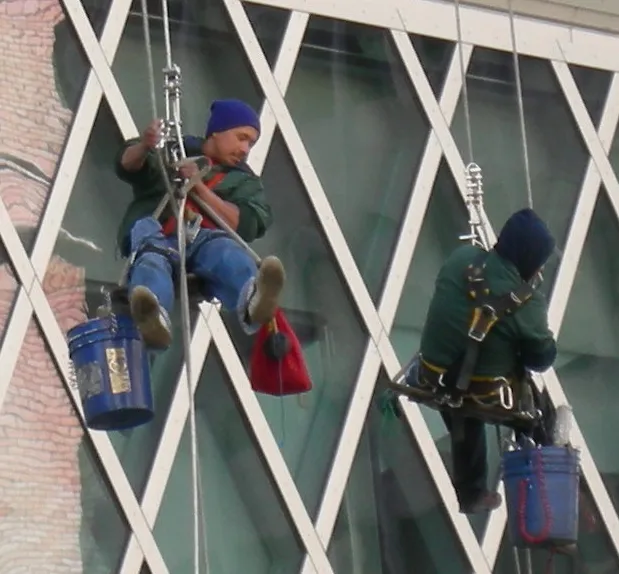
Skilled window washers rappel down the side of a building, cleaning as they descend, using ropes, stays, and carabiners – with a work line for moving around and a safety line in place as added protection against falls. This approach requires a high level of physical fitness, spatial awareness, and calm under pressure. Workers who specialize in rope access typically carry certifications from professional bodies that govern safe practice in high-altitude work.
Rope access involves using ropes, harnesses, and other equipment to ascend and descend buildings, allowing window washers to reach areas that cannot be accessed from suspended platforms or gondolas, such as narrow ledges or sections behind obstacles – and it provides a high level of mobility and flexibility for navigating complex building facades.
Safety Regulations That Govern Every Job
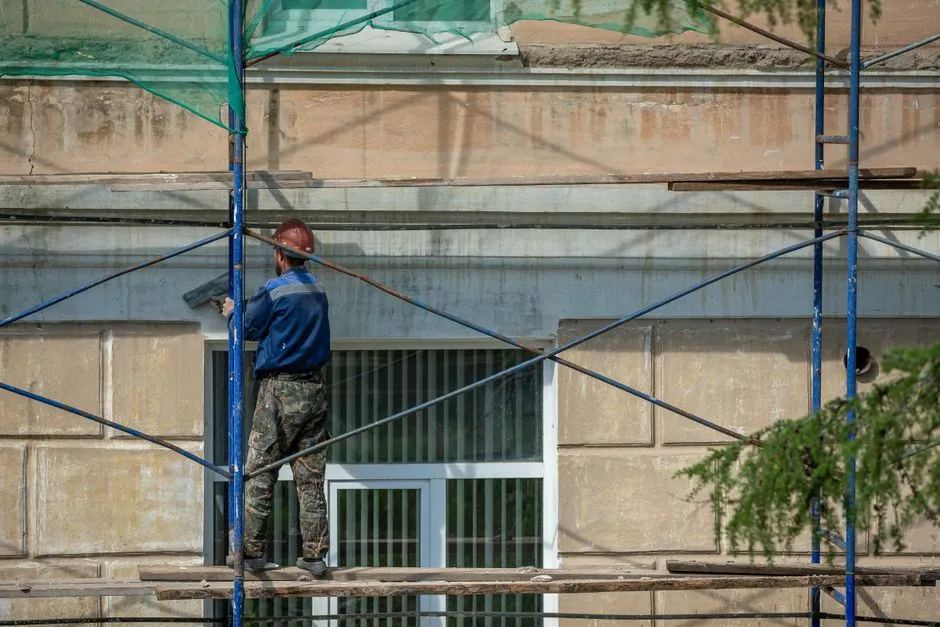
Key safety standards include OSHA 1910.27, which deals with scaffolds and rope descent systems for window cleaning; OSHA 1910.66, which covers powered platforms for exterior building maintenance; and ANSI/IWCA I-14.1-2001, which provides guidelines for proper equipment use, training requirements, and safety measures for window cleaners working at height. These are not optional guidelines – compliance is a legal requirement, and violations can result in significant fines from federal regulators.
For rope descent systems, OSHA 29 CFR 1910.27 requires each anchor to sustain at least 5,000 pounds per attached employee. Tie-off checks, anchor inspections, exclusion zones, weather monitoring, and a workable rescue plan receive the same attention as the cleaning itself. On a hotel property, this infrastructure must also account for the building’s ongoing guest activity below.
The Real Risk Numbers Behind This Work
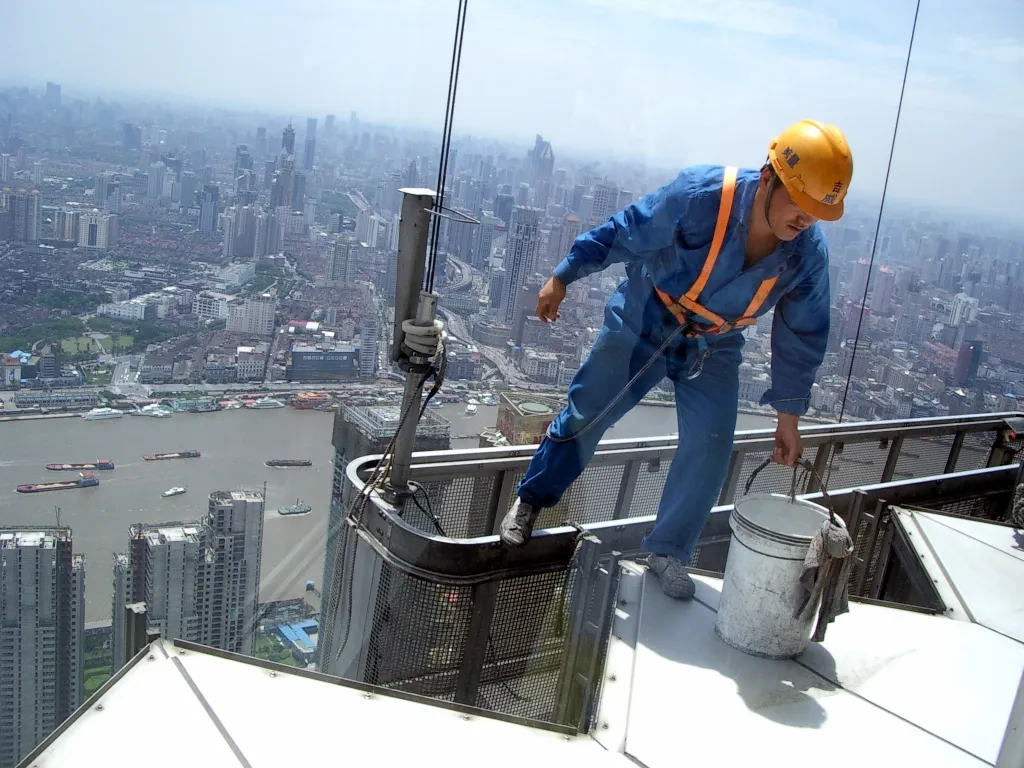
Fatalities in high-rise window cleaning are exceedingly rare – with high-rise building window cleaners seeing roughly 1.5 million exposures, or times when they are working on the side of a building, every year, yet occupational fatalities typically remain at about one or two per year. That low figure reflects decades of safety improvement, though it does not diminish the daily discipline required to keep the numbers that low.
An OSHA-cited industry analysis recorded 88 window-cleaning accidents over 15 years, including 62 fatalities, while a separate summary reported 28 incidents over five years, including 11 deaths. According to industry data, roughly one in five window cleaning accidents involves the misuse of equipment. That statistic alone underlines why certification and ongoing training are not formalities in this profession.
Weather Is Never Just a Backdrop
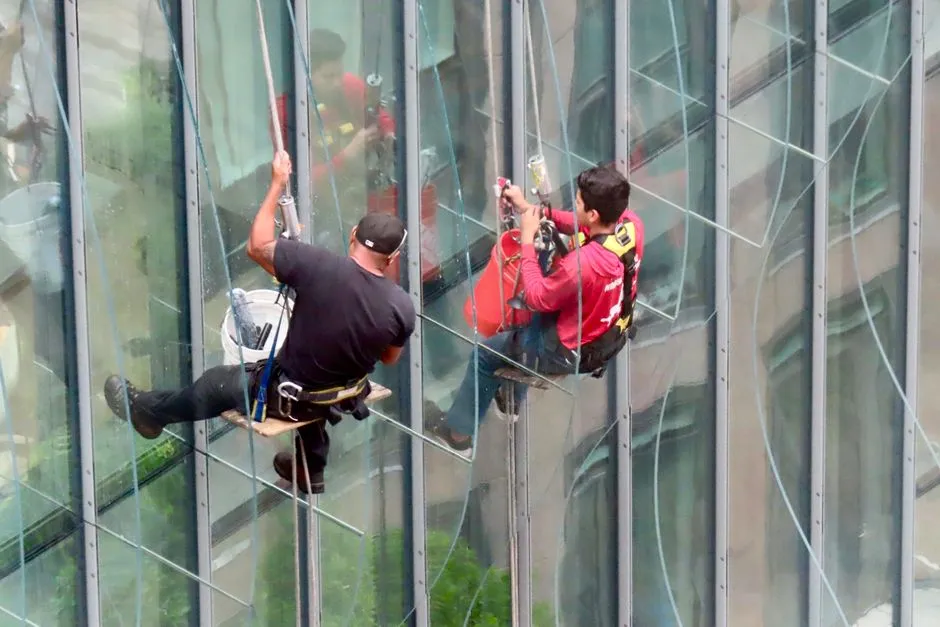
Safety is of paramount importance in skyscraper window washing, as the height presents significant risks, and working at such great heights exposes window washers to the dangers of falls, strong winds, extreme temperatures, and other environmental hazards. Wind in particular is unpredictable at altitude – what feels like a mild breeze at street level can translate into difficult and destabilizing gusts at the 40th floor.
Weather causes operational delays on approximately 15 percent of scheduled work days annually, which means hotel maintenance teams must build flexibility into their schedules. On high-profile properties, where a spotless facade is part of the brand experience, even minor delays can create operational pressure. Crew supervisors make go or no-go calls each morning based on wind speed, precipitation, and temperature.
What It Takes to Qualify for This Work
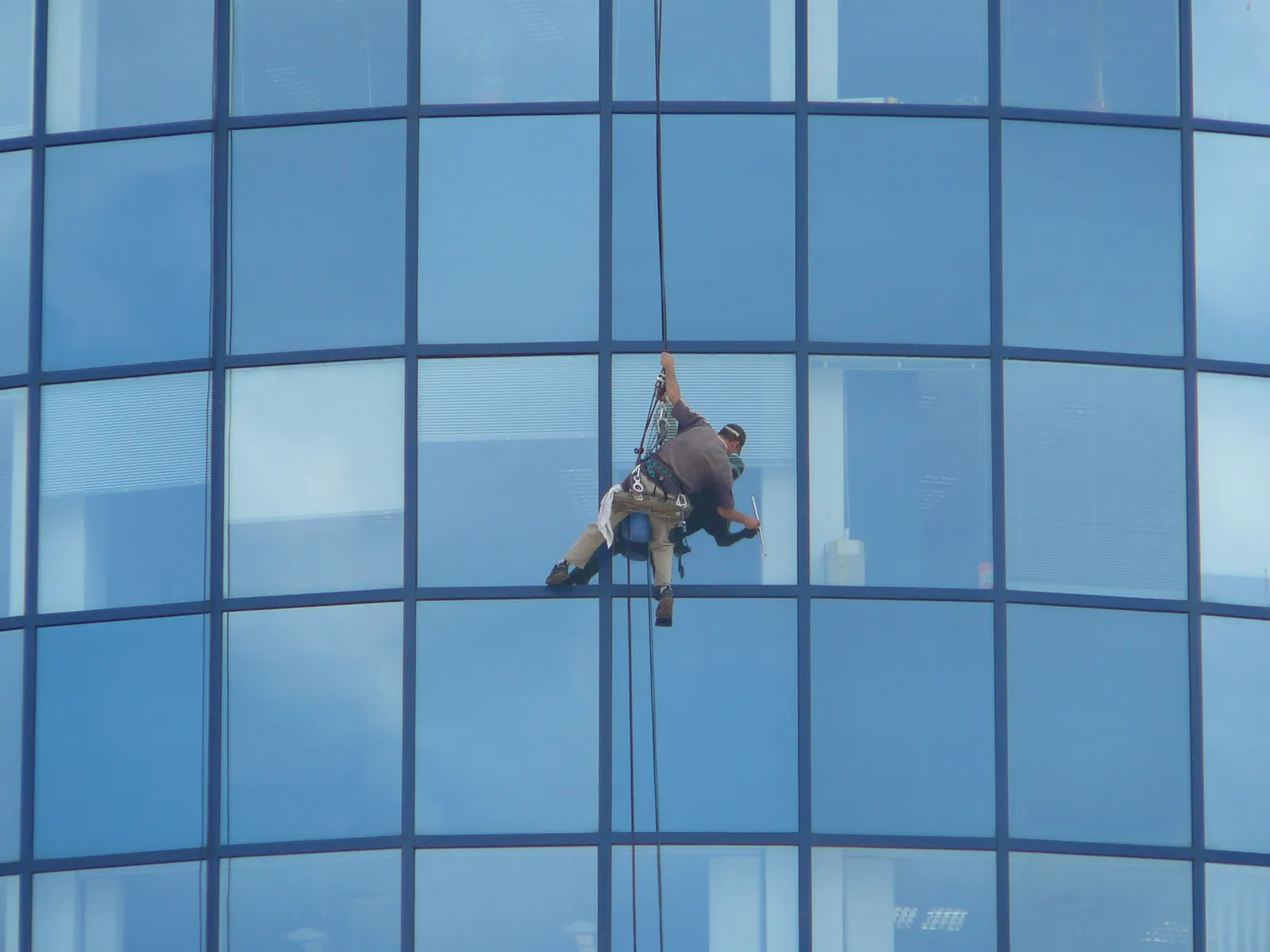
Professional high-rise cleaners hold certifications for rope access, scaffold operation, and safety training. These credentials are earned through structured programs and must typically be renewed on a regular cycle. The window cleaning industry has increasingly recognized the risks of cleaning tall buildings and contributed to a concerted effort to improve worker safety, with companies investing in training programs and safety equipment while adhering to strict safety regulations.
Experienced high-rise window cleaners can earn over $35 per hour due to hazard pay, which reflects both the skill level required and the physical demands of the job. Not everyone who enters the profession makes it to the high-rise tier. The combination of technical certification, physical conditioning, and psychological comfort with altitude narrows the pool significantly.
How Often a Hotel’s Windows Actually Get Cleaned

Most commercial high-rises run quarterly cleaning cycles, with street-facing or flagship facades cleaned more often, depending on location, pollution levels, and tenant or brand standards. For a luxury hotel in a dense urban environment, cleaning frequency can be higher than average because the visual appearance of the exterior is directly tied to guest perception. A smeared or streaked glass tower sends an unintended message before a guest ever walks through the door.
Seasonality affects market revenue with a dip of up to 30 percent during winter months in northern climates, which is when wind, ice, and freezing temperatures make exterior work either impractical or dangerous. Hotels in colder cities typically schedule their most intensive cleaning during spring and early autumn, with lighter maintenance runs through the warmer months in between.
Robots Enter the Picture
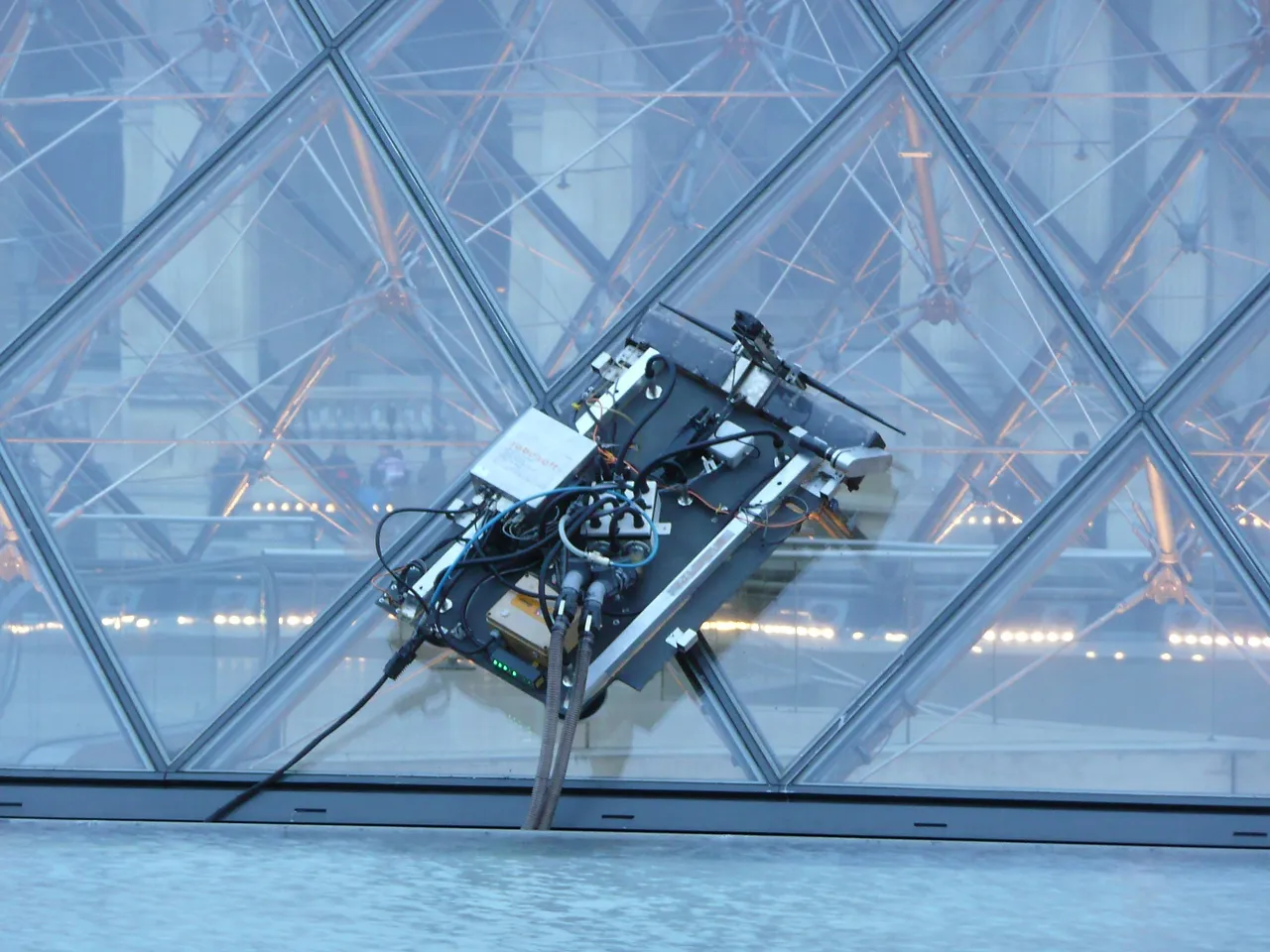
In collaboration with Palladium Window Solutions and The Durst Organisation, Skyline Robotics introduced Ozmo – described as the world’s first robotic-armed window-cleaning robot – with its deployment at 1133 Avenue of the Americas in New York City representing a significant shift toward safer and more efficient window cleaning practices. The system is reportedly three times faster than traditional window cleaning methods and integrates advanced sensors and AI to adapt to challenging weather conditions and fragile glass structures.
Skyline Robotics’ Ozmo system was deployed in August 2024 on a 45-storey tower in midtown Manhattan, becoming the first robotic arm to clean a working New York skyscraper – and while the robot uses LiDAR and computer vision to track windows and runs several times faster than human teams, a supervisor still operates it from the roof rather than fully autonomously. The technology is promising, but human oversight remains central to how it works in practice.
The Push Toward Greener Cleaning
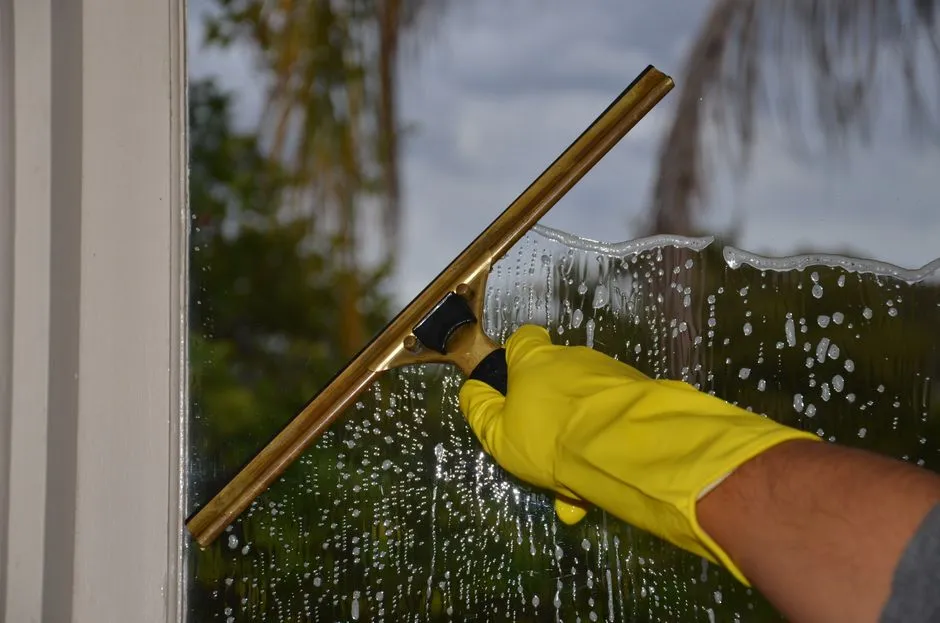
Sustainable cleaning has become a major focus as buildings move to reduce water usage, with water-fed pole systems using purified water that lowers chemical demand – and eco-friendly cleaning now actively supports green building certifications while reducing operational costs. For hotels pursuing sustainability ratings, this alignment between building maintenance practices and environmental standards is increasingly important. A property’s commitment to green credentials cannot stop at energy systems and linen programs – it extends to how the exterior glass is maintained.
In 2025, Unger Enterprises launched the HydroPower Nano Pure Water System, featuring a triple-stage filtration system with nano-membrane plus DI resin, producing purified streak-free cleaning water while using about ten percent less water than traditional reverse osmosis systems. Key manufacturers are now investing in robotic window cleaners, water-fed pole innovations, and lightweight high-rise platforms, with many also focusing on purified-water systems and low-energy robotic units to align with global green building standards.
The Bigger Industry Behind the Squeegee
Recent market reporting places facade maintenance at USD 1.60 billion in 2025, with reported growth of 9.3 percent, while window cleaning remained the largest application at USD 2.26 billion and 48 percent of revenue. The window cleaning industry is projected to grow by 13 percent between 2020 and 2028. That kind of growth reflects the continued rise of glass-dominant architecture in cities across the world, where hotels, residential towers, and commercial buildings all require regular exterior care.
The global facade cleaning market is projected to grow due to the increase in glass-fronted skyscrapers. As hotel brands compete on design and visual presence, the glass facade has become as much a part of the product as the lobby or the rooms. Keeping that glass pristine is not a background task – it is a maintenance commitment that runs continuously and relies on people trained to do something most of us would never attempt.
The Quiet Professionalism No One Talks About
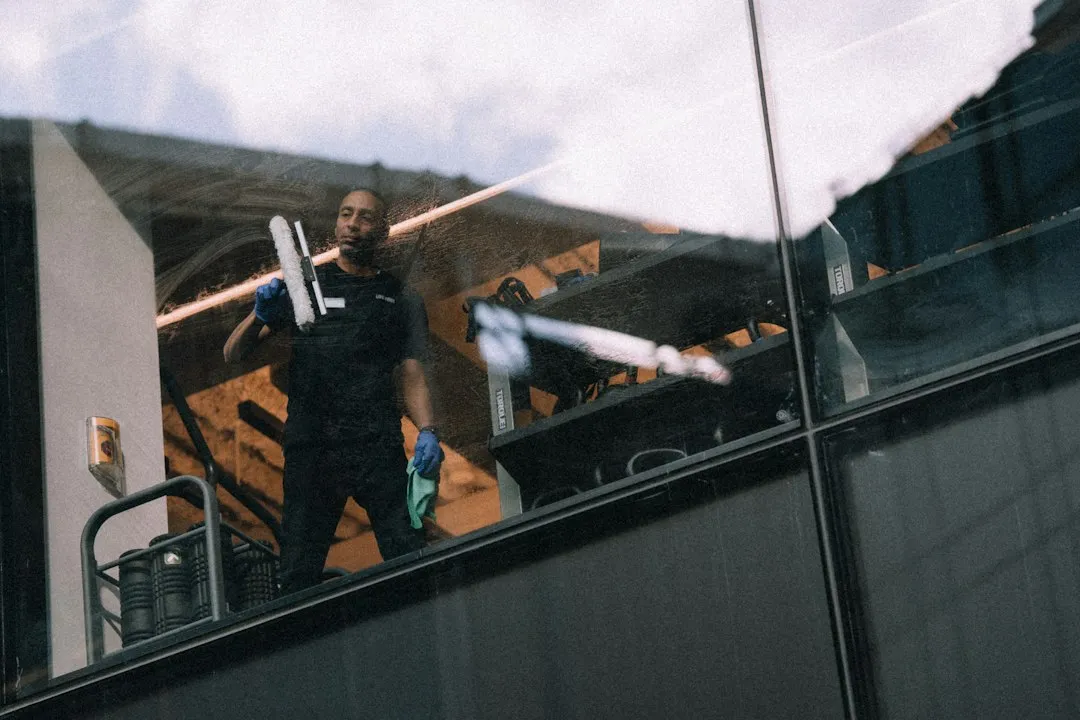
Window washers on hotel towers occupy a genuinely unusual place in the world of hospitality. They are essential to the guest experience in a way that is entirely invisible when done well, and glaringly obvious when neglected. The profession demands physical courage, technical expertise, careful judgment about conditions, and a willingness to trust equipment – and the people who rigged it – with their lives.
The industry has come a very long way from the early days when workers stood on window ledges with no harness at all. A trade in window cleaning developed in New York City in the late 19th century as early skyscrapers were built, and the height increased the risk to the washers, who at first cleaned skyscraper windows by standing on the window ledge and holding onto the frame – until leather safety belts attached to anchor bolts were introduced, followed by scaffolds. What the workers do today, with robotics, LiDAR, and certified rigging systems, is a world away from those origins – and still, it requires someone to show up, strap in, and get the work done.
AI Disclaimer: This article was created with the assistance of AI tools and reviewed by a human editor.