
The Rule Itself: What the Law Actually Says

In 2009, Greece started prohibiting certain types of shoes at historic sites. The government issued a public directive emphasizing that visitors should wear footwear that does not “wound the monuments.” It is not a suggestion posted on a sign somewhere; it carries genuine legal weight.
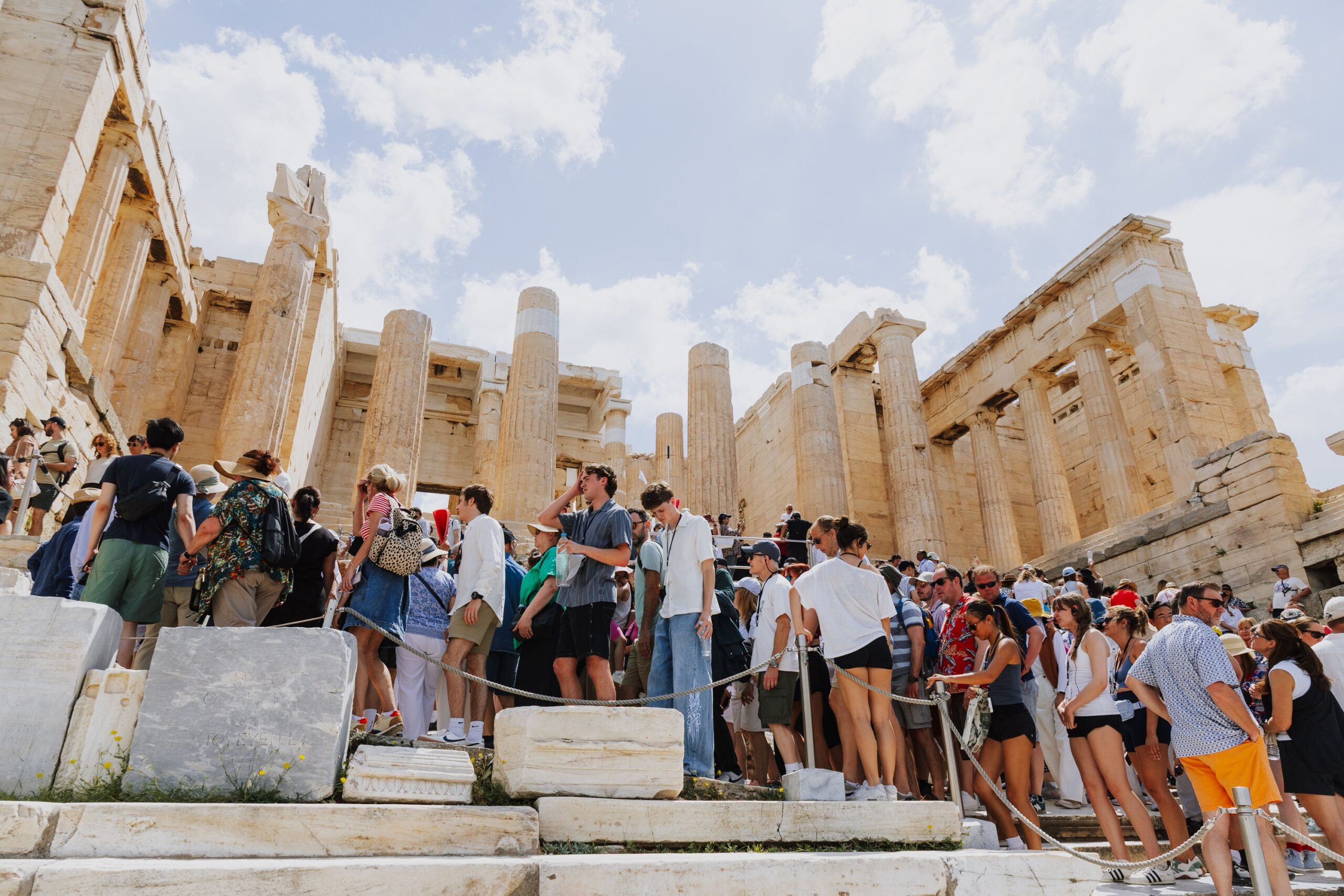
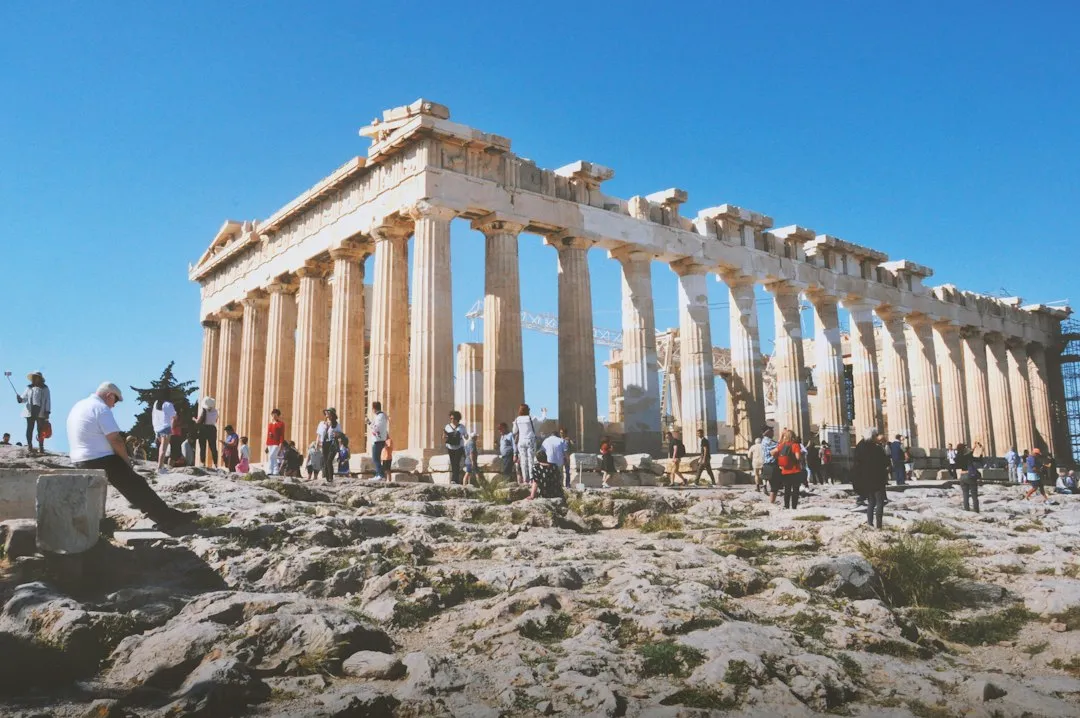
Visitors wearing high heels at ancient Greek sites like the Acropolis and Parthenon can be arrested and fined up to €900. The restriction applies at iconic landmarks including the Acropolis in Athens, the Roman Agora, and the archaeological site of Delphi, with other protected sites across Greece also enforcing the ban under the country’s heritage protection laws.
The Physics Behind the Damage

High heels have been identified as a potential risk to the integrity of ancient structures because the narrow, pointed design exerts concentrated pressure on the surfaces of monuments, which can cause cracks or scratches. The numbers behind this are striking when laid out plainly.
A 100-pound woman in high heels exerts far more pressure per square inch than a 6,000-pound elephant in bare feet, because stiletto heels have an area of about one sixteenth of a square inch while an elephant walks with two feet covering around 40 square inches each – meaning the woman exerts well over 1,500 psi versus roughly 75 psi from the elephant.
When wearing very slender heels with a diameter of less than 10 mm in some cases, weight is distributed upon a substantially smaller surface and the pressure load can be many times higher than normal. Marble that has survived earthquakes and centuries of weathering is, in some ways, less equipped to handle this kind of localized, repetitive impact.
What Happens to the Marble

The primary reason for the ban is the protection of ancient marble floors found at iconic archaeological sites, as Greek archaeologists observed that sharp, pointed heels cause micro-cracks in the marble, which has already survived thousands of years of erosion, war, and tourism. These micro-fractures are nearly invisible at first but compound over time.
According to Greece’s Ministry of Culture, the rule was introduced to prevent damage to fragile stone surfaces that have survived for thousands of years, as thin, pointed heels can chip and crack the marble and limestone, particularly at locations that welcome millions of visitors each year. Once the surface structure of ancient marble is breached, water and pollutants work their way in, accelerating deterioration from the inside out.
The Acropolis: A UNESCO Site Under Real Pressure

The Acropolis attracted more than 4.6 million visitors in 2025, averaging approximately 12,600 people per day, with data from the Hellenic Statistical Authority confirming 4,609,113 visitors that year compared with approximately 4.55 million in 2024. That is an enormous volume of foot traffic for a site built in the fifth century BCE.
The site accounts for approximately 35 percent of total visits to archaeological sites across Greece, maintaining its position as the country’s leading cultural attraction. The Acropolis, a UNESCO World Heritage Site described as having exceptional universal value, is one of the most affected landmarks. Every pair of shoes that walks those ancient stones leaves a mark, however small.
The Scale of Greek Tourism Today

The number of tourists that visited Greece in 2024 reached new heights, with the Mediterranean country welcoming 40.7 million foreign visitors, marking a nearly 13 percent increase compared to 2023. That growth is a point of national pride and, simultaneously, an ongoing conservation challenge.
Over 20 million people visited Greece’s archaeological sites and museums in 2024, bringing a total of 171 million euros into government coffers, up from 157 million euros in 2023 and 121 million euros in 2022, according to Greece’s statistical agency. Travel and tourism’s total contribution to GDP in Greece was above 19 percent in 2023, the third-highest among European Union countries after Portugal and Croatia. Protecting the physical sites is, quite directly, protecting the national economy.
What Archaeologists Said When the Ban Was Announced

Authorities put the ban in place in 2009 because sharp-soled shoes were adding to the wear and tear of national treasures. The announcement was made plainly and without ambiguity by cultural officials who had been watching the slow degradation of ancient surfaces for years.
Cultural officials explained that ancient marble has a “skin” that deteriorates when pierced or pressured repeatedly. At the time, archaeologists also expressed concern about the “excessive use” of ancient sites, such as the Odeon of Herod Atticus in Athens and the Epidaurus Theatre in the Peloponnese region. The footwear ban was one part of a larger conversation about sustainable access to irreplaceable places.
Safety Is Also a Factor
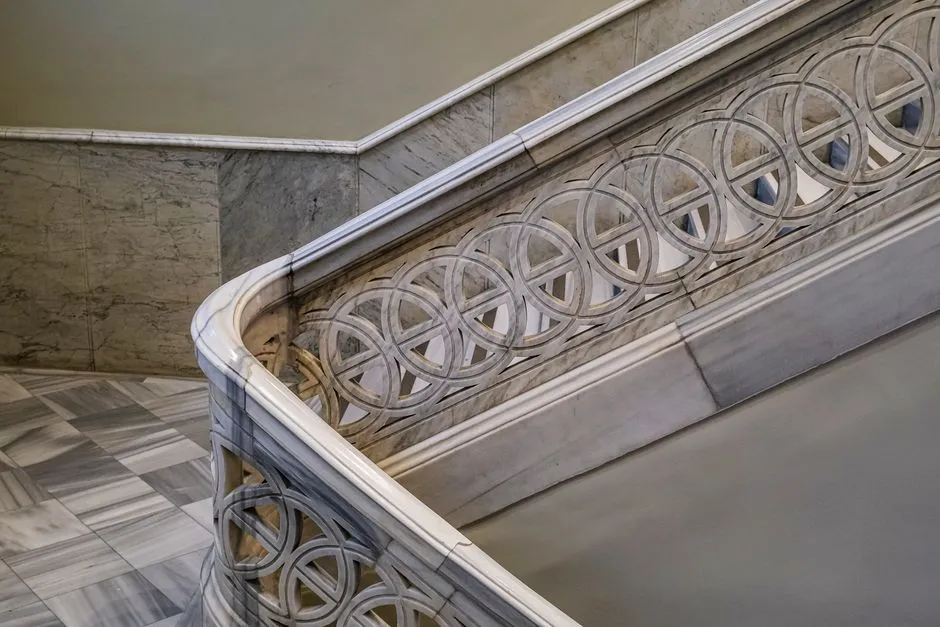
In Greece, it is illegal to wear high heels when touring monuments like the Parthenon and the Acropolis, and they are notoriously slippery surfaces to navigate in heels anyway. The ancient stone pathways are uneven, worn smooth by millions of footsteps, and often steep.
The prohibition in places like this is also due to the particular nature of the floor, which can be dangerous for those wearing high heels – they may get stuck in cracks or gaps, and high heels are generally not safe on wet or unpaved surfaces. A twisted ankle on a marble staircase dating back 2,500 years is not the memory most visitors are hoping to bring home.
Other Rules That Come with the Territory
The 2009 regulation does not stop at footwear. Other rules include bans on drunken behavior, consuming food and drink on-site, and unauthorized performances. Greece treats its ancient sites as living cultural monuments, not open-air entertainment venues, and the regulations reflect that consistently.
Greece has also moved to limit the number of visitors to the Acropolis of Athens to 20,000 daily guests, using timed entry slots to spread foot traffic more evenly throughout the day. After a three-year study by leading scientific institutions, the Greek Ministry of Culture and Sports has earmarked 19 monuments that most urgently need protection against natural threats, with several more to be bolstered by 2030.
What You Should Wear Instead

Trainers, flat shoes, and other flat-soled footwear that will not damage ancient stone are generally allowed. The rule is not about controlling personal style – it is about the contact point between a shoe and a surface that cannot be replaced. Comfortable, closed-toe walking shoes are both the practical and respectful choice.
Although the rule often surprises first-time visitors, it is intended to protect irreplaceable archaeological treasures rather than dictate what people wear, and flat-soled shoes, trainers, and other appropriate footwear are permitted. Most experienced travelers to Greece now see the rule as common sense rather than an inconvenience.
Greece’s Broader Commitment to Heritage Protection

Worsening wildfires, soaring heat waves, and rising water levels have prompted Greek officials to take a closer look at protecting priceless archaeological sites that draw hundreds of thousands of visitors each year. The footwear ban sits within this much wider framework of preservation thinking.
From 2022 to 2025, scientists at the National University of Athens and the National Research Foundation examined past and present climate and geological conditions at 19 sites, and according to the culture ministry, new fire sensors at 21 sites are to be delivered this year with fire protection plans drawn up for over 60 archaeological sites. The high heels rule, seen in this light, is simply one thread in a very large conservation effort.
A Quiet Lesson in Responsible Travel

Few travel rules are as easy to respect as this one. The logic is transparent, the science supports it, and the stakes are genuinely high. These are not reconstructed replicas or themed attractions – they are among the oldest standing structures in human history.
Greece’s approach offers a useful model for how popular destinations can manage mass tourism without closing their doors entirely. The ban on high heels is, at its core, an act of collective care: a recognition that some things belong to everyone and to no one generation in particular. Packing the right shoes before a visit to the Acropolis is a small gesture, but it is part of something much larger than footwear.
AI Disclaimer: This article was created with the assistance of AI tools and reviewed by a human editor.