
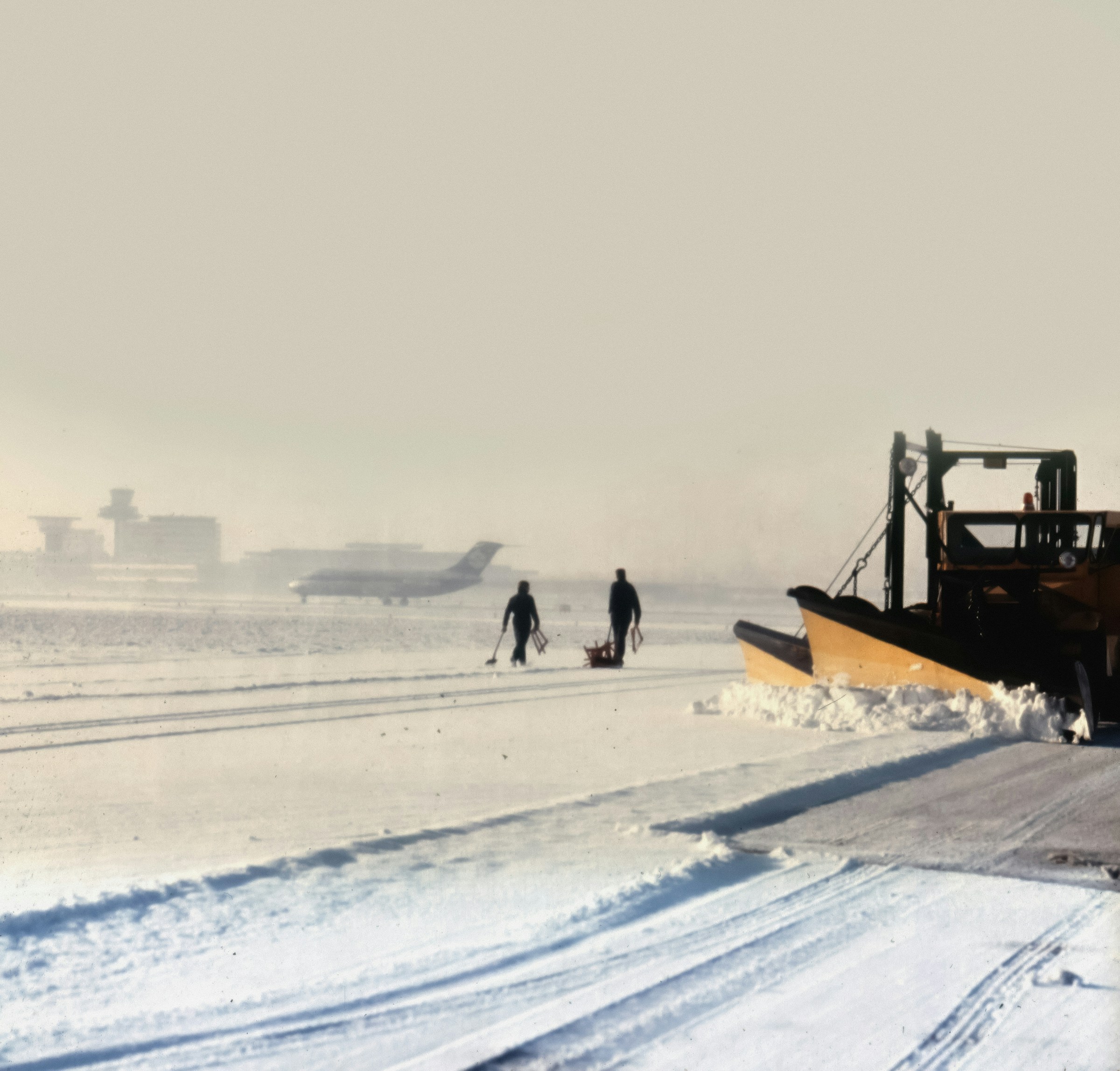

Most travelers sitting at a gate during a winter storm watch the snowfall stack up on the tarmac and simply hope the flight leaves on time. What they rarely see is the precision operation already underway outside: dozens of heavy machines moving in tight formation, crews communicating over radios, and a carefully rehearsed plan designed to reclaim a runway in the time it takes to watch a TV episode.
Runway snow removal is one of aviation’s less glamorous but absolutely critical disciplines. The margin for error is essentially zero, and the pressure to move fast is constant. Here is how it actually works, from the first weather alert to the moment a plane touches down on cleared pavement.
The Moment the Plan Activates

The primary objective of airport snow operations is to ensure that aircraft can land, take off, and taxi safely and without difficulty during winter storm conditions. That objective kicks into motion well before the first flake lands. Airports monitor forecasts closely, and most large facilities have a dedicated command post that coordinates every moving part of the response.
The FAA’s guidelines call for airports to implement a Snow Control Center, which manages snow clearing operations, serves as the prime source of field condition reporting including runway braking conditions and snow accumulations, and informs the airport traffic control tower, air carriers, and other parties of expected runway closures and openings. Think of it as an air traffic control room, but focused entirely on the ground battle against winter weather.
Priority Zones: Not Every Surface Is Equal

Keeping aircraft able to land, take off, and taxi safely involves clearing snow and ice from runways, taxiways, and apron areas. These surfaces are not treated equally. Runways are the highest priority, followed by taxiways, then aprons where aircraft park at gates.
The FAA’s Advisory Circular on airport winter safety requires airports to have sufficient equipment to clear one inch of falling snow from Priority 1 areas within recommended clearance times, and the Snow Control Center is responsible for informing the tower and airlines of expected runway closures and the issuance of timely NOTAMs. A NOTAM, or Notice to Air Missions, is the formal alert that tells pilots a runway is temporarily closed or has reduced braking ability.
The Fleet: Machines Built for Speed and Scale
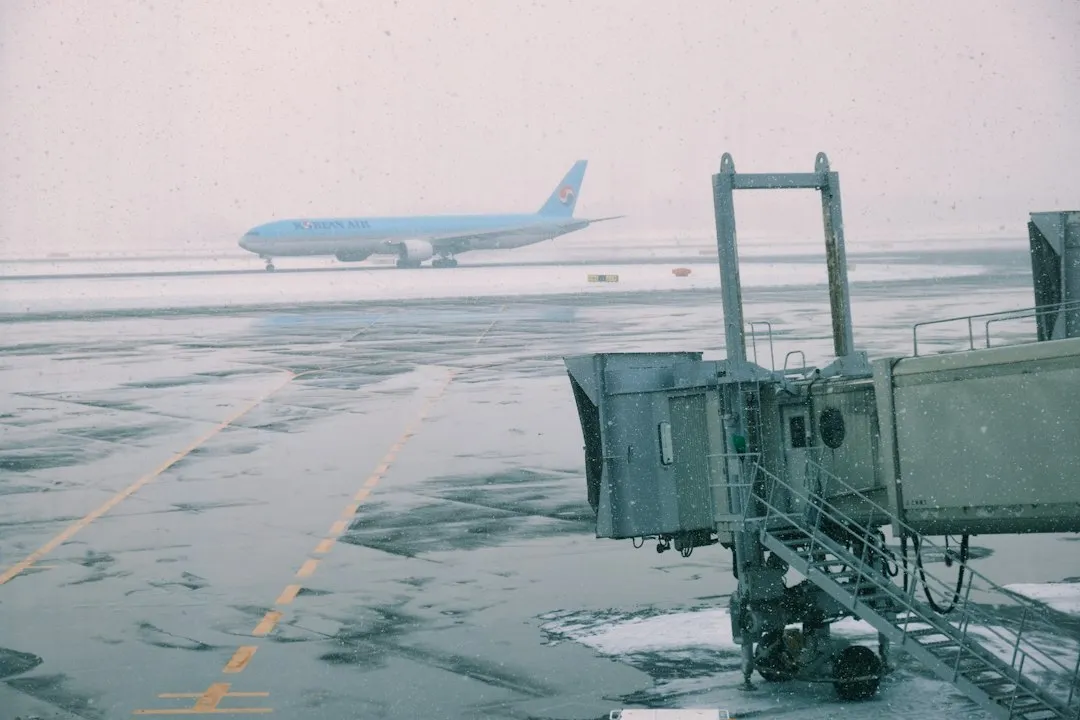
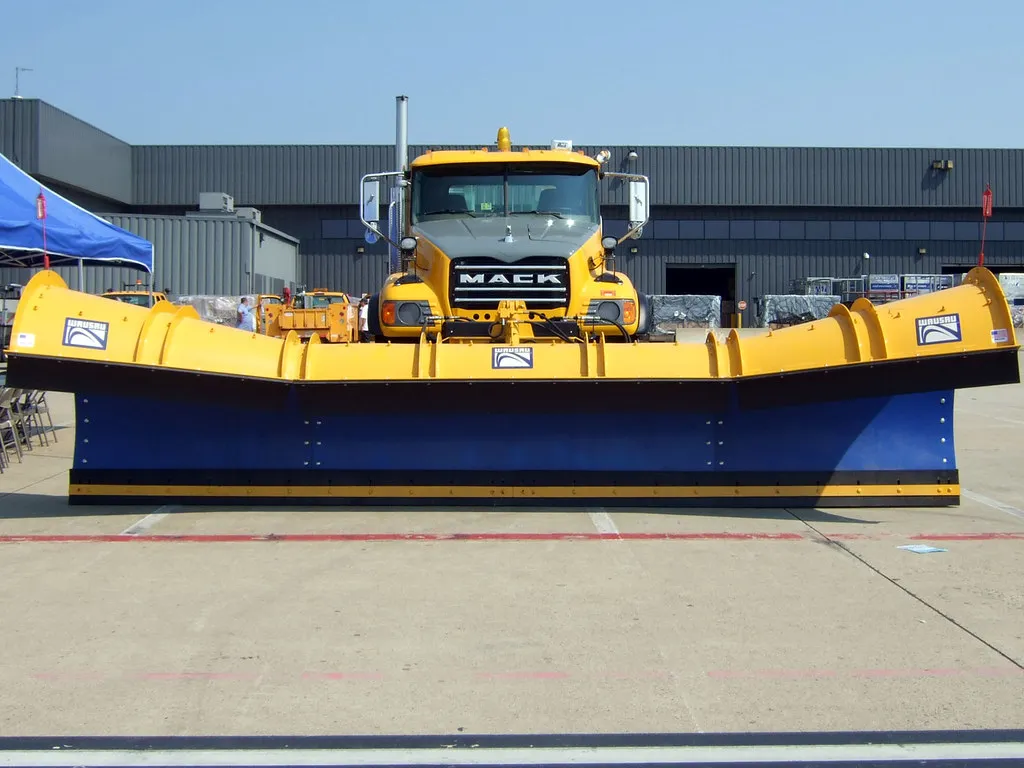
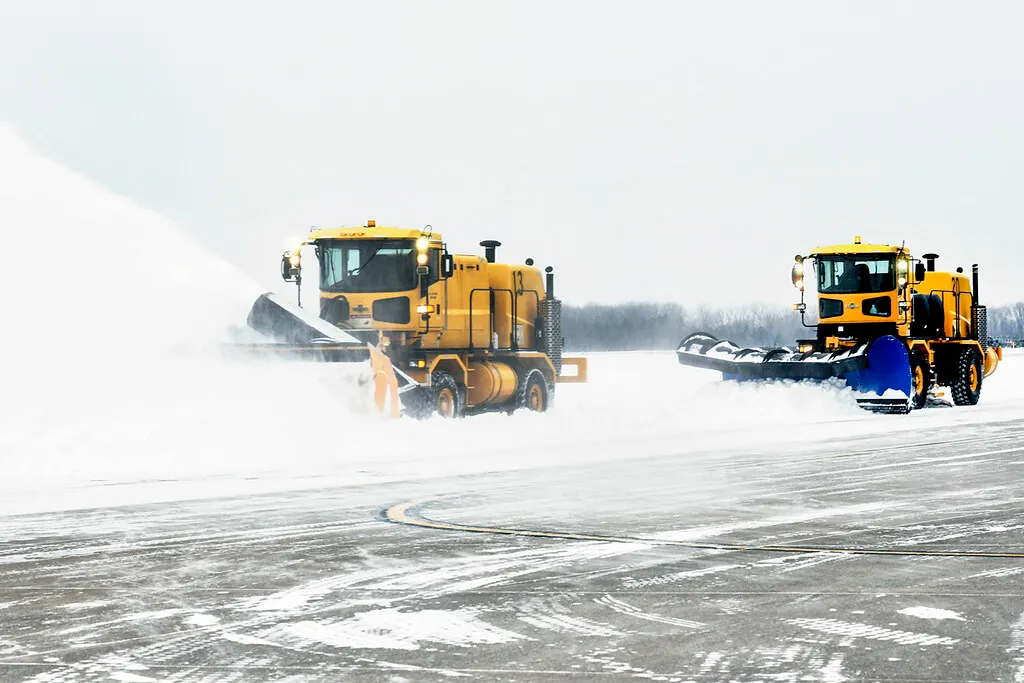
Airport snow removal equipment is engineered for vast, flat surfaces where speed is critical to prevent runway closures, and unlike standard municipal road plows, these machines often operate at speeds up to 30 to 35 mph to keep pace with falling snow. The sheer scale of the machinery involved surprises most people who have never seen it up close.
Large airport rotary plows are massive, diesel-powered machines capable of moving 3,000 to 5,000 or more tons of snow per hour. To put that in context, a loaded semi-truck weighs roughly 40 tons, meaning these blowers can effectively process the equivalent of over a hundred trucks’ worth of snow every hour. Equipment used by airport operators includes displacement and rotary snowplows, sweepers and brooms, material and chemical spreaders, carrier vehicles, multipurpose vehicles, friction measuring equipment, and front-end loaders.
The Echelon Formation: Teamwork at 30 mph
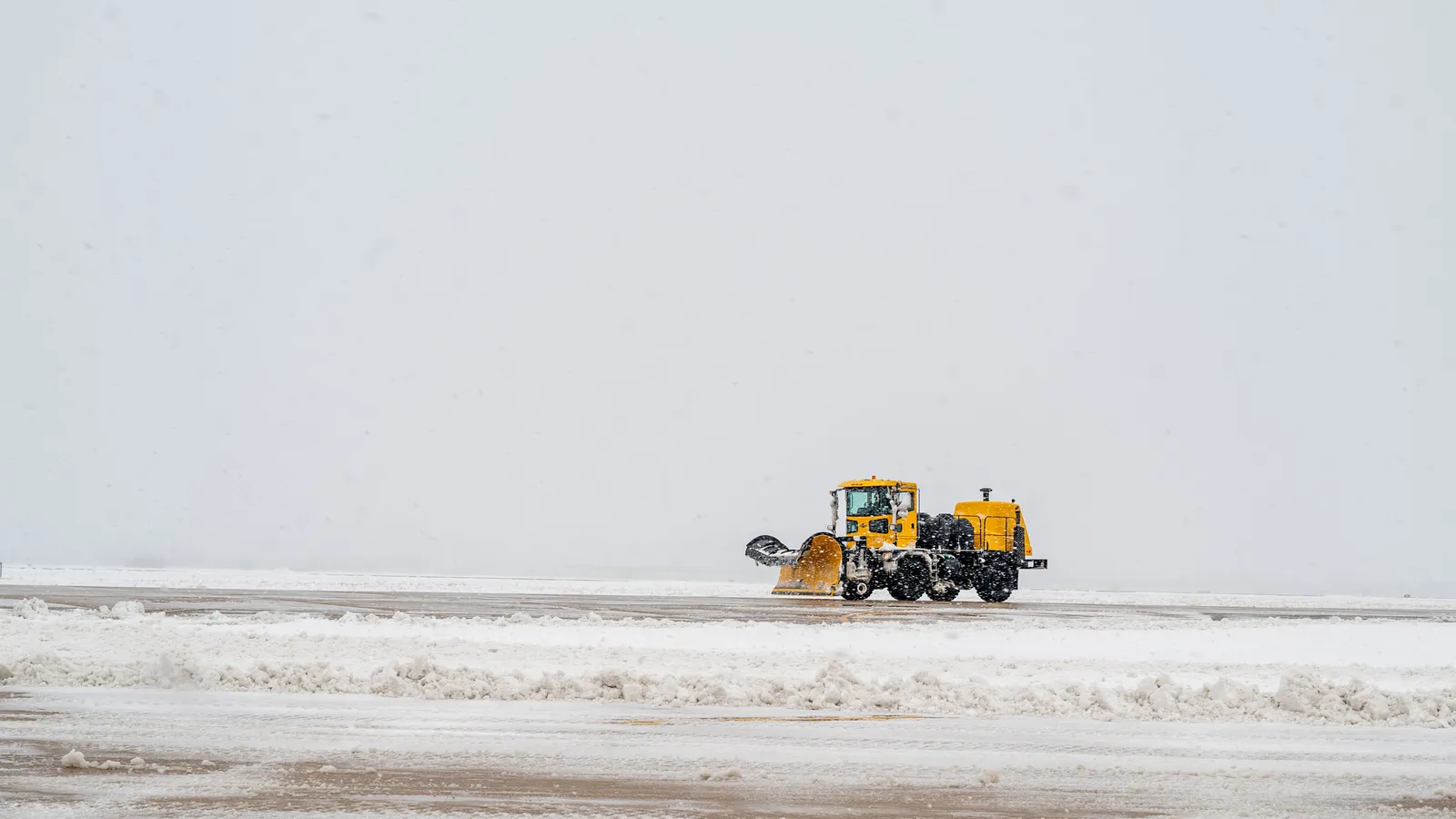
The most visually striking aspect of large-scale runway clearing is the echelon formation. A line of plows fans out in a diagonal pattern, each vehicle slightly behind and offset from the one in front, sweeping snow to the side in one coordinated pass. It looks almost choreographed, and it more or less is.
At airports like Minneapolis-St. Paul, this entire process of clearing a two-mile-long runway can be completed in under 30 minutes. The formation also keeps the work zone predictable, which matters enormously because snow removal equipment operators are required to monitor air traffic control or other frequencies for information on approaching or departing airplanes at all times. A plane could be cleared to land on a parallel runway while crews are still working nearby.
Japan’s 40-Minute Benchmark
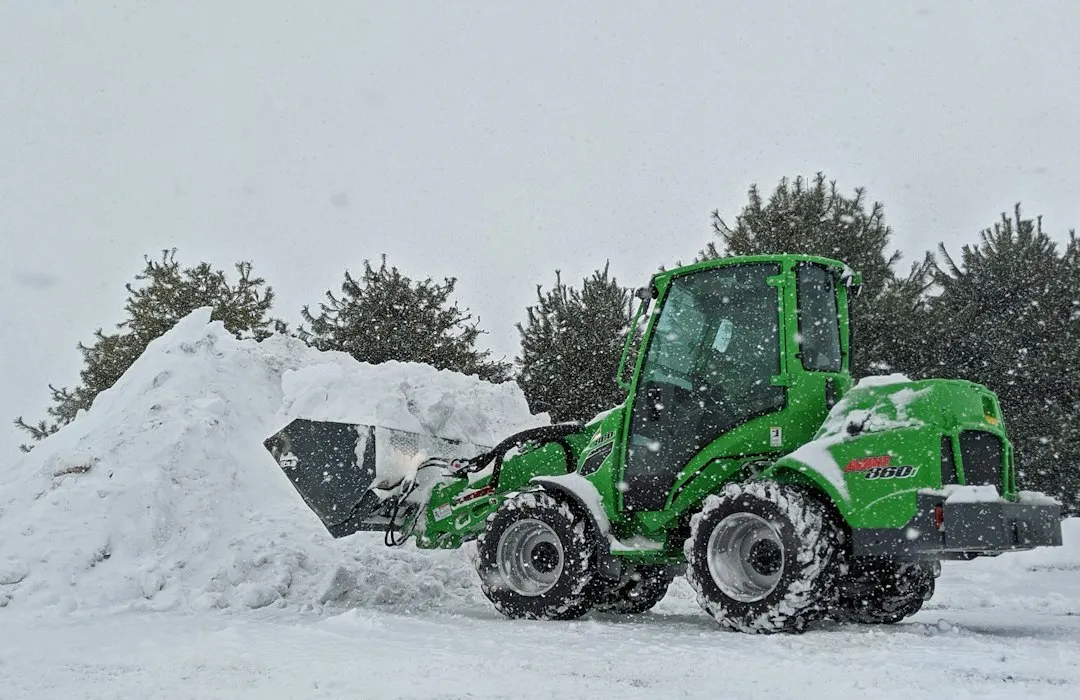
For a vivid real-world example of what a well-organized snow crew can accomplish, look no further than Aomori Airport in northern Japan, where winter is not a disruption but a permanent seasonal condition. The 38-vehicle White Impulse snow removal crew at Aomori Airport clears snow from the runway, taxiway, and apron covering 55 square kilometers in 40 minutes.
That figure is remarkable when you consider the surface area involved. It requires every driver knowing their exact role, the vehicles operating as a synchronized unit, and zero tolerance for hesitation. This kind of precision is the global standard that major airports continuously work toward.
Munich’s 600-Person Winter Army
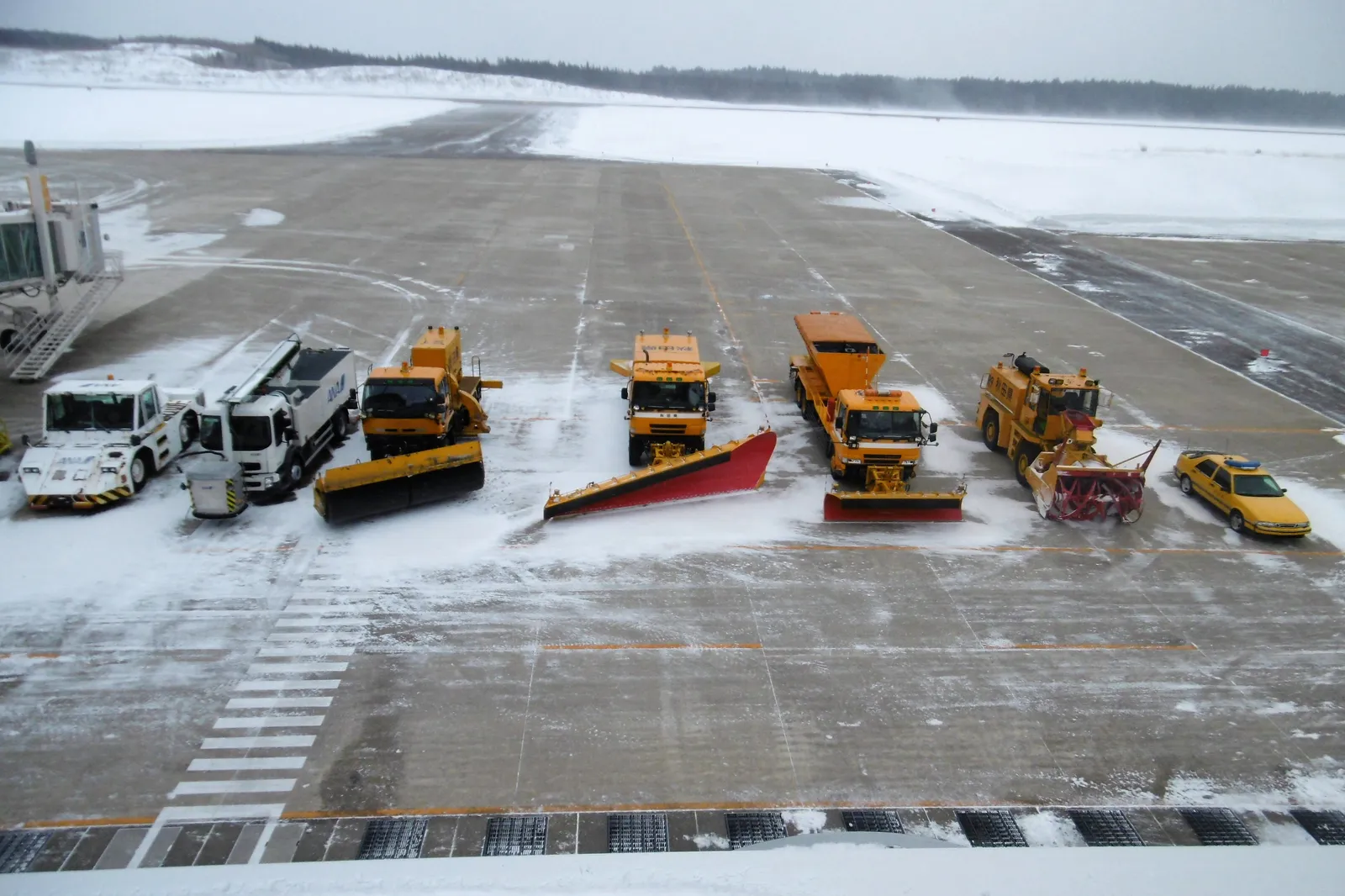
Scale is everything in winter airport operations, and Munich Airport in Germany offers one of the most striking examples of institutional commitment to runway readiness. Munich Airport operates a winter maintenance fleet of 184 vehicles, including 152 dedicated to airfield clearing and de-icing. The team of over 600 personnel can clear a runway more than 4,000 meters long and 60 meters wide in approximately 30 minutes, ensuring continuous operations across 5.6 million square meters of airfield area.
That level of staffing and equipment reflects a simple reality: for a major hub, even a short closure cascades into hundreds of delayed or diverted flights. The investment in an enormous winter workforce is also an investment in keeping the entire network moving.
Pre-Treatment: The Step That Happens Before the Storm

Before the first snowflake falls, liquid anti-icers are applied to runway surfaces. This acts like a non-stick coating for the runway, preventing snow from bonding to the pavement. Pre-treatment is now standard practice at most major airports because it significantly reduces the time and chemical volume required once a storm begins.
If the runway pavement temperature is warm enough for snow to compact and bond, or if freezing rain is forecast, approved anti-icing chemicals and heated sand should be applied prior to the start of precipitation or as soon as it starts. Approved products include glycol-based fluids, potassium acetate base, and potassium formate-based fluids. Choosing the right chemical for the specific temperature and precipitation type is its own technical discipline.
De-Icing the Aircraft Itself
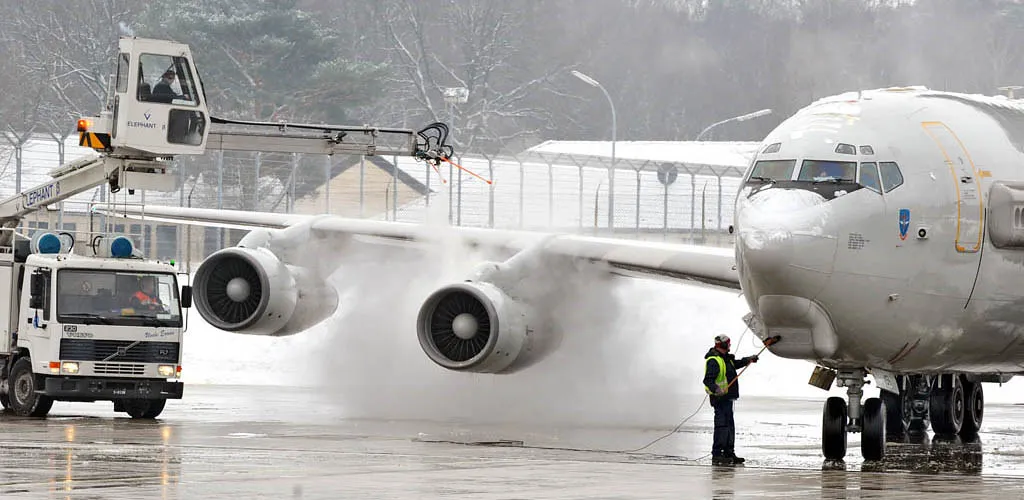
Clearing the runway is only one side of the equation. The aircraft sitting at the gate also needs to be clean before it can safely depart. De-icing involves the use of specialized trucks equipped with tanks filled with glycol-based fluids. Type I de-icing fluid is orange, heated to 140 degrees Fahrenheit, and sprayed to remove ice and snow, while Type IV anti-icing fluid is green and applied after de-icing to prevent further accumulation.
Chicago O’Hare is American Airlines’ largest and busiest de-icing destination, with aircraft de-iced 6,000 to 10,000 times per season depending on the severity of the winter, using approximately 500,000 gallons of glycol for the six months of de-icing season. That volume gives a real sense of just how resource-intensive winter flight operations truly are at a major northern hub.
The Environmental Side of the Operation
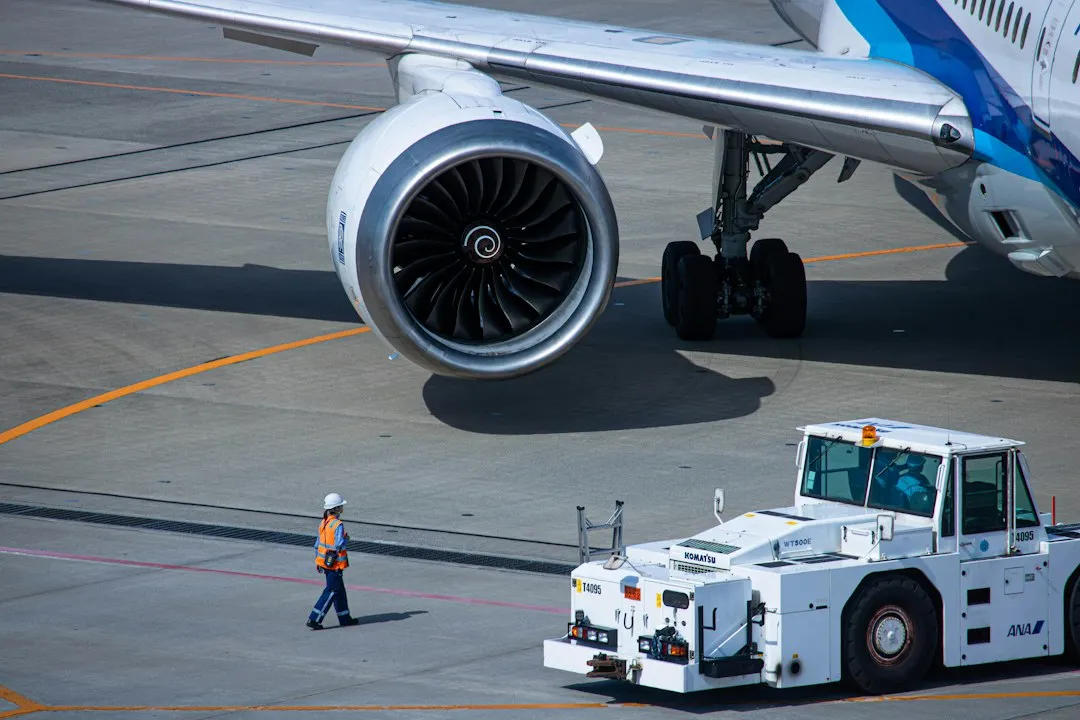
All that glycol has to go somewhere, and airports are increasingly accountable for where it ends up. Discharge of glycol-based aircraft de-icing fluids can have potentially negative environmental effects on nearby surface water. Most modern airports now operate containment systems specifically designed to capture and properly dispose of glycol runoff rather than letting it drain into surrounding ecosystems.
To ensure responsible environmental management, operators, service providers, and local airport authorities are required to prepare detailed glycol management plans and procedures. This area of airport operations has grown in regulatory attention over recent years, as environmental standards tighten alongside safety requirements. The balance between speed, safety, and stewardship is one of the defining challenges of modern winter operations.
A Growing Industry, Driven by Climate and Demand
The global airport snow removal equipment market reached approximately 411 million USD in 2024 and is anticipated to grow to over 610 million USD by 2032. That steady growth reflects both expanding air travel demand and the reality that winter weather disruption has become more unpredictable in key regions.
Growth is supported by the FAA’s continued investment in airport infrastructure via the Bipartisan Infrastructure Law, which has allocated roughly 25 billion USD over five years for airport improvements, with a meaningful share flowing to snow-fighting equipment. Additionally, observed increases in the frequency of heavy snowfall events in the Northeast and Midwest are prompting airports to shorten replacement cycles and expand fleet size. Newer airports and smaller regional facilities are also upgrading. Centennial Airport in Colorado supported over 6,100 lifesaving medevac flights in 2025 and recently added snow removal vehicles to its fleet to ensure air ambulances can operate even during severe winter conditions.
Final Thoughts
There is something quietly impressive about the fact that a major international airport, facing a full-blown blizzard, can have a runway operational again within the time it takes most people to eat breakfast. It does not happen by accident. It happens because of meticulously maintained equipment, well-drilled crews, regulatory frameworks, and years of accumulated operational knowledge.
The next time a winter flight departs close to schedule despite heavy snow outside, the credit belongs to a team that most passengers never think about: the crews in orange vests who spent the night clearing a path through the storm. Their work is invisible by design, and that is exactly the point.
AI Disclaimer: This article was created with the assistance of AI tools and reviewed by a human editor.