


A Cracker Born Near Kyoto Shrines
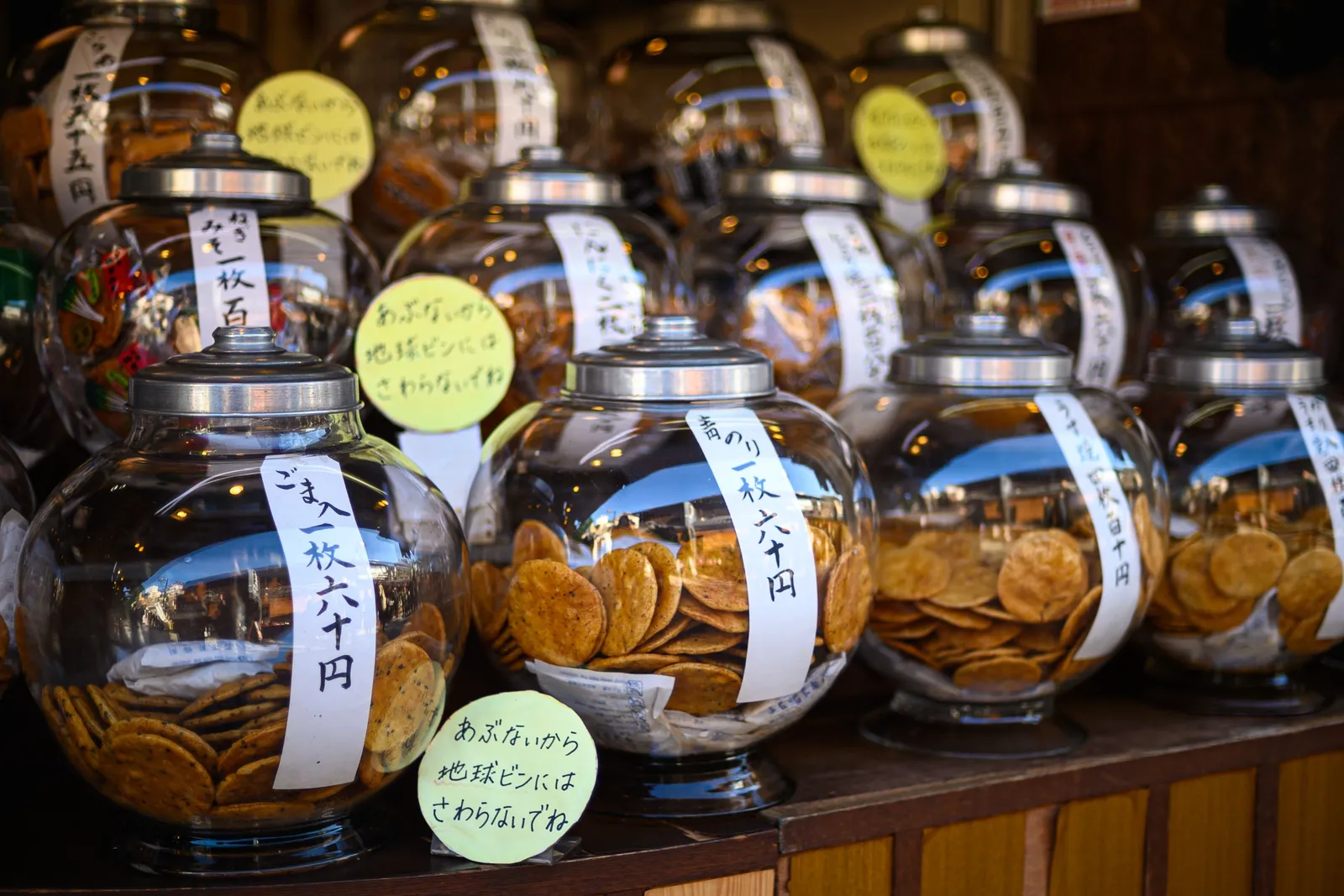
While many Americans associate fortune cookies with Chinese restaurants and, by extension, Chinese culture, they are actually more readily traceable to 19th-century Japan. As far back as the 1870s, some confectionery shops near Kyoto, Japan carried a cracker with the same folded shape and a fortune tucked into the bend.
The name of it was tsujiura senbei. “Tsujiura,” similar to omikuji notes, tells people their fortunes. These senbei were larger than their Chinese-American counterparts and also contained sesame seeds and white miso.
Various forms of fortune-telling snacks still exist in Japan today. Centuries ago, however, they were likely reserved for the upper class, mainly because few could read, in places like geisha houses or on bustling streets in major cities from Tokyo to Kyoto.
The Researcher Who Cracked the Case

The origin of the thin shells enclosing a small note with prophetic phrases is traceable to Japanese tradition, as revealed by Japanese researcher Yasuko Nakamachi, who based her degree thesis on this very topic.
Nakamachi found fortune cookie evidence in Japan that predates by decades the first appearance of fortune cookies in America. Among her pieces of evidence are multiple references to the cookies in Japanese literature and history, including an 1878 etching of a fortune cookie maker, as well as centuries-old family bakeries in Japan that make fortune cookie-like crackers, complete with paper fortunes.
Researching at Japan’s National Diet Library, Nakamachi found compelling evidence tracing the cookie’s origins to Japan, including an 1878 book called Moshiogusa Kinsei Kidan about an apprentice in a senbei store making tsujiura senbei, or “fortune crackers.” This single document effectively places the fortune cookie in Japan nearly three decades before any American claim was ever made.
How It Differs From the American Version
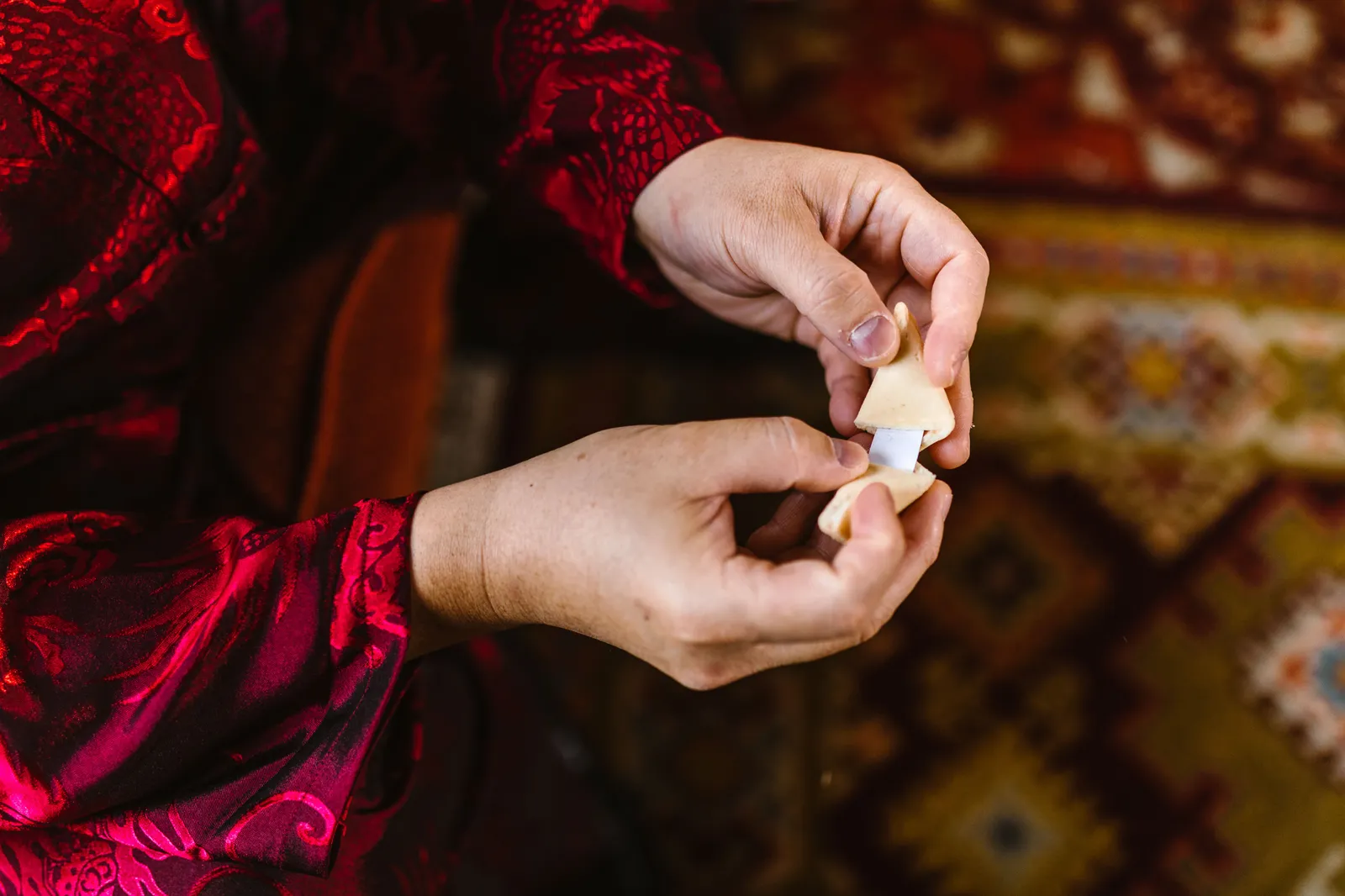
The Japanese cracker was larger and darker, made with sesame and miso instead of the vanilla and butter used to flavor fortune cookies found in modern Chinese restaurants in America.
The main differences between Japanese and American fortune cookies were in the size, the flavoring, and the position of the fortune. The Japanese cookies were bigger, used sesame and miso, and had the fortunes pinched in the mouth rather than folded inside.
Traditional fortune cookies go by many different names in Japan: tsujiura senbei, meaning “fortune crackers”; omikuji senbei, meaning “written fortune crackers”; and suzu senbei, meaning “bell crackers.” The variety of names alone speaks to how deeply embedded this confection was in Japanese culture long before it ever crossed the Pacific.
Makoto Hagiwara and the Japanese Tea Garden
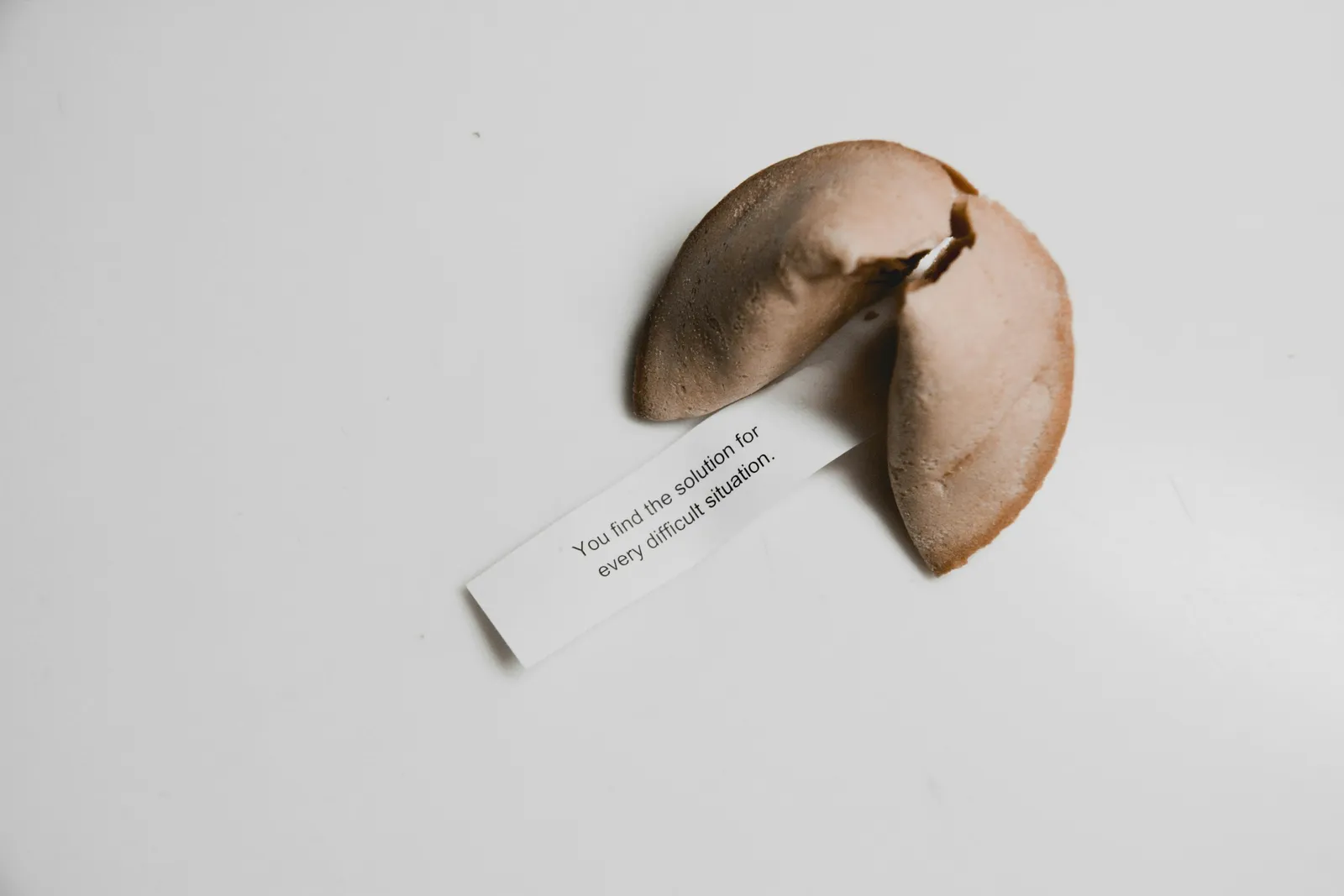
Makoto Hagiwara was a Japanese immigrant who worked as caretaker of the Japanese Tea Gardens in San Francisco since 1895. Between 1907 and 1914, he began serving fortune cookies to guests.
After being fired by an anti-Japanese mayor and later reinstated by a new mayor, Hagiwara is claimed to have made the very first batch of fortune cookies during the 1900s. As a token of gratitude to those who stuck by him during those hard times, Hagiwara served these cookies.
Despite a competing claim from David Jung, founder of the Hong Kong Noodle Company in Los Angeles, Makoto Hagiwara of Golden Gate Park’s Japanese Tea Garden in San Francisco is reported to have been the first person in the United States to serve customers the modern version of the fortune cookie. Those fortune cookies were made by a San Francisco bakery called Benkyodo.
The Rival Claim: David Jung and Los Angeles
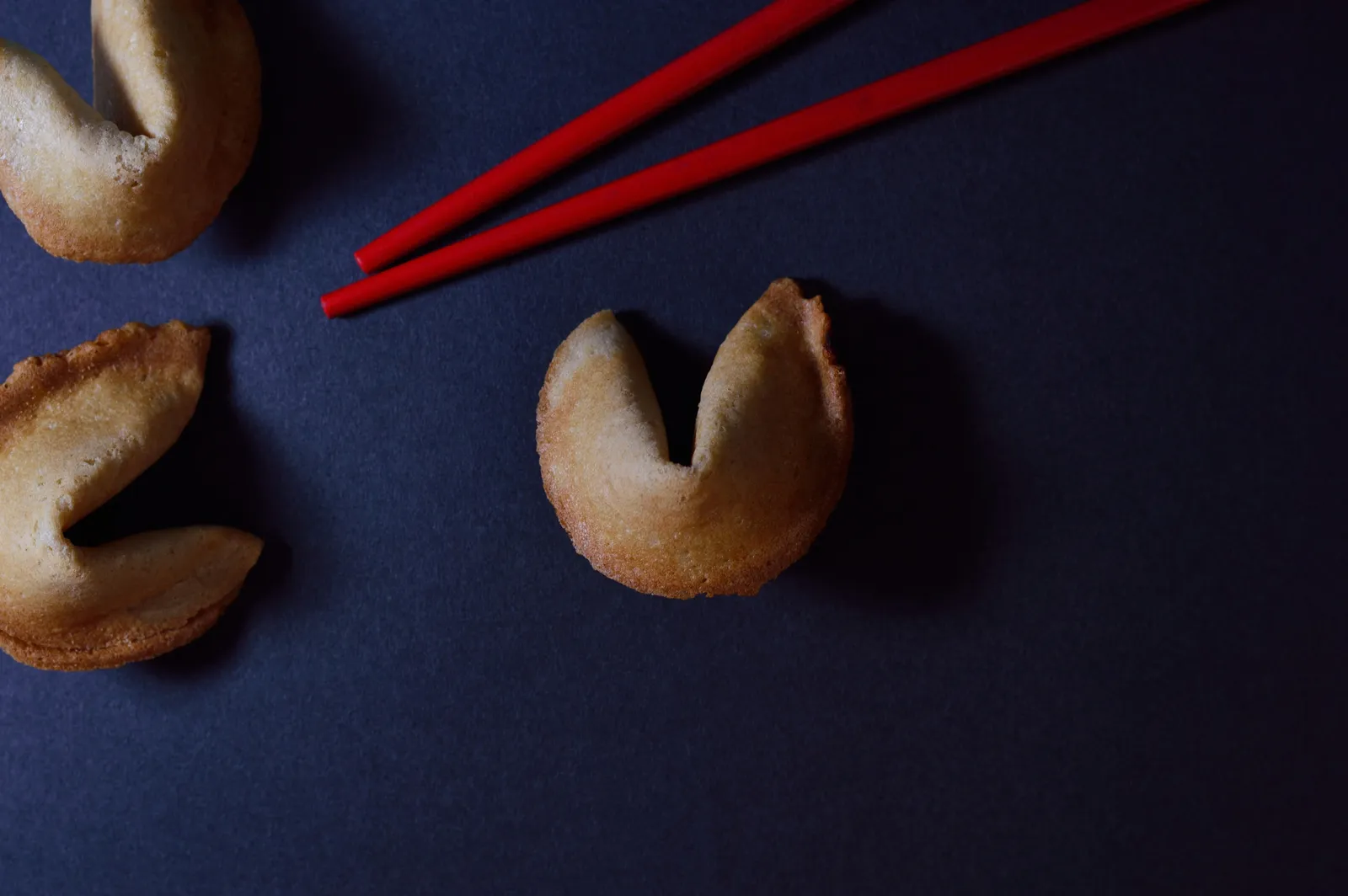
Not everyone agrees on Hagiwara’s story. Many claim it was David Jung, a Chinese immigrant who founded the Hong Kong Noodle Company while living in Los Angeles, who invented the cookie in 1918. It is believed that Jung was concerned about the poor who couldn’t afford meals, so he created a cookie and hid a strip of inspirational verses written by a Presbyterian minister.
In 1983, San Francisco’s Court of Historical Review attempted to settle the dispute. During the proceedings, one of the key pieces of evidence was a message inside the cookie that read, “S.F. judge who rules for L.A. Not Very Smart Cookie.” A federal judge from San Francisco determined that the cookie originated from Hagiwara, and the court ruled in favor of San Francisco.
Interestingly, Yasuko Nakamachi has argued that the fortune cookie was mentioned in a Japanese cookbook 30 years before the claims by either Hagiwara or Jung were made, which places the Japanese lineage on firmer historical ground than either California rival.
Japanese Immigrants Brought the Cookie to California
The fortune cookie likely arrived in the United States along with Japanese immigrants who came to Hawaii and California between the 1880s and early 1900s, after the Chinese Exclusion Act’s expulsion of Chinese workers left a demand for cheap labor. Japanese bakers set up shop in places such as Los Angeles and San Francisco, making miso and sesame-flavored fortune cookie-like crackers, among other treats.
In the early 1900s, Japanese immigrants in San Francisco and Los Angeles made senbei at their bakeries. A few local Chinese restaurants lacked desserts on their menu, so they started procuring the Japanese crackers to sell to their own customers.
It is believed the cookies were first produced in America sometime between 1907 and 1914. That window aligns closely with the period when Hagiwara was actively tending the Japanese Tea Garden and serving the cookies to visitors.
World War II and the Great Transfer

The single most important event in fortune cookie history is one of the darkest chapters in American history: the forced internment of Japanese Americans following Executive Order 9066 in 1942. Approximately 120,000 Japanese Americans on the West Coast, including virtually every Japanese-American baker and confectioner who had been producing fortune cookies, were forcibly relocated to internment camps.
Chinese-American entrepreneurs, who were not subject to internment, stepped into the vacuum. Chinese restaurant owners and bakers adopted the fortune cookie, scaled up production, and integrated it into the Chinese-American dining experience.
By the time Japanese Americans were released from internment camps after the war, the fortune cookie had been thoroughly rebranded as a Chinese-American product. The Japanese origins were not so much suppressed as simply forgotten, overwritten by a new cultural association that seemed natural because the cookie appeared alongside Chinese food.
Veterans, Postwar Appetite, and the Cookie’s Spread
The cookie’s popularity took off following World War II when veterans returned to the West Coast after the conflict and asked for the treat when they visited their favorite Chinese eateries.
When soldiers came home from war, and even more so as American families began to dine out in the 1950s and beyond, the wish for something sweet after dinner was great. Since Chinese cuisine did not have many sweet dessert options compared to, say, French or Italian cuisines, restaurateurs offered up fortune cookies, which were promptly cracked open and enjoyed.
By the late 1950s, dozens of Chinese bakeries and fortune cookie companies were making an estimated 250 million cookies every year. The scale of that number, reached within just one decade of the war’s end, shows how quickly the cookie moved from regional curiosity to national ritual.
Machines, Mass Production, and a Billion-Cookie Industry
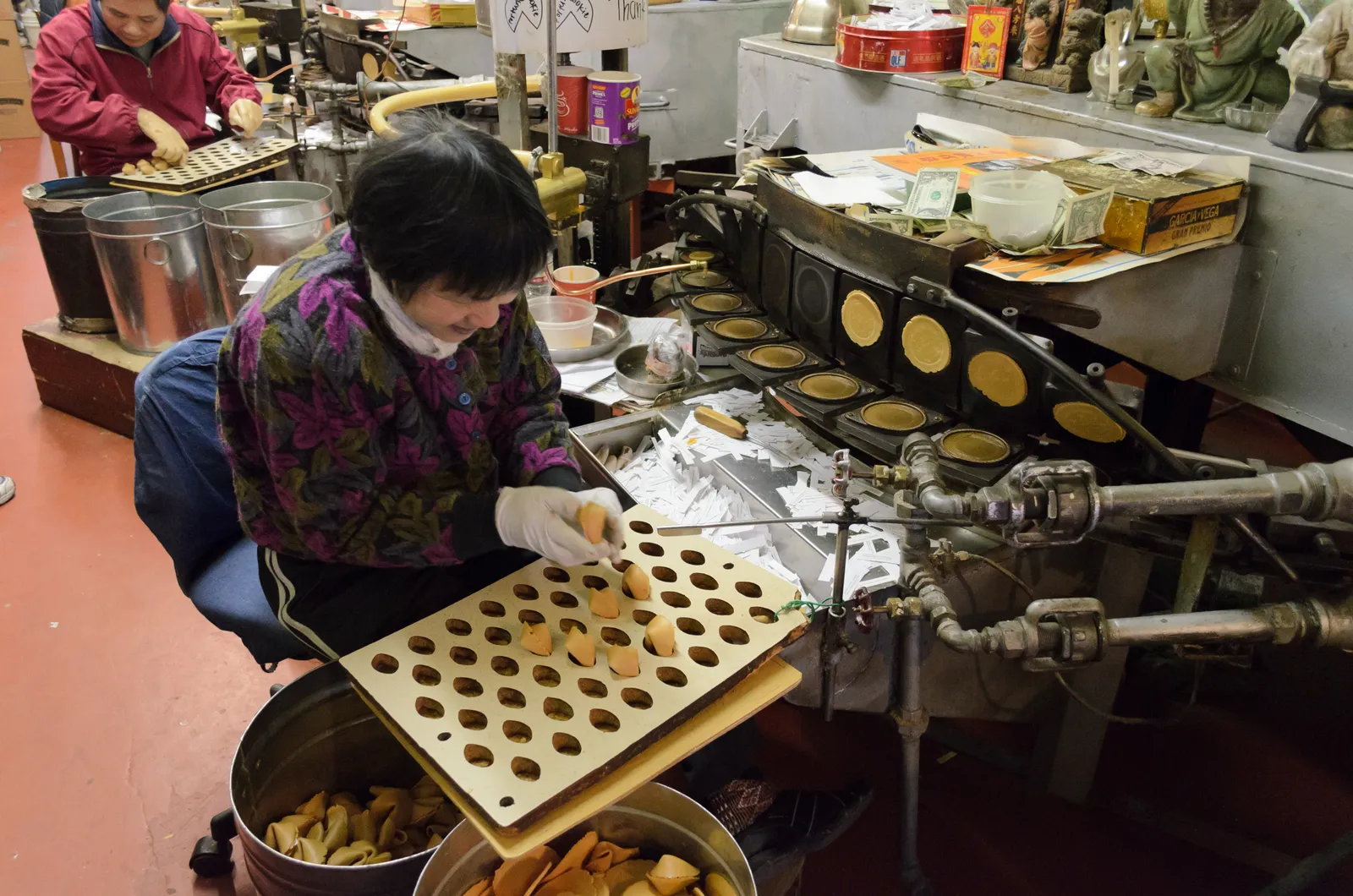
Traditionally, bakers would bake three-inch circles of dough, insert a fortune while still warm, and use chopsticks to fold the cookie into its iconic shape before it hardened. The fortune cookie industry changed dramatically after the fortune cookie machine was invented by Edward Louie in the late 1960s.
By the late 1950s, dozens of bakeries were producing around 250 million cookies each year. In the 1960s, Edward Louie founded Lotus Fortune in San Francisco and developed an automatic machine that sped up production. The innovation helped turn the cookie into a standard feature across restaurants.
There are approximately 3 billion fortune cookies made each year globally, the majority consumed in the US. The largest manufacturer of the cookies is Wonton Food, Inc., headquartered in Brooklyn, New York. They make over 4.5 million fortune cookies per day.
Unknown in China, Iconic in America
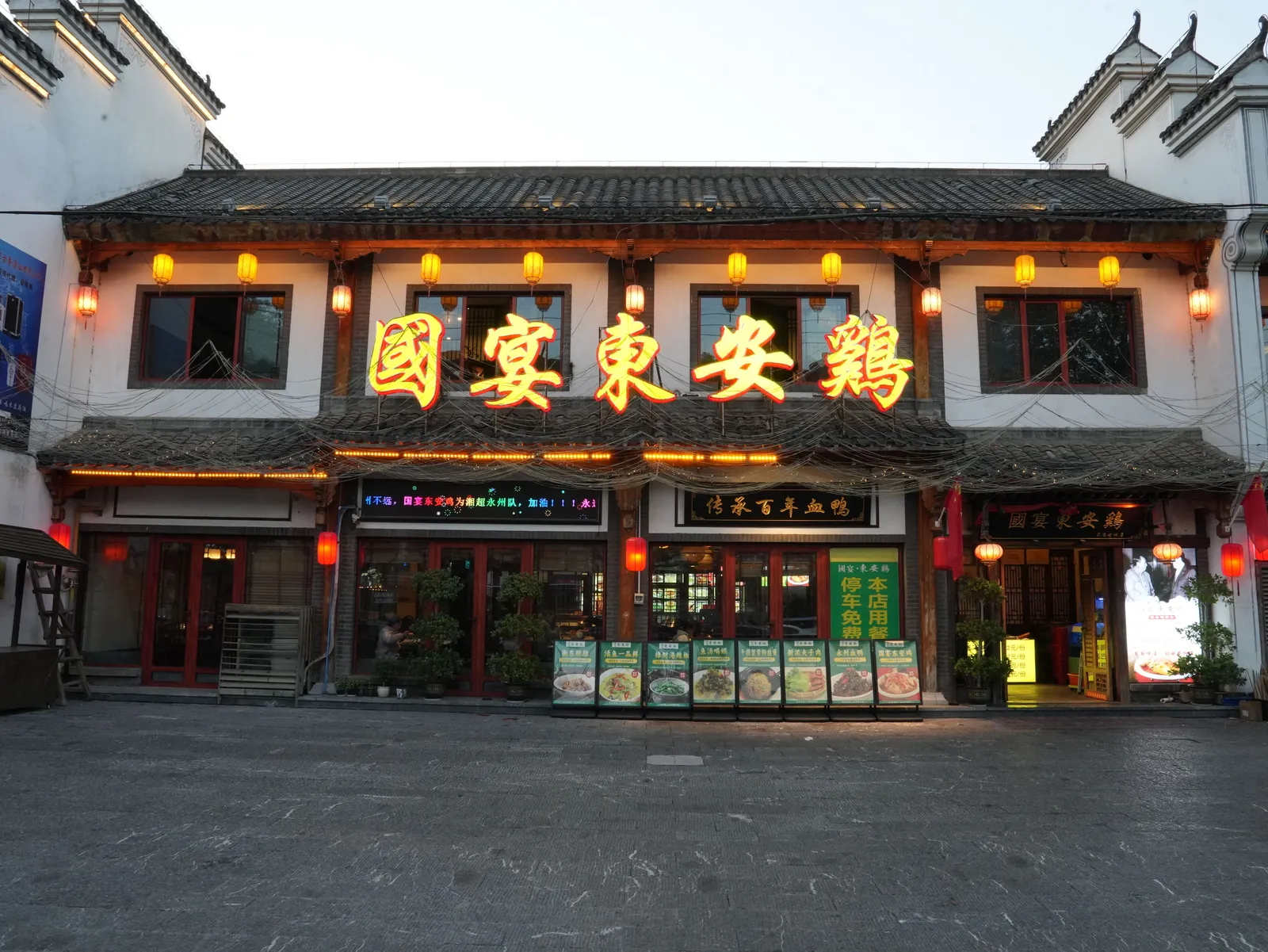
Fortune cookies are often served as a dessert in Chinese restaurants in the United States, Canada, Australia, and other countries, but they are not Chinese in origin. That disconnect between perception and reality is about as wide as food history gets.
Today, approximately three billion fortune cookies are produced annually, the vast majority in the United States. Despite their association with Chinese culture, fortune cookies are virtually unknown in mainland China.
A product that started in Japanese communities became widely produced by Chinese-American businesses. Over time, the origin story faded, and the cookie became seen as part of Chinese cuisine. It’s a reminder of how thoroughly wartime disruption can reshape cultural memory.
The Takeaway
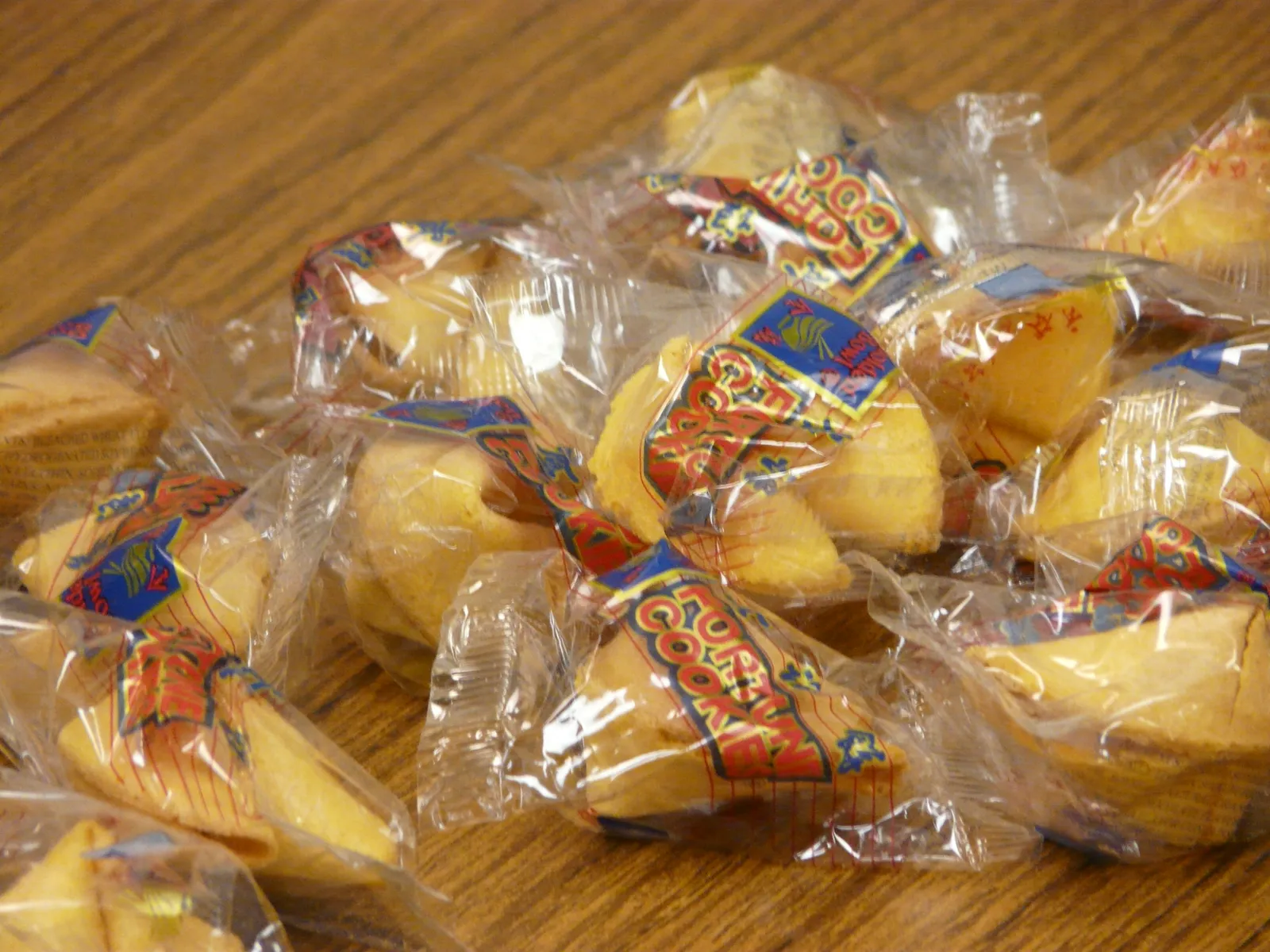
The fortune cookie’s paper slip often carries some vague wisdom about patience or opportunity. There’s a quiet irony in the fact that the cookie itself embodies exactly that. It began in Kyoto bakeries near Shinto shrines, traveled across the Pacific with Japanese immigrants, survived a wartime erasure of its origins, and emerged from Chinese American dining rooms as something entirely new.
None of that journey was planned. It happened through immigration, adaptation, tragedy, and the simple appetite for something sweet after a meal. The fortune cookie’s journey from Japanese tea gardens to Chinese restaurants was not a deliberate act of appropriation but a consequence of wartime displacement.
The real story isn’t about one culture stealing from another. It’s about how food absorbs history, and how the things we take for granted at the dinner table have often traveled further and harder than we imagine.
AI Disclaimer: This article was created with the assistance of AI tools and reviewed by a human editor.