
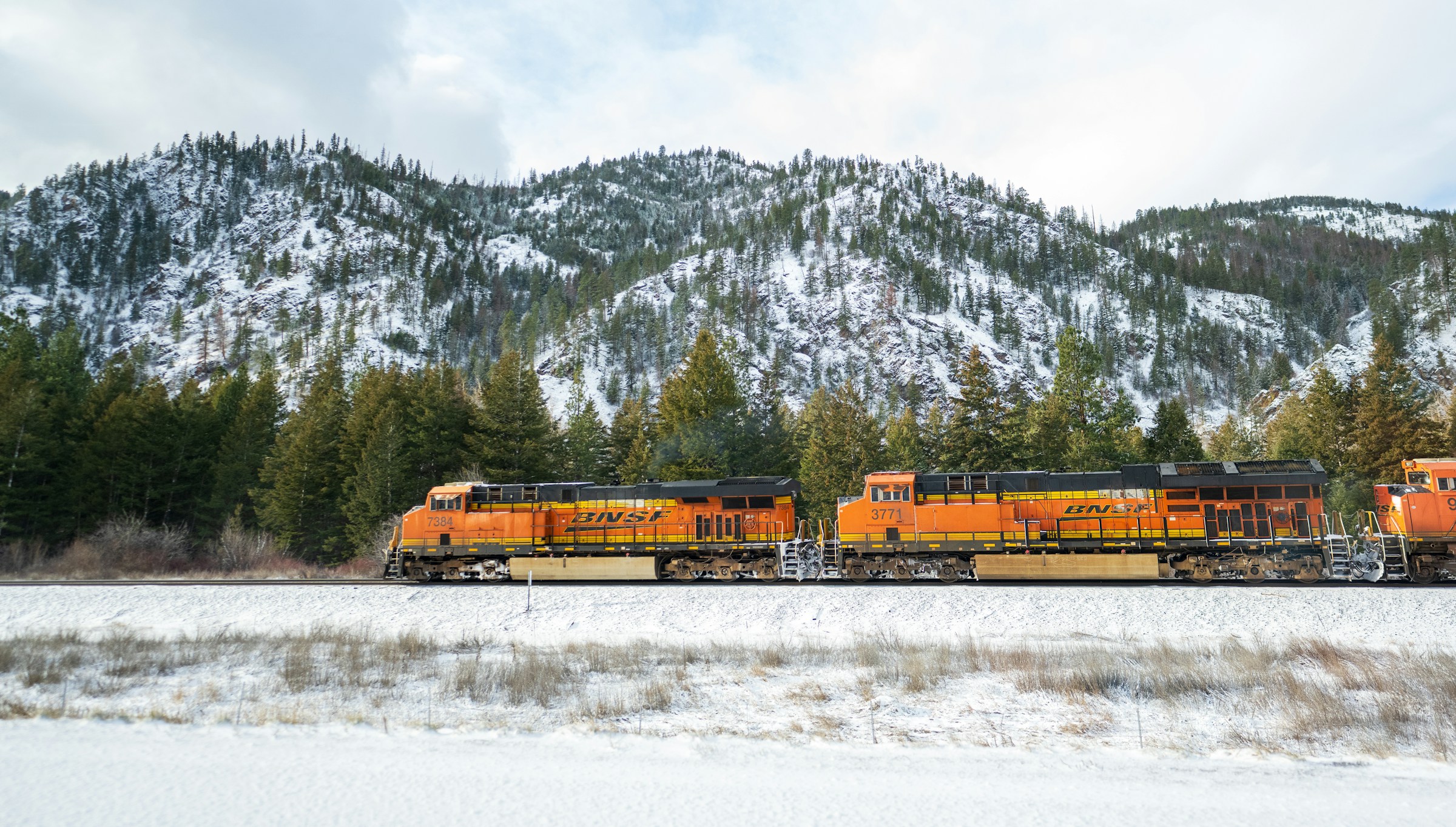

Why Regular Trains Simply Can’t Do This
Conventional trains move because of friction between steel wheels and steel rails. It works remarkably well on flat or gently graded track. Rack railways allow trains to operate on steep gradients of up to 100% (45 degrees) or more, well above the 10% (5.7 degrees) maximum for friction-based rail.
On steep grades, the friction between the wheels and the rails cannot apply sufficient adhesion to the train’s wheels so as to overcome gravity, and the train is in danger of sliding down the track. This is especially true during braking on the descent, which becomes critically difficult long before the climb itself becomes impossible.
Normal trains cannot retain traction on rails at grades steeper than roughly 10%, which is why mountain railways need a cog and rack system to pull trains up and control the speed of the descent. That boundary between manageable and impossible is surprisingly narrow, and cog engineers have spent generations working on the right side of it.
The Rack and Pinion: A Simple Idea That Changed Mountain Travel
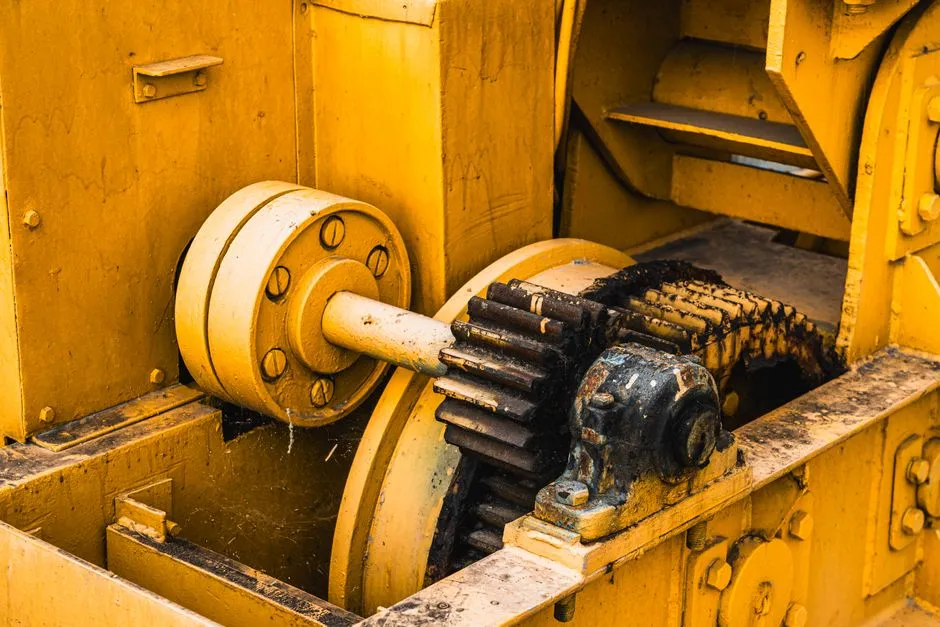
Where a line is too steep to rely on adhesion for climbing, a rack railway may be used, in which a toothed cogwheel engages with a toothed rack rail laid between the tracks. This interlocking relationship is the core of everything. The cog doesn’t slip. It grips.
A toothed cogwheel on the locomotive engages with a toothed rack rail laid between or alongside the conventional rails. This interlocking system provides the necessary traction and stability for the train to climb or descend gradients unattainable by regular trains, which rely solely on the friction between wheels and tracks.
The rack-and-pinion mechanism also provides more controlled braking and reduces the effects of snow or ice on the rails. That last detail is easy to overlook, but it matters enormously on high-altitude lines where conditions shift fast and ice can appear without warning.
The World’s First Mountain Cog Railway: Mount Washington
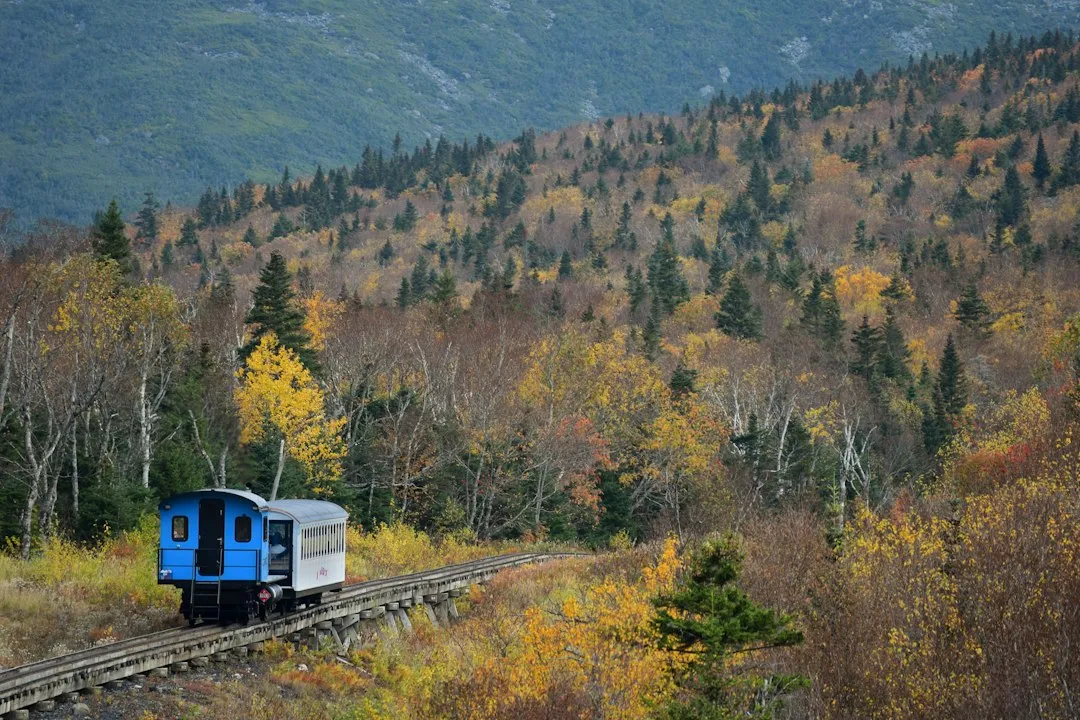
The Mount Washington Cog Railway, also known as the Cog, is the world’s first mountain-climbing rack-and-pinion railway. It opened in New Hampshire in 1869, conceived and built by inventor Sylvester Marsh, and it set the template for every cog railway that followed.
The railway is approximately 3 miles long and ascends Mount Washington’s western slope, beginning at an elevation of approximately 2,700 feet above sea level and ending just short of the mountain’s summit peak of 6,288 feet. That’s a climb of more than 3,500 feet in a very short horizontal distance. Its maximum grade reaches 37%, a remarkable figure for a passenger railway of any era.
The train ascends the mountain at 2.8 miles per hour and descends at 4.6 mph. Steam locomotives take approximately 65 minutes to ascend and 40 minutes to descend, while the biodiesel engines can complete the climb in as little as 36 minutes. Slow, deliberate, and utterly reliable.
The Steepest Cog Railway in the World: Pilatus, Switzerland
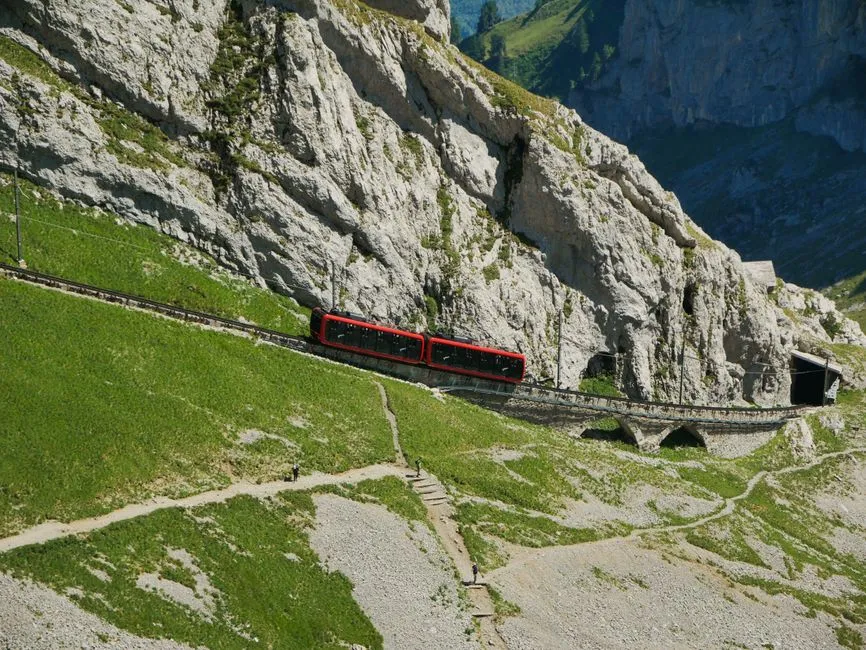
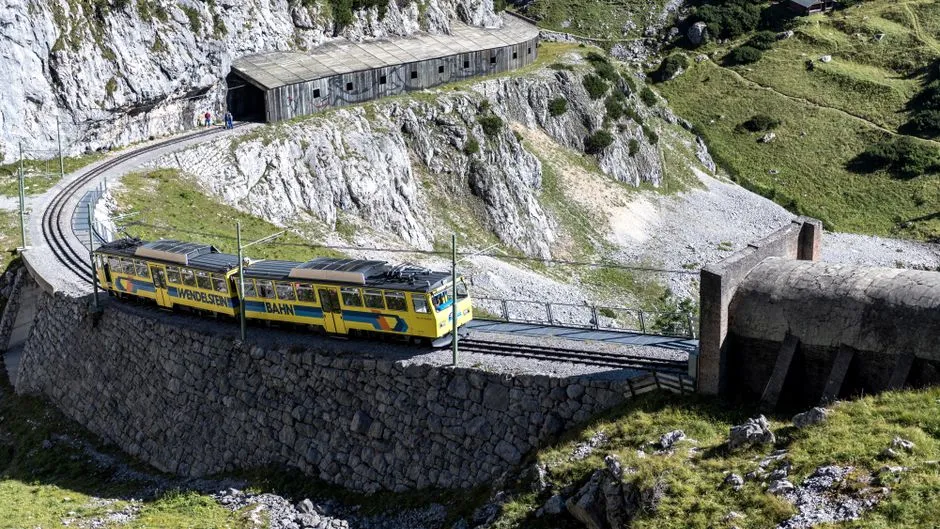
The Pilatus Railway in Switzerland is the steepest rack railway in the world, with a maximum gradient of 48% and an average gradient of 35%. Those numbers are almost hard to visualize. At 48%, for every 100 meters you travel horizontally, you rise 48 meters vertically.
Eduard Locher, an engineer with great practical experience, proposed an alternative design with a maximum grade of 48%, cutting the required distance in half. Conventional systems at the time could not negotiate such gradients because the cogwheel pressed onto the rack from above may, under higher gradients, jump out of engagement with the rack, eliminating the train’s driving and braking power.
Instead, Locher placed a horizontal double rack between the two rails, with the rack teeth facing each side. Thanks to this pioneering rack and pinion system, the cogwheel railway has managed a record gradient of 48% since 1889, a feat that remains unrivalled worldwide to this day.
Pikes Peak: The Highest Cog Railway in the World
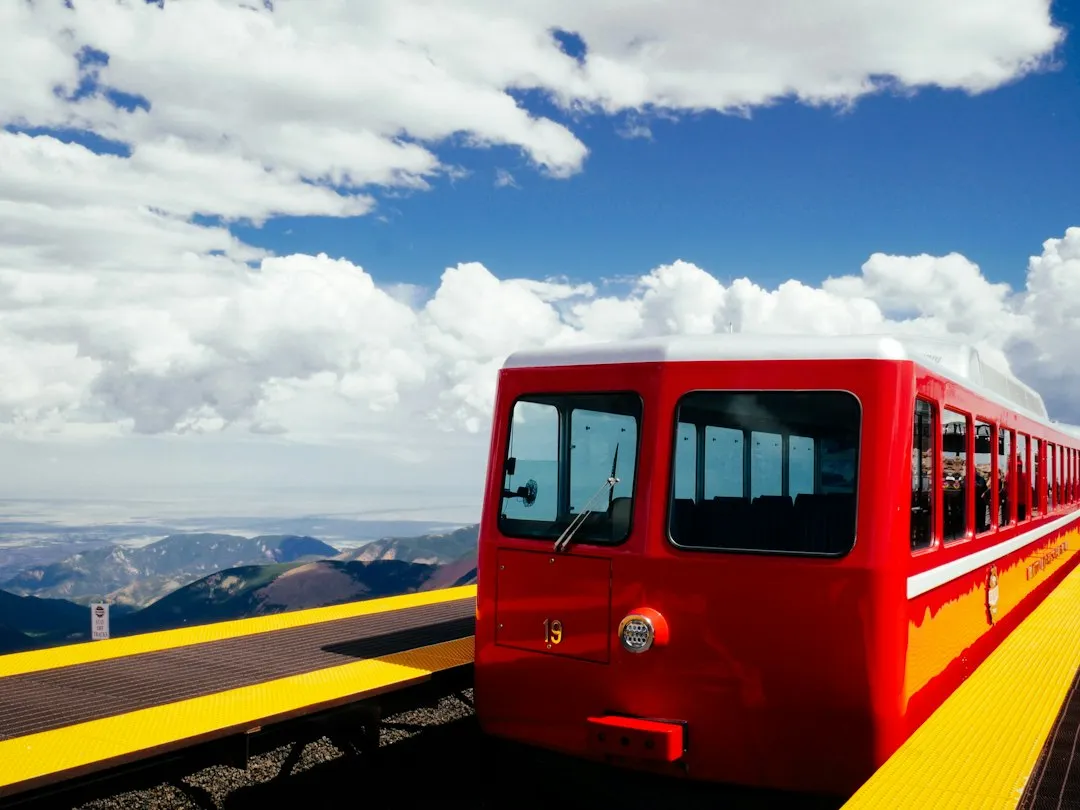
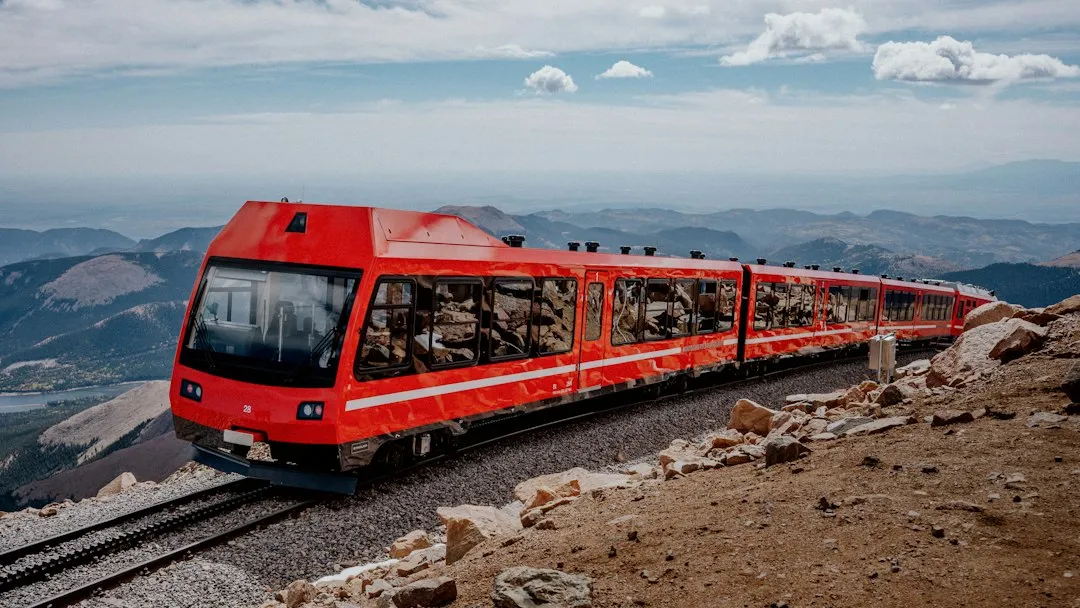
This rack-and-pinion train climbs 7,600 feet in just 9 miles, taking passengers from Manitou Springs to one of Colorado’s most famous summits the same way it has since the 1890s. Pikes Peak holds a different record than the Pilatus. It isn’t the steepest, but it climbs to the highest elevation of any cog railway on Earth.
The average grade is 16.23 percent and the steepest section reaches 25 percent. The road is standard gauge and utilizes the Abt system of rack and pinion, invented by Dr. Roman Abt of Lucerne, Switzerland. The Abt system, with its staggered teeth on parallel rack rails, was a significant step forward in smoothness and reliability for mountain railways.
Switzerland provided the new train cars during a $100 million update finished in 2021. Stadler was awarded a contract to supply three Hm4/4 locomotives powered by Cummins Tier 4-compliant diesel engines, along with nine aluminium-bodied coaches. The locomotives have four cog wheels for traction and braking, and the coaches have one cog wheel per bogie for braking.
Triple-Redundant Braking: The Safety Logic Behind the Descent
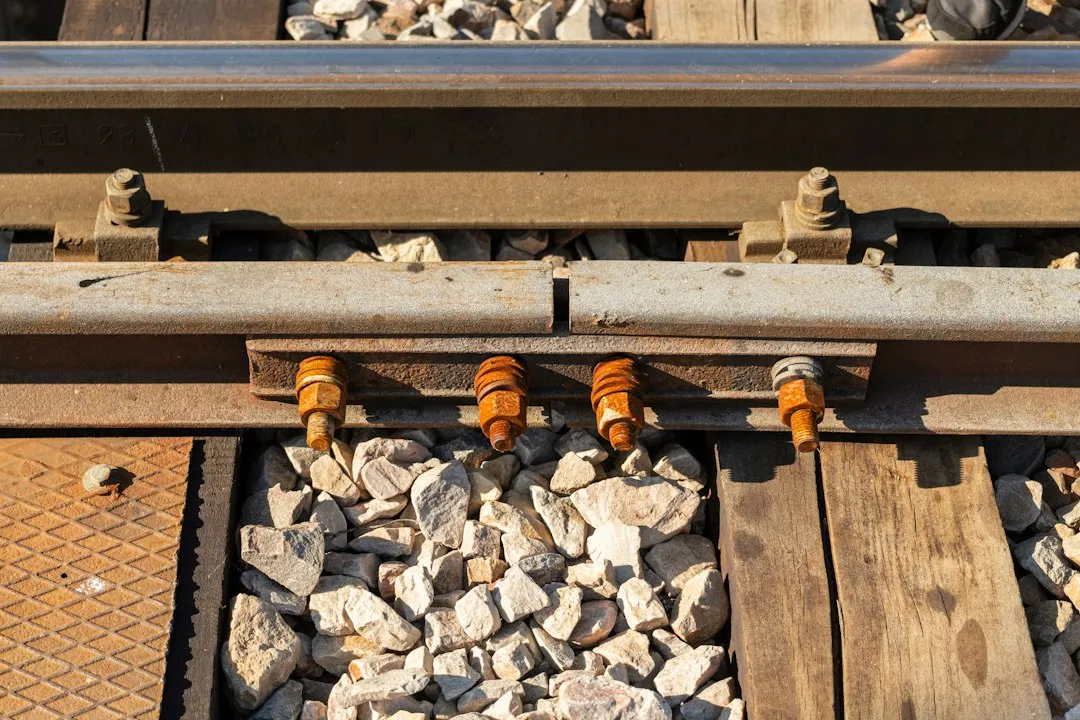
Getting up is only half the engineering challenge. Coming down is where the real safety work happens, and cog railway engineers have responded with layered braking systems that leave very little to chance.
The Pikes Peak Cog Railway climbs a 25% grade kept safe by three brake systems. The first layer uses a hydraulic retarder that converts speed into heat. The second layer uses iron shoes that grip the center cog rail. The third layer uses compressed-air brakes that squeeze the wheels, and if air pressure is lost, they engage automatically.
Any one layer can hold the whole 38-ton train by itself. Crews run a strict brake test every morning, and a one-foot miss cancels the trip. That level of operational discipline is as much a part of the safety story as any piece of hardware.
The Roman Abt System: Engineering That Spread Across the Globe
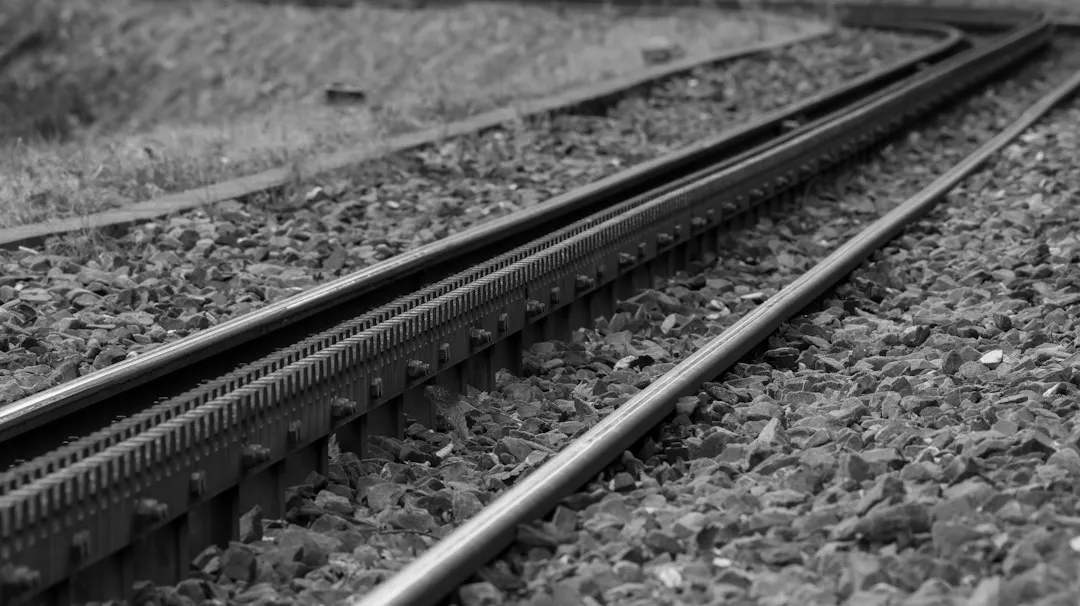
In 1882, Roman Abt took out a patent on his new invention, a rack and cog system which uses two or three rack rails arranged parallel with the teeth staggered. The system was soon applied to numerous new mountain railways, not only in Switzerland but throughout the world. By 1923, a total of 300 miles of such lines had been built.
The staggered-tooth design solved a practical problem: by offsetting the teeth on parallel racks, the train never has a moment where all rack teeth disengage simultaneously. This gives a far smoother ride and more consistent power transfer on the climb. It was a modest refinement with significant consequences for the passenger experience.
The Pikes Peak line runs on a special rack system first developed in Switzerland in the 1800s. It has cogwheels that fit into a toothed rack between the rails, which lets it climb steep slopes of up to 25% without slipping. The Abt system remains one of the most widely used rack designs in the world today.
Snowdon Mountain Railway: Over a Century of Mountain Engineering
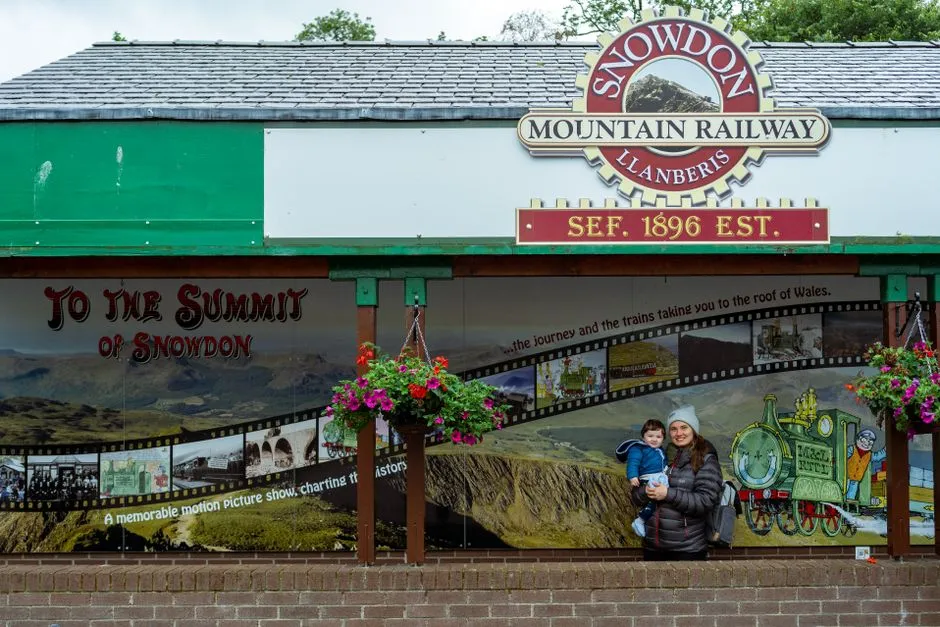
In Wales, the Snowdon Mountain Railway has been carrying passengers to the summit of the highest peak in England and Wales since 1896. The engineering challenges on Snowdon are shaped as much by weather as by gradient, with severe wind, ice, and mist making the operational environment genuinely demanding year-round.
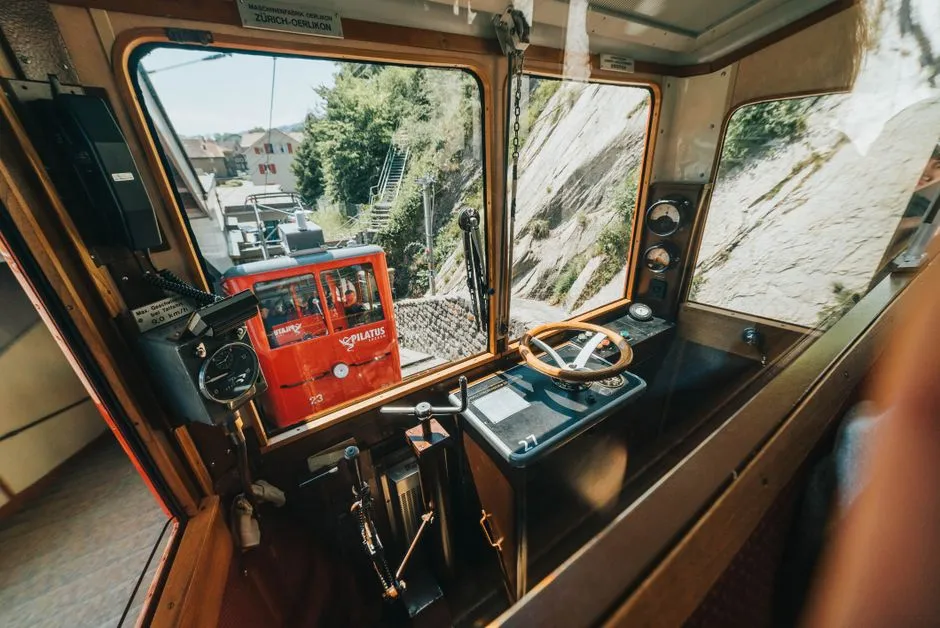
The guard sits at the front of the carriage with a control panel monitoring speed, brake pressure, wipers, and train lights, along with an emergency stop button. The carriages are not connected to the locomotive in either direction but are fitted with a handbrake and an independent braking system with an automatic overspeed feature.
This overspeed system activates at 7.6 mph when two weights spinning outwards, driven by centrifugal forces past a predetermined limit, automatically apply the brakes via a fixed linkage. The railway sees around 140,000 annual passengers and operates with rigorous safety procedures given the extreme terrain. As of 2024, the Snowdon Mountain Railway operates as a hybrid system, blending historic character with modern efficiency.
Cog Railways Beyond the Alps: Urban and Industrial Uses
There’s a common assumption that cog railways belong exclusively to dramatic mountain scenery. The reality is more interesting. Most rack railways are mountain railways, although a few are transit railways or tramways built to overcome a steep gradient in an urban environment.
Cogwheel railways are by no means restricted to alpine areas. They are also used on urban slopes, as with the Dolderbahn in Zurich, for example. City engineers have recognized that where a hill is too steep for a standard tram or bus route, a rack system can fill the gap without the expense and disruption of tunneling.
The underlying principle scales well. Whether the challenge is a 3,000-meter alpine summit or a steep residential hillside, the rack-and-pinion logic remains the same: lock the wheel into the track, and gravity loses its leverage. That versatility is part of why the technology has survived well into the 21st century.
The Locher System: Solving the Problem of Teeth Jumping Off the Rail
On very extreme gradients, standard upward-facing rack rails create a new problem. The extraordinary steepness of the Pilatus line was accompanied by the risk that cogwheel railway systems known at the time would cause the railcar teeth to rise off the rack under the combined forces of traction and gravity, potentially losing all drive and braking capability.
Locher’s answer was to orient the rack horizontally rather than vertically, with teeth on both sides rather than one. The cog wheels on the locomotive grip the rack from left and right, meaning the train is effectively locked to the track laterally. It cannot rise off the rack regardless of the gradient, which is how a 48% grade became safely operable.
With a gradient of 48%, the Pilatus Railway has been mastering one of the boldest railway lines in the world for over 100 years. To overcome the challenge, the builders developed their own cogwheel system, a technical masterpiece that made history. It remains the only railway in the world using this specific horizontal rack configuration.
The Road Ahead: Cog Railways in the Modern Era
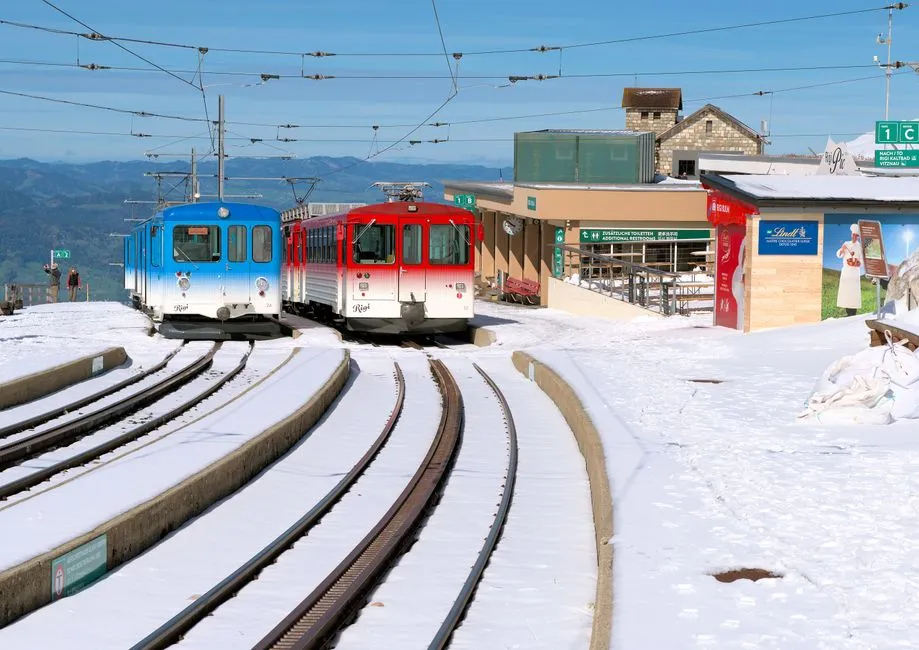
Cog railways are not relics. Across Switzerland, Japan, North America, and Wales, they are actively maintained, upgraded, and in some cases expanded. The Pikes Peak line’s $100 million overhaul, completed in 2021, is the most prominent recent example of the industry investing seriously in its future. New locomotives, new safety computers, and new track materials all reflect genuine confidence in the technology.
The new Pikes Peak trains have eight computers on board, with some dedicated to monitoring every aspect of the locomotive. If the train exceeds the 8.5-mile-per-hour descent speed, the system will stop the train automatically. The rail was upgraded to 60 pounds per yard from 45, and the cog rail in the center of the track, which bears the entire force of the train’s climb, was upgraded to a more long-lasting design.
Ongoing engineering work at Snowdon focuses on extending the lifespan of the viaduct, now over 120 years old, and integrating renewable energy sources to power the lower stations. Sustainability is becoming part of the conversation, which feels appropriate for railways that have always asked questions about how far smart engineering can reach.
The Quiet Genius of Teeth on a Track
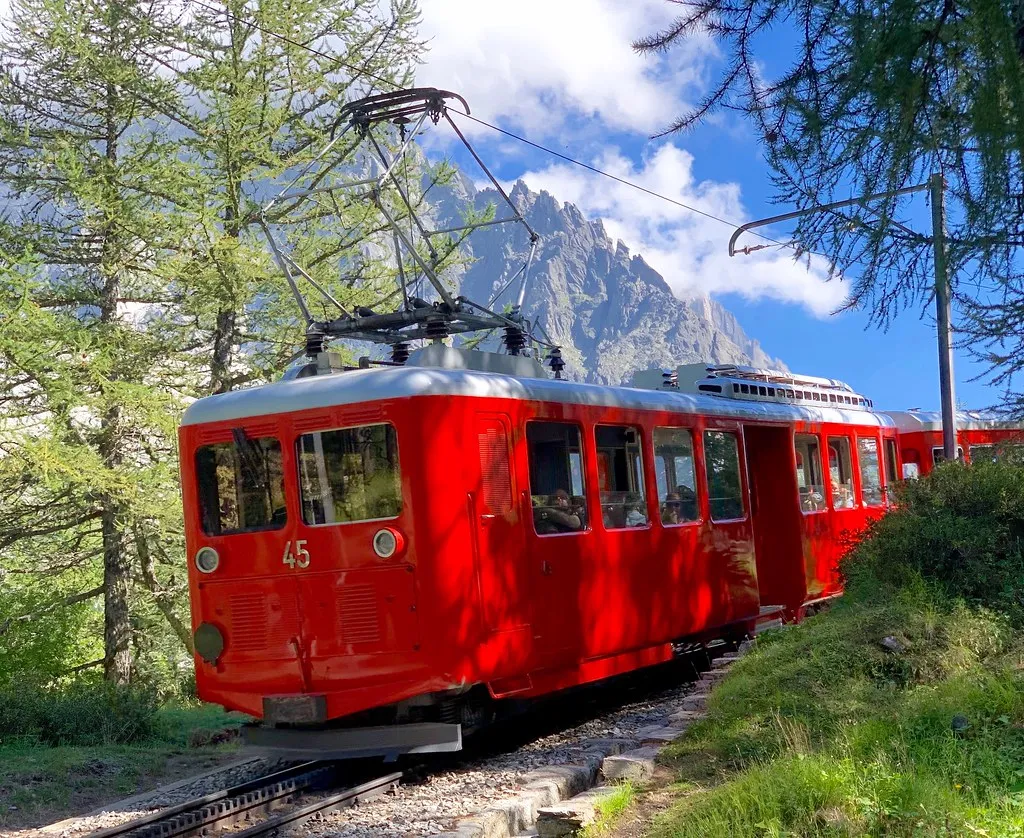
The elegance of a cog railway is that the solution it offers is permanent. The gradient doesn’t change. The mountain doesn’t move. The cog wheel keeps turning. There’s no workaround being exploited, no temporary fix. The rack is laid down, the pinion meshes with it, and the physics of slipping is simply removed from the equation.
Engineers who work on these lines speak of them with something close to affection, and it’s easy to understand why. A cog railway is one of the purest examples in transport of a problem that has been genuinely solved rather than managed. The teeth lock in, the brakes are layered and tested every morning, and the train climbs the mountain that regular trains could never touch.
That moment of quiet astonishment, when the locomotive begins ascending a slope that seems to laugh at the idea of rail travel, is not an illusion. It’s the result of over 150 years of careful, incremental engineering. Teeth on a rail, holding firm against gravity. Simple in concept. Remarkable in practice.
AI Disclaimer: This article was created with the assistance of AI tools and reviewed by a human editor.