
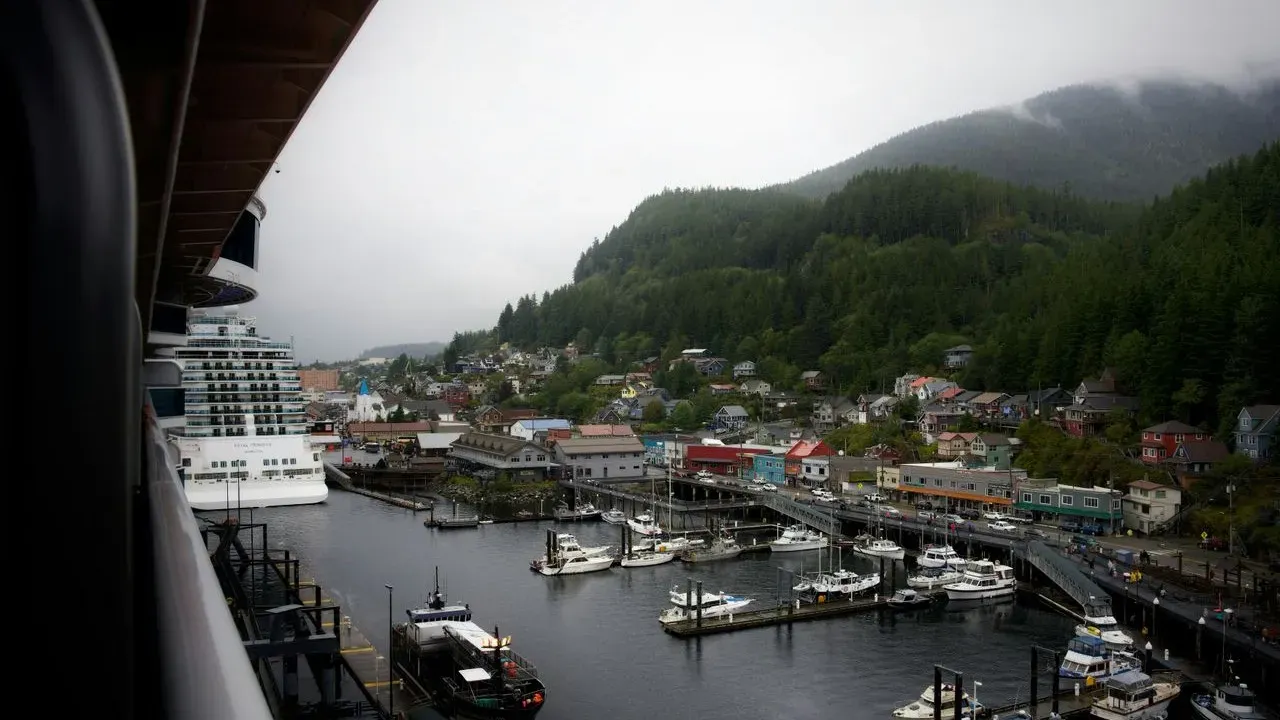

Ketchikan sits at the southern edge of Alaska on Revillagigedo Island, where the Tongass Narrows meet the waters of the Inside Passage. Founded in 1900, the city carries forward a deep Tlingit presence alongside its fishing heritage and the dense coastal rainforest that surrounds it. Visitors arriving by cruise ship step into a place shaped by rain, salmon migrations, and centuries of Indigenous artistry.
A Waterfront Arrival Shaped by Rain and Tide
Cruise ships tie up at berths close to downtown, placing passengers within easy reach of the harbor and its wooden boardwalks. The city receives rain on roughly 232 days each year, a steady presence that keeps the surrounding Tongass National Forest lush and vibrant. This climate supports the salmon runs that draw both wildlife and observers to the creeks each fall. The historic Creek Street district runs alongside Ketchikan Creek on pilings above the water. Once home to a red-light district, the area now features shops and viewpoints where visitors can watch salmon moving upstream. The steady rhythm of the tides and the sound of the creek create a quiet backdrop for wandering.
Totem Poles as Living Expressions of Tlingit, Haida, and Tsimshian Traditions
Ketchikan holds one of the largest collections of totem poles in the world, displayed across several sites that honor the artistic traditions of the region’s Indigenous communities. Totem Bight State Park and the Totem Heritage Center preserve and interpret these carved works, which continue to hold cultural significance for Tlingit, Haida, and Tsimshian people. The poles stand as records of family histories, stories, and values rather than simple decorations. Visitors who approach the sites with curiosity and respect gain a clearer sense of how these traditions remain active in contemporary life. Guided experiences at the parks help frame the carvings within their proper cultural context.
Local Flavors and the Rhythm of Creek Street
Seafood defines much of the dining scene near the waterfront, with salmon prepared in chowders, grilled preparations, and other straightforward dishes that highlight the day’s catch. Establishments such as the Alaska Fish House and nearby spots along Salmon Landing offer indoor and outdoor seating with views of the harbor. Creek Street itself functions as both a commercial corridor and a natural vantage point. Boardwalks lead past shops selling local crafts and artwork, while the creek below provides seasonal glimpses of spawning salmon and occasional harbor seals. A short walk from most berths, the street rewards unhurried exploration on foot.
Extending the Journey into Misty Fjords and the Tongass
Short excursions from Ketchikan reach Misty Fjords National Monument, where boat and flightseeing tours reveal the scale of the surrounding national forest. These outings showcase the same rainforest ecosystem that blankets the city, along with opportunities to observe eagles and other wildlife in their habitat. Trails near the docks, including those leading toward Perseverance Lake, offer additional ways to experience the landscape on foot. Whether travelers remain in town or venture outward, the emphasis stays on moving through the place with attention to its natural and cultural layers. Ketchikan rewards visitors who arrive ready to listen to the rain, follow the salmon, and regard the totem poles as ongoing expressions of the communities that created them. The southernmost city in Alaska invites a measured pace that respects both the environment and the people who call it home.
AI Disclaimer: This article was created with the assistance of AI tools and reviewed by a human editor.