

Just How Big Is It, Exactly?
Spanning roughly 306 feet, or about 93 meters, Landscape Arch in Devils Garden is the longest arch in North America. That figure is frequently cited by the National Park Service, though measurements do vary slightly depending on method and source. In 2004, the Natural Arch and Bridge Society measured the span more precisely at 290.1 feet, with a margin of about 0.8 feet, and a height of 77.5 feet.
The arch’s opening is six feet longer than a standard football field, and a nine-story building would easily fit beneath its thin span. The thinnest part of the arch, at its narrowest cross-section, measures only about 18 feet wide. For a span this long, that proportion is extraordinary.
Where It Sits Within the Park
Landscape Arch is found among many formations in the Devils Garden area, located in the northern reaches of Arches National Park. The park itself sits just five miles north of Moab, in eastern Utah, and covers about 76,679 acres of high desert terrain.
The park is home to over 2,000 arches, which must have at least one side with an opening three feet wide to qualify, making it the area with the highest concentration of arches in the world. Within that remarkable collection, Landscape Arch is the longest of them all.
How the Arch Was Formed
The arches of the park formed through a combination of geological processes: an underlying salt bed deposited around 300 million years ago shifted and buckled overlying sandstone layers into fins, which were then gradually eroded by water, ice, and wind into the spectacular formations visible today.
The park’s arches are made from eroded Entrada Sandstone, which was formed in the late Jurassic Period, roughly 165 to 144 million years ago. Landscape Arch began as a wall arch, essentially an arch still attached to a rock fin on one side, before erosion freed it into the freestanding span it is now. The iron oxide in the sandstone gives it that signature warm red and orange color.
Who Named It and When
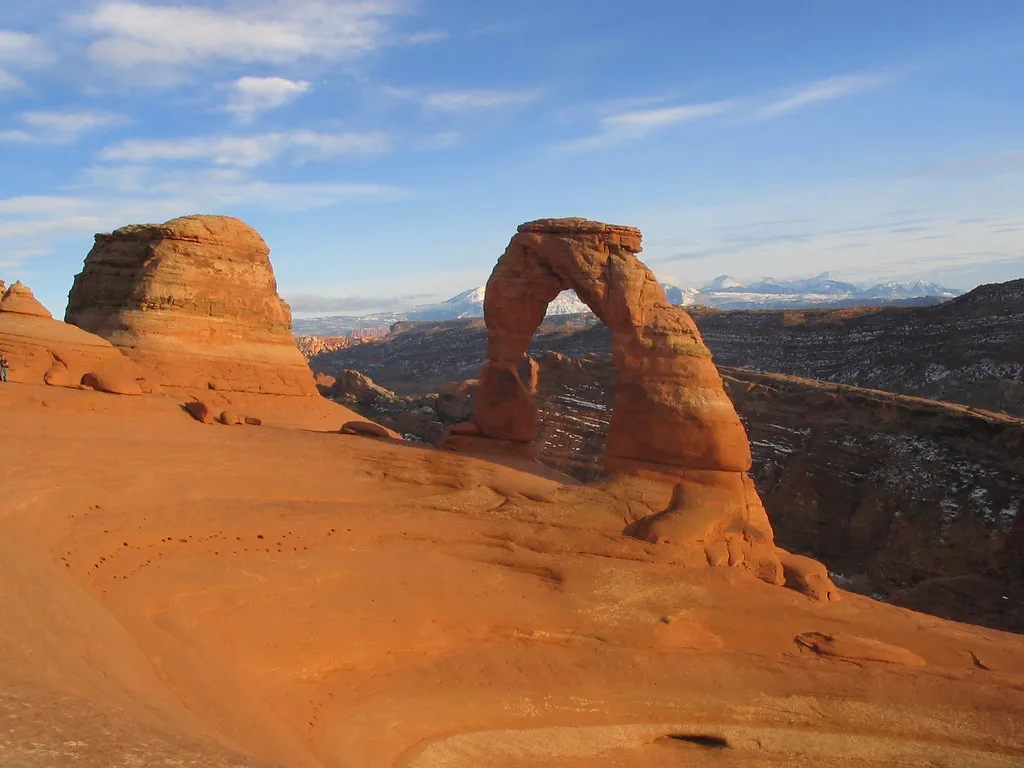
Landscape Arch was named by Frank Beckwith, who explored the area in the winter of 1933 to 1934 as the leader of an Arches National Monument scientific expedition. Beckwith was responsible for naming several of the park’s most prominent features during that winter survey.
In addition to Landscape Arch, Beckwith named some of the park’s most recognized landmarks, including Delicate Arch and Tower Arch. Before that expedition, many of these formations existed without formal names, known mainly to local ranchers and a handful of explorers who had passed through the area.
The 1991 Rockfall That Changed Everything
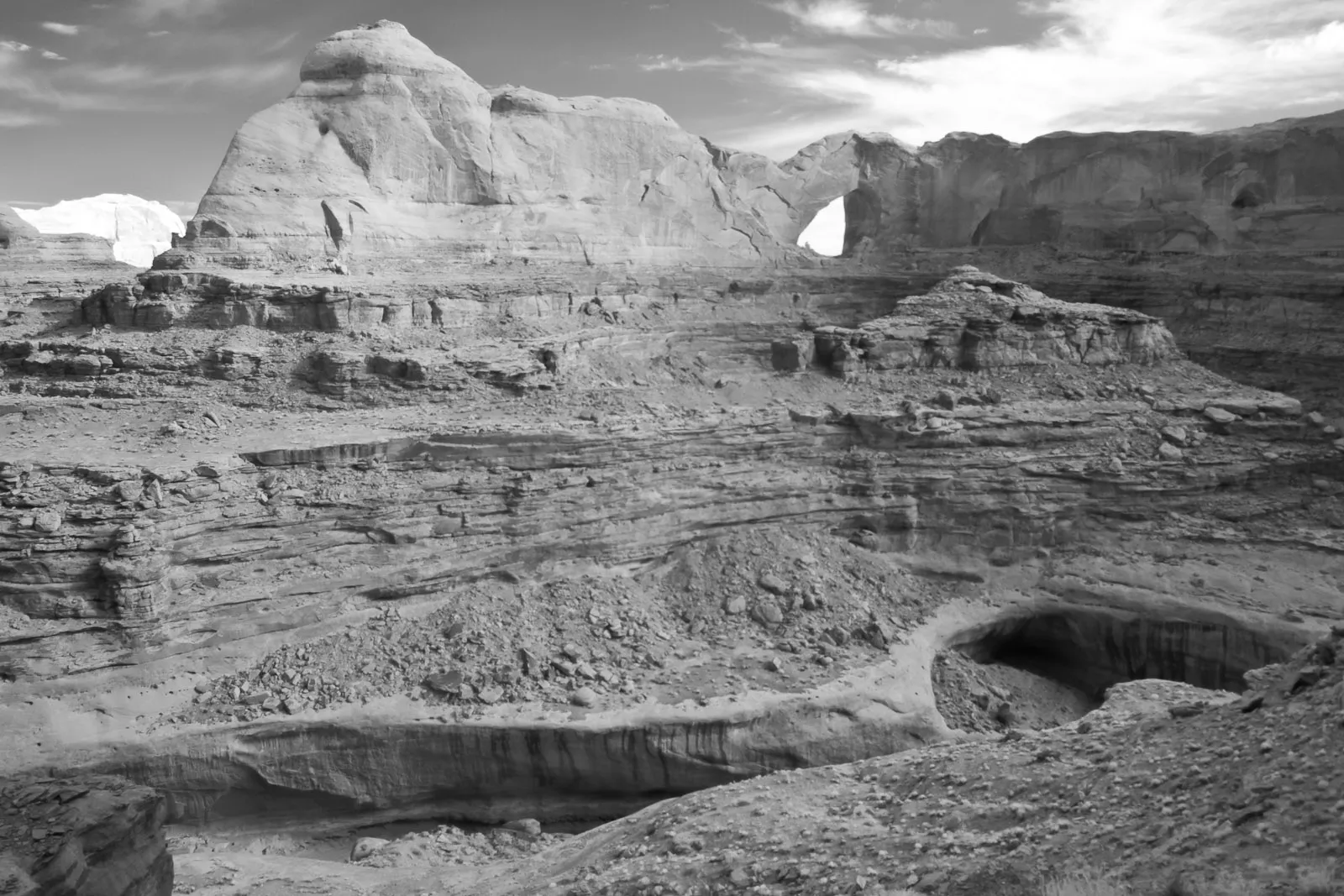
At about 2:45 in the afternoon on September 1, 1991, a group of visitors stood beneath Landscape Arch in Devils Garden and watched a slab of sandstone break away from its underside and fall. Between those witnesses and at least one visitor with a camera, they caught one of the only documented natural arch collapses ever witnessed in real time by the public.
The rock slab that fell was 60 feet long, 11 feet wide, and four feet thick, leaving behind an even thinner ribbon of rock. Two additional large rockfalls occurred in 1995, and since those events, the trail beneath the arch has been closed.
A Span That Keeps Getting Thinner
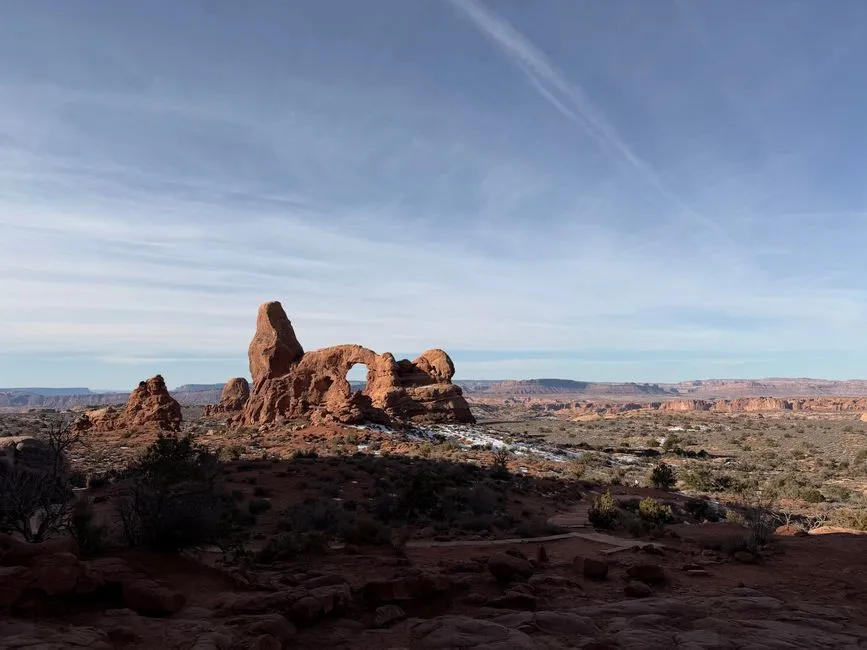
Stretching about 306 feet across, Landscape Arch’s delicate frame includes certain sections measuring only about 6 feet in diameter, making it a remarkable geological feature. That dimension refers to the thinnest visible profile of the arch when viewed from certain angles, though the structural width at the narrowest point is approximately 18 feet.
That geometry is exactly why the 1991 collapse was not a surprise to park geologists, even if the timing was: a span this long, held up by rock this thin, was always going to keep shedding pieces of itself. The arch’s long-term fate, like all arches eventually, is collapse. The only question is when.
Where It Ranks Globally
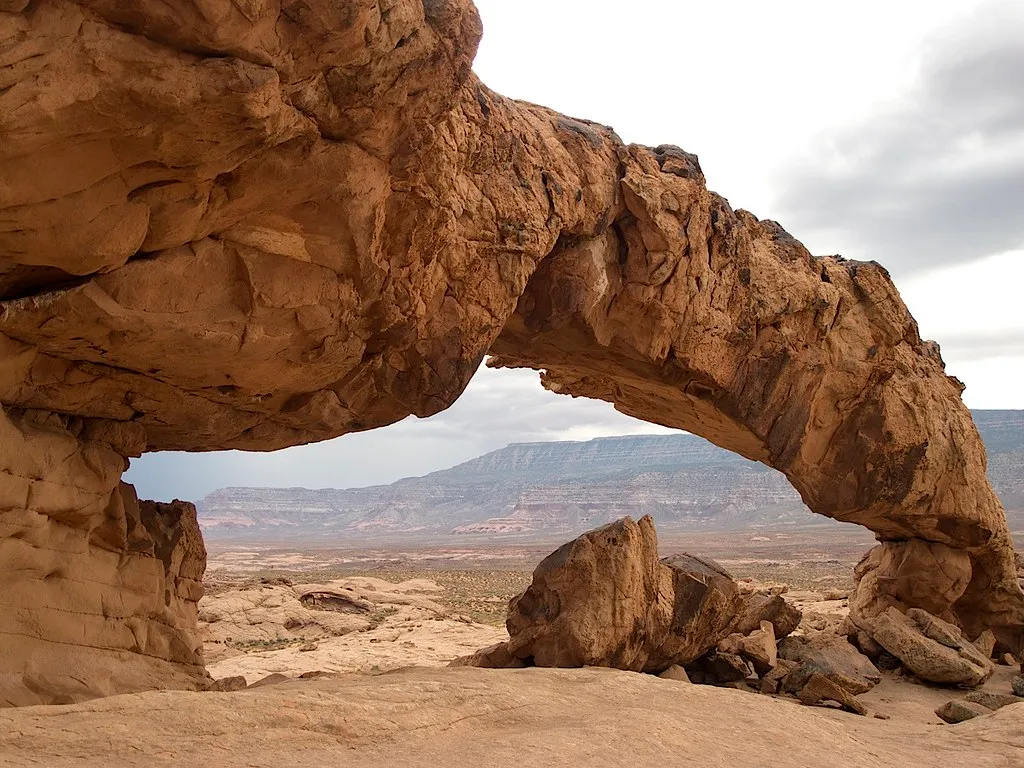
The Natural Arch and Bridge Society considers Landscape Arch the fifth longest natural arch in the world, after four arches located in China. That ranking reflects more rigorous laser-based measurement methods that have been applied to major arches around the world over the past two decades.
More accurate methods of measuring arches have been devised in recent years, including laser surveys, but the work can be difficult and even dangerous, and because it is often hard to determine exactly where an arch begins and ends, rankings have shifted over time. Landscape Arch held the title of longest known arch in the world for many years before Chinese arches were formally measured and catalogued.
Its Closest Rival in Utah
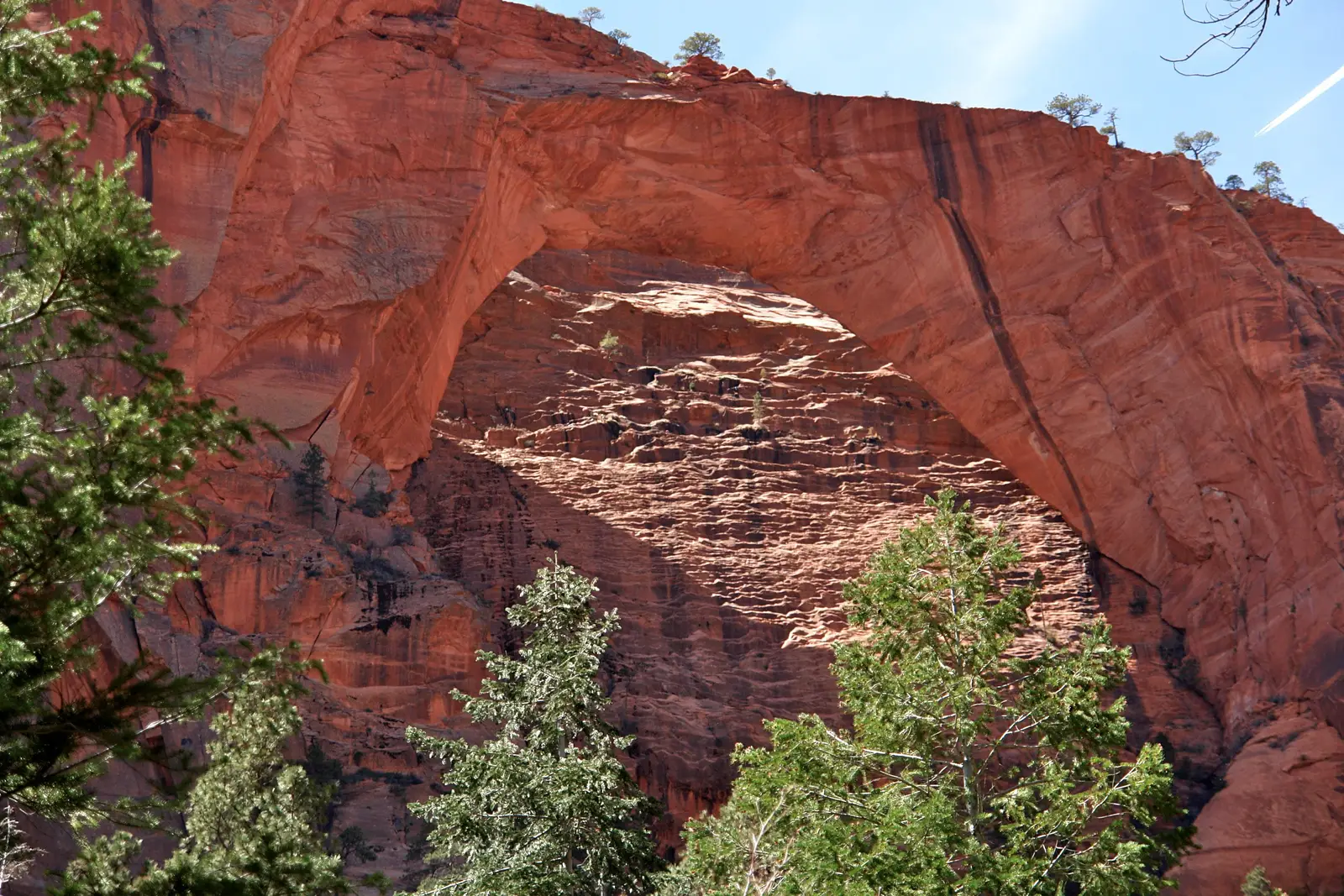
Kolob Arch, located in Zion National Park in Utah, spans 287.4 feet and is considered the sixth-longest natural arch in the world, which puts it just slightly shorter than Landscape Arch. The difference between the two is close enough that the comparison has been debated for decades.
Kolob Arch was long thought to be the longest arch in the world, with an opening of around 300 feet, before more precise measurements placed it second to Landscape Arch in the United States. Only dedicated hikers ever see Kolob Arch, as it requires a strenuous 14-mile hike. Reaching Landscape Arch, by contrast, is far more accessible.
How to Reach Landscape Arch
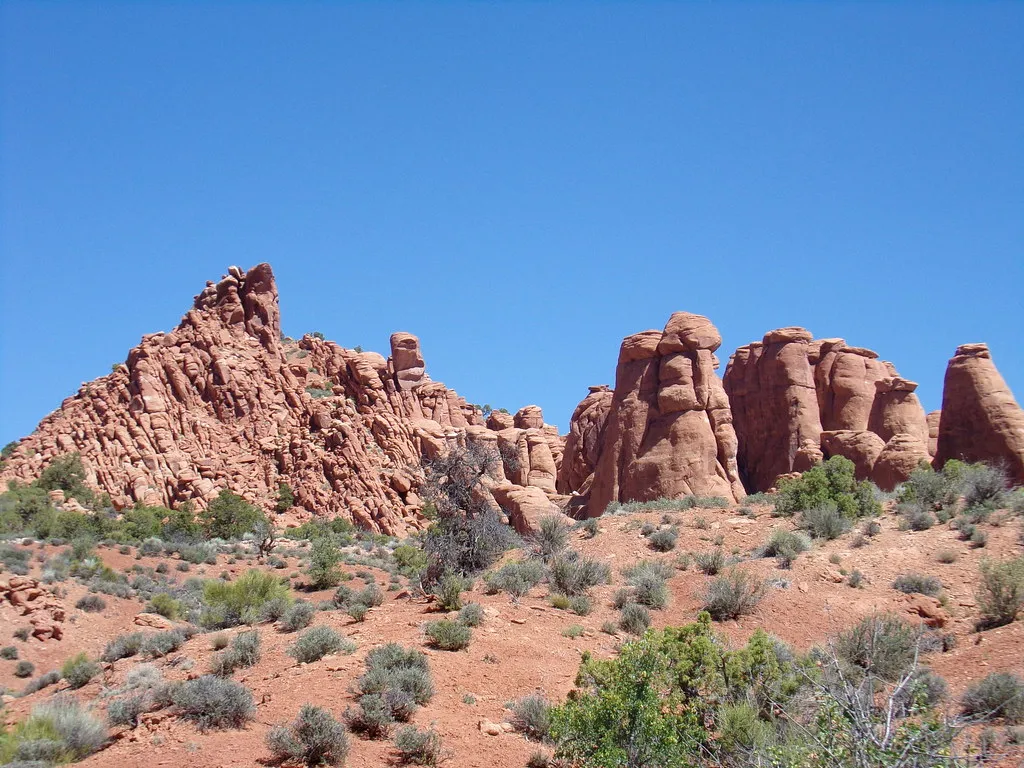
The arch can be reached by a 0.8-mile graded gravel trail from the Devils Garden trailhead. The path is considered easy terrain and is suitable for most visitors, including families with children. The round trip from the trailhead to Landscape Arch is 1.6 miles.
The Landscape Arch Trail follows a relatively gentle path through the sandstone fins and unusual rock formations of Devils Garden. Short side trails lead to Tunnel Arch and Pine Tree Arch before the main route reaches Landscape Arch. The trail closes beneath the arch itself, so viewing is done from a designated area a short distance away.
What Wall Arch’s Collapse Tells Us
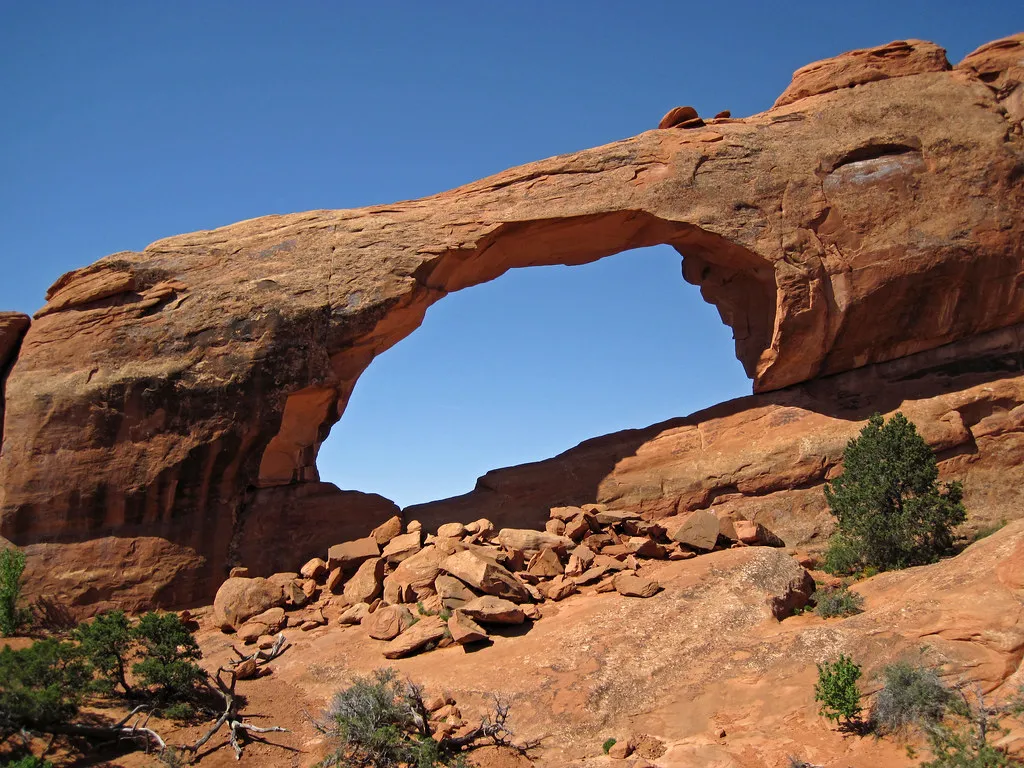
Wall Arch collapsed sometime between the night of August 4 and the morning of August 5, 2008, temporarily blocking the Devils Garden Trail, with no one observing the fall. It was the first collapse of a major arch in the park since sections of Landscape Arch fell in 1991.
Officials from the National Park Service and the Utah Geological Survey visited the site and noted stress fractures in the remaining formation, which may cause further collapses in the future. Wall Arch’s disappearance serves as a quiet reminder that Landscape Arch, for all its grandeur, is a temporary feature. The desert gives, and the desert takes back.
A Quiet Reflection on Permanence
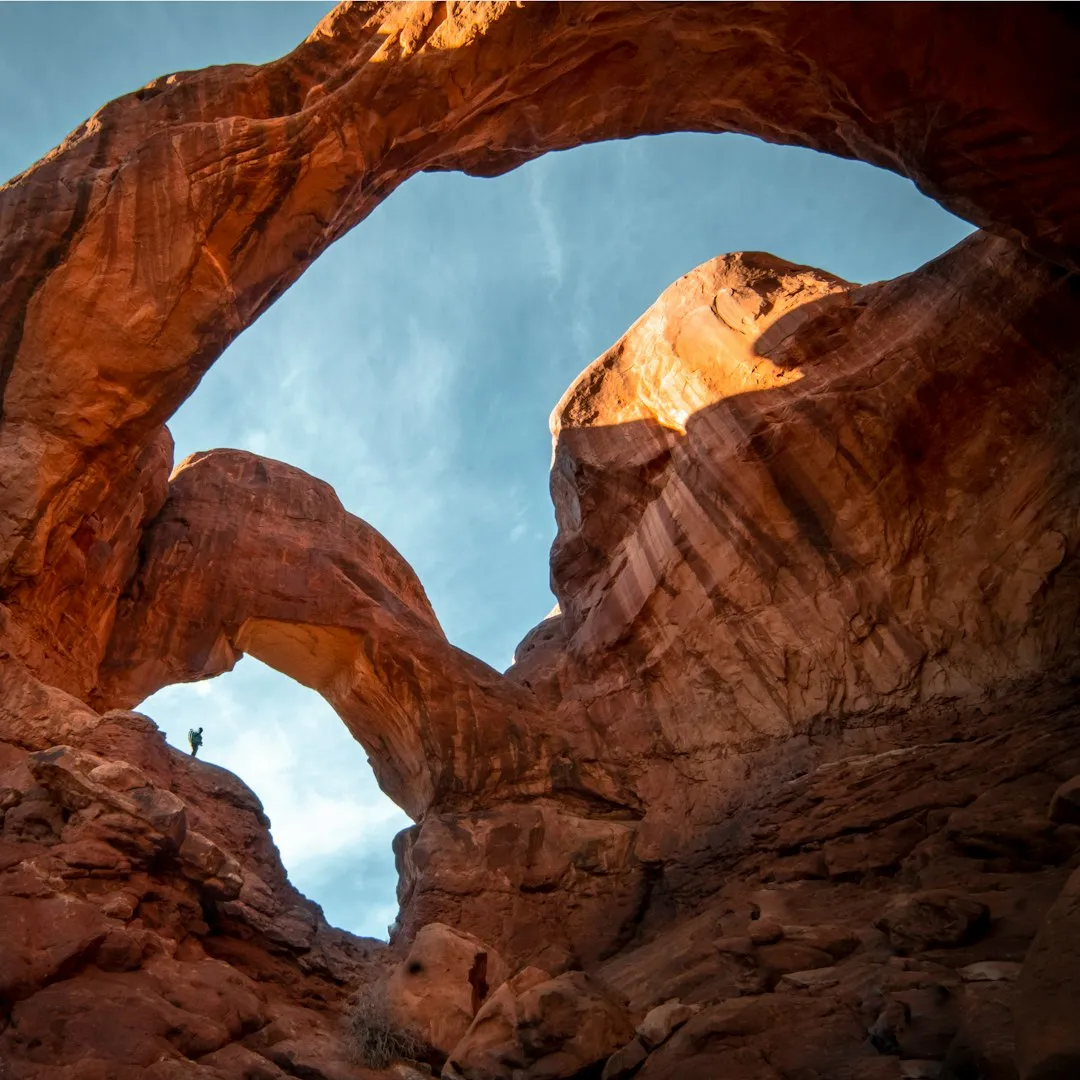
Landscape Arch is not the tallest, the most photographed, or the most famous arch in Utah. That distinction belongs to Delicate Arch, the silhouette on every Utah license plate. What Landscape Arch offers is something different: sheer horizontal audacity, a span that looks like it was drawn rather than carved, impossibly flat against the desert horizon.
Standing at the viewing area, watching that ribbon of stone float between two rock abutments, it’s easy to understand why people have been returning to this spot for nearly a century. Due to constant erosive forces, all arches will eventually fall. Knowing that only makes the view more worth taking in while it’s still there to see.
AI Disclaimer: This article was created with the assistance of AI tools and reviewed by a human editor.