
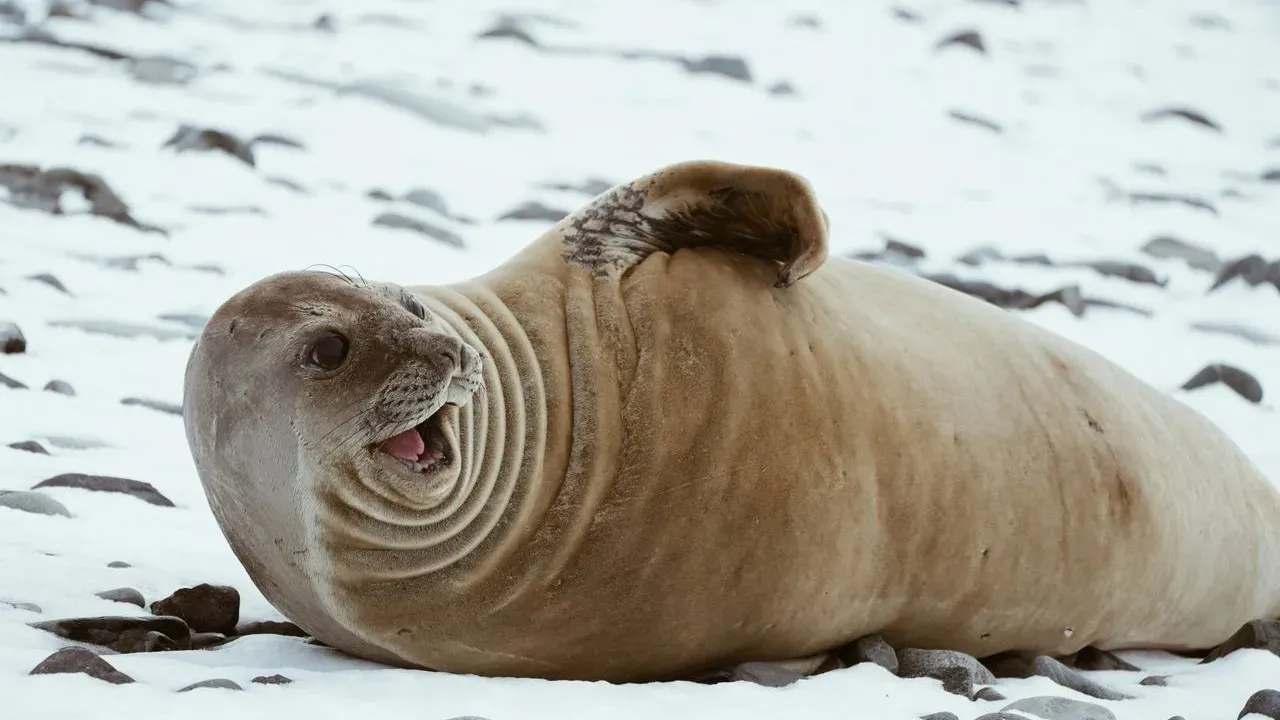

A young walrus calf named Annautaq was discovered alone on an Alaskan beach earlier this year. At roughly five months old, the animal faced an uncertain future in the wild. Caregivers arranged transport across the continent, covering approximately 4,000 miles to a specialized facility in Orlando, Florida.
The Initial Rescue
Rescue teams responded to the sighting on the remote shoreline. They assessed the calf’s condition and determined that it could not survive independently at that stage. The decision to move the animal followed standard protocols for orphaned marine mammals in the region. Every step prioritized the calf’s immediate safety and long-term welfare.
Preparing for the Cross-Country Move
Transporting a marine mammal of this size requires careful planning. Specialized equipment maintains stable temperatures and hydration levels throughout the flight and ground segments. Handlers monitor vital signs at regular intervals to reduce stress. The route combined air travel with ground transfer, spanning multiple time zones and climate zones. The journey itself unfolded over several days. Each segment was timed to limit exposure to temperature swings and noise. Support staff remained with the calf at every stage, adjusting care as conditions changed. Such coordinated efforts reflect established practices for relocating marine wildlife when local rehabilitation options are unavailable.
Arrival and Adjustment in Florida
Annautaq reached the Orlando facility after the full distance. Staff there prepared an acclimation area suited to the calf’s needs. Initial observations focused on appetite, rest patterns, and interaction with the new surroundings. Ongoing monitoring will guide any adjustments to the daily routine. Facilities of this kind maintain detailed records on each resident animal. Those records help track growth, health markers, and behavioral development over time. The calf’s progress will be evaluated against benchmarks established for its age and species. Any changes in care will be made only after review by the veterinary team.
Looking Ahead
The relocation places Annautaq in an environment equipped for extended care. Future decisions about the calf will rest on continued health assessments and expert input. Stories like this one highlight the practical challenges involved in responding to orphaned marine mammals along northern coastlines. The focus remains on measured, evidence-based steps that support the animal’s well-being.
AI Disclaimer: This article was created with the assistance of AI tools and reviewed by a human editor.