
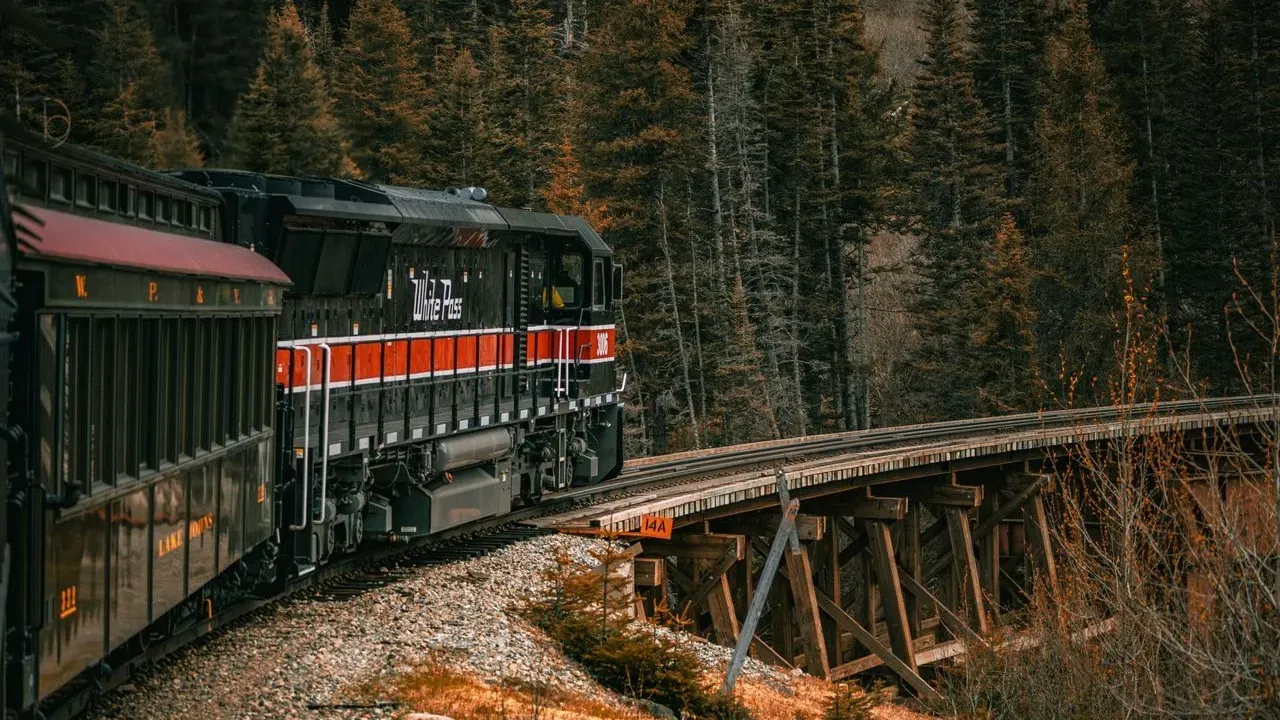

Skagway sits at the edge of the sea in southeast Alaska, a small port town that draws thousands of cruise passengers each summer. Many step ashore with plans to explore the surrounding landscape, and the White Pass and Yukon Route Railway stands as one of the most direct ways to do so. The narrow-gauge line climbs from tidewater into the coastal mountains, following a path first carved during the Klondike Gold Rush more than a century ago. ([1])
Built in Two Years to Serve a Stampede
Construction of the railway began in 1898 amid the rush for gold in the Yukon. Investors from the United States, Canada, and England financed the project, while more than 35,000 workers completed the $10 million effort in just two years. Before the tracks existed, prospectors faced two punishing overland routes: the steep Chilkoot Trail or the longer White Pass. Both demanded that each traveler carry a full ton of supplies, turning the journey into a test of endurance. Once the rails reached the summit, the trip to the Klondike became far shorter and less hazardous. The line carried passengers and freight for more than eight decades, operating year-round until declining metal prices closed the mines that supplied most of its cargo. Service paused from 1982 to 1988. When the railway reopened, it shifted focus to visitors, running from late April through mid-October to match the cruise season. In 1994 the route received designation as a Historic Civil Engineering Landmark.
The Summit Route and Longer Journeys
The most common excursion follows the White Pass Summit line. The train travels roughly 20 miles from Skagway to the U.S.-Canada border at nearly 3,000 feet elevation before returning. The round trip lasts two to three hours and passes maintenance shops, waterfalls, steel bridges, two tunnels, and several historic gravesites. Passengers receive a booklet with a route map and short descriptions of each landmark. A longer option, the Bennett Scenic Journey, covers about 68 miles to Carcross in Canada’s Yukon Territory. Travelers spend roughly eight hours on the round trip, including a stop in Bennett, British Columbia, and a boxed lunch. This itinerary requires a passport because the train crosses an international border. Shorter hiker shuttles also operate to trailheads near Denver Glacier and Laughton Glacier, allowing time for self-guided walks before the return ride.
Tickets, Timing, and Cruise Connections
Advance tickets for the Summit route cost $155 for adults and $77.50 for children when purchased directly. A steam-powered parlor-car version runs at a higher rate. The Bennett journey is priced at $289 for adults and $144.50 for children. Cruise lines sell the same trips as shore excursions, often at a premium that can reach $229 for adults on the Summit route. Tickets are available online through the railway’s website, by phone, or at the ticket office on Second Avenue in Skagway. Day-of purchases are possible but risky during peak season, when departures frequently sell out. Travelers booking independently should confirm that chosen times align with their ship’s port call. Several coaches now include wheelchair lifts and accessible restrooms; cruise lines and the railway can arrange these cars with advance notice.
Moving Through Changing Weather and Light
The vintage coaches lack air conditioning, so interior temperatures vary with the season. On cooler days the ride feels comfortable; warmer afternoons can feel close. Open-air terraces on each car allow passengers to step outside for unobstructed views, though fog can reduce visibility on some trips. Guides move through the train to narrate points of interest, answer questions, and sell small souvenirs. A modest tip to the car guide or conductor is customary. The fleet mixes modern diesel locomotives with restored steam engines and passenger cars dating back more than a century. Only a limited number of coaches have been updated for accessibility, so advance requests remain important for travelers with mobility needs. The Depot and stations at Skagway and Fraser are wheelchair accessible. The railway continues to connect visitors with the scale of the coastal mountains and the layered history of the gold rush. Those who ride it gain a direct sense of how the landscape shaped travel and settlement in this corner of Alaska.
AI Disclaimer: This article was created with the assistance of AI tools and reviewed by a human editor.