
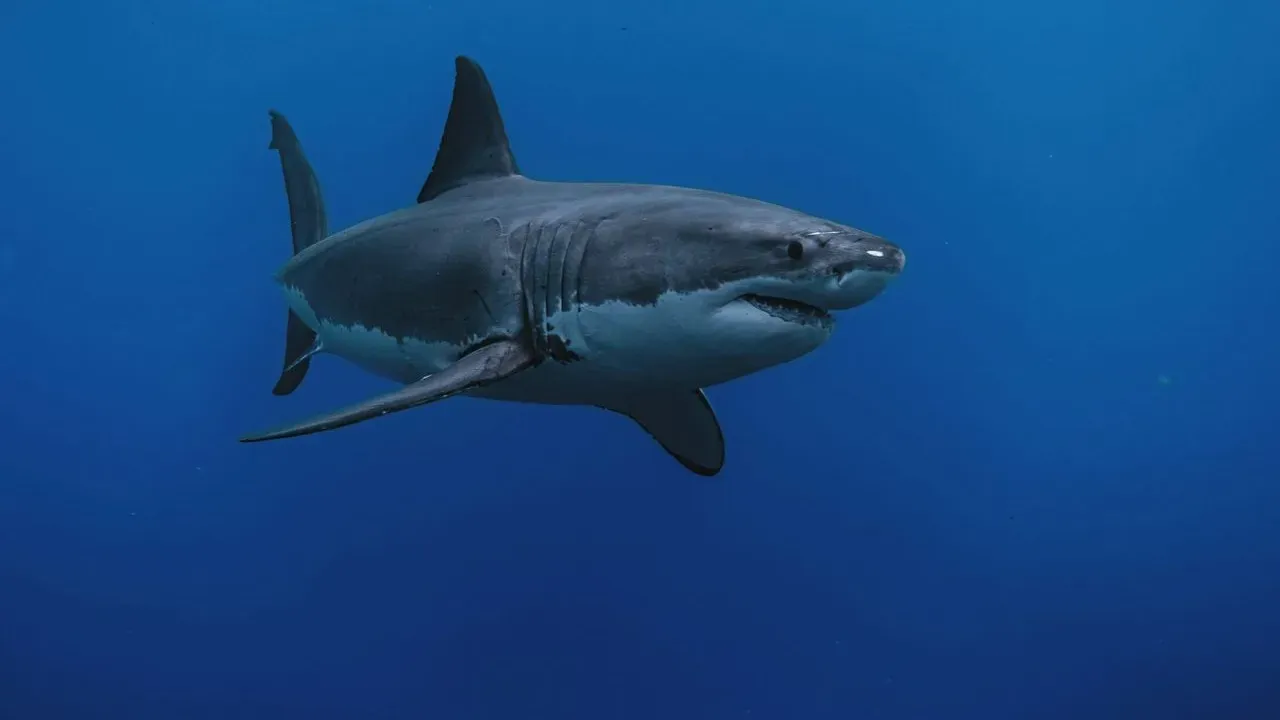

Tybee Island sits along Georgia’s Atlantic coast, where the waters hold more than the usual beachgoers might expect. A recent encounter there brought one of those surprises to the surface when a great white shark drew close to a boat and a woman aboard reached toward it. The moment, captured on video and shared by the Knot Lucky White Shark Tagging Program, unfolded quickly and left a lasting impression on everyone watching.
The Unexpected Meeting at Sea
The sequence began with the shark near the vessel, its presence already drawing attention from the crew. One participant, identified as Jen, extended a hand in what appeared to be a gentle gesture. In the next instant the animal turned its head sharply and moved forward, closing the small distance that remained. The crew maintained control throughout, and the shark never reached the woman. Observers later described the sudden shift as something they felt physically, even from a safe position on deck. The entire exchange lasted only seconds before the shark moved away. No one on board sustained injury, and the animal itself showed no sign of distress once it continued on its path.
Behind the Tagging Effort
The Knot Lucky program operates with a dual purpose. Crew members catch, tag, and release great white sharks to support ongoing research into their movements and habits. Each tagged individual also receives the name of a fallen service member, linking scientific work with a tribute to those who served. In this case the team chose not to attempt tagging. Conditions never allowed a safe window, and the program places the well-being of both the shark and the crew above every other goal. The animal was released unharmed and swam off on its own.
Respect as the First Rule of Coastal Travel
Wildlife encounters along the Georgia shore can feel memorable precisely because they remain rare and unpredictable. The incident underscores why distance matters when any large marine animal appears. Observers noted that the shark’s reaction served as a clear signal: these are powerful creatures that deserve space and calm observation rather than direct contact. Travelers who head to Tybee Island or similar coastal spots often seek exactly this kind of connection with the natural world. The same waters that support tourism also sustain complex ecosystems. Keeping a respectful margin allows both visitors and marine life to share the environment without unnecessary risk.
Why the Georgia Coast Continues to Draw Careful Explorers
Tybee Island offers wide beaches, historic lighthouses, and easy access to the open Atlantic. Its location near Savannah makes it a convenient base for those who want to combine urban exploration with time on the water. The recent sighting adds another layer to that appeal: an occasional glimpse of the larger animals that migrate through the region. Programs like Knot Lucky demonstrate how science and remembrance can coexist on the same boat. Their work continues regardless of any single encounter, steadily building knowledge that benefits both researchers and the public. For visitors, the takeaway remains straightforward. Watch, appreciate, and let the ocean set its own boundaries.
AI Disclaimer: This article was created with the assistance of AI tools and reviewed by a human editor.