
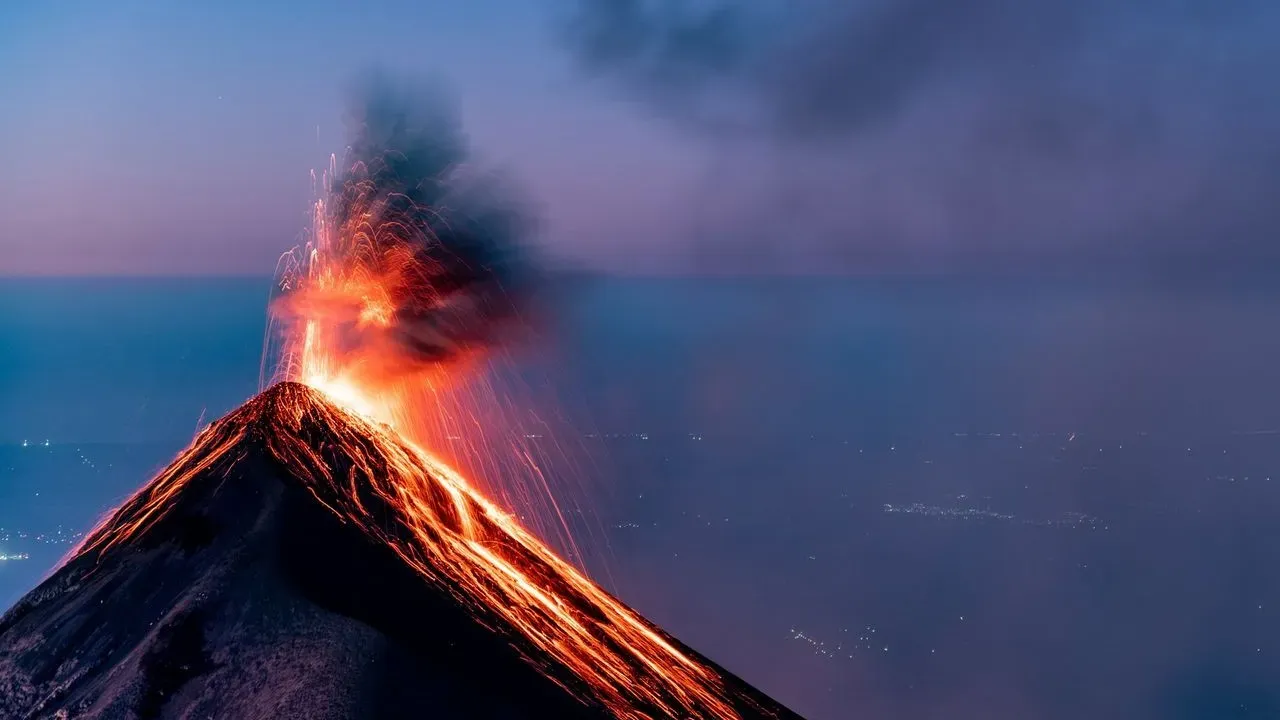

Guatemala’s volcanic highlands offer a rare vantage point where one peak serves as a natural observatory for another. Acatenango rises to 3,976 meters, placing overnight camps high enough to frame the neighboring cone of Fuego across a deep barranca. From these sites, the active volcano’s explosions become visible after dark, with incandescent material tracing arcs against the night sky. Travelers reach these camps through established trails that begin near the village of La Soledad. The route climbs steadily through changing vegetation zones, from agricultural plots into cloud forest and finally onto steeper volcanic slopes. Reputable operators coordinate with local authorities and supply the necessary permits and equipment for the overnight stay.
Understanding the Landscape
Acatenango and Fuego form part of a larger volcanic complex that shapes daily life in surrounding communities. Fuego remains in a state of persistent activity, with recent bulletins from INSIVUMEH recording multiple explosions per hour and ash plumes that can drift toward nearby settlements. Camps on Acatenango sit at a respectful distance, allowing observation without entering restricted zones. The municipality has prohibited direct ascents toward Fuego’s upper ridges, a measure that protects both visitors and residents. Hikers who choose this experience therefore witness the volcano’s power from a position that honors those boundaries.
Preparing for the Ascent
The climb demands steady pacing and attention to altitude. Most groups take four to six hours to reach camp, gaining roughly 1,500 meters from the trailhead. Layers that handle both daytime warmth and nighttime cold prove essential, as temperatures drop sharply once the sun sets. Hydration and measured effort help mitigate the effects of thinner air. Guides monitor group members throughout the day and adjust the schedule when needed. Choosing an operator that employs local residents and follows current safety protocols supports the communities that live with the volcano’s rhythms year-round.
The Night at Camp
Once tents are pitched and meals prepared, attention turns toward Fuego. Explosions occur at intervals that vary with the volcano’s current phase, sometimes producing visible glow and audible rumbles that carry across the divide. Ashfall remains possible, so operators supply masks and advise covering water sources. The experience unfolds quietly. Campers settle into sleeping bags while the mountain across the valley continues its display. Clear nights reveal the contrast between the dark sky and the bright pulses of material ejected from Fuego’s crater. Dawn brings its own transition as the group prepares for the optional push to Acatenango’s summit.
Traveling Responsibly
Any visit to this region benefits from checking the latest INSIVUMEH and CONRED bulletins before departure. Conditions can shift with rainfall or changes in eruptive intensity, and authorized routes may close temporarily. Supporting operators who maintain fair wages for local staff and contribute to community preparedness aligns with the principles of purposeful travel. The same respect extends to the land itself: staying on designated paths, packing out all waste, and recognizing that the volcanoes continue to influence the lives of people who call their slopes home. The overnight on Acatenango rewards preparation with a perspective that lingers long after the descent. It offers a measured encounter with Guatemala’s dynamic geology and the quiet stewardship required to experience it safely.
AI Disclaimer: This article was created with the assistance of AI tools and reviewed by a human editor.