
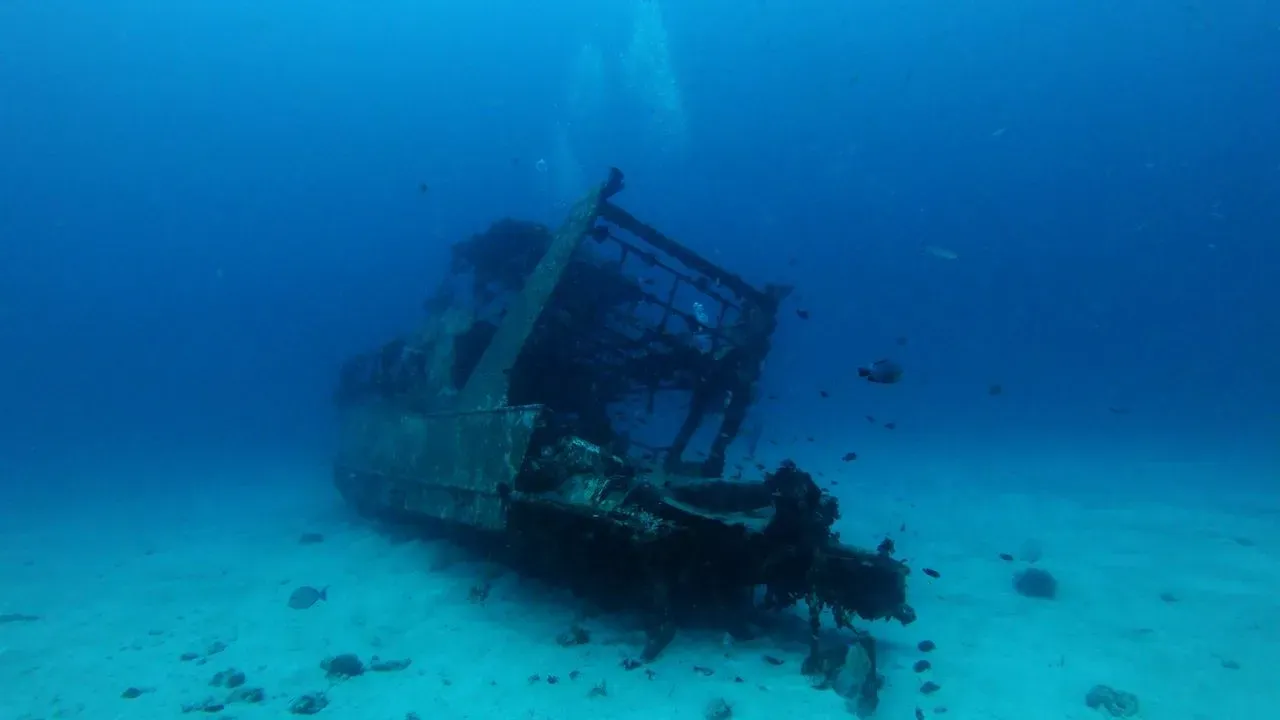

The discovery of the SS Cornwallis off the Maine coast connects two events from late 1944 that shaped a small stretch of New England shoreline. A German U-boat first landed two agents near Hancock on November 29. Four days later the same vessel torpedoed the 400-foot Canadian steamship, sending it to the seabed in minutes. The wreck now rests nearly 400 feet down, located this past July by the Nomad Exploration Team. ([1])
A Merchant Ship With a Long Service Record
Built in Vancouver in 1921 as the Canadian Transporter, the vessel later sailed under Canadian National Steamships as the Cornwallis. It carried general cargo along North American routes and survived an earlier torpedo attack in Barbados in 1942. Repairs returned the ship to service, and in November 1944 it departed Barbados loaded with sugar and molasses bound for St. John, New Brunswick.
The 5,458-ton steamship was armed with deck guns, yet none were fired during its final encounter. On December 3 the U-1230, commanded by Hans Hilbig, struck the cargo hold. The Cornwallis sank in roughly ten minutes. Of the 48 people aboard, five reached safety after a period in life rafts; one additional crew member died of exposure before rescue.
The U-Boat’s Earlier Mission Along the Same Coast
The same submarine had already completed a covert landing four days prior. Two agents, Erich Gimpel and William Colepaugh, came ashore near Hancock, Maine. Their task was to gather intelligence inside the United States. The pair traveled undetected to New York City before Colepaugh’s confession led to their arrest by the FBI.
American authorities quickly linked the spy landing to the sinking of the Cornwallis. Residents in Hancock had noticed unfamiliar men in the days surrounding both incidents. The episode remains one of the few documented German operations on the U.S. East Coast during the final year of the war.
Modern Recovery of an Underwater Time Capsule
The Nomad Exploration Team, based in New Hampshire, spent years searching the remote waters off Mount Desert. Cold temperatures, strong currents, and limited visibility complicated the effort. Side-scan sonar first located the hull; subsequent dives confirmed the identity through structural details and artifacts consistent with the vessel’s documented history.
Team member Danny Allan described the find as the result of sustained persistence. For families and coastal communities tied to the ship, the location brings renewed focus to a chapter of maritime loss that had faded from public memory. The wreck now serves as a preserved record of both the merchant trade and the brief German presence along Maine’s shores.
Coastal Heritage and Quiet Reflection
Maine’s rugged shoreline holds many layers of maritime history, from fishing fleets to transatlantic routes. The Cornwallis discovery adds a precise, documented thread to that record. Visitors who explore the region’s lighthouses, working harbors, and small museums encounter stories of trade, resilience, and occasional conflict that shaped daily life for generations.
Respectful interest in these sites supports local historical societies and encourages careful stewardship of the marine environment. The sea continues to guard its own, yet measured exploration can illuminate the past without disturbing what remains below the surface.
AI Disclaimer: This article was created with the assistance of AI tools and reviewed by a human editor.