
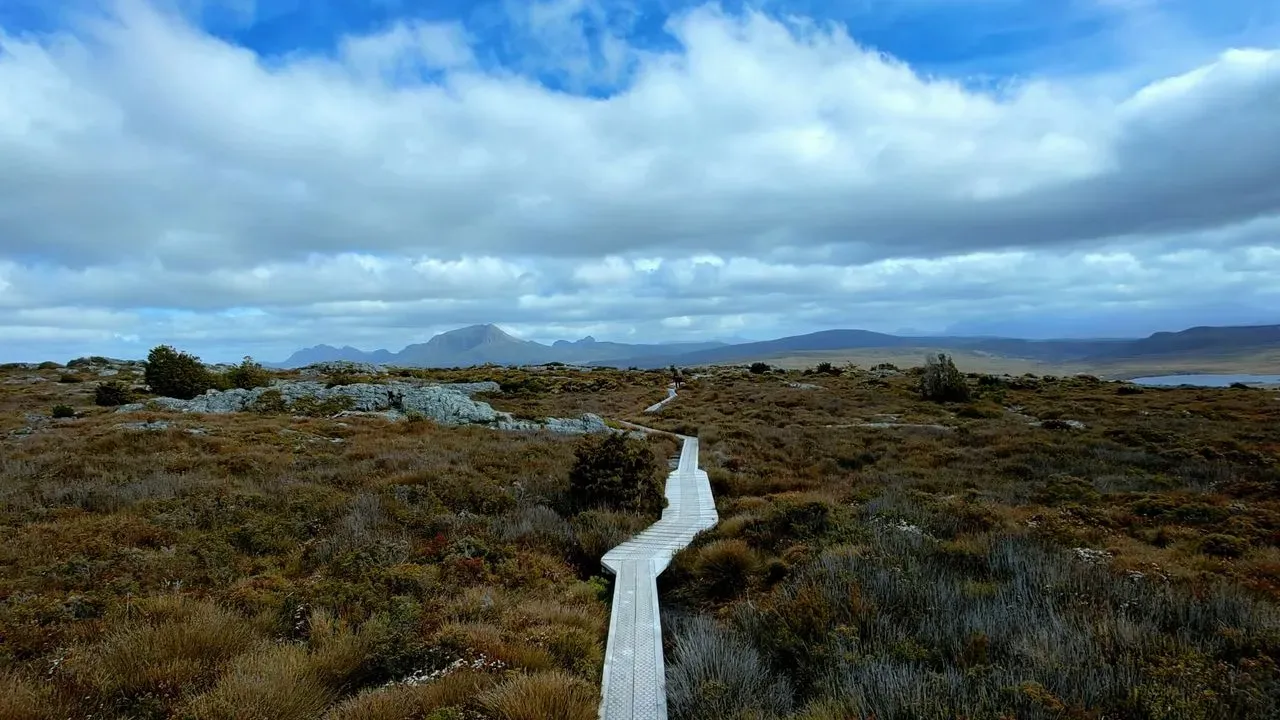

Tasmania’s Cradle Mountain–Lake St Clair National Park holds one of Australia’s most carefully managed long-distance walks. The Overland Track crosses 65 kilometres of alpine plateaus, ancient rainforests and glacial valleys within the Tasmanian Wilderness World Heritage Area. Daily departures are capped at 34 independent walkers during the main season, a measure that protects both the landscape and the experience of those who travel it. ([1]) **A landscape shaped over millennia** The route begins near Cradle Mountain and ends at Lake St Clair, following a north-to-south direction through the booking season. Tasmanian Aboriginal people have maintained connections to these mountains and valleys for more than 42,000 years. The area lies within the traditional lands of the Big River and Northern Tasmanian Aboriginal nations, where seasonal travel, tool-making and land management practices left traces still visible today. Walkers move through country that carries deep cultural significance alongside its geological and ecological value. **How the permit system works** Bookings for the October-to-May season open each July and fill quickly on popular dates. The fee of $312 for adults and $272 for children or concession holders covers the full walk and the required park pass. Only independent groups of up to eight people may book at once, and the daily limit helps keep impacts low on fragile alpine soils and vegetation. Shoulder months such as October and May often retain availability later into the season, giving planners more flexibility. ([2]) **Preparing with care and respect** Successful walks begin long before the first step on the track. Walkers study weather patterns, pack appropriate layers for sudden changes, and carry everything they need for six or more days. The Parks and Wildlife Service emphasises Leave No Trace principles: plan ahead, travel and camp on durable surfaces, pack out all waste, leave what you find, minimise campfire impacts where permitted, respect wildlife and be considerate of others. These practices keep the track’s remote character intact for future visitors and protect the ecosystems that make the journey remarkable. **Moving through changing terrain** Each day brings distinct environments. Early sections climb through subalpine forests toward exposed ridges with sweeping views. Later stages descend into temperate rainforest and buttongrass plains before reaching the deep waters of Lake St Clair. Side trips to peaks or valleys remain optional, allowing walkers to adjust effort according to conditions and fitness. The track’s infrastructure, including raised platforms at campsites, concentrates use and reduces trampling of surrounding vegetation. **A measured approach to a rare landscape** The Overland Track rewards preparation and restraint. Its permit system and visitor guidelines reflect a deliberate choice to limit numbers so the wilderness retains its quiet and its integrity. Those who secure a place step into a landscape that has been shaped by both natural forces and long human presence, and they leave it ready for the next careful traveller.
AI Disclaimer: This article was created with the assistance of AI tools and reviewed by a human editor.