
The Pressure Differential Is the Real Lock
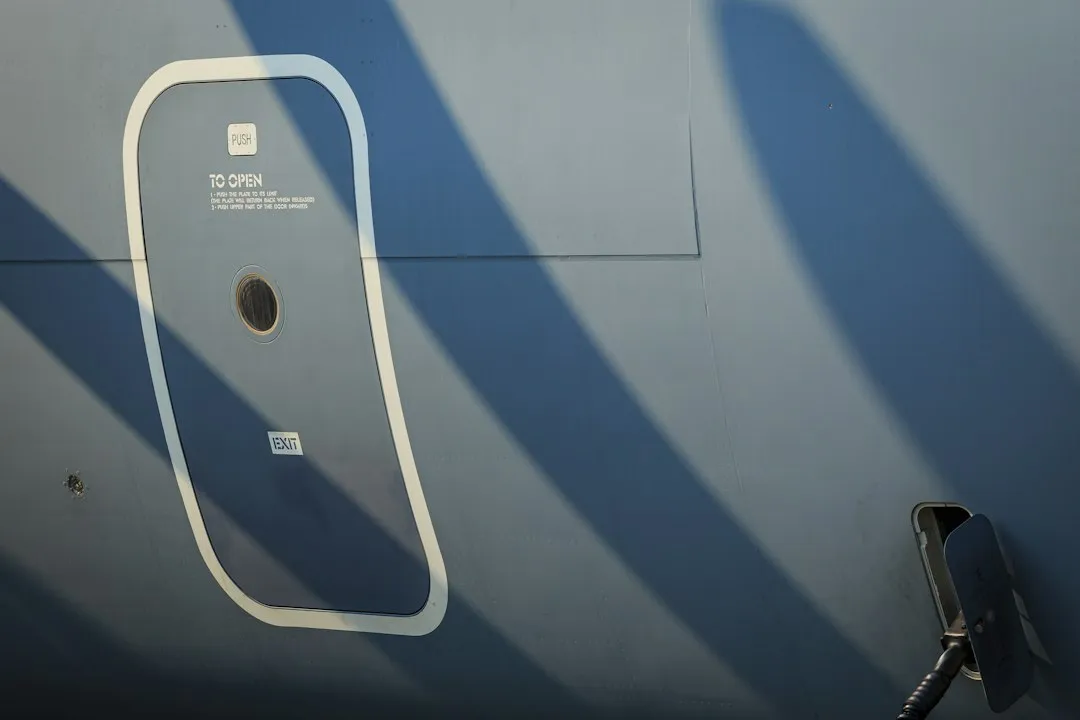
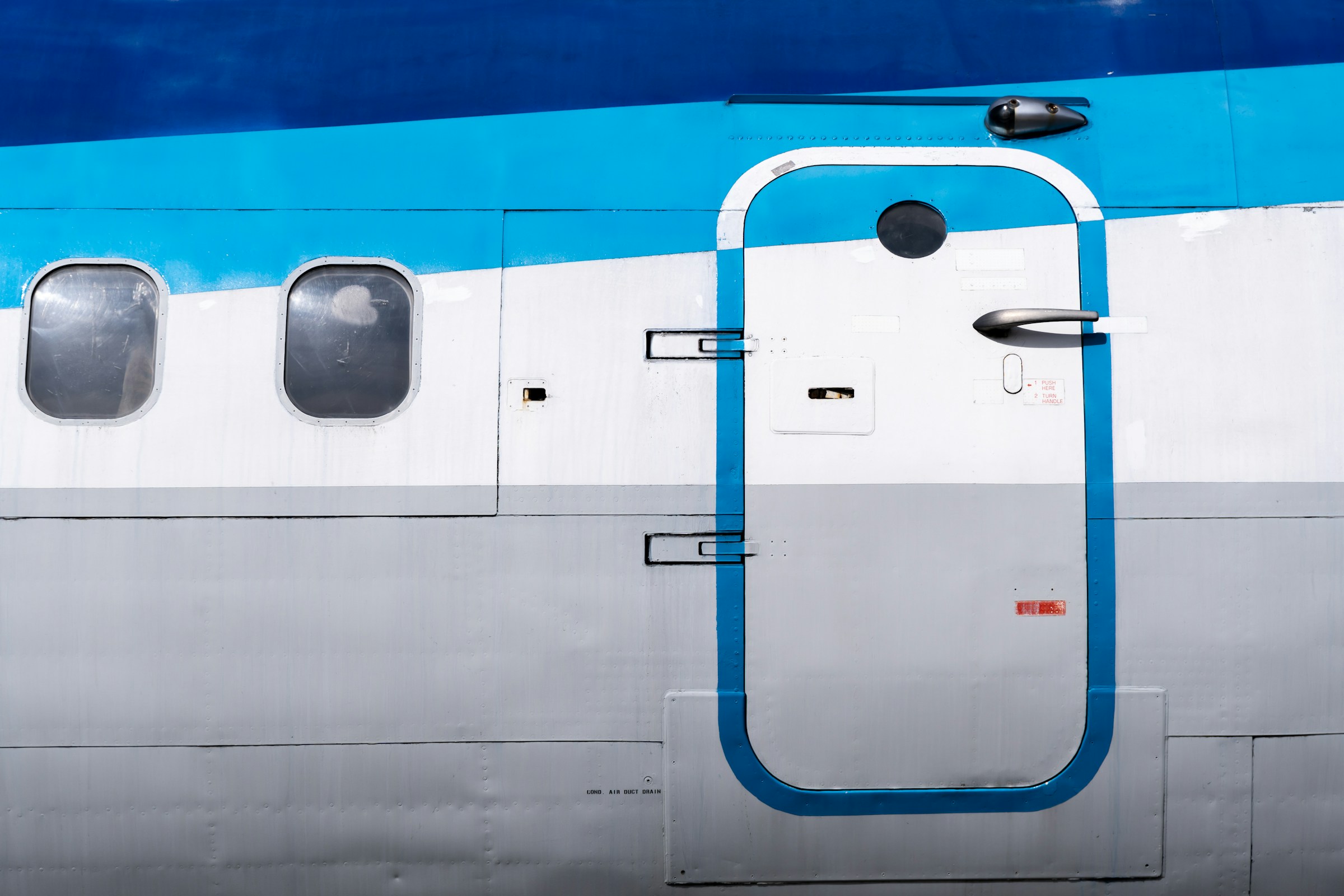
The most fundamental reason airplane doors stay shut in flight has nothing to do with traditional locks. Airplane doors cannot be opened mid-flight under normal circumstances due to the immense pressure differential between the cabin and the outside environment. At cruise altitude, the air outside is far thinner than the air inside the cabin, and that difference in pressure creates a force pushing outward on the door that no person could overcome.
At cruising altitude, the pressure differential on a commercial aircraft door is approximately 8 to 9 PSI, creating roughly 13 metric tons of outward force. To put that into perspective, in order to pry open an airplane’s exit door at cruising altitude, a person would need to exert more than 23,600 lbs of force. That’s roughly the weight of several adult elephants.
How Cabins Are Pressurized in the First Place
To make flying safe and comfortable, cabins are pressurized to simulate an altitude of around 6,000 to 8,000 feet. At a typical cruising altitude of 30,000 to 40,000 feet, the outside air is far too thin to sustain consciousness, let alone comfort, so the aircraft actively maintains higher internal air pressure throughout the flight.
The cabin pressure in a passenger aircraft at a cruising altitude of 9,000 to 12,000 meters is about 750 mbar, which corresponds to the ambient pressure at an altitude of about 2,500 meters above sea level. This internal air pressure is the same force that seals the doors from the inside, making the pressurization system both a comfort feature and a passive security mechanism.
The Plug Door: An Elegant Engineering Solution
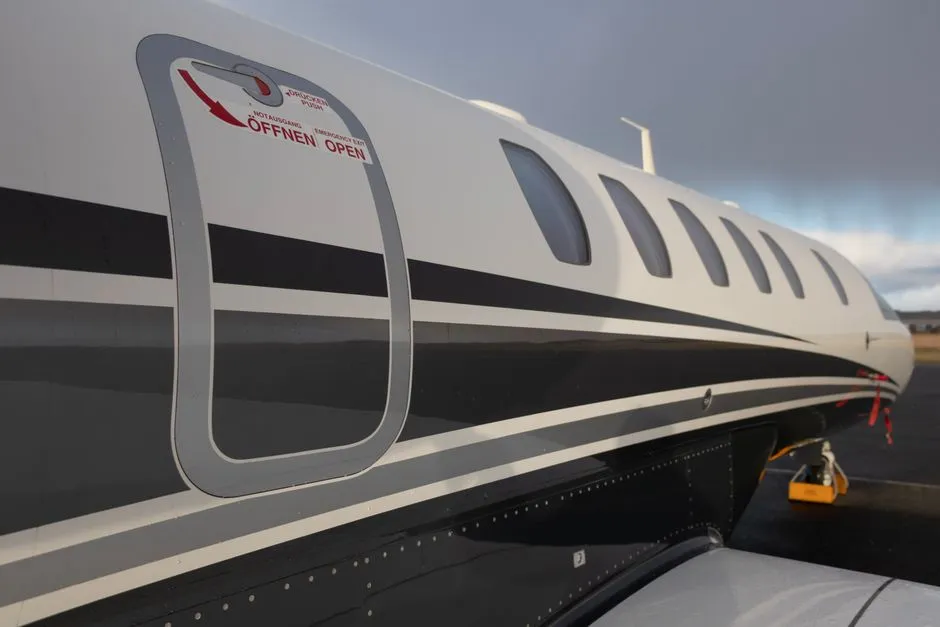
Almost all commercial aircraft doors open inward before being pushed out, or are designed to “seat” into the frame like a plug, so the interior pressure effectively seals the door shut with thousands of pounds of force. This design is intentional. The door is slightly larger than the opening it fills, so the more pressure builds inside, the more firmly it is held in place.
When the cabin is pressurized, the door is literally sealed against its frame by that force, making it impossible to move inward in the first place. Most modern commercial aircraft use plug door designs, which must first move inward before opening outward, making them physically impossible to open under pressurized conditions. It’s a self-reinforcing system: the higher the altitude, the stronger the seal.
Mechanical Locks Provide a Second Layer of Protection
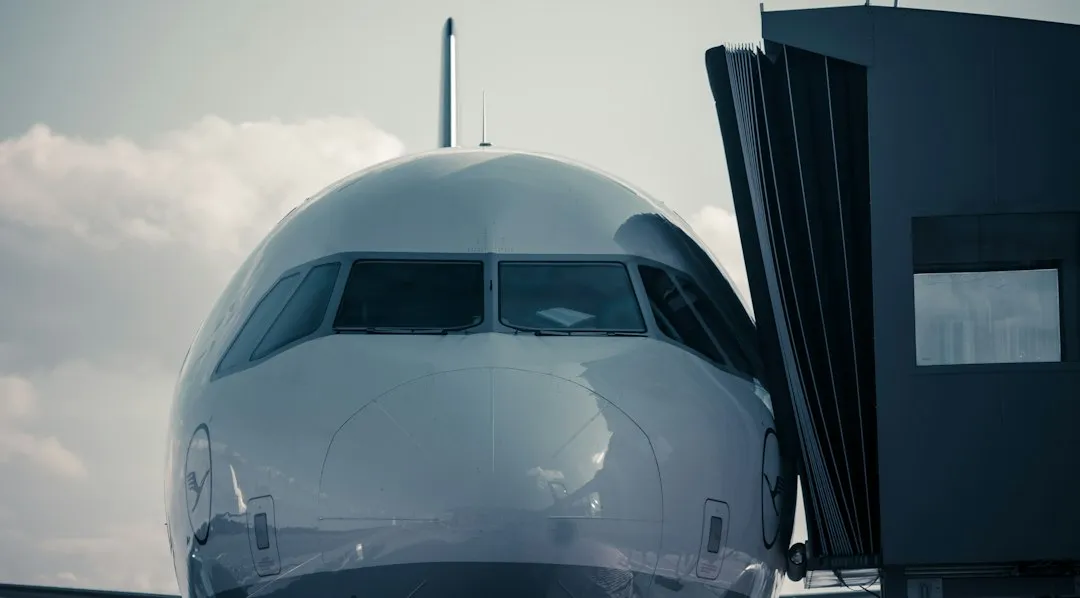
Beyond physics, airplane doors have robust mechanical locks and latches. Steve Wright, an associate professor of aerospace engineering at the University of the West of England, told WIRED that the doors are locked while at high altitude and only unlock when the plane lands. So even in a hypothetical scenario where the pressure differential somehow vanished, the door would still require deliberate mechanical release.
Even if cabin pressure were somehow not a factor, the door would still be mechanically secured by independent locking systems designed specifically to prevent exactly this kind of situation. These two layers, physics and mechanics, work together to make mid-flight door opening essentially impossible under normal operating conditions.
What Would Actually Happen If a Door Were Somehow Breached
Hypothetically speaking, if someone opened an airplane door at cruising altitude, the plane’s cabin would depressurize, and a strong suction effect would suck out the air, people, and loose objects from the plane. The results would be catastrophic, rapid, and almost certainly fatal for anyone near the opening.
Anyone standing near the exit would be ejected into the sky; the cabin temperature would quickly plummet to frostbite-inducing levels, and the plane itself might even begin to break apart. Decompression events in aviation history have confirmed just how violent and sudden such scenarios can be, which is precisely why the door engineering is so robust.
The Altitude Exception: When Doors Can Actually Open
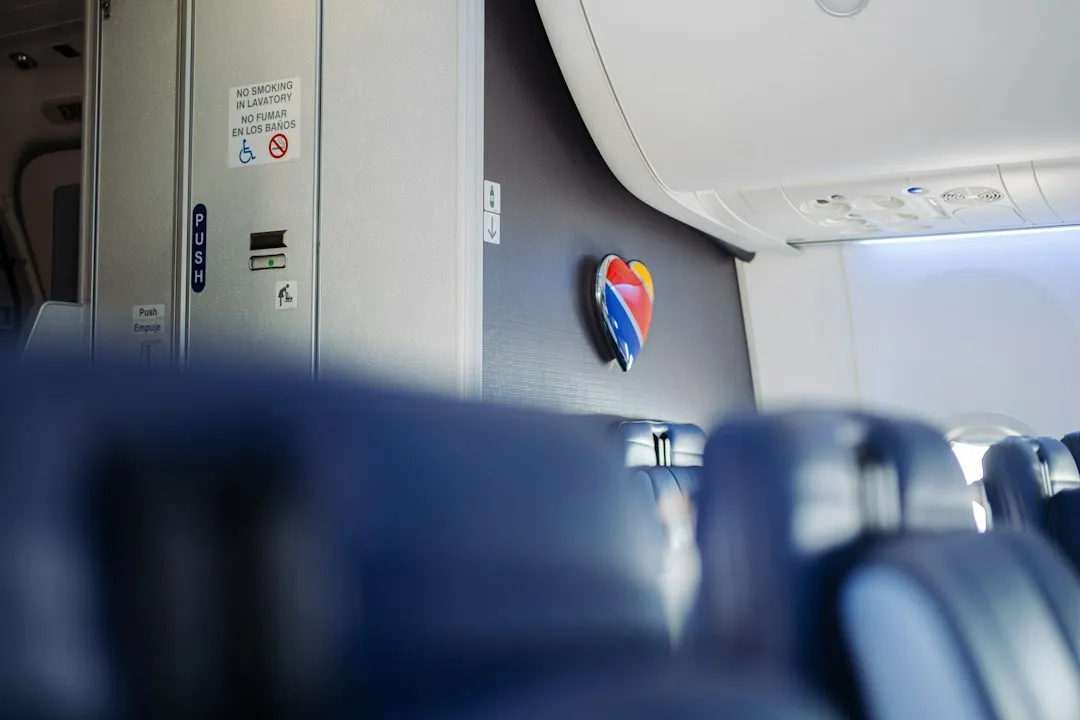
Not every phase of flight carries the same level of door security. Below 8,000 feet, the pressure is controlled to match the pressure outside, hence why ears only hurt in the last 8,000 feet of descent. Below that altitude, there is either a slight or no pressure difference between the inside and outside of the plane, so it is much easier to pull the door open.
At very low altitudes such as below 1,000 feet, where the pressure differential is negligible, a door could potentially be opened. This is why there have been rare incidents of doors being opened during final approach or taxiing. The danger is real, but it’s a very different engineering context compared to cruising at altitude.
The Asiana Airlines Incident: A Real-World Case Study
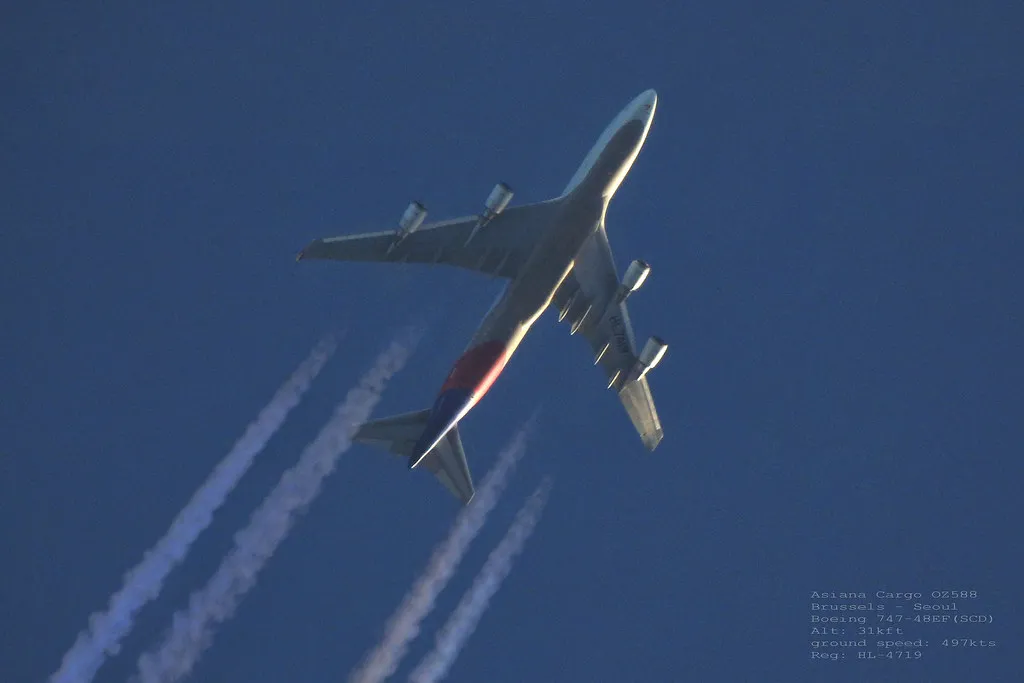
In 2023, a passenger on an Asiana Airlines flight did manage to open an emergency exit door while the aircraft was still in the air. The 33-year-old man, who later told police he was feeling suffocated and wanted to disembark quickly, opened the door at about 700 feet above the ground. That low altitude made all the difference.
The 2023 Asiana Airlines incident was possible because the aircraft was at very low altitude, cabin pressure had equalized with outside air, and the door was a lighter emergency exit with a simpler mechanism. Due to this incident, nine passengers onboard were hospitalized, and South Korea introduced a new regulation mandating that its airlines must make a pre-flight announcement warning passengers not to open emergency exits.
The Alaska Airlines Door Plug Blowout: When Manufacturing Fails

Perhaps the most alarming aviation story of 2024 involved not a passenger trying to open a door, but a door structure failing on its own. The NTSB investigated a January 5, 2024 mid-air door plug blowout in which Alaska Airlines 737 MAX 9, registered as N704AL, departed Portland International Airport on flight AS1282. Shortly after takeoff, when the plane was about 16,000 feet in the air above Oregon, a plug covering an unused exit door blew off, causing oxygen masks to be deployed.
A preliminary report released by the NTSB in February 2024 found that four bolts designed to prevent the door plug from falling off the Boeing 737 Max 9 plane were missing before the plug blew off during the flight. Investigators determined the door plug was gradually moving upward over the 154 flights prior to the incident before it ultimately flew off. The NTSB concluded that Boeing did not provide adequate training, guidance, and oversight to prevent the blowout, and members also criticized Boeing’s safety culture and its failure to install four key bolts, as well as ineffective oversight by the Federal Aviation Administration.
Emergency Exits: A Slightly Different Story

Many passengers glance at the over-wing emergency exits and wonder whether those are easier to breach. While emergency exits are designed for rapid evacuation in certain scenarios, they cannot be opened easily mid-flight due to safety features and pressure. The same physical principles that apply to main cabin doors apply to emergency exits as well, with the key distinction being that some emergency exits are lighter and have simpler latching mechanisms.
Emergency exits are designed to be opened quickly on the ground, and they are not easier to open mid-flight because of the pressure differential. The design intention is that these exits become accessible rapidly during evacuations at low or zero altitude, not at 35,000 feet. The physics ensures the distinction holds.
The Bigger Picture: A System Designed to Be Foolproof
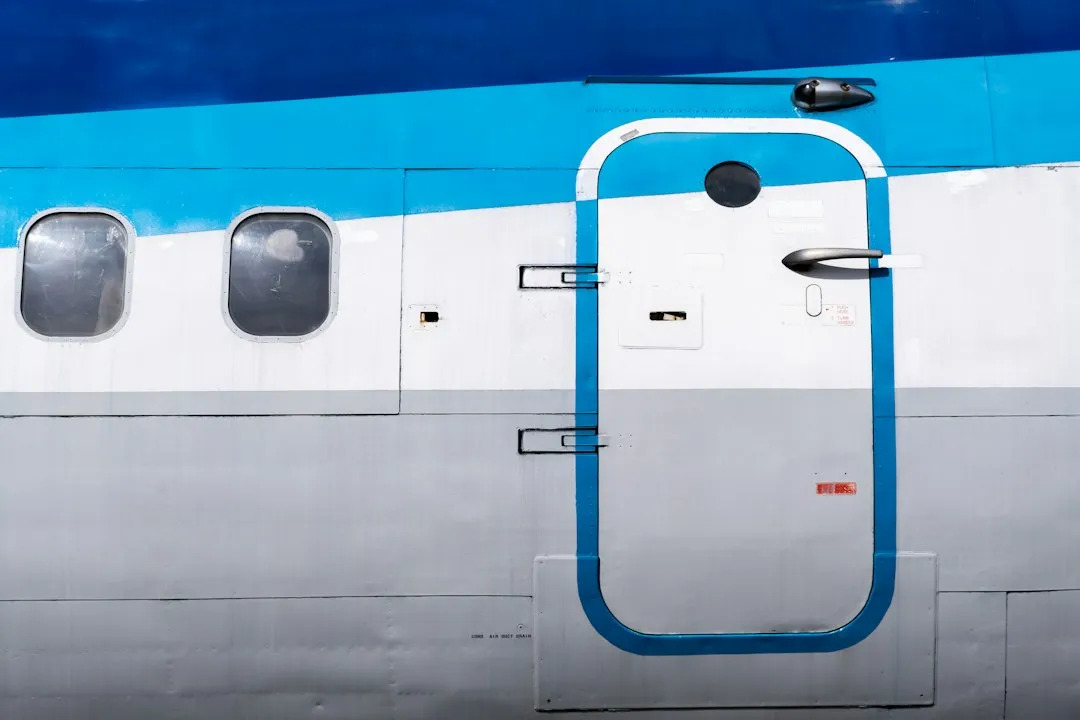
Airplane doors are designed so that the most dangerous failure mode, opening at altitude, is physically prevented by the laws of physics themselves. The physics of pressurization mean that at the altitudes where an open door would be most dangerous, opening one is most impossible. That elegant inverse relationship is not accidental. It reflects decades of engineering refinement.
No one has ever successfully opened a standard cabin door at cruising altitude on a commercial jet. The next time a news story surfaces about someone trying to open an airplane door, remember: while it may cause alarm in the cabin, the attempt itself is doomed to fail at high altitude. The engineering is that reliable.
Final Thoughts

The story of airplane doors is, in a quiet way, a story about thoughtful design. The same pressurized air that keeps you breathing at 35,000 feet is the force holding the door firmly in place. One system serves two purposes simultaneously, and that kind of redundancy is what makes commercial aviation as safe as it is.
Recent events, from the Asiana low-altitude incident to the Alaska Airlines door plug blowout, have reminded the industry that vigilance matters at every stage, from the factory floor to final approach. The physics won’t protect you if the bolts aren’t there in the first place. That’s a lesson worth keeping in mind, not as a reason to worry, but as a reminder that aviation safety is earned through continuous attention to detail.
AI Disclaimer: This article was created with the assistance of AI tools and reviewed by a human editor.