
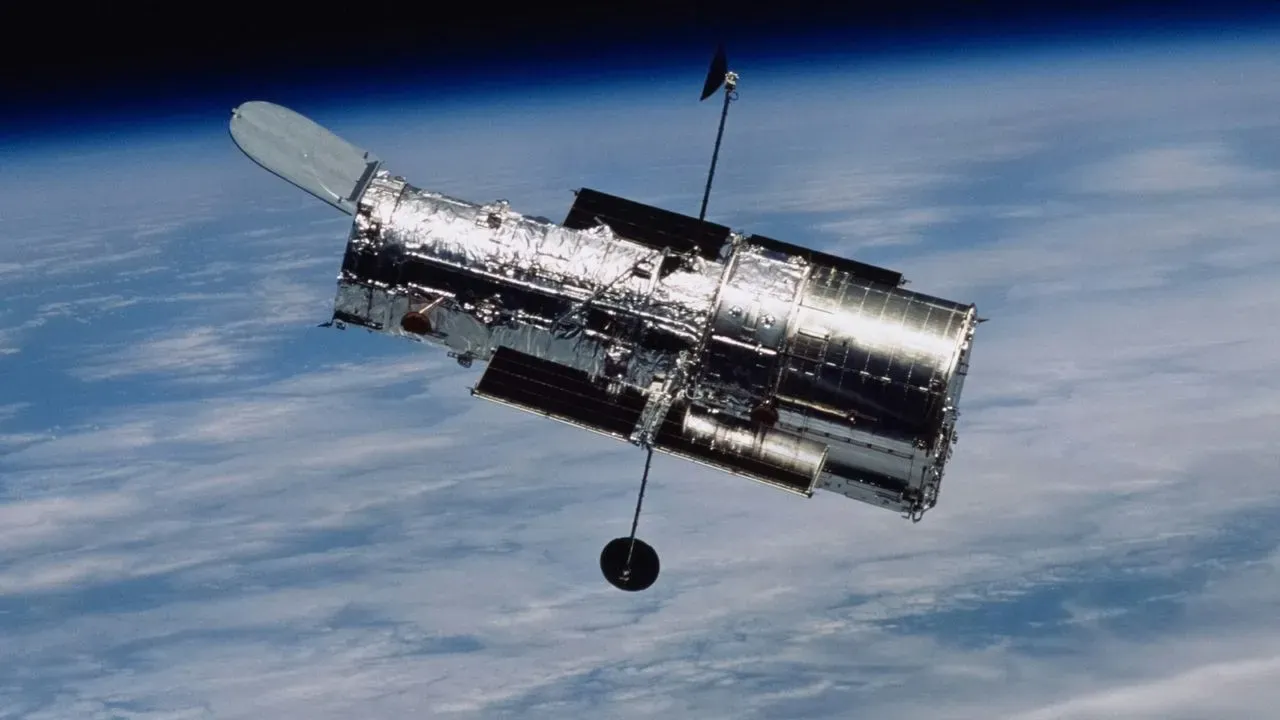

Cape Canaveral, Florida – An aging NASA spacecraft that has spent two decades studying the universe’s most energetic events is now on a final, irreversible path back to Earth. The U.S. Space Force has projected that the Swift Observatory will reenter the atmosphere on or around Friday, with the bulk of its roughly 1½-ton structure expected to burn up during descent. The prediction follows an unsuccessful effort to raise the telescope’s orbit and extend its mission.
A Record of Discovery
Swift was launched in 2004 with a clear scientific purpose: to detect and study gamma-ray bursts, the brightest explosions known in the cosmos. Over the years it also contributed to observations of supernovae, active galactic nuclei, and other high-energy phenomena. Its instruments allowed astronomers to respond rapidly to transient events, often within minutes of detection. That responsiveness helped shape modern understanding of how stars end their lives and how black holes influence their surroundings. The telescope operated far longer than its original design life. Mission teams continued to extract valuable data even as the spacecraft aged and its orbit gradually lowered. Each successful observation added to a public archive used by researchers worldwide.
The Final Rescue Attempt
In recent months, operators explored options to boost Swift’s altitude and delay its eventual reentry. Those efforts did not succeed. Without additional propulsion, the slow but steady effect of atmospheric drag brought the spacecraft lower with each orbit. The U.S. Space Force’s 18th Space Defense Squadron tracked the object and issued the current reentry forecast based on the latest orbital data. Most of the spacecraft is expected to disintegrate high in the atmosphere. Any surviving fragments would be small and would fall over open ocean, consistent with standard predictions for objects of this mass and composition.
Marking the End of an Era
The impending reentry closes a long chapter in space-based astronomy. Swift’s ability to catch fleeting cosmic events in real time influenced how subsequent missions were designed. Its data continue to support studies that compare early observations with newer telescopes now operating in orbit or on the ground. For those who follow space exploration from Florida’s Space Coast, the story resonates with the region’s long association with both launches and returns. The same skies that have witnessed countless departures now frame the quiet conclusion of one more scientific instrument.
What Remains
Swift’s scientific legacy rests in the observations it delivered and the questions it helped frame for future missions. As the spacecraft completes its final orbits, attention turns to the next generation of rapid-response telescopes that will build on its work. The data archive it created will remain available, offering researchers a continuing resource long after the hardware itself has returned to Earth.
AI Disclaimer: This article was created with the assistance of AI tools and reviewed by a human editor.