
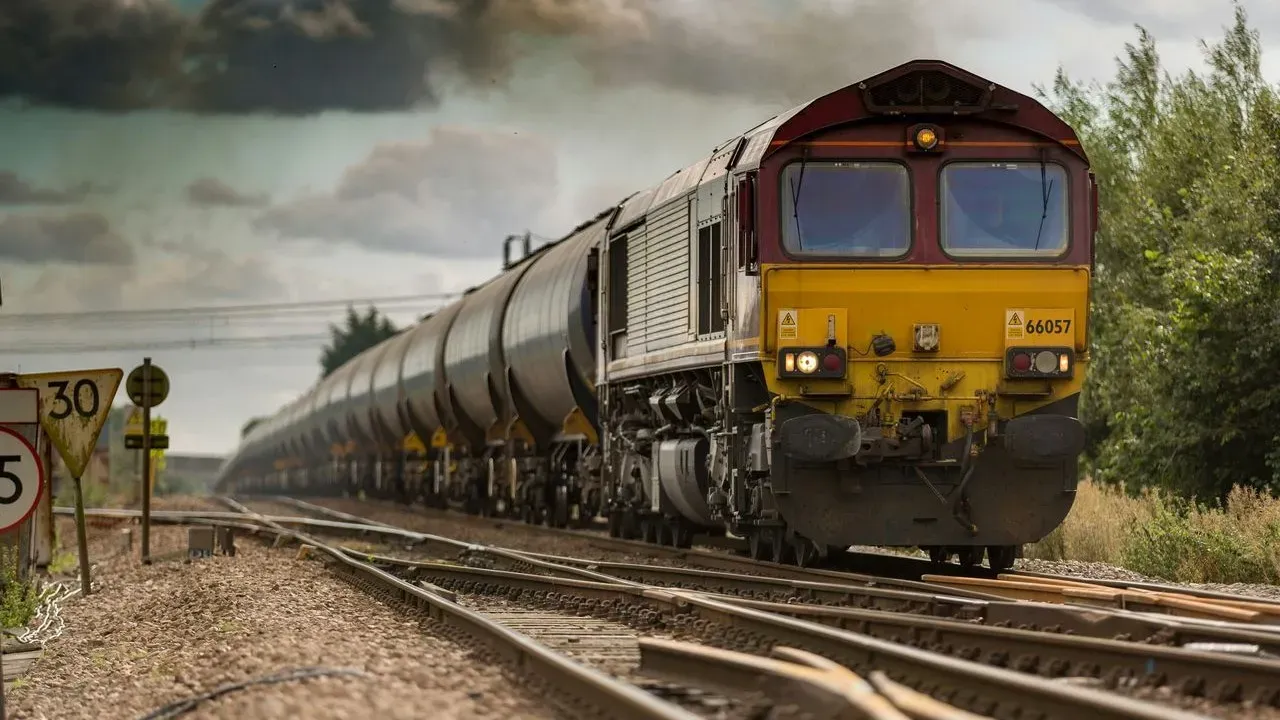

Cape Town – A state-owned transport company has completed a test run that stretches the practical limits of rail freight in striking new ways. Transnet Freight Rail moved an empty consist of 696 wagons across more than 500 miles of South African track in mid-October, a distance and scale that immediately invites comparison with earlier long-haul efforts elsewhere. The journey began at the port of Saldanha Bay on the country’s west coast and ended at an iron-ore mine deep in the interior. ([1])The operation lasted two days and required locomotives distributed along the length of the train to maintain power and control. Such distributed power is essential when a single consist grows this large, yet the test also served a broader purpose: gathering data that could strengthen South Africa’s ability to move bulk minerals and other commodities over long distances.
Scale That Redefines Daily Operations
At 4.7 miles from end to end, the train exceeds the length of most freight services operating anywhere in the world. Typical trains elsewhere range from half a mile to roughly 1.5 miles, depending on terrain, signaling systems, and loading practices. South Africa and Australia have long pushed those boundaries because their mining regions sit far from export ports, creating a natural incentive for longer consists that reduce the number of separate movements required. Transnet’s configuration placed electric and diesel units at intervals so that braking and acceleration commands reached every wagon without dangerous delays. The empty wagons on this particular run allowed engineers to focus on the mechanical and logistical questions that arise only when a train occupies several miles of track at once.
A Learning Exercise With Clear Stakeholders
Russell Baatjies, chief executive of Transnet Freight Rail, described the run as a deliberate learning exercise. The data collected will inform future efforts to transport minerals and other goods more efficiently across the country’s extensive rail network. Mining companies that rely on reliable bulk transport stand to benefit, as do port operators and the communities whose livelihoods depend on steady export volumes. The October 18 departure from Saldanha Bay followed a carefully planned schedule that accounted for gradients, curves, and passing loops along the 534-mile route. Because the wagons traveled empty, the test isolated questions of traction, signaling response, and crew coordination from the added variables of loaded weight.
Placing the Achievement in Context
Transnet positions the run as surpassing a 4.5-mile train that operated in Western Australia in 2001. Whether the new length will be formally recognized by international rail bodies remains to be seen; the company presents the achievement as a practical demonstration rather than a certified world record. Still, the numbers illustrate how infrastructure investments and operational ingenuity can extend the reach of existing rail corridors. For travelers and observers interested in the quiet romance of long-distance rail, the test underscores a simple truth: the same tracks that carry passengers and tourists also move the raw materials that sustain modern economies. Watching a consist of this length glide past offers a tangible sense of the engineering required to keep goods flowing across vast landscapes.
Looking Ahead on the Rails
Further trials will likely examine loaded operations, refined braking sequences, and integration with existing traffic. Each step builds institutional knowledge that can support both commercial freight and, indirectly, the passenger services that share parts of the network. In a country where rail has historically connected remote mining districts to coastal gateways, these incremental advances matter for long-term economic resilience and for the travelers who value thoughtful, low-impact ways of moving through the landscape.
AI Disclaimer: This article was created with the assistance of AI tools and reviewed by a human editor.