
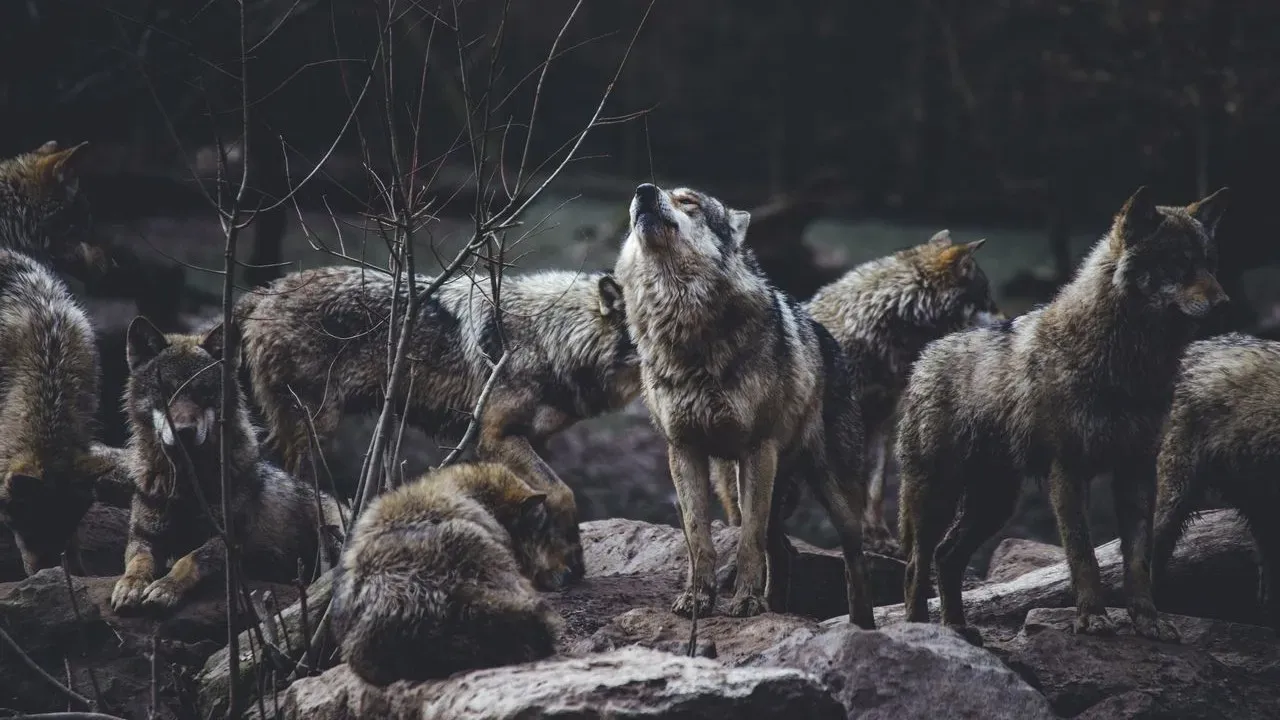

California’s gray wolves have begun re-establishing themselves in the state’s northern wilderness after more than a century of absence. A small founding population has led to some closely related pairings, yet state wildlife officials report that the development does not pose an immediate risk to the animals’ long-term presence. The story reflects both the challenges of recolonization and the steady connections that continue to link California wolves with larger populations farther north.
A Century-Long Absence Ends
Gray wolves once ranged widely across California before systematic removal in the early twentieth century eliminated them from the landscape. Their return began in recent years as individuals dispersed southward from established packs in Oregon. Each new sighting and confirmed pack marks a gradual restoration of a native predator to ecosystems that have long lacked its influence. Wildlife managers track these movements through radio collars, trail cameras, and public reports. The process reveals how even a modest number of arrivals can spark new family groups in suitable habitat. Connectivity with source populations remains essential for maintaining genetic health over time.
Small Numbers Shape Early Family Lines
With relatively few wolves present, some pairings have occurred between closely related animals. Data from the California Department of Fish and Wildlife and monitoring groups show that nearly a quarter of known individuals trace their parentage to sibling pairs within one northern pack. Specific examples include the Ashpan and Ice Cave packs, where documented relationships reflect the limited pool of available mates during the early stages of recovery. Such patterns are not unusual when a species reoccupies territory from a narrow base. Similar dynamics have appeared in other recovering carnivore populations that started small and isolated. Officials emphasize that these early pairings do not define the trajectory of the entire group.
Officials See Ongoing Gene Flow
California Department of Fish and Wildlife gray wolf expert Axel Hunnicutt has stated that inbreeding does not currently threaten population viability. Wolves continue to arrive from Oregon each year, bringing new genetic material and pairing with resident animals. This annual dispersal maintains connections to the broader western wolf population and reduces the long-term effects of any localized close relationships. The agency’s monitoring program documents these movements and pairings in detail. Continued observation allows managers to assess whether additional support, such as habitat protection or conflict reduction measures, may be needed as numbers grow. The focus remains on supporting natural processes rather than intervening in individual family lines.
Supporting Responsible Wildlife Recovery
The return of wolves offers a tangible measure of ecosystem resilience in California’s wild places. Public interest in these animals often centers on ethical viewing opportunities from a distance, respect for their space, and support for the landscapes that sustain them. Travelers drawn to remote northern forests can contribute by following leave-no-trace principles and learning from local conservation efforts. State agencies and partner organizations provide updates on known wolf activity through official channels. These resources help residents and visitors understand current distribution without encouraging close approaches or disturbance. The emphasis stays on coexistence that benefits both people and wildlife. Wolves’ gradual re-establishment in California underscores how patience and connectivity can restore balance to long-altered landscapes. As new generations take hold, the story continues to evolve through careful monitoring and the natural movement of animals across state lines.
AI Disclaimer: This article was created with the assistance of AI tools and reviewed by a human editor.