
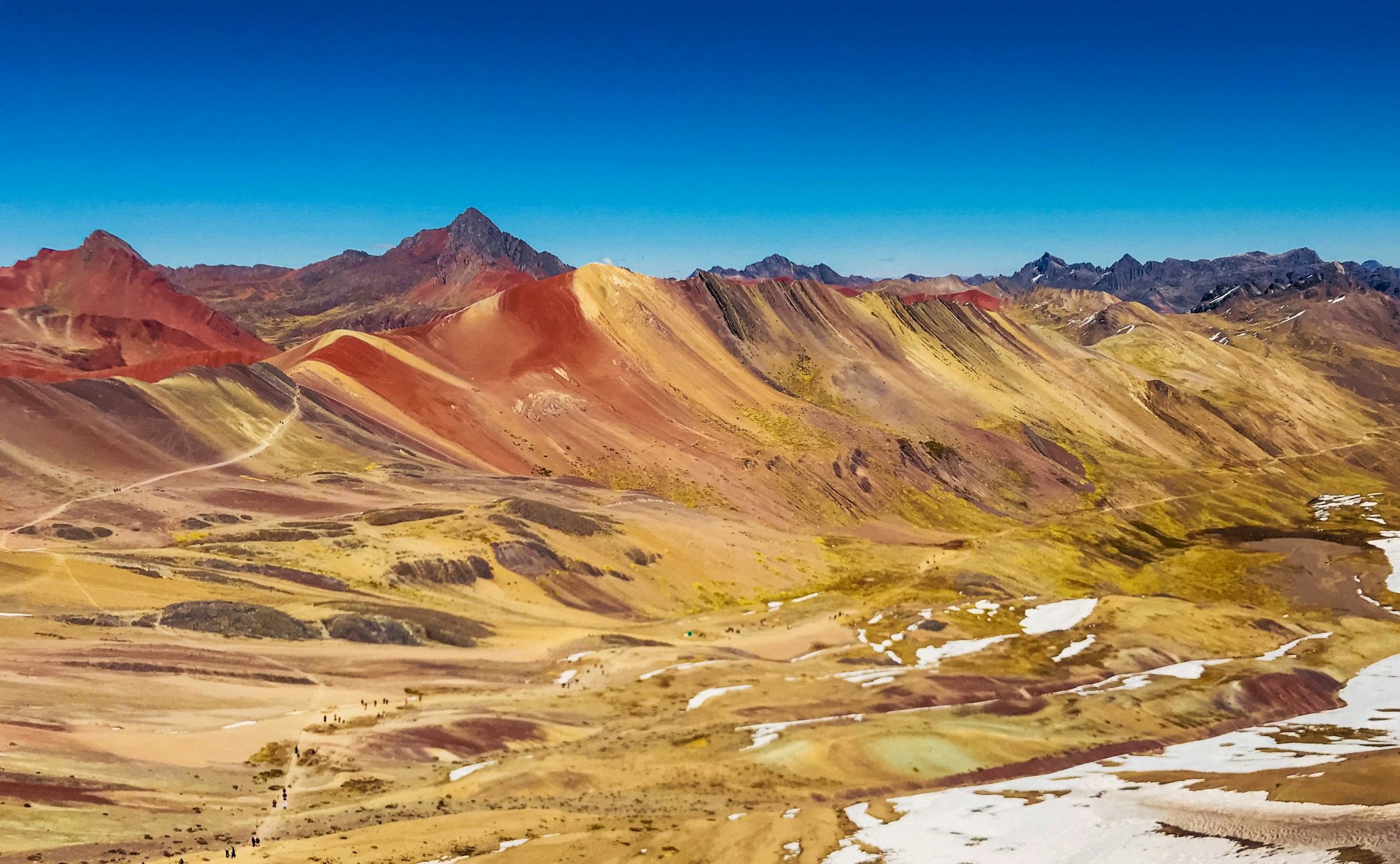

There’s a mountain in southern Peru where the earth itself seems to have lost the plot. Bands of red, mustard yellow, deep green, and lavender sweep across the slopes in a way that makes your eyes question what they’re seeing. It doesn’t look like geology. It looks like brushstrokes.
This is Vinicunca, better known as Rainbow Mountain, and the story behind those colors is far more remarkable than any painting could be. From ancient seafloors to Andean tectonic violence to vanishing ice, the mountain holds a timeline that spans tens of millions of years. What visitors see today is only the latest chapter.
A Mountain of Many Names
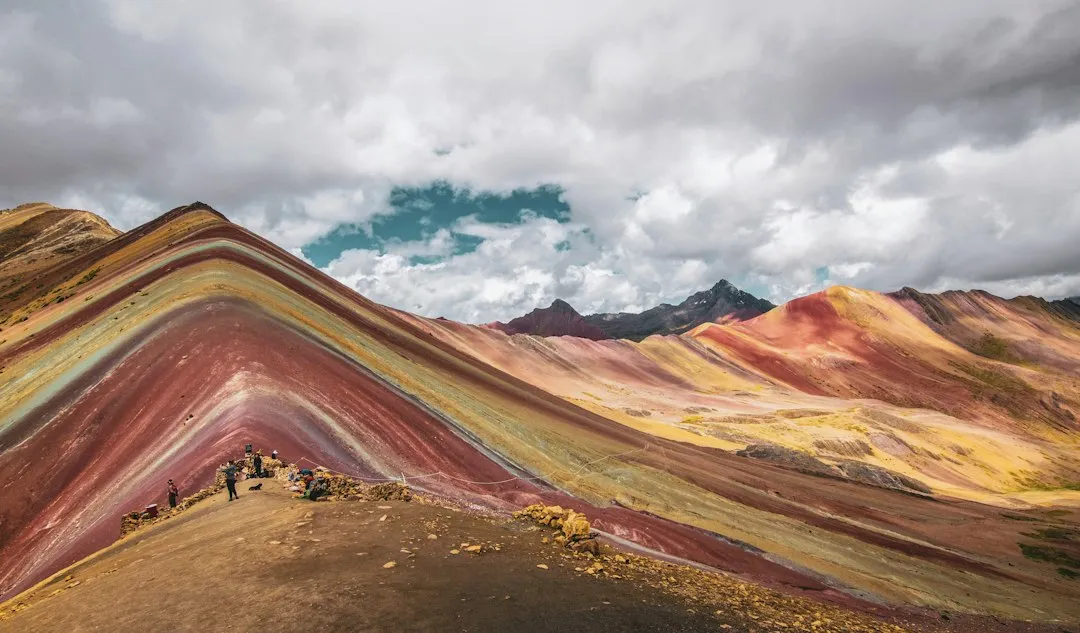
Rainbow Mountain, known locally as Vinicunca or Winikunka in Quechua, is a striped mountain in the Vilcanota range of southern Peru, about 100 kilometers southeast of Cusco. The Quechua name “Winicunca” roughly translates to “colored mountain,” while its Spanish name, Montaña de Siete Colores, means “Mountain of Seven Colors.”
The “Mountain of Seven Colors” is a popular label, though in reality Vinicunca displays numerous shades and mineral tones rather than exactly seven perfectly separated colors. The naming is poetic rather than precise, which feels entirely appropriate for a place this visually arresting.
The Geological Forces That Made It
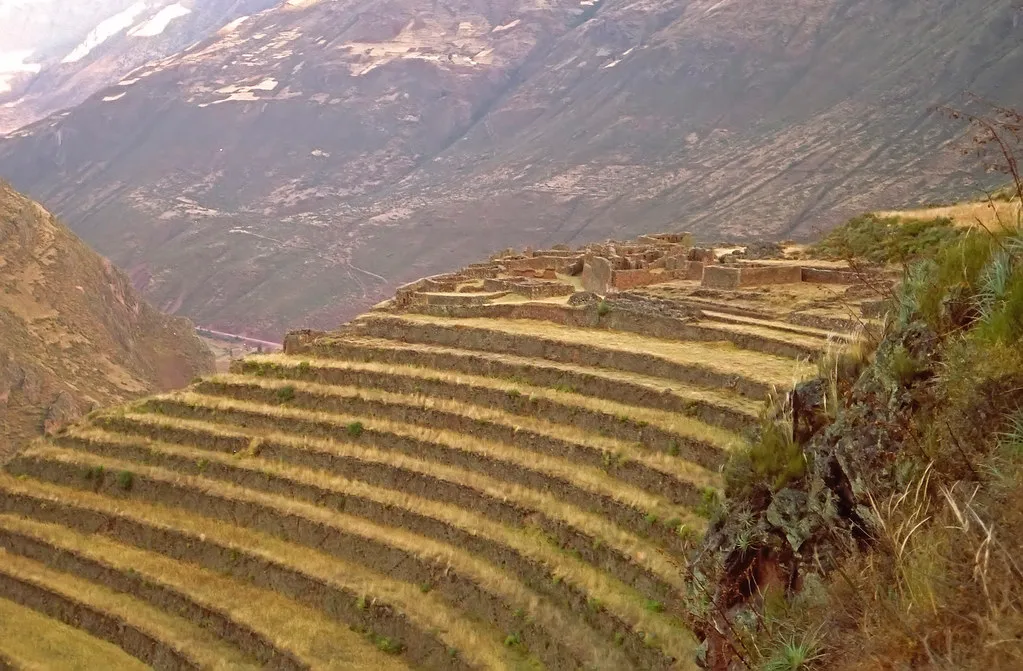
Rainbow Mountain is made from layers of sedimentary rock deposited roughly 75 to 63 million years ago. As the Nazca Plate moved beneath the South American Plate, tectonic forces lifted and deformed these rock formations, helping build the Andes. Erosion eventually exposed the layers, revealing the colorful bands across Vinicunca’s slopes.
The Geological Society of Peru, quoted by BBC Mundo in 2018 and summarized again by Andina in 2025, describes layers of sediment laid down by water in seas, lakes, and rivers between roughly 65 and 2 million years ago. The fact that all of this ended up above 5,000 meters is a reminder of just how violent the Andean uplift really was.
Why Every Stripe Is a Different Color
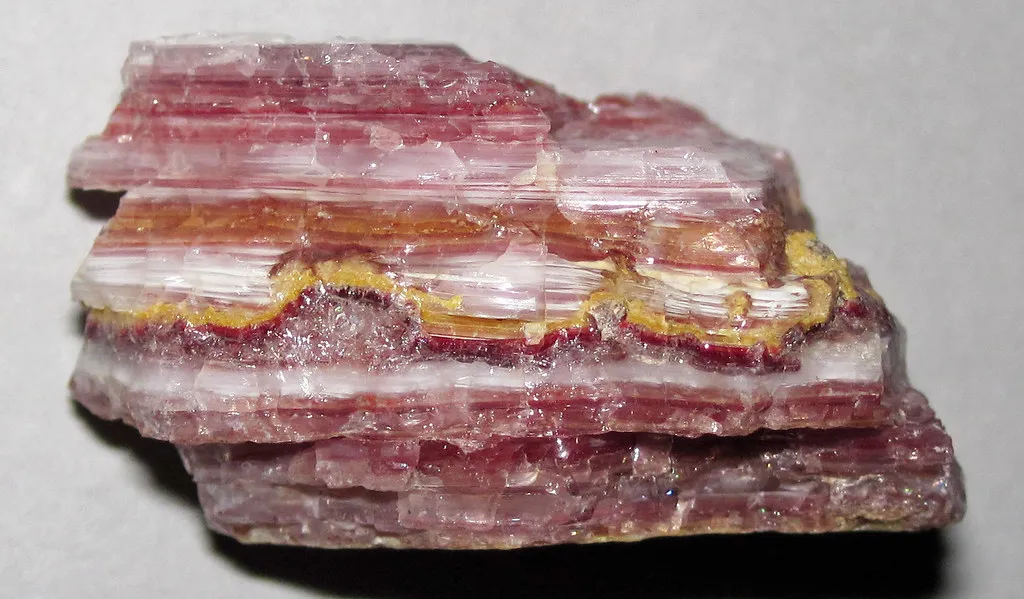
Unlike a mountain covered in vegetation, much of Rainbow Mountain’s appearance comes directly from the exposed geological layers beneath the surface. Different mineral deposits and sediments create the reds, yellows, greens, and lighter tones that give the mountain its striped appearance.
The colors of Vinicunca come from different mineral deposits such as iron oxide (red), copper oxide or chlorite (green), and iron sulfide (yellow). Brown and purple tones come from goethite or oxidized limonite. Each color is essentially a chapter of the mountain’s chemical biography, written in mineral form over geological time.
Hidden Under Ice Until Very Recently
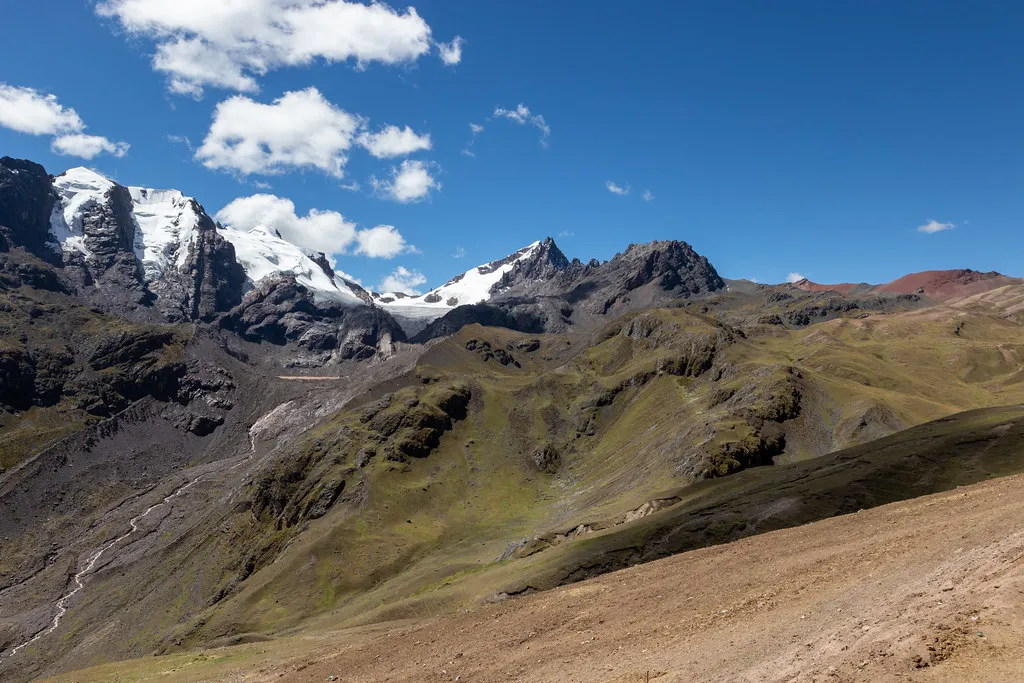
Remarkably, Vinicunca was covered by permanent snow and ice as recently as the early 21st century. A permanent glacier and snowfield covered the colored layers, part of a broader pattern of Andean ice loss documented by Peru’s National Institute of Glaciology, INAIGEM. Local shepherds knew the mountain existed, but tourists had no reason to visit what appeared to be an ordinary snowfield among thousands of others in the Andes.
The widely repeated claim that a glacier covered Vinicunca until climate change melted it around 2015 is nuanced by scientists. The Geophysical Institute of Peru indicated the hill was partly iced and had seasonal snow until the early 1990s, and a researcher at the Pontifical Catholic University of Peru doubted the summit had been a true glacier in recent decades. What is clear is that the colors were not visible to the outside world until well into the 2000s.
How Vinicunca Went Viral Almost Overnight
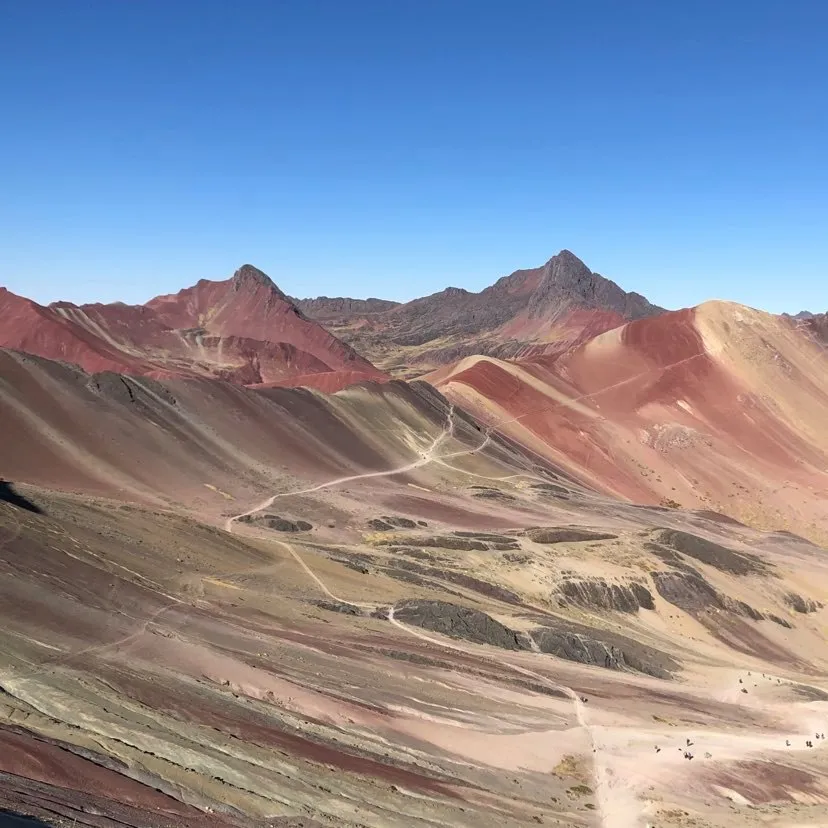
As the snow receded in the early 2000s, the colored layers became visible. By 2016, photos started going viral and tourism exploded almost overnight. Since its tourism discovery in 2015, this colorful destination saw a rapid rise in popularity: in just two years, it went from receiving a few dozen visitors per day to welcoming over 1,000 tourists daily, becoming a must-see stop for travelers in Peru.
Within two years of word spreading, Rainbow Mountain transformed from unknown grazing land into Peru’s second most-visited attraction after Machu Picchu. The speed of that transformation is almost as extraordinary as the mountain’s appearance.
The Altitude: Where the Body Struggles and the Eyes Feast
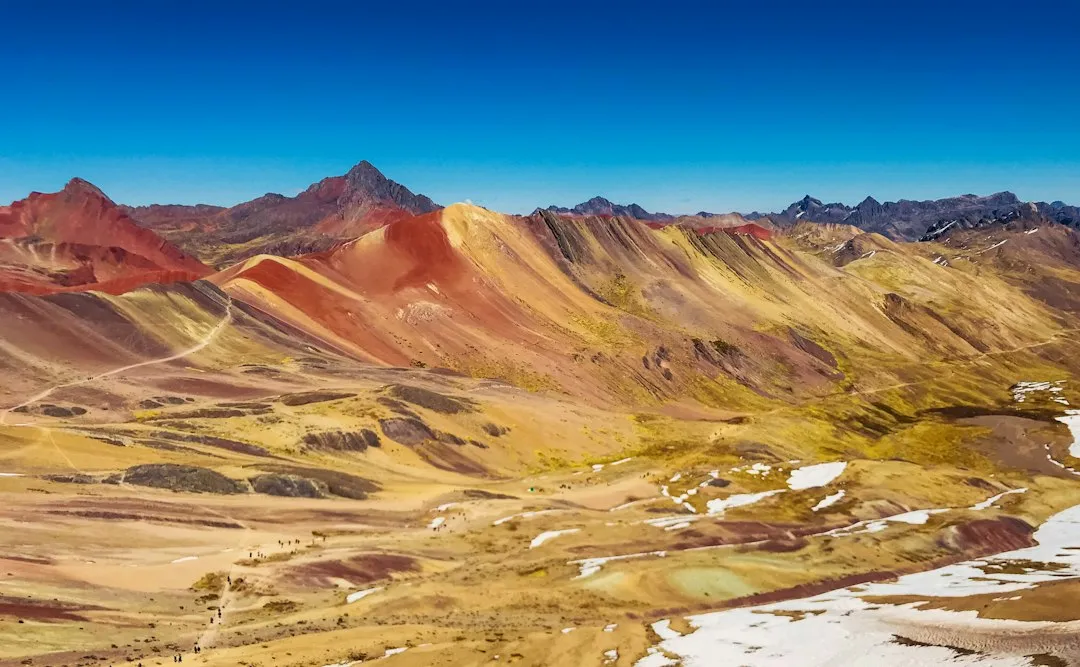
The Rainbow Mountain altitude reaches 5,200 meters above sea level, which classifies this hike as moderate to demanding difficulty. Altitude sickness is caused by a lack of oxygen at higher altitudes and can set in at altitudes above 2,500 meters above sea level, putting Rainbow Mountain well above the minimum elevation where it can occur.
Without acclimatization, travelers may experience headaches, dizziness, nausea, shortness of breath, and fatigue. Most travelers should spend at least two to three days in Cusco before hiking Rainbow Mountain. Coca leaves have been used by Andean communities for centuries. They are not a cure for serious altitude sickness, but they provide mild stimulation and represent a genuine local tradition.
How Many People Are Actually Going There
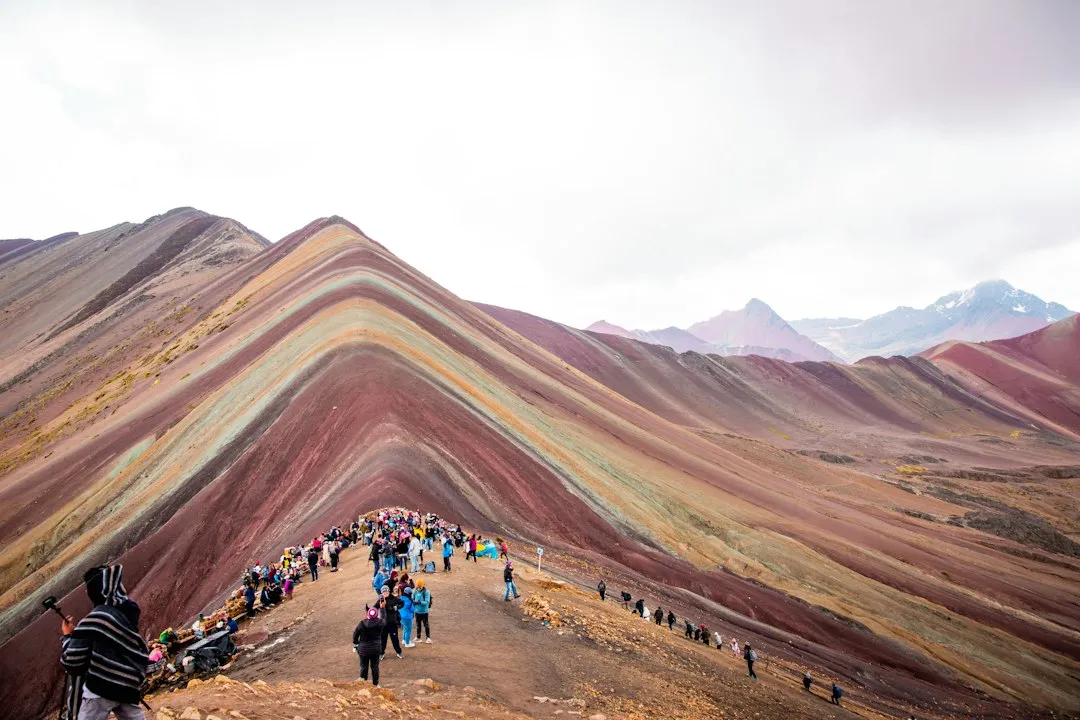
According to the Regional Directorate of Tourism, Dircetur, of the Cusco region, daily visitor numbers reportedly reach up to 1,000 to 1,500 people per day during peak seasons. MINCETUR, Peru’s tourism ministry, counts about 110,000 visitors to Vinicunca in 2025.
The dry season from May through September offers the clearest skies, but crowds peak in July and August. Hundreds of tour buses leave Cusco around 3 to 4 am every single day in high season. It is a rhythm that says a lot about how dramatically a single photograph can reshape a destination.
The Real Cost of All That Attention
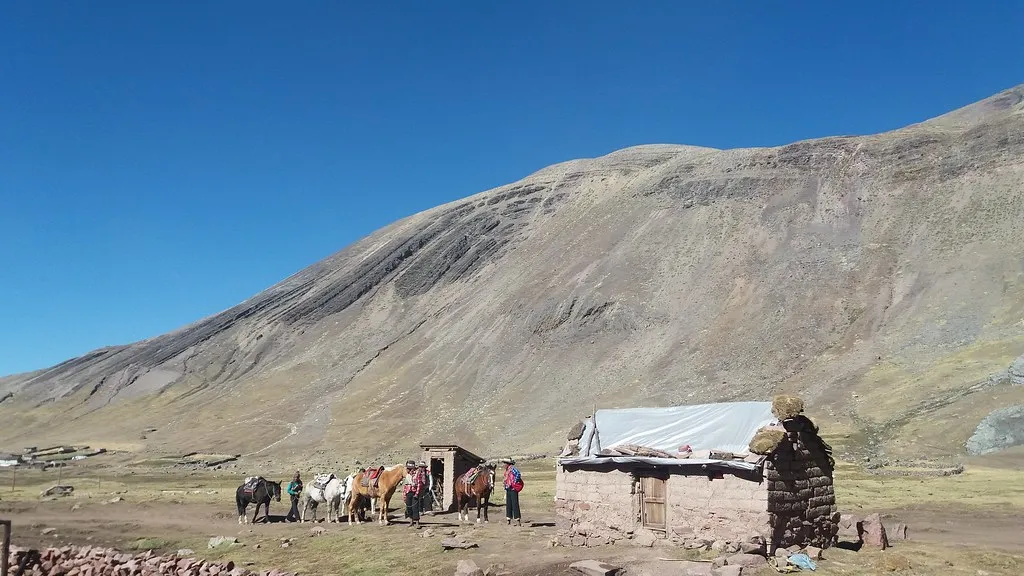
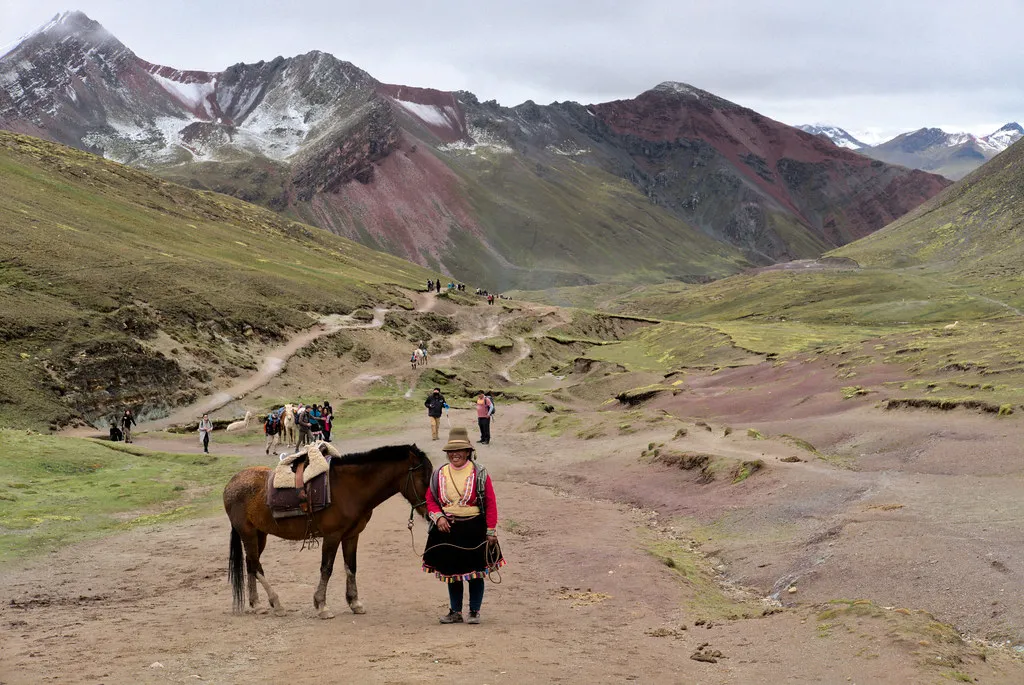
Infrastructure has struggled to keep pace with demand. On peak days, over 1,500 visitors make the trek. The site had no facilities until recently, and even now amenities remain basic. The sudden tourism boom provides income to remote communities while straining the environment those communities depend upon.
The large number of people visiting has led to the creation of a path up the side of the mountain that has become very susceptible to runoff, causing significant erosion. The Regional Directorate of Foreign Trade and Tourism, DIRCETUR Cusco, is the entity responsible for preserving the landscape, controlling visitor flow, and protecting the wildlife of the mountain range.
What Tourism Is Giving Back to Local Communities
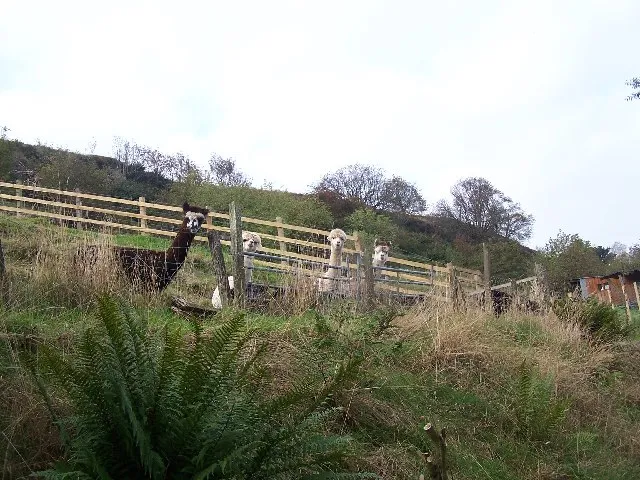
Many locals have migrated back to their old homes due to the economic boom brought about by the increase in tourism. It has been a boost for the alpaca wool farmers in the area, as many tourists bring home alpaca scarves, hats, and gloves. Local communities around Vinicunca now manage access and collect entrance fees.
The sudden tourism boom provides income to remote communities while straining the environment those communities depend upon. That tension is real and ongoing, and responsible visitors are worth far more than casual ones at a place this fragile and this precious to the people who call it home.
Palccoyo: The Quieter Alternative Worth Knowing
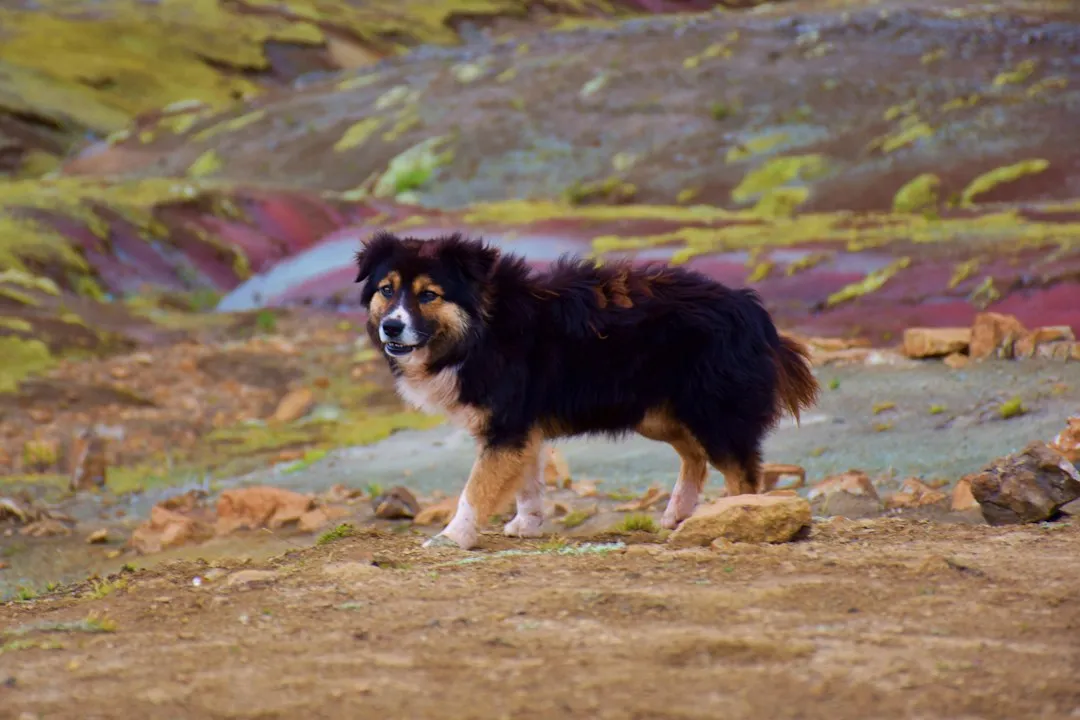
Many travelers don’t realize that another impressive natural attraction is located nearby: Red Valley and Rainbow Mountain aren’t the same place. Vinicunca is known for its multicolored mineral bands, while Red Valley features much broader mountain slopes dominated by red, rust, brown, and ochre tones.
Palccoyo, the lesser-known alternative, sits at a maximum altitude of 4,900 meters compared to Vinicunca’s 5,036 meters, involves a shorter 3-kilometer walk compared to 6.2 kilometers, and typically receives only 100 to 200 visitors daily versus over 1,000 at Vinicunca. Palccoyo Rainbow Mountain offers the same type of scenery with roughly 90 percent fewer tourists. For those who want the landscape without the queue, it’s a genuinely compelling option.
The Bigger Picture: A Mountain Still Changing
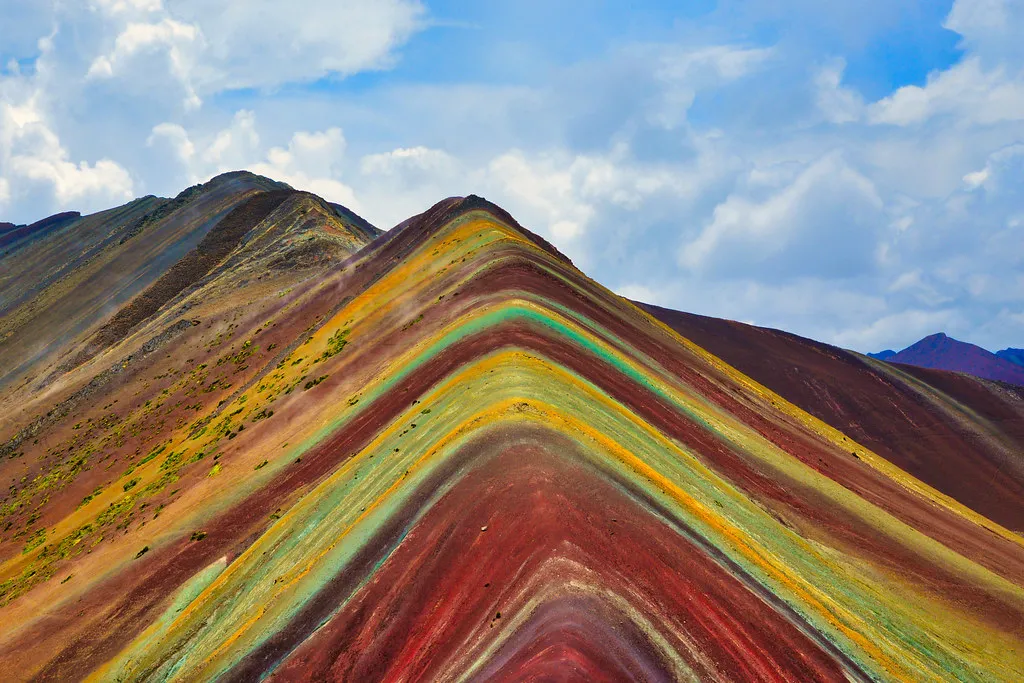
Beneath Vinicunca’s colorful slopes lies a story of ancient sediments, mineral-rich rocks, and the tectonic forces that raised the Andes. The mountain we see today is not a finished product. Ongoing erosion continues to shift and expose new layers. The colors themselves will slowly change over geological time, as weathering and oxidation continue their work.
The combination of sedimentation, tectonic deformation, uplift, erosion, weathering, and oxidation created the Rainbow Mountain we see today. Every hiker who reaches the summit is standing on a process, not just a place. That distinction quietly makes the whole experience more meaningful.
The Takeaway
Rainbow Mountain doesn’t need any embellishment. The science behind those colors is already extraordinary. The geology alone, spanning tens of millions of years of sediment, tectonic pressure, and ice, earns more wonder than any photograph can fully deliver.
What makes Vinicunca worth caring about now, in 2026, is not just the view from the summit. It’s the fragility of the place, the communities whose livelihoods are tied to it, and the responsibility that comes with adding your footsteps to the thousands already there. Arriving prepared, informed, and with genuine respect for the landscape is the only way to visit a mountain this rare. The earth painted this over millions of years. It deserves more than a moment of attention.
AI Disclaimer: This article was created with the assistance of AI tools and reviewed by a human editor.