
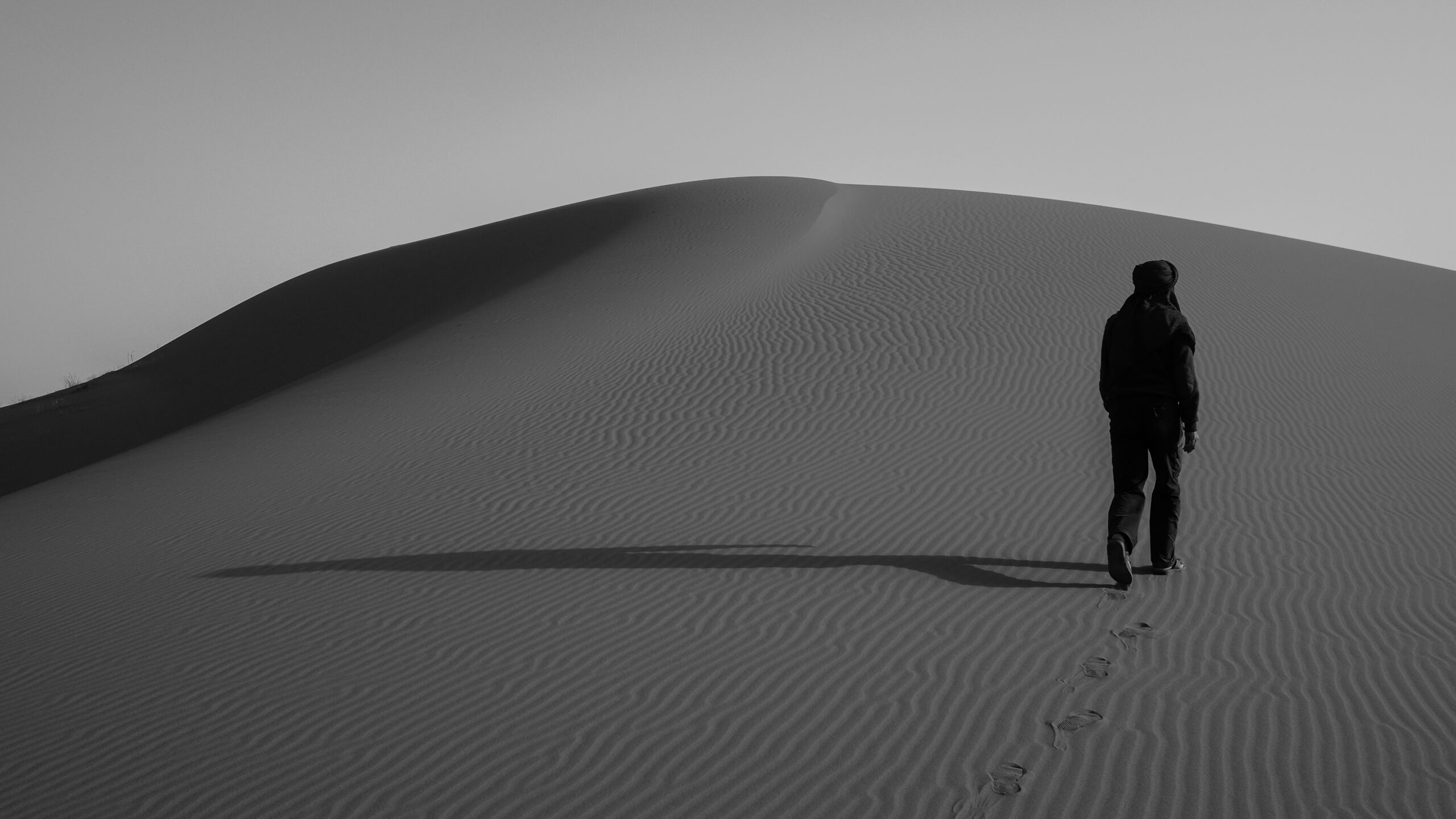
Most people carry a fixed image of the Sahara in their minds: an ocean of sun-baked sand stretching endlessly in every direction, merciless and lifeless. It is the world’s largest hot desert, covering the bulk of North Africa. That image, though vivid, tells only part of the story.
Beneath its dunes and gravel plains lies a quietly astonishing past. Beneath and between its dunes, gravel plains, and rock plateaux lies evidence of repeated monsoon expansions strong enough to build rivers, fill immense lakes, and sustain animals that now seem entirely out of place. The Sahara, it turns out, has been before. More than once.
The African Humid Period: When the Desert Bloomed
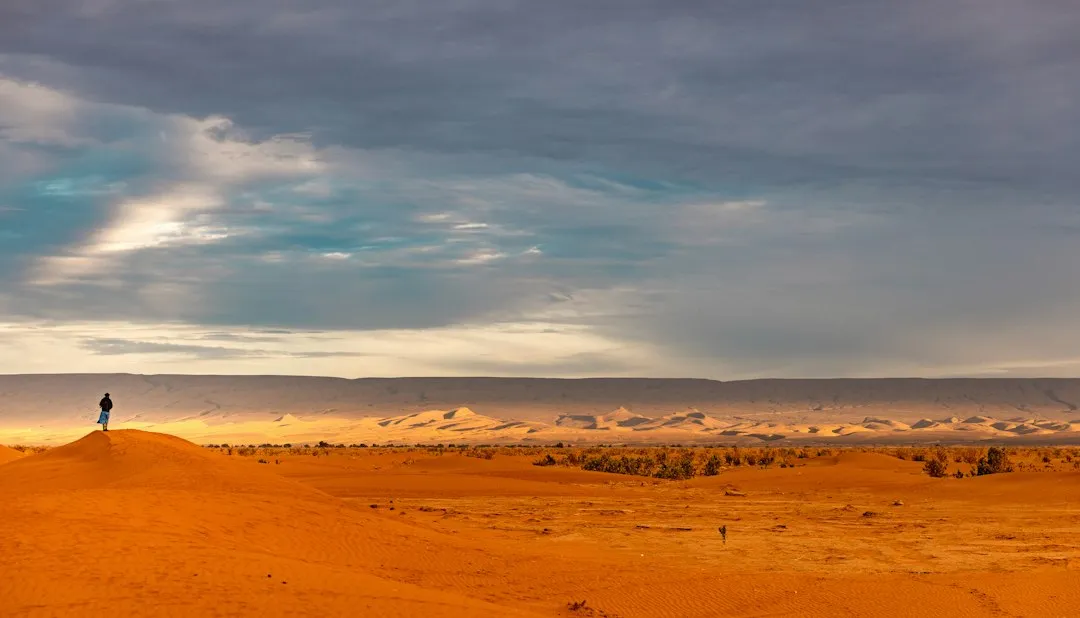
The Sahara Desert was a green savannah during the African Humid Period, between 14,500 and 5,000 years before present, with water bodies promoting human occupation and the spread of pastoralism in the middle Holocene epoch. This window in geological time is known formally as the African Humid Period, or AHP, and it represents one of the most dramatic environmental shifts in recent Earth history.
Between roughly 11,000 and 5,000 years ago, much of North Africa became a mosaic of grasslands, woodlands, rivers, marshes, and seasonal lakes during the most recent African Humid Period. This was not a mild dampening of an otherwise harsh climate. It was a wholesale transformation of an entire continent’s northern face.
Earth’s Orbital Wobble: The Engine Behind the Greening

Research published in Nature Communications showed that periodic wet phases in the Sahara were driven by changes in Earth’s orbit around the Sun and were suppressed during the ice ages. These orbital shifts, known as Milankovitch cycles, altered the distribution of solar energy reaching different latitudes, which in turn rearranged the planet’s rainfall patterns.
It’s generally accepted by paleoclimatologists that small orbital variations called Milankovitch cycles were key drivers of the African Humid Period because they would have caused slight changes in the distribution of solar radiation and shifts in the strength and position of the North African monsoon. When the monsoon strengthened and pushed further north, rain followed. Rivers formed. Life followed the rain.
A Recurring Phenomenon, Not a One-Time Event
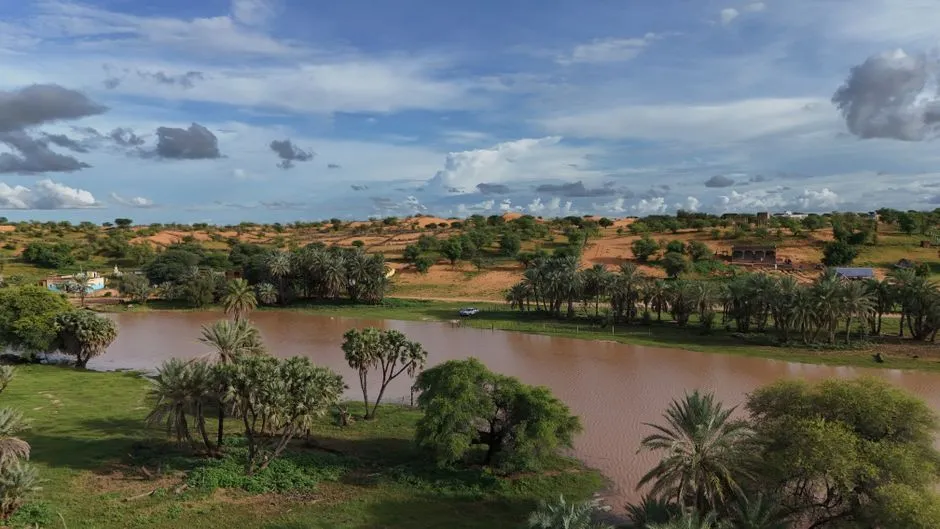
This greening of the Sahara didn’t happen once. Using marine and lake sediments, scientists have identified over 230 of these greenings occurring about every 21,000 years over the past eight million years. These greening events provided vegetated corridors which influenced species’ distribution and evolution, including the out-of-Africa migrations of ancient humans.
In the last 800,000 years, the Sahara has periodically turned green, with savannahs, rivers, lakes, and water-dependent animals appearing repeatedly throughout history. The rhythm is tied to a predictable astronomical cycle, though it plays out over thousands of years rather than human lifetimes. It is slow, vast, and undeniable.
Rivers, Lakes, and a Landscape Unrecognizable Today
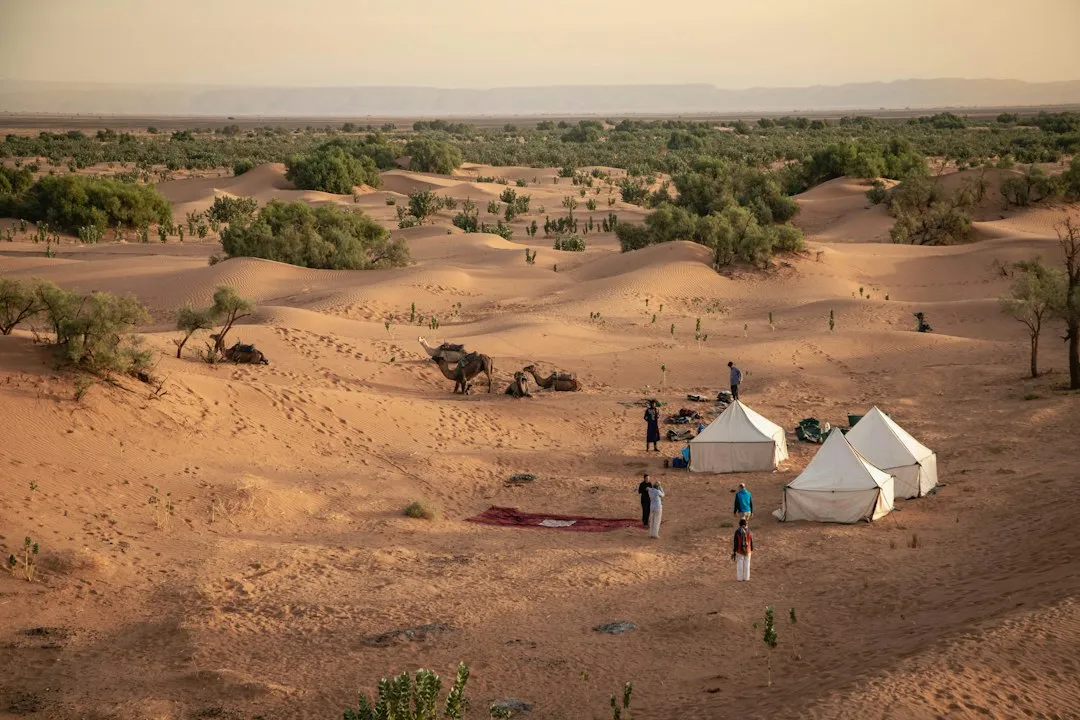
The Sahara was not always the vast desert it is today. During humid phases, it was a green corridor filled with rivers and lakes that facilitated human expansion into North Africa and beyond. These were not seasonal trickles. They were substantial waterways capable of supporting large ecosystems.
A 2015 Nature Communications paper combined satellite radar, sediment, and marine-core evidence to reconstruct the Tamanrasset, a large river system that once crossed Western Sahara and discharged into the Atlantic. Alongside this river network, numerous smaller lakes occupied interdune depressions across the desert. The landscape would have looked closer to the East African savannah than anything we associate with the Sahara today.
The Wildlife That Roamed the Green Sahara
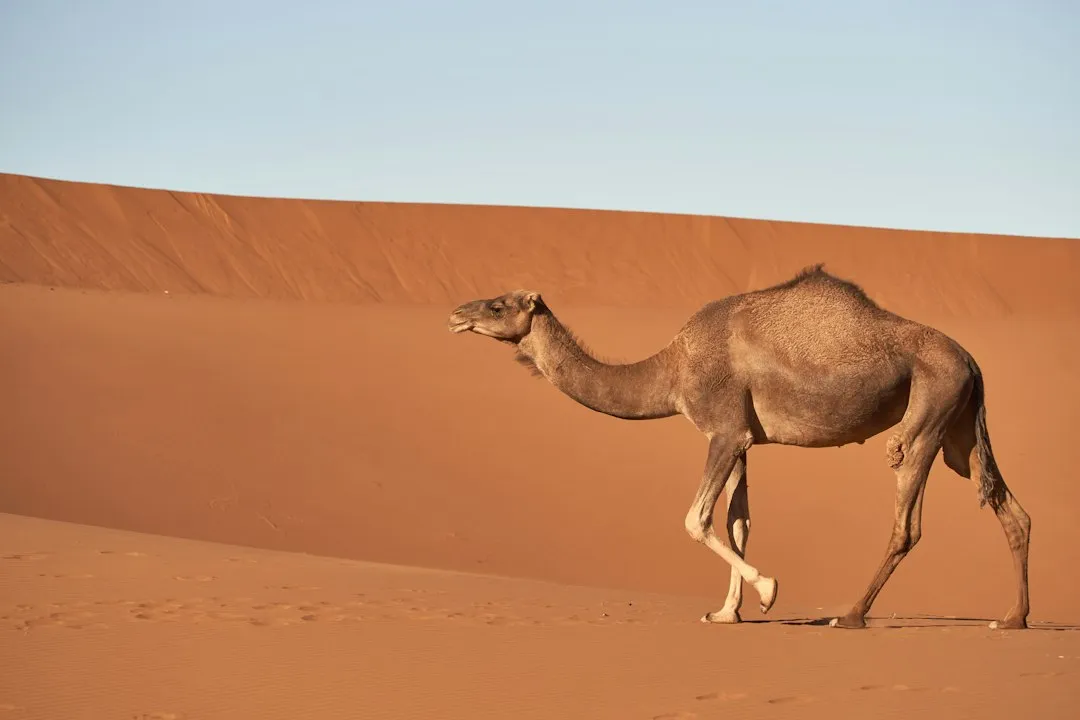
Reconstructions indicate a varied landscape of grasslands, savanna, shrubs, scattered woodland, marshes, rivers, and open water. This variety supported a remarkable range of animals. Wildlife included elephants, rhinos, hippos, crocodiles, and more than 30 species of fish, some as long as 6 feet.
As vegetation grew, animals like antelopes, giraffes, hippos, and even the mighty elephant made the Green Sahara their home. Fossil bones recovered from dry riverbeds confirm what might otherwise sound impossible. Bones of hippos dated to the same period that paintings were made have been found in the dry riverbed of the Tafassassey River, which once flowed south into Lake Chad.
Cave Art as a Living Archive
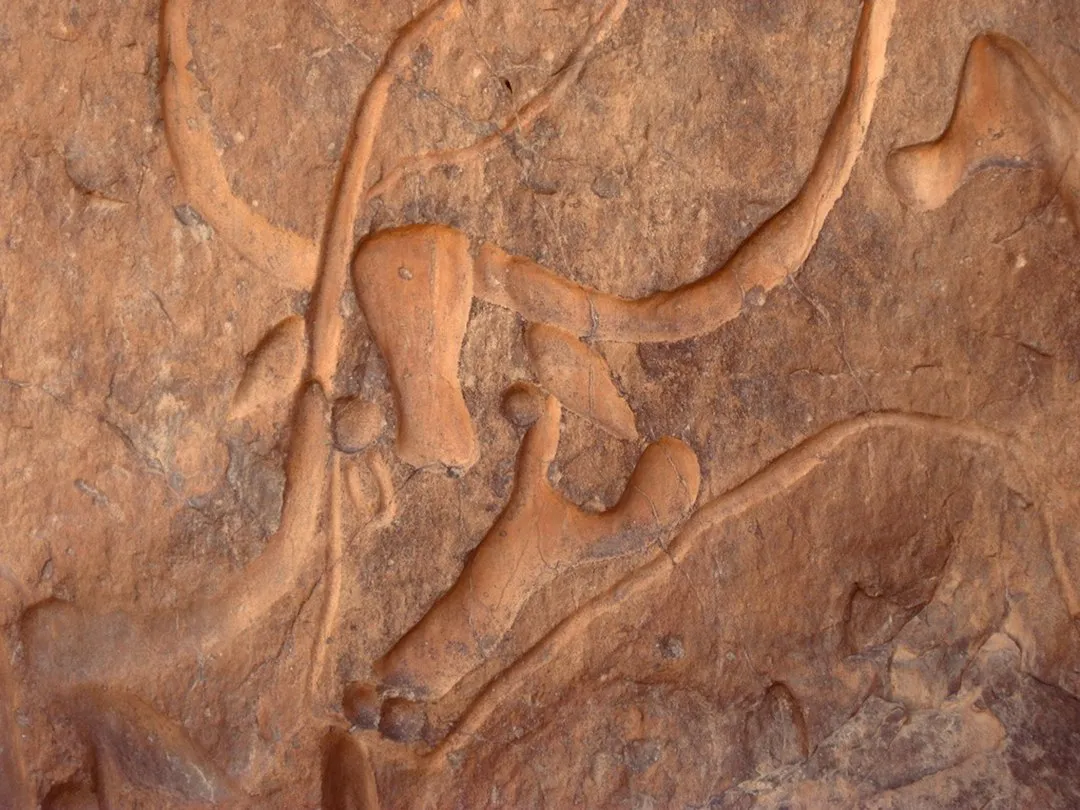
Rock and cave paintings from that time depict abundant wildlife, including elephants and giraffes that lived in the savannahs and hippopotami and crocodiles that lived in the rivers and lakes, as well as people who hunted with bows and arrows, herded animals, collected wild grains, and fished. These images are not symbolic or mythological. They are records of daily life in a world that no longer exists.
At Tassili n’Ajjer in Algeria, more than 15,000 rock paintings and engravings record what these people saw. The rock art depicts a world that no longer exists, and its accuracy is not in doubt: sediment cores from lake beds and marine deposits off the West African coast confirm that the animals were really there. The art and the science tell the same story.
Ancient DNA Confirms Who Lived There

A new study published in April 2025 reveals a long-isolated North African human lineage in the Central Sahara during the African Humid Period, more than 7,000 years ago. The study provides critical new insights into the African Humid Period, a time between 14,500 and 5,000 years ago when the Sahara desert was a green savanna, rich in water bodies that facilitated human habitation and the spread of pastoralism.
These individuals share close genetic ties with 15,000-year-old foragers that lived during the Ice Age in Taforalt Cave, Morocco. Notably, both groups are equally distant from sub-Saharan African lineages, indicating that despite the Sahara’s greening, gene flow between sub-Saharan and North African populations remained limited during the African Humid Period. It was a distinct human world, connected to its own deep past, adapted to a landscape that was far more generous than the one that followed.
How the Greening Ended: A Climate Tipping Point
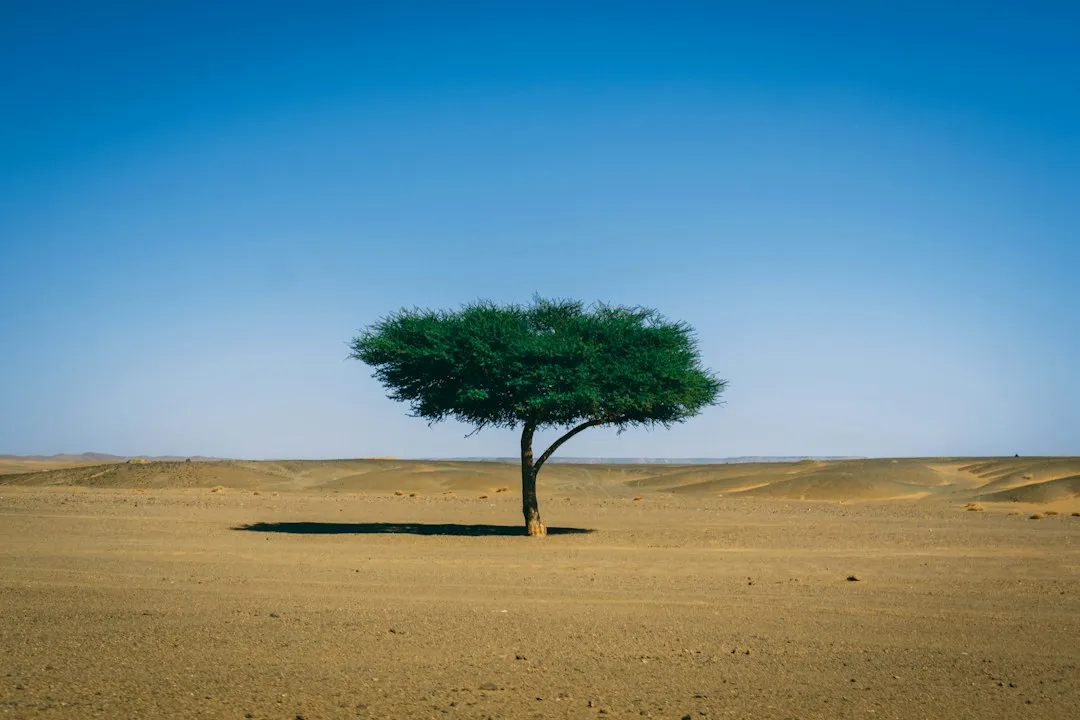
From the last ice age until around 6,000 years ago, the region now known as the Sahara Desert was a lush, green landscape teeming with life. This African Humid Period ended abruptly, transforming this thriving region into the arid terrain seen today. The speed of this transition surprised researchers for decades.
The transition from a humid green Sahara to today’s hyperarid conditions in northern Africa around 5,500 years ago shows the dramatic environmental change to which human societies were exposed and had to adapt to. A 2024 study published in Nature Communications found early warning signals embedded in climate records before this collapse, suggesting the shift crossed a genuine tipping point rather than simply being a gradual fade. A 2024 Nature Communications study described the shift from wet to dry conditions as a roughly thousand-year transition in a high-resolution Ethiopian record, including repeated shorter droughts.
What the Sediments and Sea Floors Tell Us
Roughly 11,000 to 5,000 years ago, during the African Humid Period, the Sahara Desert was likely far wetter and greener. Geologic and archaeological evidence indicates that vegetation, wetlands, and perhaps even large lakes covered areas that are now oceans of sand. Much of this evidence comes not from the desert itself, but from the seafloor.
Evidence for the Green Sahara interval comes from paleolake deposits, pollen, and archaeological remains, indicating that humans inhabited, hunted, and gathered deep within the present-day desert. Sediment cores drilled from the Atlantic Ocean floor, off the West African coast, contain ancient pollen and dust that track the rise and fall of vegetation across the continent with remarkable precision. Despite evidence indicating that the Sahara was wetter during the African Humid Period, just how wet remains a matter of scientific debate. Science is honest enough to acknowledge the limits of its own record.
What a Greener Sahara Means for Our Understanding of Climate
Although the orbital changes occurred gradually, evidence suggests parts of the Sahara dried surprisingly fast once vegetation collapsed. This finding has significant implications for how researchers think about climate change more broadly. Gradual forcing can produce abrupt consequences when a system reaches a threshold, and the Sahara’s story is one of the clearest illustrations of that dynamic in the geological record.
Less clear is whether and how much the Sahara might green and support long-lasting lakes in future centuries and millennia, as the impacts of greenhouse gas emissions and climate change are layered onto the cyclical effects of the Milankovitch cycles. The orbital conditions that once triggered past greenings are not precisely aligned to do so again in the near future, and modern climate disruption adds further complexity. The Sahara’s future is genuinely uncertain.
The Takeaway
The story of the Green Sahara is, at its core, a story about impermanence. What looks timeless seldom is. Increasing evidence shows that the Sahara was not always a desert, but rather is a region that experiences alternating dry and wet periods. The desert we see today is one chapter in a very long book, not the final word.
For those drawn to travel and to understanding the places they visit, the Sahara carries a different weight once you know its history. The dunes sit above ancient lakebeds. The rock walls of Tassili n’Ajjer hold images of a world that thrived where nothing now grows. The desert’s surprising past reflects on its present, as well as its possible future. Standing at the edge of the Sahara, you are standing at the edge of deep time.
AI Disclaimer: This article was created with the assistance of AI tools and reviewed by a human editor.