

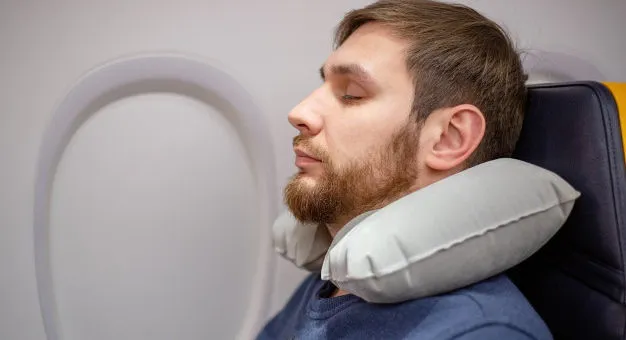
Few objects are as immediately recognizable in a departure terminal as the U-shaped neck pillow. It hangs from backpacks, drapes around shoulders, and rests on laps in every boarding gate from Bangkok to Boston. Yet most people who carry one have never paused to wonder where it actually came from.
The story turns out to be stranger and more interesting than you’d expect. The familiar curve didn’t begin in aviation. It began somewhere far quieter – and far wetter.
A Bath Pillow Becomes Something Bigger
The design of the travel pillow may have its precursor in bathtub pillows. The idea for a portable U-shaped pillow that surrounds the neck was first patented in 1929, to support a reclining person in the bathtub. New York inventor Elizabeth Millson first patented the inflatable rubber ring in 1929 as a way to help people relax in the bath.
In the patent filing, the bathtub pillow’s crescent shape is described to be “such that the head is most comfortably supported, and yet the wearer will not feel confined or oppressed.” That careful attention to both support and openness would later become the central promise of every neck pillow sold in an airport shop.
The Purpose Was Comfort, Not Travel

The foundations for these unmistakable products were laid in 1928 by Elizabeth Millson. Although, at this time, they were not made for traveling – they were designed to be used as a bath pillow. The leap from bathroom to boarding gate would take several more decades.
A pillow generally provides support for the head and neck, typically in a lying position. A travel pillow, conversely, is designed to provide support for the head and neck while seated, as is common during long automobile, train, and airplane trips. That functional shift changed everything about how the shape needed to perform.
Early Comfort on the Rails
Patent No. 98,859 to Fast on January 18th, 1870, describes a travel pillow having a cushion for promoting the comfort of passengers while traveling. This is one of the earliest documented efforts to bring neck and head comfort specifically to the experience of seated transit. Rail travel, which dominated long-distance movement in the nineteenth century, made the problem of sleeping upright very real for a large number of people.
This device comprises an inflatable semi-circular cushion and a strap adapted to form the cushion around the neck by applying downward force with the arms. Even at that early stage, designers were circling the same fundamental challenge: how do you keep a human head from rolling and drooping while the body remains seated?
The 1982 Patent That Shaped a Product Category
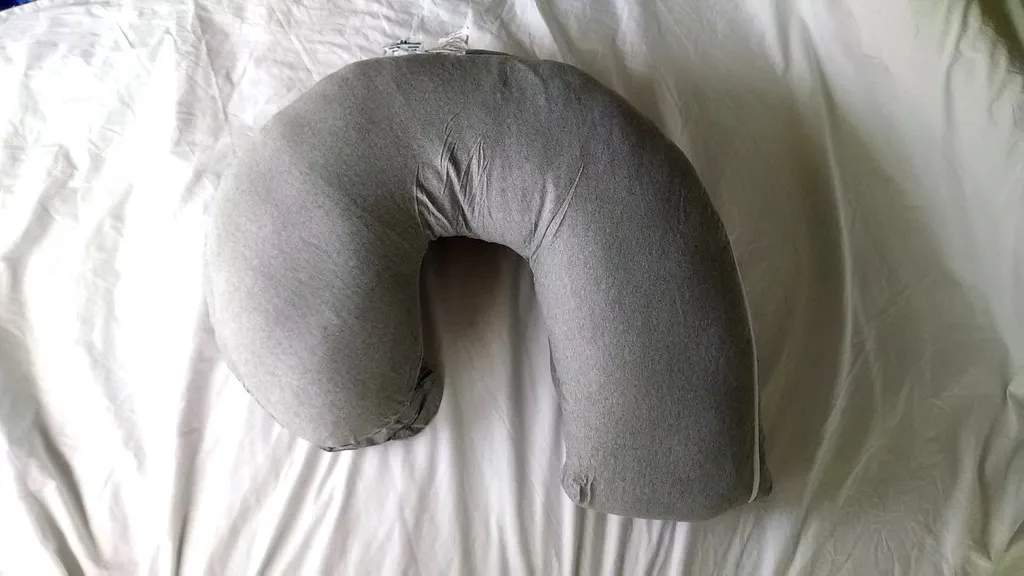
Patent No. 4,345,347 to Kantor on August 24th, 1982, describes a cushion having a U-shaped portion for supporting the head and neck of a user while sitting. This patent is frequently cited in later travel pillow designs as a clear predecessor of the modern form. By this point, the shape had migrated fully from bathroom to transit context.
Throughout the 1980s, society saw an exponential growth of U-shaped travel pillows. This came as flights became more common and accessible to everyday people, and not just the wealthy or famous. Wider air travel meant a wider audience experiencing the same stiff-neck discomfort – and a wider market ready for a simple fix.
The Weight of the Human Head

The human head weighs approximately ten pounds, a significant load. When you’re awake, a complex system of muscles handles that weight without much conscious effort. The moment you drift off in a seat, however, those muscles relax and the head begins to drift. That’s the core problem the U-shaped pillow was designed to address.
A travel pillow is generally U-shaped and is adapted to fit around the neck of a person. A travel pillow can prevent neck strain and promote comfort by supporting a person’s neck and head vertically. The geometry of the shape is straightforward: two cushioned arms cradle the sides and back of the neck, keeping the head from tipping sideways during sleep.
The Design’s Persistent Limitation
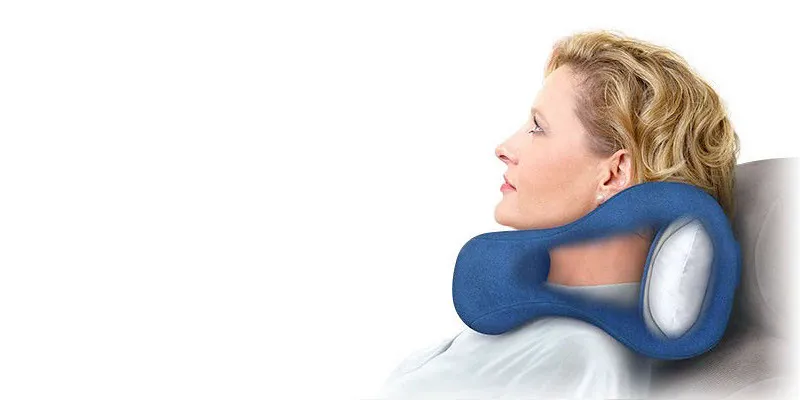
The U-shape, for all its practicality, has a structural weakness that engineers and inventors have been trying to solve for decades. While several travel pillows exist in the prior art, few provide adequate support for alternative head positions. Travel pillows are notorious for forcing the head forward, causing neck strain. Current travel pillows do not adequately support a front position due to the gap of the U-shape.
Dr. Ben Darlow, a musculoskeletal physiotherapy specialist and Associate Professor in the Department of Primary Health Care and General Practice at the University of Otago, says there is very little scientific literature around the U-type pillow, but it is “designed to have the opening under the chin.” That intended orientation is not how most travelers use the product, which helps explain why satisfaction with the classic design is so inconsistent.
How People Actually Wear It

In 2021, TikTok user @sidneyraz shared a travel pillow hack video in which he secured a U-shaped travel pillow with the opening at the back. The viral video clocked up more than five million views, with many of the twenty-nine thousand commenters shocked by the approach. The clip revealed something telling: a surprisingly large number of frequent flyers had been wearing the product incorrectly for years.
The first U-shaped pillow was designed to be worn around the back of the head and neck. Whether worn front-open or back-open, the debate itself says a lot about how the design evolved without ever being accompanied by clear user instruction. The shape reached global ubiquity faster than any consensus on how to use it.
Innovation Responding to Limitation

Once the classic U-shape became mainstream, inventors moved quickly to address its shortcomings. Recent attempts to improve the travel pillow have included straps to hold one’s head in place, or box-like contraptions to place one’s head in. Some of these solutions look slightly unusual in a crowded cabin, but they reflect genuine ergonomic thinking.
The J-Pillow, an invention by former Virgin Atlantic flight attendant Gemma Jensen, won the 2012 British Invention of the Year Award. Its shape provides chin support, which the U-shaped original never offered. These lateral innovations confirm that the original design, while effective enough to become universal, still had room for meaningful improvement.
A Growing Global Market

What began as a rubber bath accessory in 1929 has grown into a commercially significant product category. The global travel neck pillow market size was valued at approximately one and a half billion US dollars in 2024, with a robust year-on-year growth trajectory. The global travel pillow market is experiencing steady growth due to increasing international travel, rising disposable incomes, and heightened consumer focus on comfort during long journeys.
North America continues to lead the travel neck pillow market, with a market size of approximately five hundred and twenty million dollars in 2024. The region is expected to maintain steady growth, supported by ongoing product innovation and the increasing adoption of premium travel accessories. The Asia Pacific region is emerging as the fastest-growing market for travel neck pillows.
From Niche Item to Universal Accessory

The travel pillow has become a universal modern-day travel accessory for both air and train travel, rising in popularity in the last four decades and becoming ubiquitous in the last two decades. Few travel products have made such a complete transition from novelty to near-essential. Walk through any international terminal and the evidence is everywhere.
The global travel pillow market is growing due to rising travel frequency, growing health awareness, and increasing demand for ergonomic comfort. Materials have evolved considerably too, from inflatable rubber to memory foam and bamboo fiber blends, but the foundational crescent shape first conceived by Elizabeth Millson nearly a century ago has remained remarkably intact.
The Takeaway
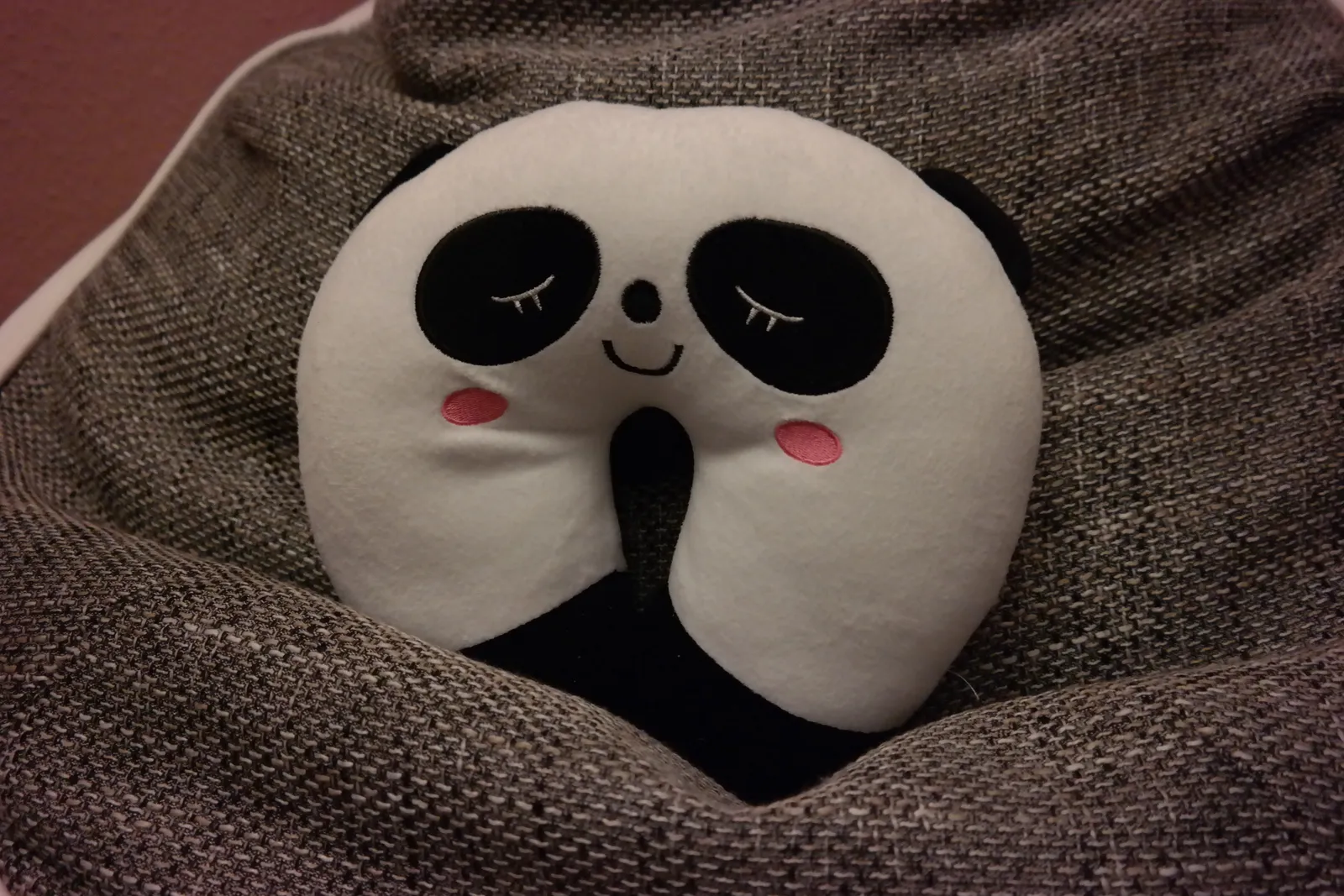
There’s something quietly remarkable about an object that migrated from a Victorian-era bathtub to the neck of nearly every long-haul traveler on the planet. The U-shaped pillow didn’t emerge from aviation research or ergonomic science. It came from someone’s desire to rest more comfortably in a bath – and that modest beginning has proven, against all odds, extraordinarily durable.
The design has its limits, and the industry keeps working around them. Yet the core idea has endured for nearly a hundred years because the problem it solves – how to rest a heavy head while seated upright – hasn’t changed at all. Some solutions are simple enough to outlast everything that tries to replace them.
AI Disclaimer: This article was created with the assistance of AI tools and reviewed by a human editor.