
Most Harnesses Fail Crash Testing
The numbers from independent crash testing are hard to look away from. Using a 55-pound crash test dummy dog and 29 dog harnesses available on the market, the Center for Pet Safety (CPS) and MGA Research staged a 30-mile-per-hour vehicular accident applying the same Federal Motor Vehicle Safety Standards used to test child seats. Of the products tested, 25 of the 29 failed.
In another landmark independent study, the CPS found that eight brands qualified for crash testing, four more failed to pass even preliminary testing, and of everything that reached the sled, exactly one product passed. That’s not a minor quality concern. That’s a near-total failure across an entire product category.
Research by NRMA Insurance found that an unrestrained pet sitting on the back seat of a car can hit the dashboard with enough force to cause serious injury, even at a collision speed below 20 km/h. Most harnesses, while effective at restraining pets, are not safety devices and do little to prevent injury in a common low-speed crash.
The “Crash Tested” Label Doesn’t Mean What You Think
There’s an important distinction that most shoppers miss: crash-tested is not the same as certified. Independent certification is a voluntary program, so a company is free to test, fail, and print the words “crash tested” anyway.
Manufacturers can conduct their own internal tests, choose favorable conditions, and still label a product as crash tested. When looking for a safe dog car harness, make sure it’s been crash tested so you know it’ll at least have a chance of protecting your dog, but that test should come from an accredited, independent third party.
To determine which harness brands were the safest, the Center for Pet Safety sampled 11 pet harnesses that claimed “testing,” “crash testing,” or “crash protection.” The results revealed that advertising language and actual safety performance are very different things. Consumers deserve to know that distinction before they buy.
Using a Walking Harness in the Car
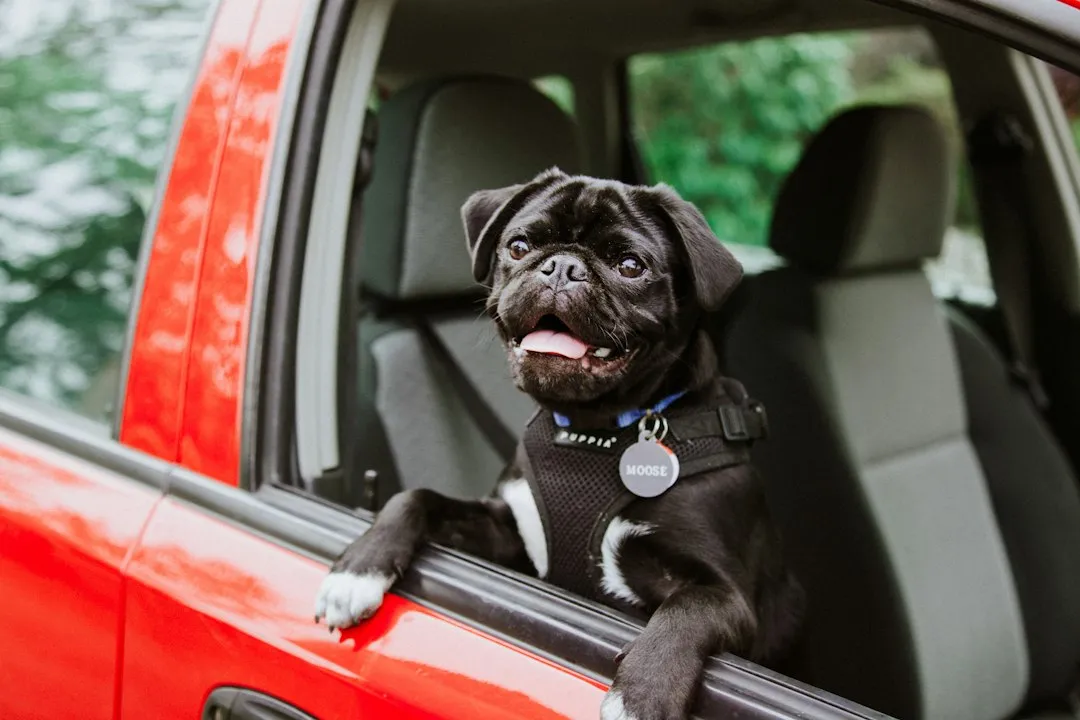
One of the most common mistakes dog owners make is using their dog’s everyday walking harness as a vehicle restraint. It seems logical on the surface since the harness is already fitted and familiar. The reality is more troubling.
A veterinary case report indicated that a regular walking harness attached by a snap-hook to a single spot on the back of the harness means that upon a collision, the movement of the dog’s body is restricted by the belt’s snap-hook. However, the head and lower part of the dog’s body continues forward, causing a rapid and extreme flexion of the vertebral column.
According to veterinary researchers, the ideal safety harness should be large, padded, and precisely fitted to each dog. In order to avoid severe spinal injury, the harness should have two spots of attachment. A single-point clip on a standard walking harness simply can’t distribute crash forces across a dog’s body in any protective way.
The Physics of an Unrestrained Dog
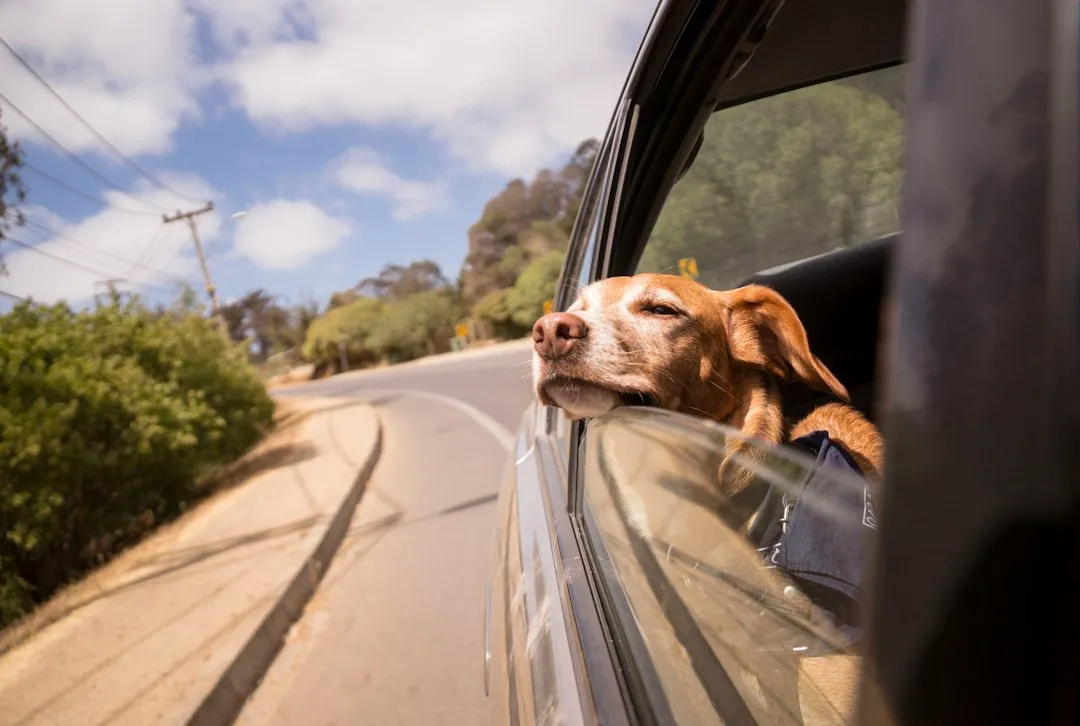
It helps to think about the actual forces involved, not just abstractly but in real numbers. AAA explained it this way: an unrestrained 10-pound dog in a crash at 50 mph will exert roughly 500 pounds of pressure, while an unrestrained 80-pound dog in a crash at only 30 mph will exert 2,400 pounds of pressure.
Cars have safety devices for people, such as seat belts and airbags, but they do not have built-in safety devices for pets. Consequently, in an accident, the likelihood of a pet being injured or killed is substantially higher, and the pet may also injure or kill other vehicle occupants as a projectile.
These aren’t worst-case scenarios reserved for highway pile-ups. Even a sudden hard stop at city speeds generates enough force to cause serious injury. The weight-to-force relationship scales rapidly, which means even small dogs pose a real threat to themselves and to passengers sitting nearby.
Weak Buckles Are a Hidden Problem
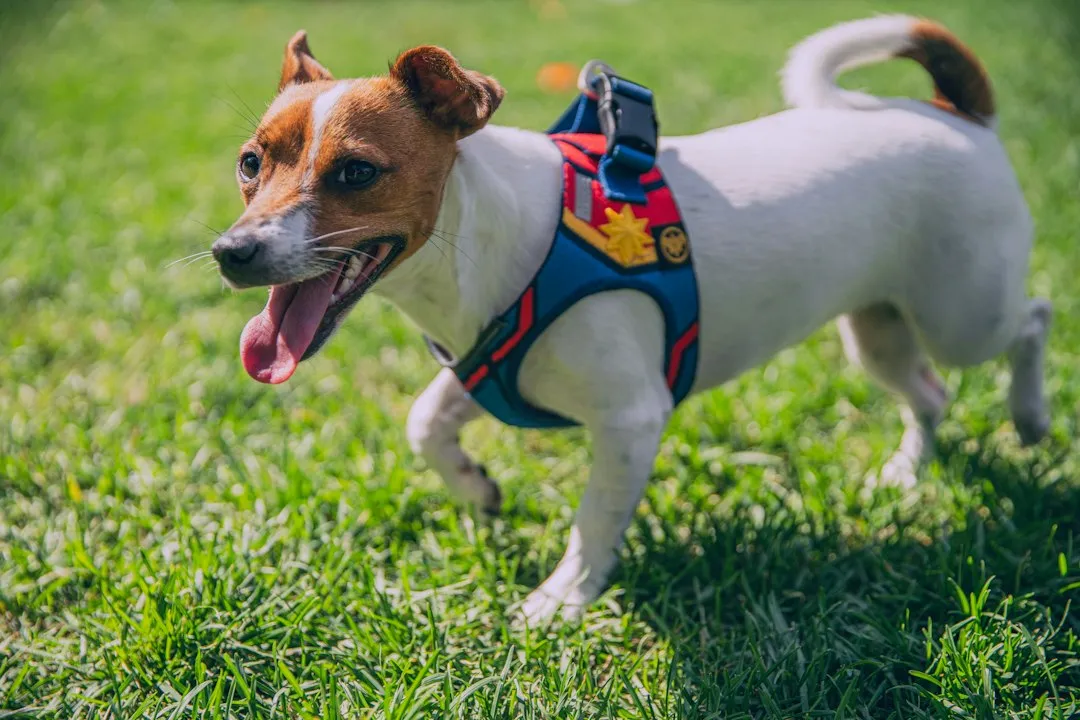
Even when a harness looks sturdy, the weakest point is often the buckle. NRMA Insurance used weighted dog dummies to test harnesses in impacts at both 35 km/h and 20 km/h. Even at low speed, 23 of the 25 popular harnesses tested failed because of weak plastic buckles, similar to those used to clip backpacks.
Buckle failure is particularly dangerous because it creates a false sense of security right up until the moment of impact. The dog appears restrained during normal driving, so the owner has no way of knowing the harness would give way in an emergency.
Some tests not only resulted in catastrophic failure of fasteners and caused severe harness deformation and stitching failure, but also launched the test-dummy dog, stripped off the harness, or hung and strangled the test dummy. That last outcome, strangulation from a failed harness, is a risk almost no buyer considers when browsing pet store shelves.
Distracted Driving Is Part of the Problem Too

The danger isn’t limited to what happens during a crash. An unrestrained or poorly restrained dog creates hazards before any collision even occurs. Dogs that move freely around a vehicle can create distractions that pull a driver’s attention from the road even before an emergency occurs. Tennessee pet owners reported behaviors such as barking, seeking attention, moving between seats, and jumping into the front seat.
Half of Illinois dog owners say their dog’s behavior has affected their driving, such as taking their eyes off the road or a hand off the steering wheel, to braking or swerving suddenly, or missing a traffic signal.
According to the AAA Foundation for Traffic Safety, taking a driver’s eyes off the road for just two seconds doubles the chance of a car accident. An unrestrained dog can cause a distraction significant enough to contribute to a crash in less than one minute. These are sobering numbers, especially for owners who believe their calm, well-trained dog poses no real risk.
Owners Know the Risk But Often Do Nothing About It
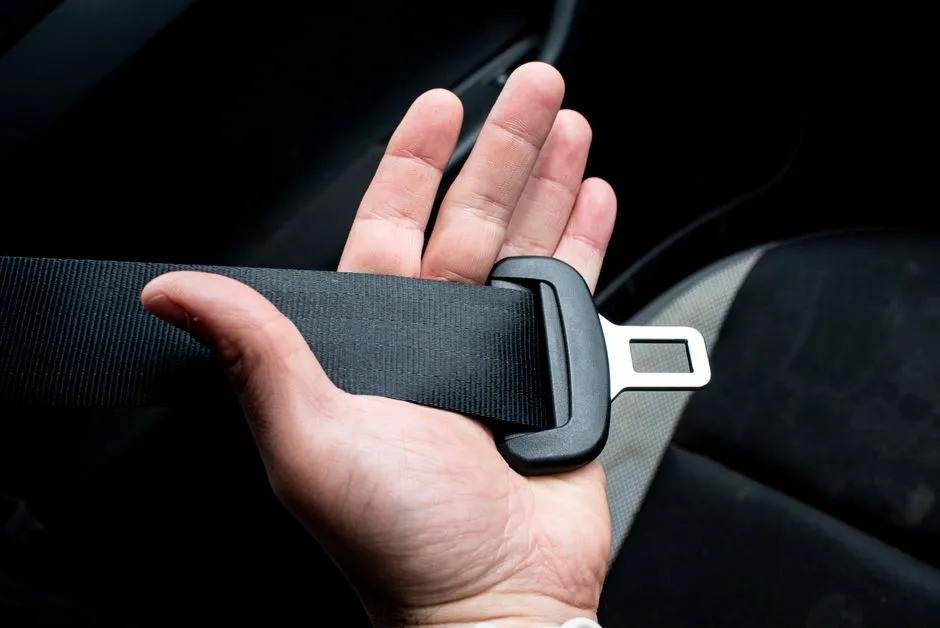
Perhaps the most frustrating part of this story is that pet owners aren’t uninformed. They largely know what the risks are. A 2026 AAA survey found that while 88% of Illinois dog owners believe restraints are important, nearly one in three still allow their dogs to ride unrestrained.
The gap between belief and behavior is wide. According to the same AAA survey, 41% of respondents let their dogs ride unrestrained so the dogs can stick their heads out the window. Another 41% said they don’t own a proper restraint for the dog, and 11% said they feel bad for their dogs if they ride in a crate.
According to a 2024 survey commissioned by Erie Insurance, a large majority of dog owners surveyed said they drive somewhere with their dogs for various reasons. What’s especially alarming is the fact that half of pet owners who drive with their dog acknowledged that their dog could cause an accident while in the car with them. Awareness without action still leaves dogs at risk.
Fit Matters as Much as Design
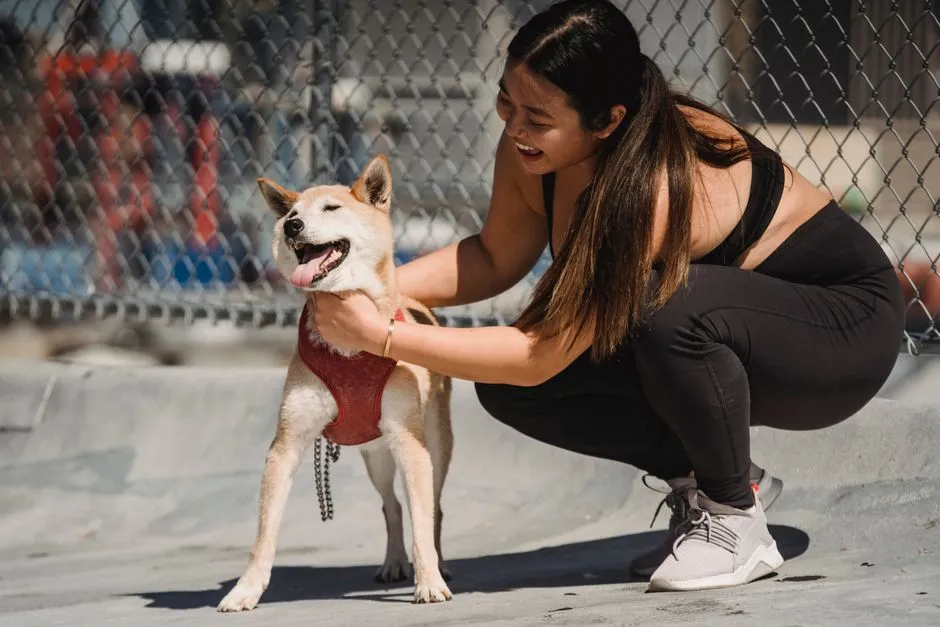
Even among genuinely safe, properly certified harnesses, fit remains a critical factor. A harness that is too loose will allow excessive forward movement during impact, negating much of its protective value. One that is too tight can cause discomfort or restrict breathing before a crash ever happens.
To make sure it isn’t too loose or too tight, you should be able to comfortably fit two fingers between the harness and your dog’s body. This simple test takes seconds and should be performed every time the harness is put on, since dogs can lose or gain weight seasonally and harness webbing can stretch over time.
The ideal safety harness should be large, padded, and precisely fitted to each dog. Padding matters because it distributes crash forces rather than concentrating them on a single strap. Precision fit matters because a harness that shifts during a crash provides far less protection than one that stays correctly positioned.
A New Safety Standard Is Finally Here
The good news is that the industry is beginning to catch up to the problem. In November 2025, ASTM International’s consumer products committee approved a new standard for the safety of dog harnesses used in motor vehicles. The standard, known as F3725, was developed by the pet products subcommittee.
This is the first formal benchmark of its kind for canine vehicle restraints, which is a significant step forward for an industry that has operated largely without enforceable safety standards for decades. The new standard addresses ejection prevention and injury protection for both dogs and other vehicle occupants.
A strong car harness can protect your dog in the unfortunate event of a collision, while also making sure they are secure and can’t cause distractions. With a formal standard now in place, consumers will eventually have a clearer framework for comparing products, though voluntary adoption by manufacturers will determine how quickly that changes in practice.
What to Look for in a Genuinely Safe Harness
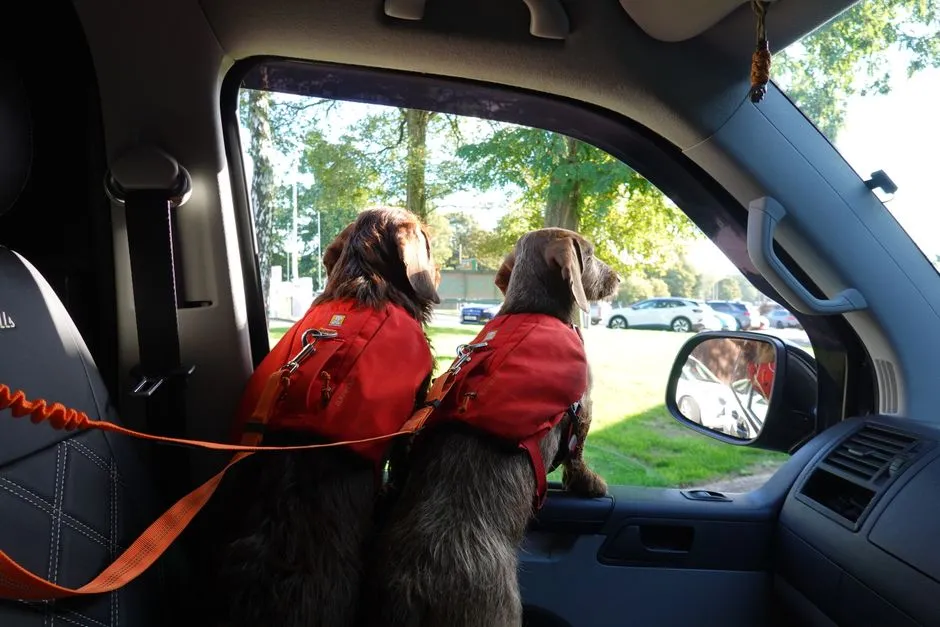
Not all harnesses are equal, and the difference between a safe one and a dangerous one isn’t always visible from the outside. A properly engineered safety harness uses a broad, padded vest to distribute and reduce damaging forces that can cause injury. There should be multiple points of contact to reduce forward and lateral movement in the event of a collision or sudden stop.
The most credible safety harnesses have been crash-tested at U.S., Canadian, and E.U. child safety standards, then independently tested and certified through a third-party organization such as the Center for Pet Safety. Third-party certification is the clearest signal available to consumers right now, since it removes the conflict of interest that comes with manufacturer-run testing.
One important thing to keep in mind is that a car harness isn’t necessarily the best harness for walking. A harness built for vehicle use is designed around crash force distribution, not leash control or movement during a walk. Owners who invest in a certified car harness should consider keeping a separate walking harness for outdoor use, rather than trying to make one product do both jobs well.
The Takeaway

Putting a harness on your dog before a drive is a good instinct. The problem is that the harness in your hand may offer very little real protection, regardless of what the packaging claims. The research is consistent: most harnesses fail under crash conditions, buckles give way at low speeds, and the wrong type of harness can actually cause spinal injury rather than prevent it.
The 2025 ASTM standard is a meaningful step, and third-party certified options do exist. The gap between what most owners believe they’re providing and what their dog actually needs is closeable. It just requires looking past the marketing language and asking a simple question: has this product been independently tested and certified by a third party?
That one question, asked before every purchase, is probably the most useful thing a dog owner can do for their pet’s safety on the road.
AI Disclaimer: This article was created with the assistance of AI tools and reviewed by a human editor.