
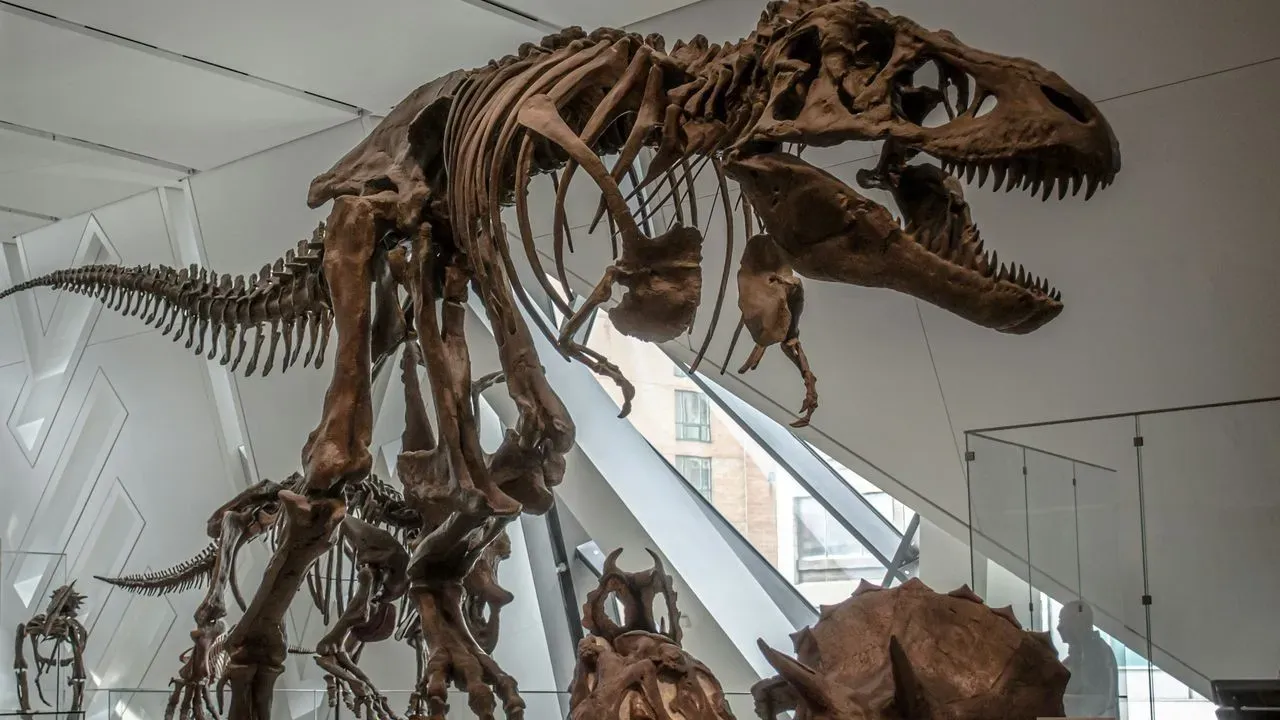

Brazil’s Romualdo Formation has yielded another remarkable specimen. A modest fragment of leg bone from the theropod Aratasaurus museunacionali has preserved microscopic structures that researchers identify as fossilized red blood cells, complete with chemical traces of heme, the oxygen-carrying component of hemoglobin. The find, detailed in a study published this week in the Proceedings of the National Academy of Sciences, pushes the record for such preservation back to 115 million years ago. ([1])
Unexpected Preservation in Ancient Bone
The bone fragment came from a site in northeastern Brazil excavated in 2008. Researchers examined its internal vascular canals under high-resolution imaging and found numerous oval structures roughly 23 micrometers long. These sat exactly where blood vessels once ran, and further tests revealed iron, nitrogen, and carbon consistent with heme-derived molecules.
Organic geochemist Kliti Grice of Curtin University led the international team. She noted that the combination of shape, location, and chemistry supports the interpretation of mineralized red blood cells. Manganese oxide minerals appear to have helped stabilize the delicate structures over deep time.
What the Evidence Shows – and What It Does Not
The discovery does not include intact blood, proteins, or DNA. Instead, it documents mineral replacements and molecular remnants that survived fossilization. Previous claims of red blood cells in dinosaur fossils have faced skepticism; this study strengthens the case through multiple independent lines of analysis performed on the same sample.
Grice described the moment the chemical signatures aligned with the microscopic images as extraordinary. The work challenges assumptions about how long certain biomolecules can persist and opens a narrow window into the physiology of animals that lived during the Early Cretaceous.
Implications for Understanding Ancient Life
Soft-tissue preservation remains rare, yet this specimen demonstrates that targeted chemical searches can recover meaningful biological signals even in very old fossils. The same methods may help reexamine other collections for overlooked traces of blood or other tissues.
For travelers drawn to deep time, the find underscores the value of visiting institutions that house Cretaceous fossils from Brazil’s Araripe Basin region. Museums worldwide continue to refine techniques that reveal how ancient ecosystems functioned, turning each new specimen into a quiet invitation to look more closely at the record preserved beneath our feet.
A Landmark in Paleontological Method
The study’s strength lies in its restraint. By combining imaging, spectroscopy, and mass spectrometry, the researchers avoided overinterpretation while still delivering the clearest evidence yet of dinosaur blood-cell remnants. Future work will test whether similar preservation occurs in other theropod bones or in different depositional environments.
Grice and her colleagues emphasize that the discovery expands what fossils can tell us without promising dramatic reconstructions of living dinosaurs. It simply shows that some molecular echoes of ancient biology can endure far longer than once thought possible.
AI Disclaimer: This article was created with the assistance of AI tools and reviewed by a human editor.