
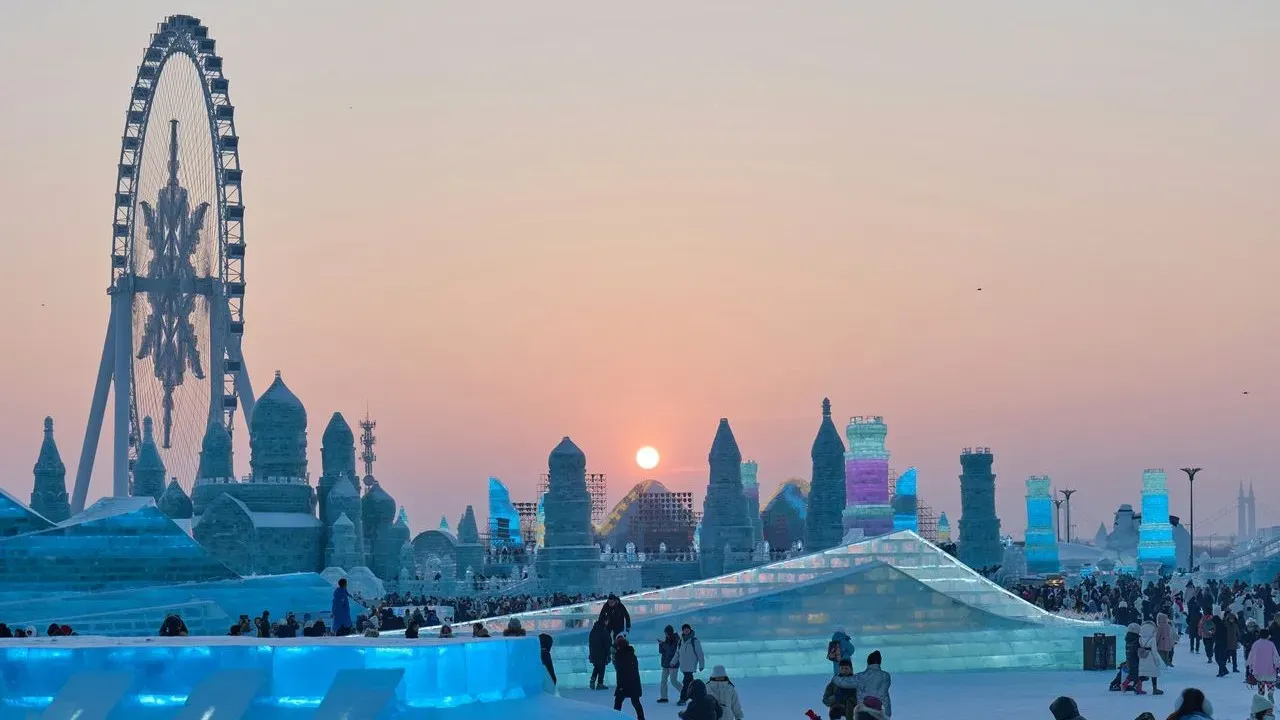

Harbin, the capital of Heilongjiang Province in northern China, transforms each winter into a landscape of monumental ice and snow structures that glow under colored lights after dark. The city’s International Ice and Snow Festival draws travelers seeking both artistic achievement and the quiet discipline required to explore extreme cold. For the 2027 season, the main venues are expected to open in late December 2026, with the traditional opening ceremony on January 5 and operations continuing into late February, though exact dates remain subject to weather and official confirmation. ([1])
The Scale of Ice and Snow Artistry
At the heart of the festival lies Harbin Ice and Snow World, where sculptors shape hundreds of thousands of cubic meters of ice harvested from the Songhua River into buildings, arches, and towers that can reach several stories high. These structures are then fitted with thousands of LED lights that create shifting patterns of color once the sun sets. Nearby, the Sun Island Snow Sculpture Expo showcases large-scale works carved from compacted snow, best viewed in daylight when details of the artists’ handiwork remain sharp. Zhaolin Park preserves an older tradition of smaller ice lanterns that have illuminated winter evenings in the city center since the 1960s.
International teams join local artisans each year, contributing designs that reflect both contemporary themes and longstanding regional techniques. The result is a temporary city whose forms change with the light and temperature, rewarding visitors who return at different hours or on successive days.
Preparing for Subzero Conditions
Daytime temperatures often hover near minus 20 degrees Celsius, with nights dropping toward minus 30. Responsible preparation begins with layered clothing that traps warm air while allowing moisture to escape. Insulated boots with good traction, thermal base layers, a windproof outer shell, and accessories that protect the face and extremities form the standard kit. Many travelers also carry chemical hand and foot warmers for extended outdoor time.
Harbin’s infrastructure supports winter visitors through heated indoor spaces at hotels and restaurants, frequent public transport, and clear pathways within the festival grounds. Planning shorter outdoor sessions with regular returns to warmth helps maintain comfort and safety throughout a visit.
Entry Requirements for U.S. Travelers
U.S. passport holders require a tourist (L) visa for most visits to mainland China. As of late 2026, the standard fee stands at $140 for regular processing, with applications handled through the Chinese Visa Application Service Center or authorized channels. A 240-hour visa-free transit option exists for travelers arriving from one country and departing to a third, provided they meet port and itinerary rules, though this does not cover typical round-trip journeys from the United States. Policies can shift, so checking the latest guidance from official U.S. and Chinese government sources before booking remains essential.
Once in China, carrying a passport at all times and respecting local customs around photography and public behavior supports smooth and respectful travel.
Planning a Considerate Visit
Advance ticket purchase for the main venues helps manage crowds, especially around the January 5 ceremony and the weeks that follow. Allowing two or three full days in Harbin provides time to experience both the illuminated evening displays and the daytime snow sculptures without rushing. Pairing the festival with quieter cultural sites in the city, such as historic districts or local markets, offers a fuller sense of place beyond the ice structures.
Travelers who approach the destination with patience for weather-dependent schedules and an appreciation for the labor of local and international sculptors often find the experience more rewarding. The festival continues a long tradition of winter ingenuity in a region where cold has long shaped daily life and creative expression.
AI Disclaimer: This article was created with the assistance of AI tools and reviewed by a human editor.