


The Ancient Roots of the Word “Concierge”

Long before hotel lobbies existed, the word “concierge” was already carrying weight. The origin of the term traces back to the 4th century, derived from the Latin word “conservous,” meaning “the guardian of the candlesticks” – a reference to the personnel responsible for fulfilling the wishes and requests of visitors to the royal palaces in France.
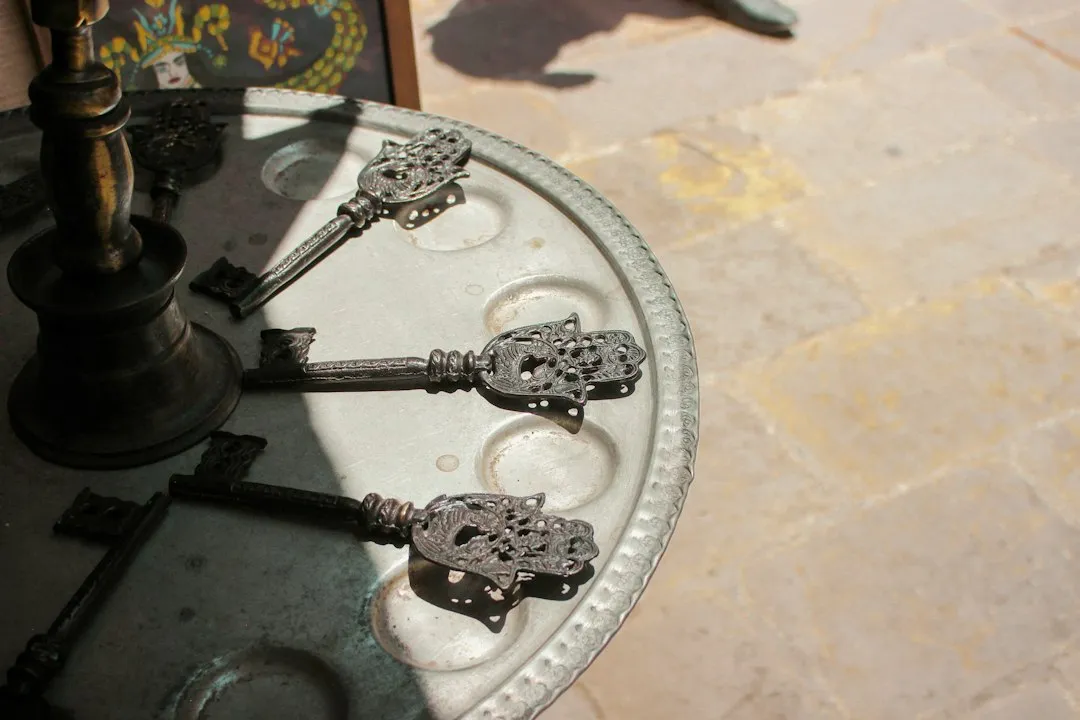
The role of concierge developed centuries ago in times when Europe’s nobility travelled from one castle to another, initially restricted to matters of security as literal keepers of the cumbersome cast iron dungeon and fortress keys, with the job soon expanding to include all matters of safety, especially for travel.
Les Clefs d’Or members also favor the Old French derivation, tracing the role back to the “comte des cierges,” or keeper of the candles – the person in charge of catering to every whim and desire of a palace’s visiting nobility. The lineage, in other words, is genuinely ancient.
Paris, 1929: Where It All Began

The first concierge association saw the light of day on October 26, 1929, when Pierre Quentin, concierge at the Hôtel Ambassador in Paris, and ten other concierges from the grand hotels of Paris realized they could operate more effectively as a team than individually.
The hall porter or doorman of the time had become the focal point of guest relations and customer service at many luxury hotels, and it was during this period that the role of the concierge was specifically created in the grand hotels of Paris and Western Europe – the first time a role had been purposely designed to assist guests with their requirements in unfamiliar cities.
It was a practical idea born of necessity. These professionals discovered early on that collaboration across hotels and cities could dramatically improve what they could offer their guests.
The International Congress That Changed Everything
On April 25, 1952, delegates from nine countries met in Cannes to hold the first congress and created the Union Européenne des Portiers des Grands Hôtels “Les Clefs d’Or,” with this historic step made possible by Ferdinand Gillet, then Chef Concierge at the Hôtel Scribe in Paris, now recognized as the “Father” of Les Clefs d’Or.
Gillet had started his concierge career in Paris as a Night Concierge at the Hotel du Rhin in 1920, and during his presidency he travelled extensively throughout Europe to seek out and connect with other hotel concierges, earning him credit for the origins of what became the international organization.
On November 15, 1972, at the 20th International Congress in Mallorca, Spain, the society formally became the Union Internationale des Portiers des Grandes Hôtels “Les Clefs d’Or,” making the Society of the Golden Keys a truly worldwide organization.
The Moment the Golden Keys Became a Symbol

The second congress, held in San Remo, Italy in December 1953, saw the creation of the society’s journal “Revue Européenne” and, crucially, the adoption of the society’s insignia and badge: the Golden Keys. Prior to this point, the association had no singular visual identity.
In 1953 the society formally adopted the Golden Keys for their badge, and then in 1998 Swiss jeweler Bucherer created the official version that now appears on the lapels of members worldwide. The upgrade to a standardized, beautifully crafted pin gave the symbol a permanence and elegance that matched the profession’s aspirations.
The true golden keys of a Les Clefs d’Or member are easily recognizable: they are quite large, with an LCD insignia on the back. Many hotel lobby employees now wear imitation keys, as they have become a universal symbol of service, but those are smaller and more generic-looking.
What the Crossed Keys Actually Mean

The crossed golden keys fastened to the lapel of Les Clefs d’Or members represent the foundations of the organization: Service and Friendship. Those two words, simple as they are, underpin every commitment a member makes.
The golden keys symbolize mastery, trust, and the ability to fulfill any guest request – from the everyday to the extraordinary. Think of the pin less as a decoration and more as a quiet pledge.
The crossed golden keys are not a symbol of privilege, but a promise of trust, professionalism, and exceptional service – a distinction worth keeping in mind the next time you notice them glinting under a hotel lobby chandelier.
The Rules for Wearing the Keys

Each member receives two pairs of keys upon confirmation – one large pair and one small pair. The large keys are worn only when the member is working in the hotel lobby, while the smaller keys are used for representation when attending a social or industry event.
These rules aren’t arbitrary. They reflect a culture of intentionality within the organization, where even the size of a lapel pin carries meaning depending on context.
Members are presented with their golden keys to be worn only on duty, representing their accomplishment and their commitment to Les Clefs d’Or. The ceremony of receiving them is taken seriously.
How Difficult It Is to Earn the Keys

To qualify, a candidate must have a minimum of five years of experience as a full-time lobby-level concierge, strong recommendations from two current members, and must pass an extensive written and oral exam that can reportedly take members up to 20 hours to complete.
Exam questions cover all areas relevant to the service of a concierge, including wine, menus, airlines, florists, and general problem-solving. Some chapters take this further with oral interviews and peer assessments before any vote takes place.
The applicant must also be sponsored by two Senior Individual Members of the member association, in order to maintain the prestige of Les Clefs d’Or. In Paris alone, only about one in four applicants is ultimately successful.
A Global Network Like No Other

Les Clefs d’Or counts approximately 4,000 members across over 80 countries and 536 destinations, forming a global network of elite hospitality professionals committed to delivering the highest standards of service.
Having a Les Clefs d’Or concierge is an honor for any hotel, because the guest experience is enhanced by a network beyond borders – meaning that if a guest in one city needs tickets for an event in another country entirely, the concierge can contact a colleague to make the seemingly impossible possible.
Les Clefs d’Or concierges collectively serve more than 100 million guests annually, providing guidance, access, and expertise that elevate every travel experience. That is a genuinely staggering reach for an organization built on a handshake between eleven Parisian concierges nearly a century ago.
The Pin as a Signal for Travelers

Les Clefs d’Or membership requires nomination, examination, and peer approval, and the pin is one of the most reliable indicators in hospitality that the person wearing it is both highly capable and extensively networked.
Most guests don’t take full advantage of the hotel concierge, probably because they simply don’t know all that these hospitality professionals can do – but concierges have years of experience, insider knowledge, and an extensive network of contacts that can make a stay significantly more successful and enjoyable.
Spotting those crossed golden keys is, in practical terms, a shortcut. It tells you, without a single word being exchanged, that the person behind that desk has earned a rare level of trust in their profession.
Counterfeits, Prestige, and Why the Real Pin Still Matters

Members identified by the golden crossed keys on their lapels form an elite fraternity, globally connected, committed to professional development, and driven to setting new standards for guest service perfection, with the organization built on two pillars: Service and Friendship.
The true golden keys of a Les Clefs d’Or member are quite large, with an LCD insignia on the back, while many hotel lobby employees now wear imitation keys that have become a more generic symbol of service – smaller and less distinctive in appearance. The difference matters to those inside the industry.
The organization dates back to 1929 as a French association, built around the motto “Service Through Friendship” – a phrase that has kept its meaning across nearly a hundred years of changing travel and shifting hospitality landscapes.
A Quiet Symbol With an Outsized Meaning

The crossed golden keys are, by design, a small and subtle thing. They’re not meant to announce themselves. They’re meant to be recognized by those who know, and trusted by those who don’t yet.
Les Clefs d’Or, as an organization, is built on two pillars – Service and Friendship – and those keys represent a not-for-profit global association that has formalized elite concierge standards across more than 80 countries. The pin has become one of the most quietly meaningful signals in all of travel.
Les Clefs d’Or represents the pinnacle of hotel concierge service – a global network of professionals united by skill, discretion, and friendship, through which every guest has access to a world of unparalleled hospitality. For travelers who understand what those two crossed keys mean, it changes the way they walk through a hotel lobby entirely.
The Takeaway

A tiny pin on a lapel shouldn’t tell you much. This one, somehow, tells you everything. Behind it is nearly a century of professional tradition, a worldwide network of people who have spent years earning the right to wear it, and a philosophy rooted in the belief that service and friendship are inseparable.
The next time you see those golden keys glinting from a concierge’s jacket, it’s worth pausing for a moment. They are not decorative. They are a credential, a promise, and a living piece of hospitality history – all crossed together at the lapel.
AI Disclaimer: This article was created with the assistance of AI tools and reviewed by a human editor.