
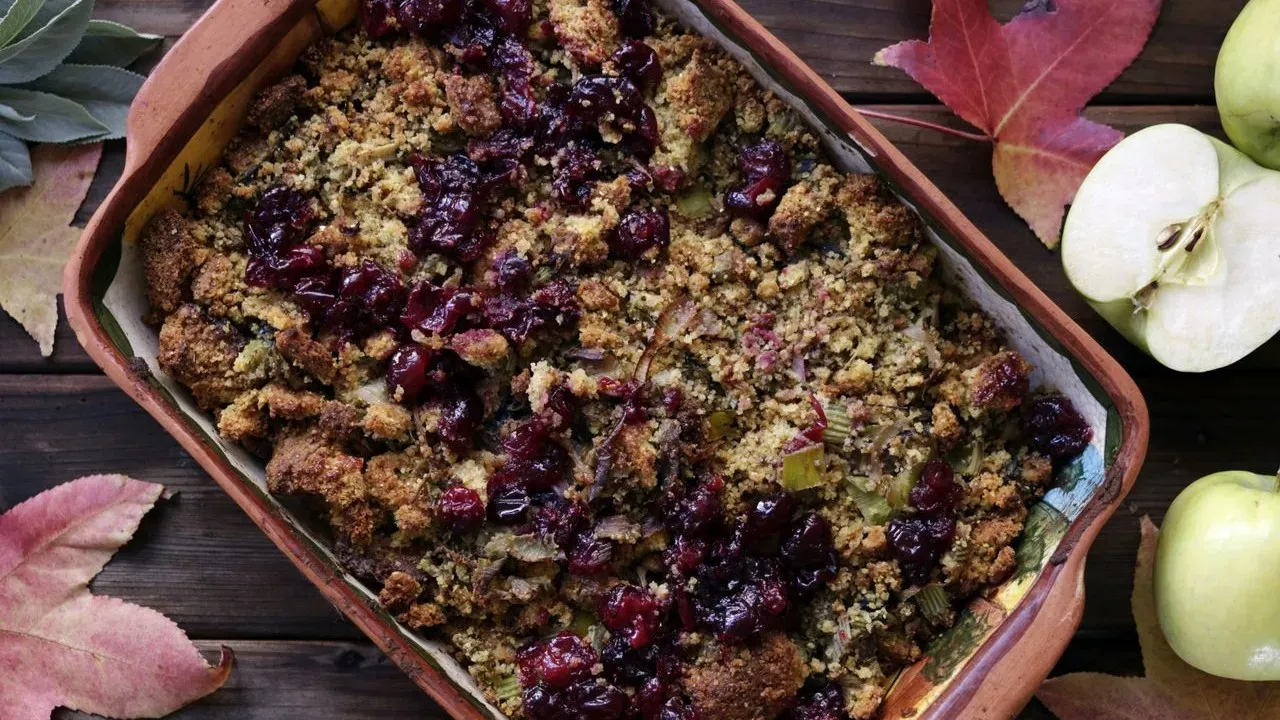

On many Thanksgiving tables, the bowl of savory bread arrives under one of two names, depending on who grew up cooking it. The same mixture of bread, aromatics, and broth can be called stuffing in one kitchen and dressing in another, and the word often reflects family history more than the recipe. With the holiday later this month, it is a good time to look at where the names come from and how to serve the dish safely. ([1])
One Dish, Two Names
Stuffing and dressing begin with the same pantry. Both are usually built on seasoned bread, often joined by onion, celery, and herbs such as sage and thyme. The University of Arkansas Extension notes that the name a cook uses depends largely on where that cook lives, with Southern families tending to say dressing and many northern households saying stuffing.
The bread itself can shift with the region. Cornbread is the most common base in the South, according to the same extension service. Coastal communities may add oysters, Louisiana cooks often reach for andouille sausage, and California versions can feature sourdough and mushrooms. USDA adds that stuffing may also include grains, pasta, fruit, sausage, giblets, or nuts, which explains why no single recipe owns the name.
Cooking Inside the Bird or Beside It
Many cooks use the word stuffing for the version baked inside the turkey and dressing for the version baked in its own dish. That line is a kitchen habit rather than an official rule, and plenty of families use the two words interchangeably. What does not change is the temperature. Both the turkey and the center of the stuffing must reach 165 degrees F, and a fully cooked bird does not guarantee that the stuffing has reached it.
For that reason, USDA recommends cooking stuffing separately for the most even doneness and the lowest risk. Cooks who still prefer the in-bird method can follow a few guidelines:
- Fill the cavity loosely, using about 3/4 cup of stuffing per pound of turkey, according to USDA.
- Keep the mixture moist, since heat destroys bacteria more quickly in a moist environment, the Arkansas Extension says.
- Place the bird in an oven set no lower than 325 degrees F right after preparing the stuffing.
- Check the center of the stuffing, the innermost thigh and wing, and the thickest part of the breast with a food thermometer.
- Let the stuffed turkey rest for 20 minutes after everything reaches temperature, then remove the stuffing.
Oyster stuffing deserves one extra step. USDA recommends cooking the oysters before they go into the mixture. A casserole dish with turkey or chicken broth offers a simpler route to savory flavor, provided the center still reaches 165 degrees F.
Preparing Ahead Without Guesswork
Holiday cooking often starts days before the meal, and stuffing is no exception. USDA advises against refrigerating a fully assembled, uncooked stuffing, so the timing of each step matters. Cooks have three safe paths. They can keep the wet and dry ingredients separate and chilled, then combine them shortly before baking. They can also mix the ingredients, freeze the mixture right away in a shallow container, and bake it without thawing. The frozen version still needs to reach 165 degrees F in the center.
A third option is to cook the stuffing in advance. Spread it into shallow containers, refrigerate it promptly, and reheat each portion to 165 degrees F before serving. Leftovers call for the same care. Cooked stuffing should go into the refrigerator within two hours of cooking or of leaving a warming appliance, or within one hour if the room is above 90 degrees F. USDA says to finish refrigerated stuffing within three to four days.
What the Name Says About the Table
For many families, the word on the menu carries memories of a grandmother’s pan or a cousin’s recipe card. Whether it is stuffing, dressing, or a local phrase all its own, the name points to a shared tradition shaped by the places where people cook and eat. Travelers who sit down to a holiday meal in another part of the country may notice that the bread, the seasonings, or the baking dish differ from what they know, and that difference is worth noticing.
Whatever the dish is called, the essentials stay the same. Use a food thermometer, respect the 165 degree F target, and handle leftovers promptly. Then pass the bowl around the table and let the name tell its own story.
AI Disclaimer: This article was created with the assistance of AI tools and reviewed by a human editor.