
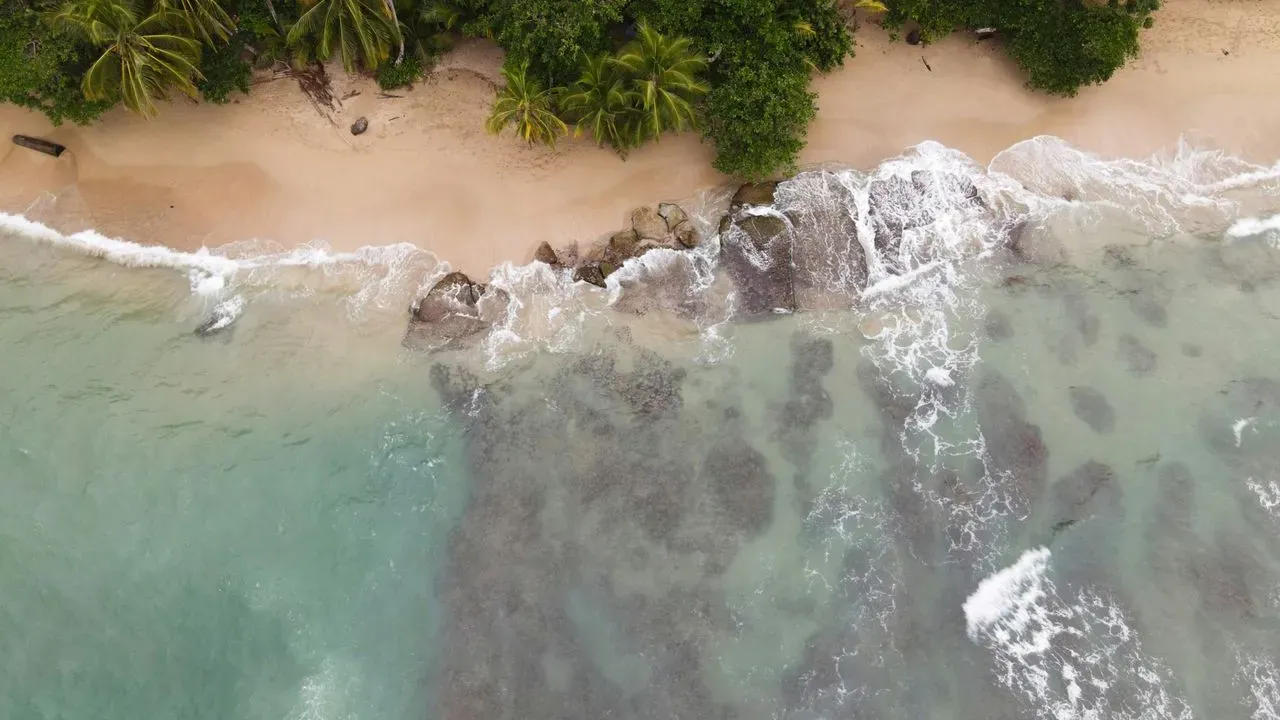

The sky turns orange over Playa Cocles, and for a few minutes the scene looks almost too composed to be real. One traveler who spent an evening there described the moment as stepping inside the postcard they had been planning to find. That feeling is what draws many visitors to Puerto Viejo de Talamanca ([1]). Yet the village has more to offer than a single view, with its own cultural identity and a pace that changes once you leave the main road.
A village shaped by sea, reserve, and jungle
Playa Cocles lies 1.5 km from Puerto Viejo de Talamanca, a small village known for its mixture of indios Brì Brì, Caribbean black culture, and sheltered by Gandoca-Manzanillo natural reserve on the brink of the Panamanian border. That setting gives the coast a green backdrop that visitors notice as soon as they arrive.
Getting around is straightforward. It’s only a short(ish) walk to Puerto Viejo from Cocles. Many travelers choose to rent bicycles instead, since the coastal road links several beaches within a short ride. Several guesthouses sit on quieter side roads surrounded by forest, so a stay in Cocles can feel removed from the village center without being far from it.
Three beaches, three moods
The beaches south of town are the reason many people return. The area includes the sublime beaches of Playa Cocles, Playa Chiquita and Punta Uva, and each has its own character.
- Playa Cocles: A stretch of beach popular with locals, visitors, and surfers alike. The northern end tends to attract surfers looking for stronger waves.
- Playa Chiquita: This beach is known as a nice quiet beach for soaking up the sun and is also good for swimming as it is a series of several small bays.
- Punta Uva: Part of the same stretch of coast, it rounds out a day of exploring by bicycle or taxi.
Surf conditions change with the seasons, so visitors should check locally before heading into the water. Playa Cocles is also known for its evening atmosphere, and the sunset hour draws crowds to the sand.
A culture rooted in Limón and its history
Puerto Viejo sits within Limón province, where people of Jamaican descent arrived for the construction of the Atlantic railroad, and their descendants built communities with a distinct identity. The village reflects that history in its daily life. Puerto Viejo, meanwhile, is a fusion of Afro-Caribbean and Costa Rican influences.
Language is one of the clearest markers of that heritage. Spanish is the main language, but many Afro-Costa Ricans speak Limonese Creole English, and English is common in tourist areas like Puerto Viejo and Cahuita. Music and food carry the same influence. Visitors often encounter rice and beans, along with reggae, calypso, and soca music, which reflect the region’s ties to the Caribbean islands.
Understanding this history also helps visitors show respect. Afro-Caribbean population, who, until 1948, had to obtain legal permission to leave Limón province, and were not recognized as citizens. Travelers who learn that background tend to approach local conversations, events, and businesses with more care.
Growth, balance, and the traveler’s role
Puerto Viejo’s appeal has also brought change. Local observers have raised concerns about gentrification and rising costs, and residents are thinking about how the village grows. Those concerns deserve attention from anyone planning a visit.
Visitors can help by choosing locally owned guesthouses, eating at family-run restaurants, and joining community-led tours where possible. Those choices keep more of the money in the community that gives the village its character. The region is also a few hours from the capital, so many travelers arrive by road, which means a slower journey and a gradual arrival into the coastal rhythm.
The sunset over Playa Cocles remains a memorable moment, but the village offers much more. Puerto Viejo rewards travelers who stay long enough to hear the Creole conversations, follow the surf, and notice how the Caribbean coast carries its own history.
AI Disclaimer: This article was created with the assistance of AI tools and reviewed by a human editor.