
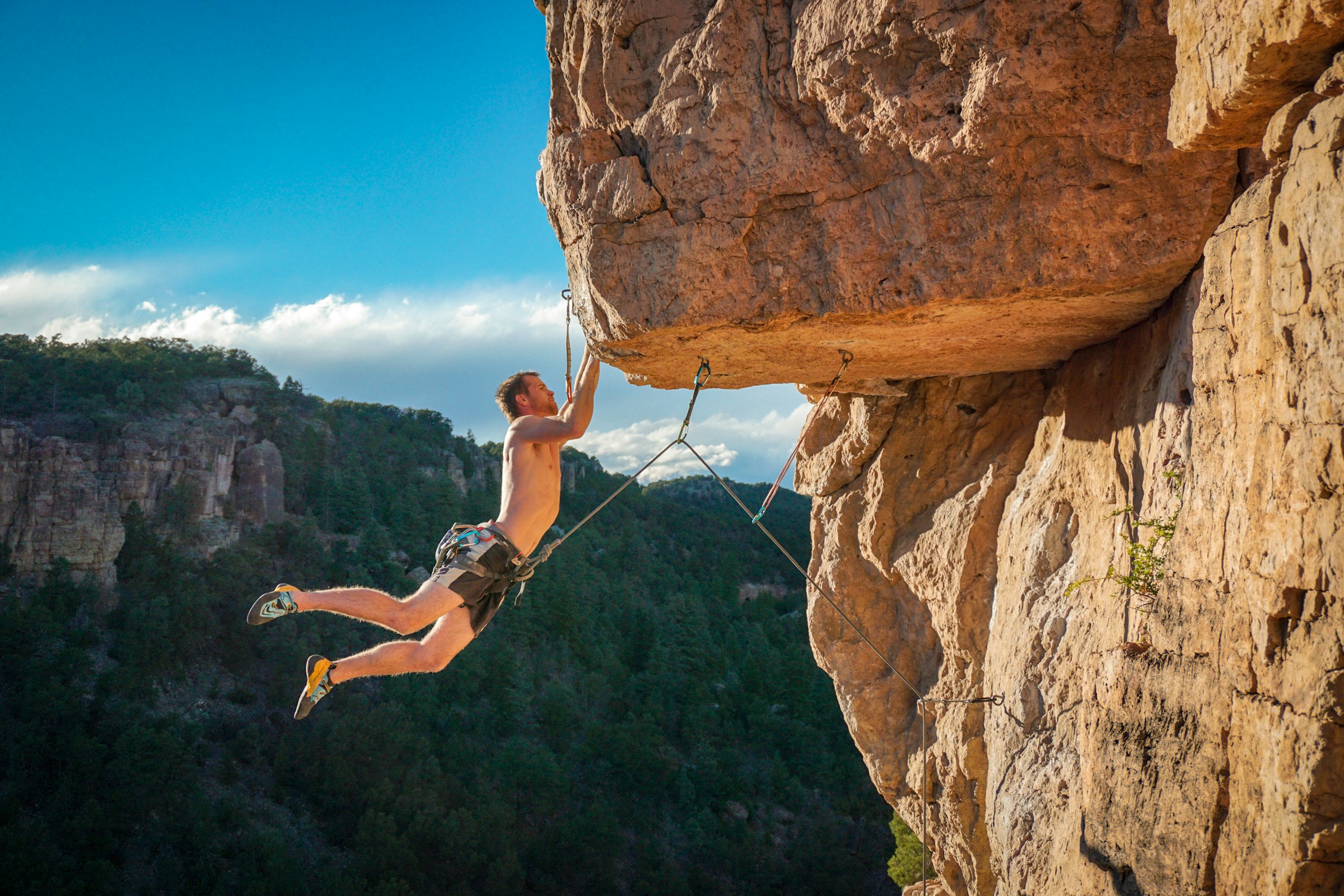

What Via Ferrata Actually Is
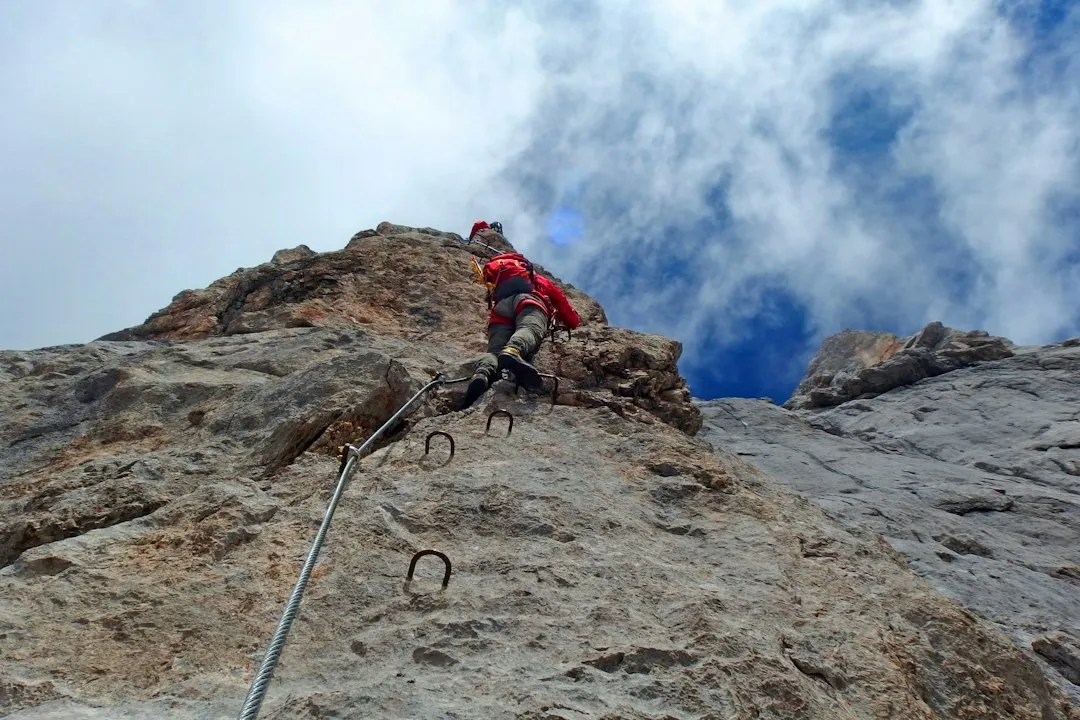
Via ferrata is Italian for “iron path,” and that’s a literal description. The UIAA, the international climbing federation, defines it as a route permanently fitted with equipment fixed to the rock: steel cables, iron rungs, ladders, pegs, and sometimes full suspension bridges.
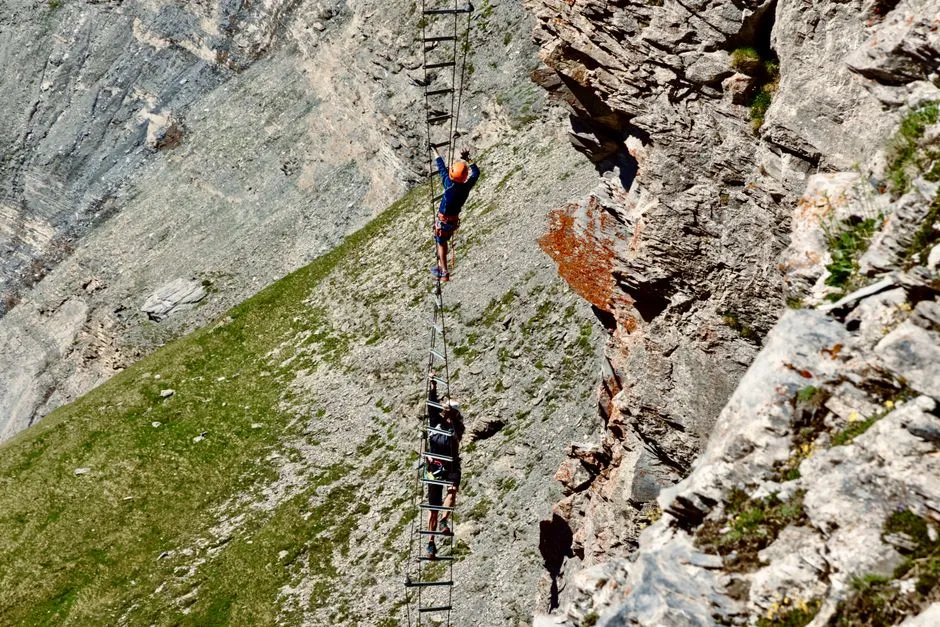
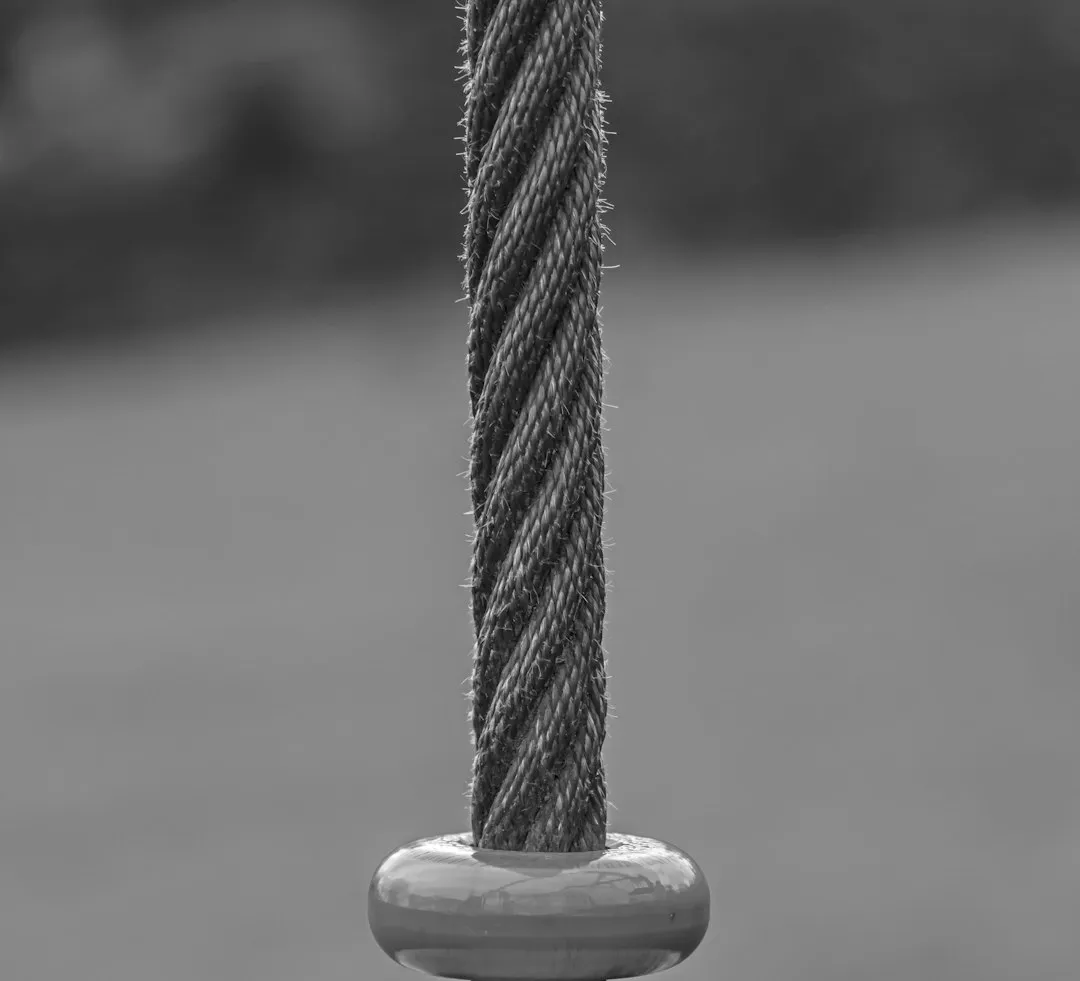
The cable is the part that protects you. It’s a braided steel wire about as thick as a thumb, held off the rock by brackets bolted in every few metres. Where the rock is too steep or too smooth to climb on its own, builders add iron rungs and staples glued into holes in the rock, pegs to stand on, and short ladders.
No prior climbing experience is required, and that’s essentially the point: the fixed cable and rungs replace technical climbing skill. You do need a head for heights, reasonable fitness, and a guide for your first outings.
A Sport That Is Growing Fast
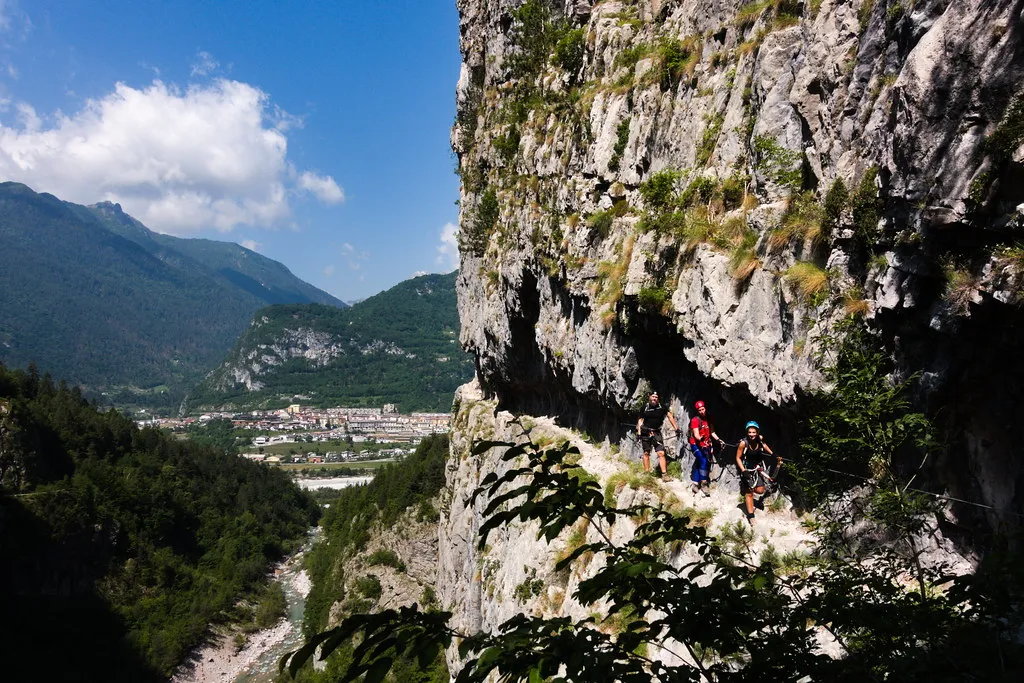
The global via ferrata tourism market reached 1.48 billion US dollars in 2024, reflecting a robust uptrend driven by the growing appetite for adventure tourism and the diversification of outdoor recreation activities.
The growing popularity of outdoor recreation and nature-based tourism during and after the COVID-19 pandemic resulted in increased interest in via ferrata, especially in North America. Routes that once attracted only seasoned alpinists now draw families, office workers, and first-time adventurers of all ages.
Since the end of 2023, the number of visitors coming specifically for via ferrata has surged, surpassing previous years by three to four times. During the Qingming Festival and May Day holidays in 2024, via ferrata projects in places such as Yandang Mountain and Baishi Mountain were all fully booked, with some visitors needing to reserve tickets in advance.
Where the Best Routes Are Found
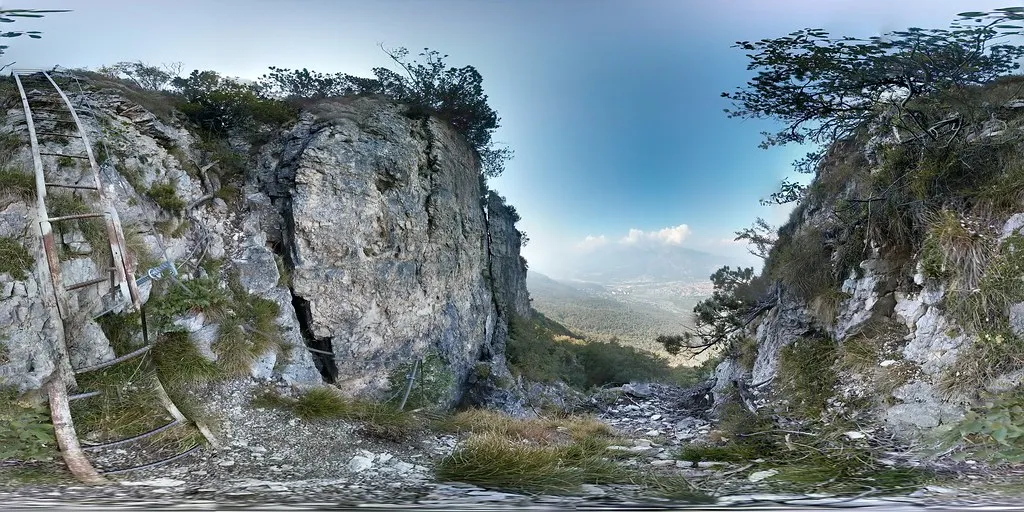
There are more than 400 via ferratas in Italy, with more than half of them located in the Dolomites. The Dolomites remain the global heartland of the sport, offering routes that range from gentle beginner paths to serious multi-hour ascents on sheer limestone walls.
In the past decade or so, the popularity of via ferrata has exploded worldwide. New vie ferrate have popped up everywhere from New Mexico to China, and old routes are seeing more traffic than at any other time in their long, storied history.
From a regional perspective, Europe continues to dominate the via ferrata tourism market, accounting for more than half of global revenues in 2024, thanks to its dense network of established routes in the Alps and a well-developed adventure tourism ecosystem. North America, meanwhile, is catching up quickly with new routes opening every year from Quebec to Arizona.
The Essential Gear Every Beginner Needs
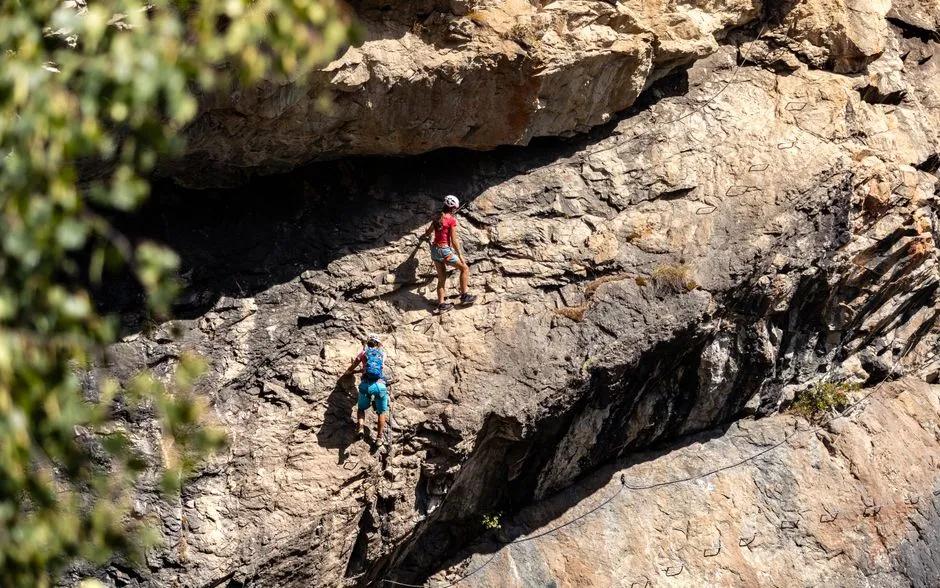
Before setting out on a via ferrata, at the very minimum, you need a climbing or alpine harness, a via ferrata lanyard with a shock absorber, and a helmet. These three items are non-negotiable. Everything else is supportive.
A via ferrata set is a Y-shaped lanyard with an energy absorber at the harness end and two stretchy arms, each ending in a large auto-locking carabiner. It is certified to the EN 958 standard. This certification matters enormously, and no substitute should ever be used in its place.
When you fall on a via ferrata, you drop along a rigid steel cable, and the forces acting on your body are greater than in climbing with a dynamic rope. Only a lanyard with an energy absorber compliant with the EN 958 standard absorbs the energy of a fall. Guides are trained to check this equipment before every session begins.
How the Steel Cable System Works
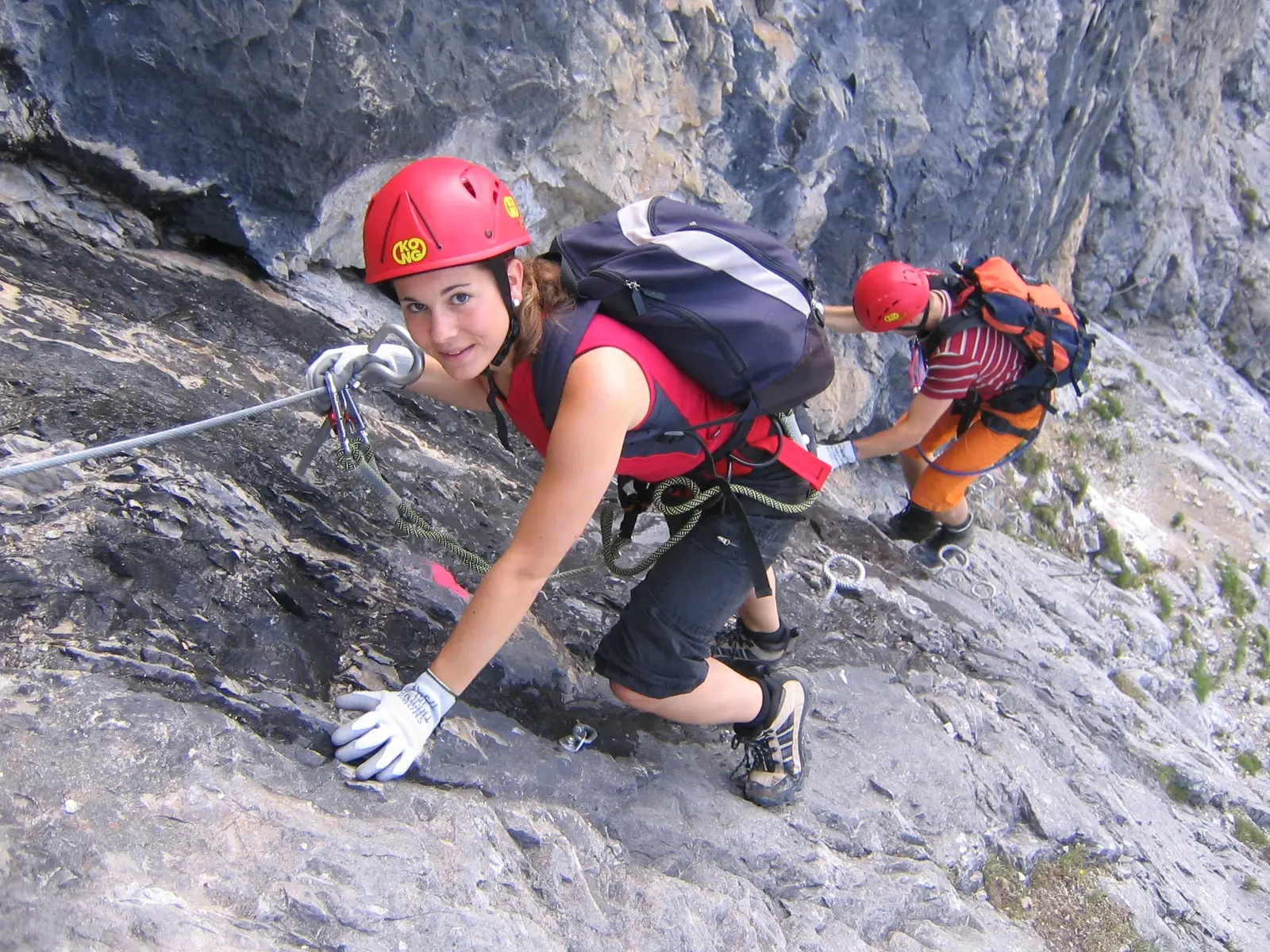
A via ferrata is a climbing route with a steel cable fixed to the rock from start to finish. You wear a harness with two carabiners on short arms and keep them clipped to that cable, so you can climb steep, exposed rock without knowing how to use a climbing rope.
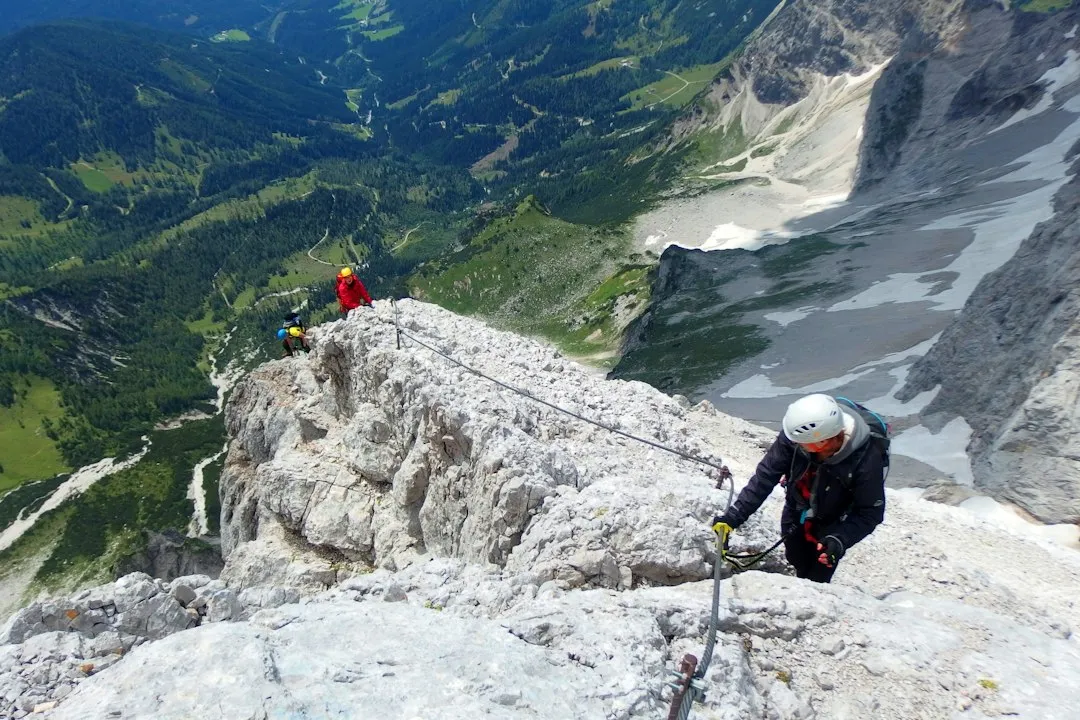
You usually wear a harness with a special two-armed lanyard, and you clip both of its carabiners onto the steel cable. As you climb, you move one carabiner at a time past each anchor point, so you are always attached to the mountain by at least one arm.
At each anchor point where the cable is fixed to the rock, you unclip one carabiner, pass it to the other side, then do the same with the second. A guide shows you the move the first time, and after three or four anchor points, it becomes automatic.
The Key Climbing Technique Guides Teach First

The key technique is to push with your legs and keep your arms straight. Pulling with your arms tires you roughly three times faster. Keep your body close to the wall and look where to place your feet rather than down.
You should have a hand on the cable at all times while ascending or descending a via ferrata. Your lanyard would save you from a fatal fall, but the goal with via ferrata is not to fall at all. You are on a very unforgiving steel cable, not a dynamic climbing rope.
As you approach the cables, harnessed up with your lanyard attached, you clip both carabiners to a cable as far forward as possible. Once you start to climb, you will meet the first fixed cable loop where the cable is attached to the mountain. To get past this, you unclip one carabiner and clip it back into the other side of the loop, then repeat with the second, ensuring you always have one attached to the mountain.
Understanding the Difficulty Grading System
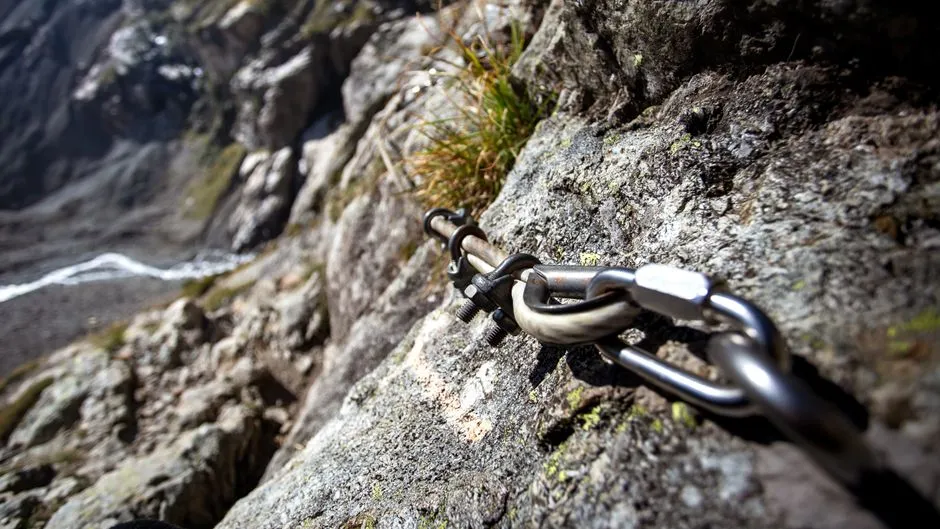
A via ferrata is a secure climbing route fitted with steel cables, ladders, and other fixed protection, allowing you to explore exposed ridges and steep walls while fully secured every step of the way. Routes are graded to reflect how much exposure and physical effort is involved, not technical climbing skill.
Moderately difficult via ferratas take you across steep rocky terrain and are fitted with bolts, steel cables, and chains for protection. Beginner-rated routes, by contrast, offer continuous handholds and shorter vertical sections with more moderate angles. The grading system exists precisely so that newcomers can find the appropriate starting point.
Starting with grade K1 or A-rated routes and progressing gradually is the recommended approach for anyone new to the sport. Guides know their local routes intimately and will always match the route to the group’s physical condition and comfort with exposure.
The Role of a Certified Guide
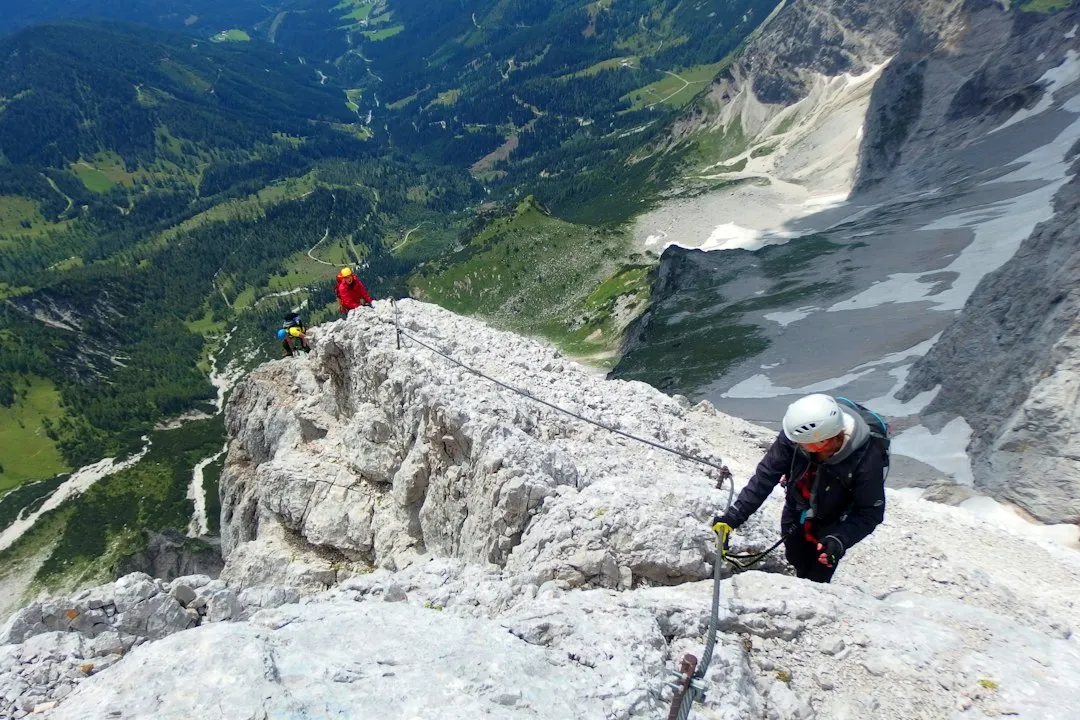
A beginner via ferrata typically takes two and a half to five hours, costs between 37 and 100 euros with a certified guide, and requires zero climbing experience. You move along steel rungs bolted into the rock face, clipped to a continuous safety cable, with an instructor managing safety and pace. The real challenge is not technique: it’s choosing the right route and knowing what to expect.
Fixed climbing routes feature steel cables, iron rungs, and ladders that aid climbers while providing continuous protection. The route can be completed independently by experienced participants or with a certified mountain guide. For anyone’s first time, the guide is not just a convenience. The guide is a genuine safety asset.
Certified guides also carry emergency equipment, understand local weather patterns, and know how to manage groups on exposed terrain. That knowledge is simply not replaceable by reading a trail description online, however detailed it might be.
Weather, Timing, and Safety Rules That Cannot Be Bent
Start early and respect the unpredictability of mountain weather. You are attached to a steel cable on exposed rock, which is nowhere to be when an afternoon thunderstorm arrives. Most experienced guides recommend beginning routes no later than mid-morning, particularly in alpine regions where electrical storms tend to build through the afternoon.
Never climb unclipped, as most fatalities occur when climbers fall without being secured. Essential rules include always using certified via ferrata equipment, keeping both carabiners clipped to the cable and moving one at a time past anchor points, and checking the weather forecast carefully, since lightning on metal cables is deadly.
Via ferrata routes are typically open from June to October, depending on snow and weather conditions. Attempting a route outside the established season, or when ice or wet rock is present, dramatically increases the margin for error. Good guides will simply decline to take groups out in unsuitable conditions, full stop.
What the Sport Offers Beyond the Climb Itself
The rise of via ferrata is tied, in part, to a cultural shift: the idea that adventure is accessible to anyone who wants it. Via ferrata provides a practical way for those who may lack professional athletic ability but still want to conquer mountains and seek thrills.
This growth presents unique destination, route, and sport development opportunities and challenges for service providers, land managers, and professional mountaineering associations. These challenges are compounded by co-occurring global concerns, such as climate change impacts on seasonal access to mountainous terrain. Responsible operators are actively thinking about how to balance growing demand with long-term environmental stewardship.
The design philosophy behind well-built via ferrata routes allows visitors to experience vertical landscapes while minimizing environmental impact. When routes are planned and managed thoughtfully, they concentrate foot traffic on durable surfaces and protect fragile alpine ecosystems from dispersed damage.
The Takeaway
Via ferrata is one of those rare outdoor pursuits where the gap between curiosity and actual experience is remarkably small. The steel cables, the rungs, the energy-absorbing lanyard: all of it exists to bring the vertical world within reach of people who have never tied a climbing knot in their lives.
The sport is growing because it genuinely delivers on its promise. With a certified guide, the right gear certified to current EN 958 standards, an appropriately graded route, and a reasonable respect for the mountains’ conditions, almost anyone can stand on a cliff face and look out over a view they earned with their own hands and feet.
The steel cable is just the beginning. What you find at the top of the route is something harder to put a grade on: a quiet confidence in your own capability that tends to stay with you long after the harness comes off.
AI Disclaimer: This article was created with the assistance of AI tools and reviewed by a human editor.