
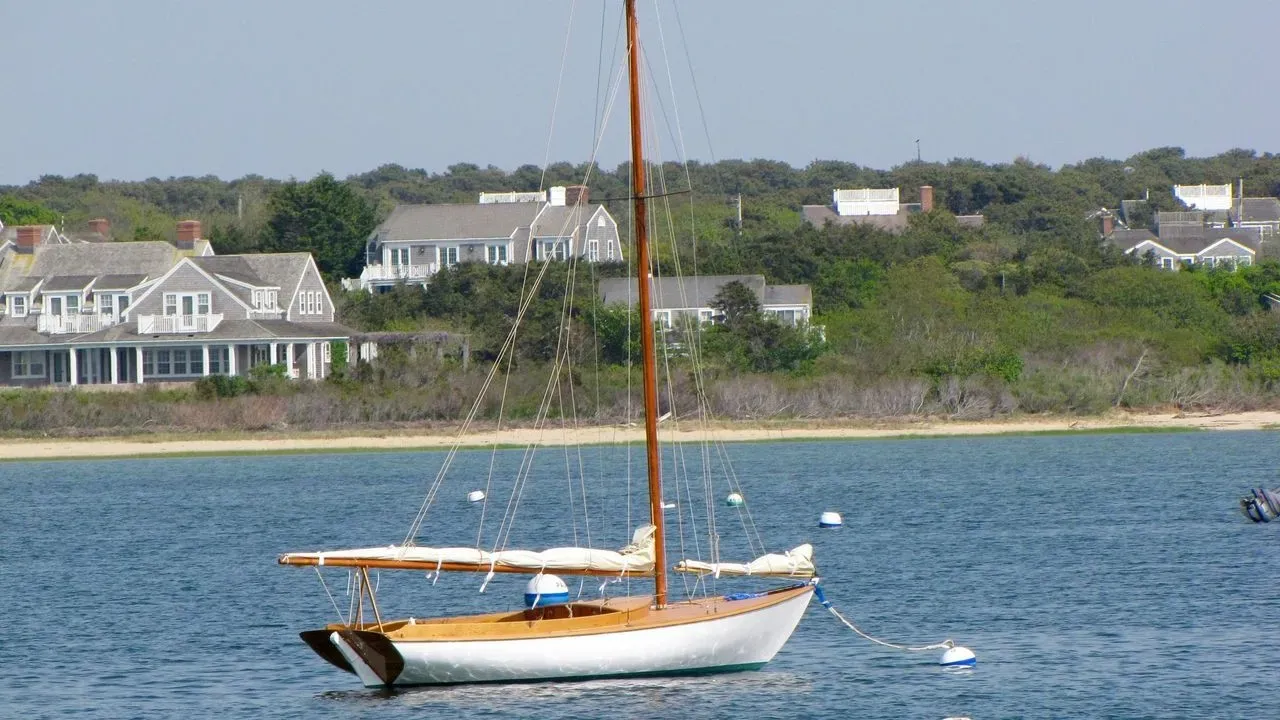

Few islands sit so close to a mainland coast and still feel so separate once the boat docks. Nantucket lies roughly 30 miles from the Massachusetts shoreline and Cape Cod, and the crossing is part of what gives the island its character. Visitors reach it by sea or by air, and the journey itself sets the pace for the days ahead ([1]).
Two Ways Across the Water
Most travelers arrive by ferry from Hyannis, where two operators run year-round service. The town of Nantucket’s official travel guide notes that both lines run high-speed passenger catamarans that cover the crossing in about an hour. A traditional car-and-passenger ferry takes longer, at roughly two and a quarter hours, and it is the option for those bringing a vehicle across.
Air travel offers a different rhythm. Small planes make the short hop from Hyannis, and one local guide to arriving on the island describes that flight as lasting about 20 minutes. Direct flights from Boston to Nantucket Memorial Airport take roughly 45 minutes to an hour, and some seasonal service also connects to major cities farther afield.
- High-speed ferry from Hyannis: about one hour
- Traditional car ferry from Hyannis: about two and a quarter hours
- Cape Air flight from Hyannis: about 20 minutes
- Direct flight from Boston: roughly 45 minutes to an hour
Getting Around Once You Arrive
Planning ahead matters, especially in summer. A visitor resource for the island advises reserving car space months in advance during peak season and booking flights early, since seats tend to fill quickly. That same guide points out that many visitors leave their cars in Hyannis and take the fast ferry instead.
Once on the island, the town of Nantucket is compact enough to explore on foot. Bicycles, taxis, and rideshares are also available. Walking the streets gives a clearer sense of how the island is laid out, from the harbor front to the quieter residential lanes where gray-shingled houses sit beneath shade trees. Taking time to wander at an easy pace tends to reveal more than a packed itinerary would.
A Maritime Past That Still Shapes the Island
Nantucket’s identity rests on the sea. In the 1800s, the island was one of the most important whaling ports in the world, and the wealth from that trade left its mark on the architecture, the commercial waterfront, and the family histories still told in town. Visitors who spend time in the historic district or along the harbor see that legacy in everyday details, from weathered wharves to the sailboats moored in calm water.
The island’s story began long before that era. Wampanoag people lived on Nantucket for generations before European settlement, and their deep connection to the land and surrounding waters remains an essential part of the island’s history. Travelers who take the time to learn about that heritage, whether through local museums or guided programs, gain a fuller picture of the place than the postcard views alone can offer.
Visiting With Care and Curiosity
Responsible travel on an island is largely about small choices. Booking transport early reduces pressure on limited seats and parking. Staying on marked paths protects dune grasses and nesting areas along the shore. Buying from local shops and restaurants supports the year-round community that keeps the island running beyond its summer season.
Planning essentials: Nantucket is about 30 miles from Cape Cod, reached by high-speed ferry, traditional car ferry, or small plane. Reserve car space and flights early for summer, and allow time to walk the town once you arrive.
Nantucket rewards travelers who treat the crossing as the first chapter of the trip. The water between the island and the mainland sets a slower tone, and the island’s history, streets, and harbor give that tone substance. Arriving with patience and respect tends to make the visit feel less like a checklist and more like a true island escape.
AI Disclaimer: This article was created with the assistance of AI tools and reviewed by a human editor.