
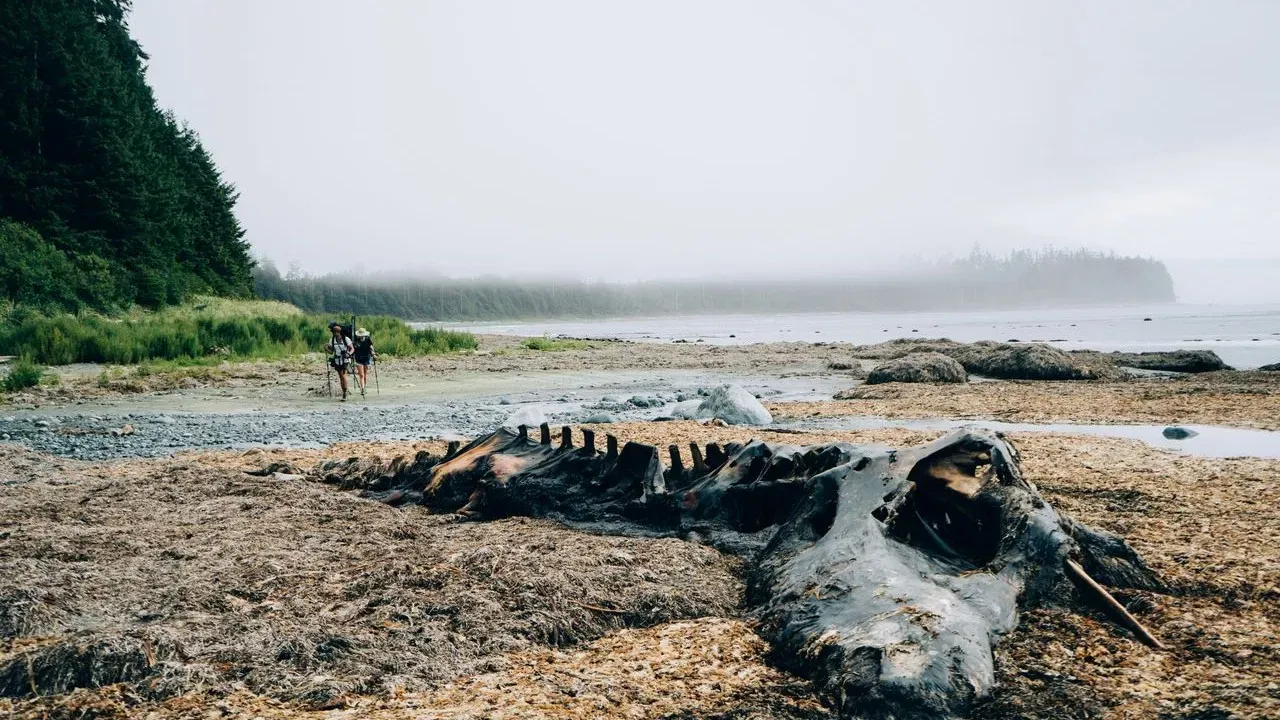

Santa Cruz, California – A juvenile fin whale drew a crowd to Cowell Beach on Thursday morning, when it was seen in the surf beside the Santa Cruz Municipal Wharf. Officials were working to remove the whale after it showed signs of illness that day ([1]). The animal died within hours. Its presence still offers a rare chance to think about one of the ocean’s largest residents and the bay that makes such encounters possible.
A Giant Seldom Seen From Shore
The fin whale is the second-largest living animal, up to 27 m. Only the blue whale is larger. Fin whales usually live far offshore, in deep ocean waters, which is why a sighting so close to a popular beach drew so much attention.
Monterey Bay is well suited to encounters with large whales. Whale watching is a year-round activity due to the incredible depth of the Monterey Bay Canyon, which provides an amazing habitat for many whale species to come close to shore to feed. Tour operators occasionally report fin whales alongside humpbacks, dolphins and other species, which places the region among the most closely studied marine habitats on the West Coast.
A Morning of Careful Work on a Busy Shore
The Marine Mammal Center was alerted to the animal around 9:30 a.m. Biologists from the center sent a team to the stranding, and the whale later died. It was not clear how the fin whale became stranded or why it died. A necropsy is planned to help answer those questions, and any conclusions will come from that examination rather than from observations on the sand.
Removing an animal of that size proved difficult. Responders estimated the whale weighed between 25,000 and 30,000 pounds. Towing a carcass offshore is usually the preferred option, but the weight and an incoming storm made that route too dangerous near the wharf. The city instead decided to tow the whale over the beach and onto a flatbed trailer. Crews worked to keep the carcass from drifting toward the wharf while they prepared the move.
Public access was limited throughout the response. A Cowell Beach parking lot was closed. The area around the whale was closed, and officials asked the public to stay behind the perimeter.
Seeing Whales Responsibly on Monterey Bay
Visitors who want to see whales on the Central Coast can do so with care for the animals and the water they share. Federal guidance for the Monterey Bay National Marine Sanctuary offers a clear starting point. Several practices stand out:
- Maintain a safe distance of at least 300 feet (100 yards).
- When booking on-the-water tours, ask whether the operator follows federal laws and NOAA guidelines for viewing whales.
- Operate at no-wake speed or match the speed of the slowest whale.
- A free, 30-minute Spout Spotter Course teaches people how to spot whales from the water and understand the rules that apply.
Responsible viewing also includes respecting what happens on shore. Crowds gathered quickly at Cowell Beach on Thursday, and the perimeter protected responders and the public alike. Scientists treat carcasses as valuable sources of knowledge. As Long Marine Lab’s Robin Dunkin put it, “Whale carcasses like this are a really important source of information and science.”
The fin whale at Cowell Beach is a reminder that Monterey Bay is a living system, shaped by deep water, seasonal feeding and countless animals that depend on it. Visitors who learn the guidelines, keep their distance and support operators that do the same help protect those animals for future visitors.
AI Disclaimer: This article was created with the assistance of AI tools and reviewed by a human editor.