
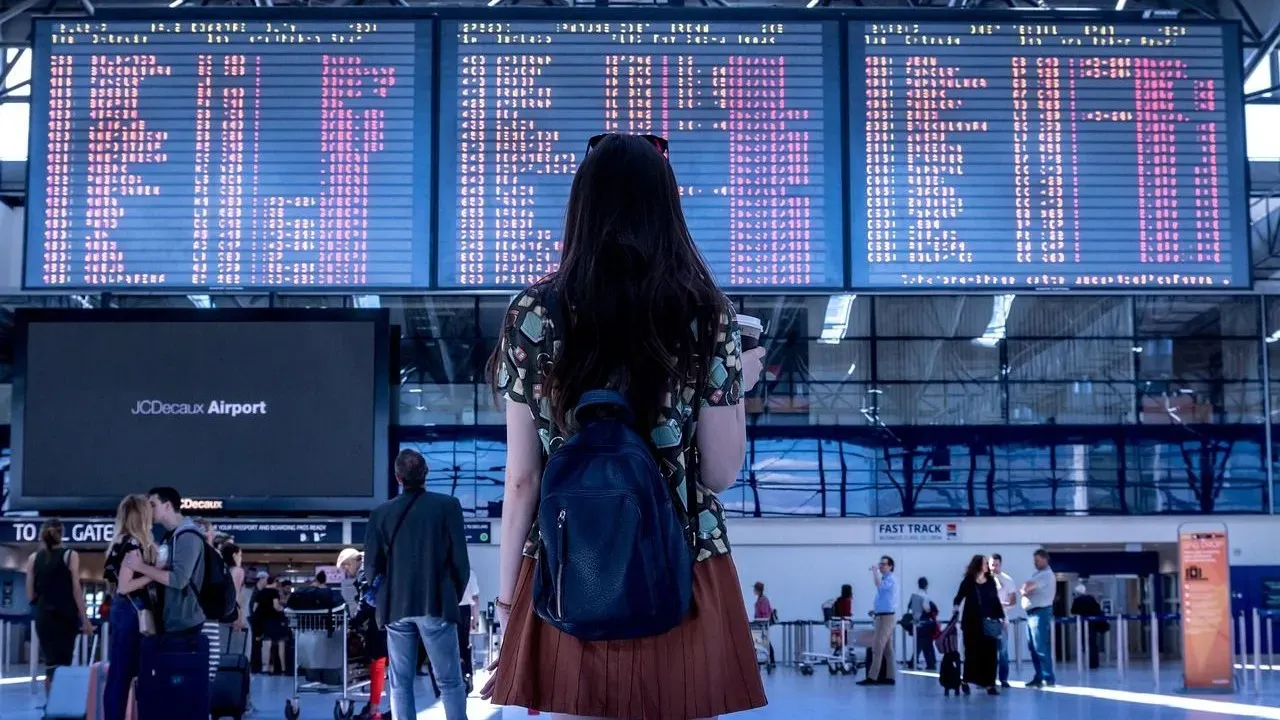

Airlines across the United States spent Saturday recovering from a rare nationwide ground stop that halted departures for more than four hours on Friday. The stop canceled more than 2,000 flights, according to Associated Press reporting, and the effects reached well beyond domestic terminals. The Federal Aviation Administration now expects the system to be back to normal in time for the end of the weekend. ([1])
Passengers Stranded, Teams Rerouted
For many travelers, the stop turned a routine trip into a search for another way home. At airports across the U.S., passengers stared at screens showing delays or rushed to find buses or trains to their destinations. The stop stranded hundreds of thousands of passengers, a figure that reflects how many people were booked on the system during the hours it was closed.
The disruption also affected professional and college athletics. Secretary of Transportation Sean Duffy encouraged NCAA football teams to reach out to the FAA so the agency can prioritize flights for Saturday games. Several teams were forced to arrange alternate transportation at short notice, a reminder of how many routine journeys depend on a single national network.
What Officials Say Caused the Stop
The FAA ordered the halt citing “extraordinary circumstances and reasons of safety” and reported frequency and radar outages between several air traffic control centers. Federal officials have described the underlying problem as a technology issue. New technology being added to the nation’s air traffic control system overloaded antiquated equipment and caused “intermittent” communications and radar gaps, officials said. Earlier reporting on the FAA’s own account described a telecommunications outage affecting air route traffic control centres.
Officials also stressed the safety of those in the air at the time. Secretary of Homeland Security Markwayne Mullin told reporters at the White House that no one was in any danger as more than 3,000 flights in the air at the time of the grounding order landed safely Friday.
A Timeline That Reaches Thanksgiving
FAA Administrator Bryan Bedford said U.S. air travel should be fully recovered from the longest nationwide ground stop in 25 years by the end of Sunday. He acknowledged that Saturday would still bring disruption, saying flights “will still have delays and cancellations” while adding that the “worst is behind us.”
Duffy struck a similar note at a news conference. “We are back at full operations.” He also cautioned that “You will continue to see some delays and cancellations as carriers reschedule flights and reposition aircraft/crews where they are needed most.” Officials add that the system will likely return to normal in time to handle the Thanksgiving travel rush. Reporting also noted that airlines work to rebook affected passengers and get all services back to normal, which can take time even after flights resume.
What Travelers Can Do Now
Those with trips in the coming days can take a few steps that may ease the process:
- Check the airline’s app or website before heading to the airport, since travelers should continue to monitor the situation as operations return to normal.
- Build extra time into connections, because delays may ripple through schedules as aircraft and crews are repositioned.
- Keep the rebooking process in one place by contacting the carrier directly, given that airlines are working through backlogs of affected passengers.
- Plan holiday travel with some flexibility, as the timeline points to a return to normal before the Thanksgiving rush.
The disruption shows how much daily life depends on the air traffic system working as expected. For travelers, the coming days will likely call for patience and a little extra planning. As the FAA moves toward full recovery, the longer question of how the nation upgrades its aging equipment remains part of the broader conversation about keeping the skies open.
AI Disclaimer: This article was created with the assistance of AI tools and reviewed by a human editor.