
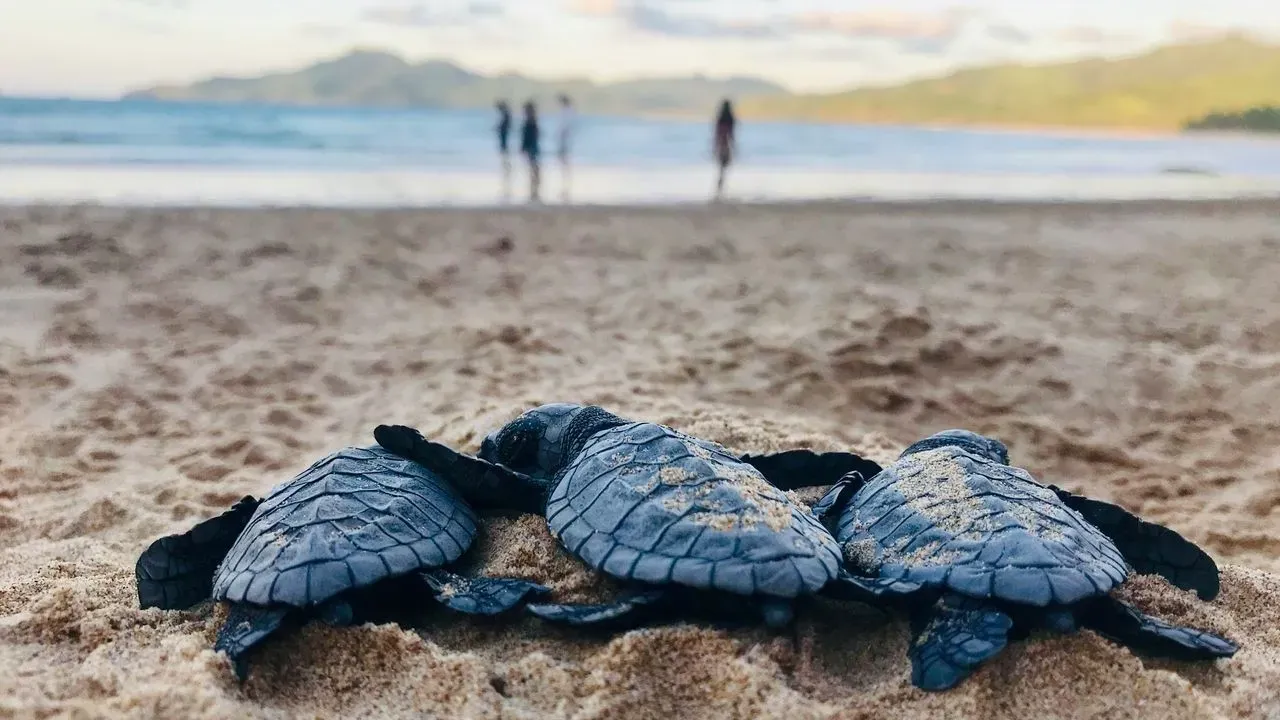

Seal Beach, Calif. – Eggs from California’s first known naturally occurring sea turtle nest have hatched, and the young olive ridley turtles were released into the Pacific on Saturday, Nov. 14. The nest was laid on Sept. 16 near Seal Beach in Orange County, a stretch of coast that has long drawn visitors for its wide sand and proximity to a national wildlife refuge. The U.S. Fish and Wildlife Service shared the news, along with video of the hatchlings making their way toward the surf. ([1])
A first for the West Coast
Olive ridleys are small sea turtles usually associated with warmer waters. They are typically found in tropical waters throughout the Pacific, Indian and Atlantic oceans, with major nesting populations in Mexico and Central America. Seeing one dig a nest on a California beach was therefore unexpected, and federal scientists took note. The nest at Seal Beach was documented as the first-ever recorded nest for any sea turtle species on the U.S. West Coast.
The Seal Beach nest was not the only one that season. Three days later, a second turtle nested about 8 miles away, near the Huntington Beach Pier. A third nest was later discovered at Buenaventura State Beach in Ventura on Nov. 1, and federal officials cordoned off the site to protect the eggs from disturbances. ([2])
Moving the eggs ahead of the storm surf
Rough conditions soon threatened the clutches. Wildlife officials determined that the eggs had the best chance of survival if they were moved before heavy swells arrived. The Aquarium of the Pacific’s president and CEO said federal and state agencies concluded that “would be to excavate those eggs before these swells happened, and potentially flooded (the area), and which would have killed the eggs in these different nests, rendering them not viable to be hatched.” ([3])
The sequence of events, as reported by the agencies and partners, looks like this:
- Sept. 16: A turtle lays eggs near the Surfside community in Seal Beach.
- Sept. 19: A second turtle nests near the Huntington Beach Pier.
- Sept. 25: Scientists move the eggs to the Aquarium of the Pacific in Long Beach, where staff oversee incubation. ([2])
- Nov. 14: Hatchlings emerge after a 58-day incubation and are released on the beach. ([4])
Release before dawn
The release itself followed a careful plan. Staff and partners returned the hatchlings to the sand in the early hours of the morning, when the beach was dark. The Fish and Wildlife Service said the team carefully released them from the beach in the dark early hours of this morning. The hatchlings were released where light, human disturbance and other distractions were minimal. ([5])
Once free of the sand, the hatchlings enter a short, intense stretch of activity. The agency describes a “frenzy” period, which lasts 24 to 48 hours, during which the hatchlings make a dash for the surf and frantically swim toward the open ocean. That burst of energy comes from the yolk they carry with them, so the first hours on open water are critical for their survival.
Not every egg hatched. The aquarium had been caring for 204 eggs laid at both beaches, so the roughly 1 in 4 that have so far emerged marks an early milestone rather than a full clutch count. ([4])
What to know
- The nest was the first known to occur naturally on California’s coast.
- The eggs were relocated to the Aquarium of the Pacific before storm surf could reach them.
- Hatchlings were released in a dark, quiet stretch of beach to limit disturbance.
Why the turtles came north
Scientists have offered one explanation for the unusual visits. Scientists say unusually warming water tied to El Niño likely drew the rare turtles to the Southern California coast. ([4])
Whether these nests signal a lasting shift for sea turtles in California remains uncertain. Researchers will need more seasons of observation before drawing conclusions. For now, the story is a hopeful one for a coastline that many residents and visitors already treasure. The aquarium thanked the public for the support and interest that followed the eggs from the beach to the lab and back again. The release site was chosen to give the hatchlings the quiet they need, a reminder that the best way to share a wild moment like this is to give wildlife plenty of room.
AI Disclaimer: This article was created with the assistance of AI tools and reviewed by a human editor.