
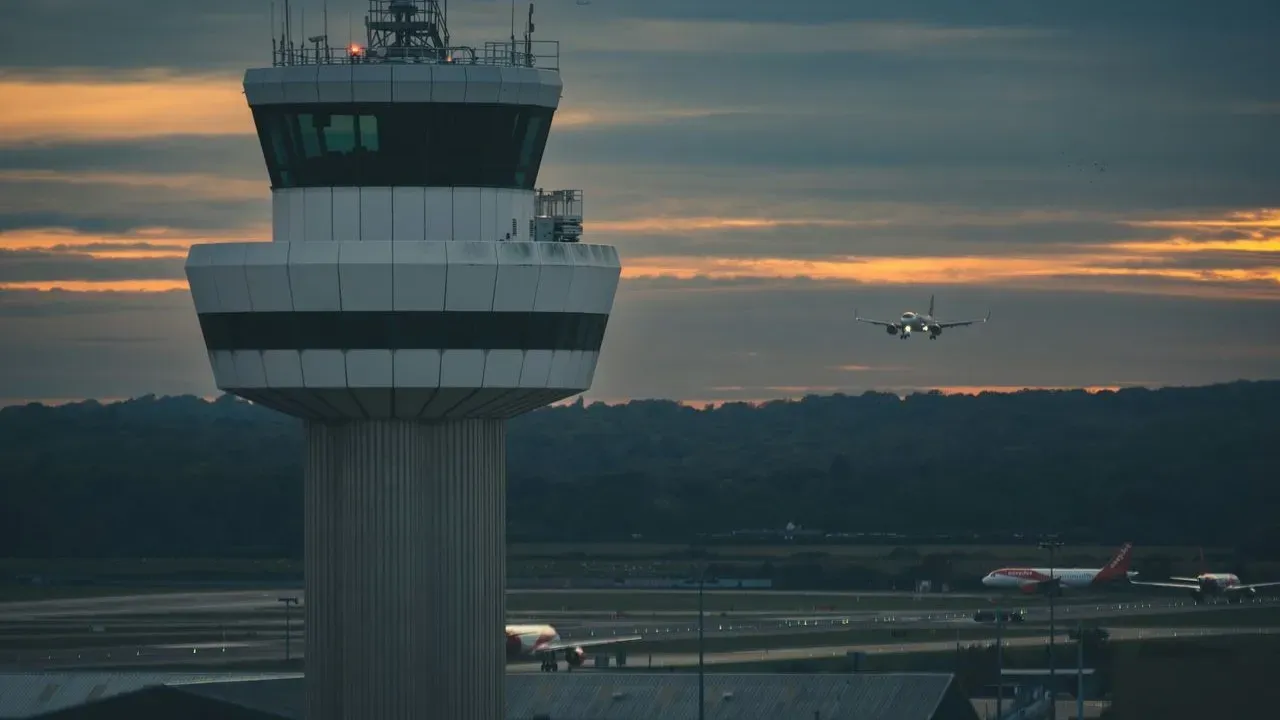

On Friday, November 13, the Federal Aviation Administration ordered a nationwide ground stop that held departures at airports across the country for several hours. Thousands of travelers were left waiting at gates, in rebooking lines, and in terminals during a busy stretch of the travel calendar. Transportation Secretary Sean Duffy has said the root cause is still being determined, and the episode has drawn wide attention to how the national airspace is managed ([1]). For travelers, the more useful question is what a ground stop actually does to a booked flight.
What a ground stop actually does
A ground stop is a traffic management order from the FAA, and it works differently from a cancellation. A ground stop is not a cancellation. Instead, the order holds flights where they begin, so that aircraft do not take off for an airport or airspace that cannot safely absorb them. Since the hold applies at the departure end, a plane bound for a busy hub may sit at a gate in another city even when the weather at that gate is clear.
Ground stops are often confused with two other tools. A ground delay program assigns each affected flight a later departure window, which makes the wait longer but easier to predict. A closure is a far more serious step, because part or all of an airport is no longer operating. The table below summarizes the differences in plain terms.
| Term | What it does | What it usually means for passengers |
|---|---|---|
| Ground stop | Holds departures bound for a specific airport or area | The aircraft waits at its origin airport until the hold ends |
| Ground delay program | Gives each flight a later departure window | The delay is often longer but more predictable |
| Airport closure | Makes all or part of an airport unavailable | Flights to that airport cannot operate normally |
Friday’s halt and the days that followed
A nationwide stop is far less common than a local one. It was only the second time since 9/11 a nationwide ground stop was ordered. The FAA said the action followed a telecommunications failure, and the agency’s own account describes the stop as a response to a technical problem rather than a threat to aircraft in the air. The FAA reported that operators canceled approximately 12,462 flights, including 9,082 cancellations by major airlines, out of an abundance of caution. While not all cancellations were directly caused by the nationwide ground stop, all flights landed safely.
Counts from the weekend differ depending on the tally and the time window. One analysis that ran through the morning of November 16 reported nearly 20,000 flight cancellations between the evening of Nov. 13 and the morning of Nov. 16. The stop itself ended on Friday evening, but its effects carried into the following days. Although the nationwide ground stop was lifted on Friday evening, its effects continued into Saturday, November 14, when more than 2,500 additional flights were canceled and hundreds more were delayed as airlines worked to restore normal operations.
Key points for travelers
- A ground stop holds departures and is not the same as a cancellation.
- Airlines may need days to reposition aircraft and crews after the hold ends.
- The FAA status page and your airline app are the fastest sources for current information.
Why air traffic control is more complicated than it looks
Aviation journalist Jeff Wise, who hosts the podcast Finding MH370 and writes about aviation for several national publications, argues that the November stop was less unusual than it appeared. He pointed to an earlier, shorter ground stop in 2009 that was linked to equipment problems during a network upgrade. In his view, the system has been modernized in stages for years, and the process has rarely been simple. Wise described air traffic control as a constant balancing act in which controllers keep many aircraft separated while they take off, climb, and land.
Wise also suggested that the system’s age is a more complicated subject than headlines suggest. He noted that the technology was upgraded in a major overhaul that began around 2009 and 2010, and that many of the features used on aircraft today came out of that effort. Staffing remains a persistent challenge, since the work is demanding and the screening requirements are strict. Those pressures have existed across administrations, which is why he believes the current debate is about how systems are maintained, not only how much they cost.
Officials have also addressed the new SMART planning tool that began operating nationally just before the stop. The FAA ordered a nationwide ground stop for all airports due to a communication issue impacting all Air Route Traffic Control Centers. Government officials said the new AI system was not responsible for the stop, and the question of how new software will be tested and monitored is one that will likely continue to draw attention ([1]).
Practical steps for your next trip
Most travelers will never face a nationwide stop, but the same tools help during any ground stop or large disruption. A few habits can make a delayed journey far more manageable.
- Check your airline app first for rebooking options, since it often shows alternate flights before call centers do.
- Look at the FAA airport status page for the expected end time of any ground stop affecting your departure or destination.
- Expect ripple effects. Delays and cancellations can linger after a stop is lifted because aircraft and crews are out of position.
- Keep a flexible plan, such as a backup flight, a carry-on with essentials, and a charged phone.
Refund and compensation rules vary, so it helps to read your airline’s current policy before you rebook. One report on the November stop noted that travelers whose flights are delayed by the ground stop aren’t entitled to any compensation because it’s outside carrier control. Cancellation terms can differ, so confirming details with the airline directly is the safest step.
A calmer way to read the next ground stop
The FAA has said the system was stable again and that operations were returning to normal after the stop. The agency waited for a period of time to ensure the system was stable before it lifted the ground stop and allowed flights to resume. The system is stable, and operations are returning to normal. The episode is a reminder that caution in the skies can mean short, inconvenient pauses. Travelers who understand what a ground stop does, and who keep their apps and plans ready, can handle these moments with far less stress.
AI Disclaimer: This article was created with the assistance of AI tools and reviewed by a human editor.