
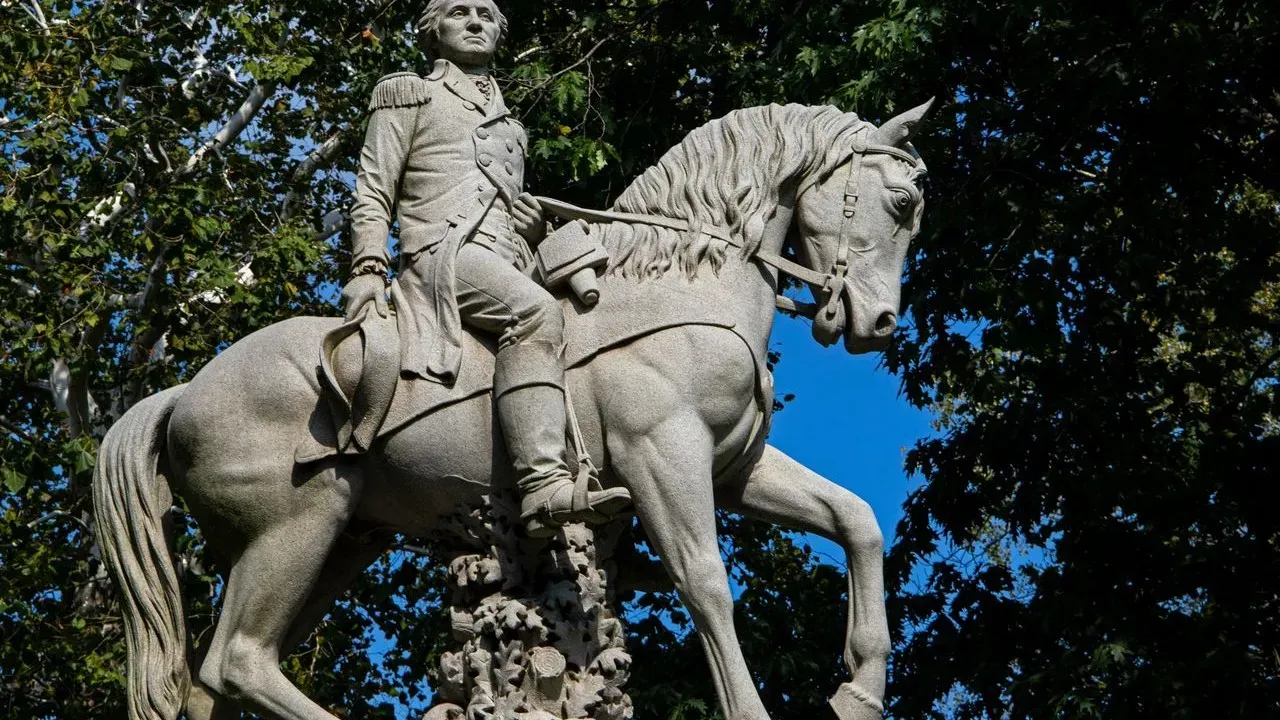

Two and a half centuries after a freezing night turned the course of the American Revolution, the story still draws visitors to the banks of the Delaware River. ([1])On Dec. 25, 1776, George Washington led his army across the river to launch a surprise attack on the British Army at Trenton, New Jersey. The 2026 commemorations of the nation’s 250th anniversary make this a fitting moment to revisit the sites where that campaign unfolded.
A Crossing Through Ice and Darkness
Both state parks commemorate General George Washington’s historic 1776 Christmas night crossing of the icy Delaware River. Today the crossing point sits within Washington Crossing Historic Park in Pennsylvania, a 500-acre site that is operated by the Pennsylvania Department of Conservation and Natural Resources in partnership with the Friends of Washington Crossing Park.
The Pennsylvania park is also where the plan took shape. Visitors can step inside the McConkey Ferry Inn, where Washington planned the attack, or walk through the Thompson-Neely Farmstead, once the encampment of the Continental Army. Standing in those rooms makes the logistics of the crossing easier to imagine: exhausted troops, a river full of ice, and a surprise that depended on secrecy and timing.
Trenton and the Ten Crucial Days
The victory at Trenton arrived in a moment of real doubt. After months of defeat and retreat for the American Army, this victory changed the morale of both the army and the country. The Hessian garrison occupying the town had been stationed there since mid-December, and the attack caught it unprepared. On the morning after the famous Christmas night crossing of the Delaware River by Gen. Washington and his troops, the Americans surprised the Hessian Troops.
Historians often describe the days that followed as a sequence rather than a single event. It was followed up over the next ten days by additional victories at the Second Battle of Trenton and the Battle of Princeton. Those victories are commonly grouped together as the Ten Crucial Days, a phrase that helps visitors see Trenton as one link in a longer chain rather than an isolated triumph.
What matters now: The Trenton battlefield itself has changed greatly. Most of this battlefield is now occupied by downtown Trenton. Visitors who want to understand the fighting rely on preserved sites, markers, and interpretive displays rather than open fields.
Where Visitors Can Walk the Route Today
Travelers planning a trip can build a route that links the two sides of the river. Trenton’s preserved sites are concentrated in a compact area, and each one adds a different layer to the story.
- The Trenton Battle Monument, which marks the location of American artillery during the battle, stands as a central landmark for the fighting.
- Located on Barrack Street, the old Trenton Barracks were built during the French and Indian War to avoid housing British troops in colonial homes.
- At Washington Crossing Historic Park, the Visitor Center is a practical starting point for the Pennsylvania side of the river.
Planning matters, because schedules vary. The annual Christmas Day crossing reenactment draws large crowds, so visitors are recommended to arrive early for parking and best viewing. Park materials also note that tours are offered Wednesday through Sunday. Tickets are required. Visitors should confirm current hours with each site before traveling, since operating days can change from year to year.
Remembering the Human Cost
The celebration of a turning point should never overshadow the people who experienced it. Trenton’s battle involved soldiers on both sides, and many of them were far from home. The Hessian troops were German soldiers serving under British command, and their garrison was caught off guard during a winter dawn.
The Old Barracks offers one of the most sobering reminders. During the American Revolution, the barracks were utilized by American, British, and Hessian troops in the early years of the war as both a place of quarter and as a hospital during and following the Battle of Trenton. Estimates of the fighting also carry weight, since one battlefield preservation listing gives estimated casualties that point to a lopsided toll, with the British side bearing the great majority. Reflecting on those losses, alongside the American hardships that preceded the crossing, gives a fuller picture of what the night meant.
A Place Worth Slowing Down For
The Christmas night crossing remains a story of persistence as much as strategy. A cold river, a tired army, and a plan made on the Pennsylvania bank produced a victory that restored confidence at a critical moment. Visitors who make the trip can honor that history by arriving early, reading the exhibits closely, and giving local communities the time and respect their historic sites deserve.
AI Disclaimer: This article was created with the assistance of AI tools and reviewed by a human editor.