
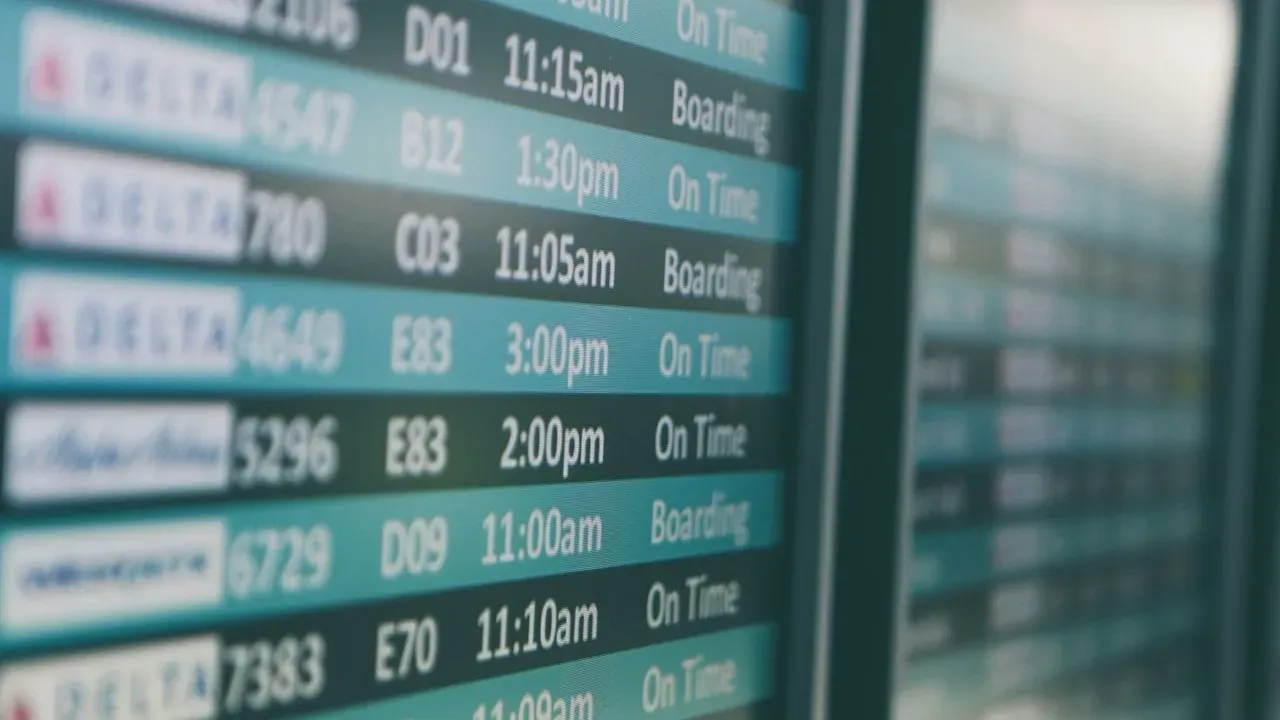

Atlanta – Early on the first Sunday of the Thanksgiving travel rush, Delta Air Lines flights bound for one of the country’s busiest hubs were held at their departure points. The disruption, ([1])came only days after a rare nationwide halt in air traffic, and it arrived as millions of travelers were already planning their holiday trips.
A Sunday Morning Hold at Hartsfield-Jackson
The Federal Aviation Administration issued a ground stop for Delta flights heading to Hartsfield-Jackson Atlanta International Airport on Sunday, November 22. ([2])The stop was requested by the airline, and it held aircraft at origin airports so that gates and taxiways in Atlanta would not become overcrowded. Within the hour, the agency replaced the stop with a ground delay program, which allowed flights to depart but with assigned waits of roughly an hour.
Delta attributed the problem to its weight and balance automation system, the software that calculates how an aircraft is loaded before takeoff. The airline said its crews were relying on manual calculations while engineers worked to restore the system. ([3])Delta also said it was coordinating with air traffic control on programs meant to protect gates and ramp space at its Atlanta hub.
Hartsfield-Jackson is one of the busiest airports in the nation, and the effects of a hold like this ripple outward quickly. Simple Flying noted that slower departures keep aircraft parked at their gates longer, leaving fewer open spots for arrivals, which is why holding inbound flights at their starting airports can ease congestion on the ground even though delays build elsewhere. ([4])
A Nationwide Halt Still Fresh in Memory
Sunday’s hold came less than two weeks after a far larger interruption. On November 13, the FAA ordered a nationwide ground stop on all departing flights after a telecommunications failure, and the halt lasted about five hours. ([5])Federal officials said the event stemmed from a telecommunications outage and that there was no evidence of a cyberattack. ([6])
Delta was among the carriers affected by that earlier event, and it spent several days rebuilding schedules as aircraft and crews were moved out of position across its network. ([4])Delta’s statement about the Sunday problem did not connect it to the November 13 failure. ([2])By the FAA’s own account, the national airspace system returned to full operational status over the weekend that followed. ([7])
Staying Flexible Through the Holiday Week
For travelers with Delta itineraries through Atlanta, the most useful habit right now is checking flight status before leaving for the airport, not after. Airline apps and text alerts typically update faster than airport screens, and they can flag a schedule change before a flight is actually canceled. A few practical steps can make a difference during a busy week:
- Check the flight status on the airline app or website on the day of travel, and again before heading to the airport.
- Turn on notifications so schedule changes arrive by text or email.
- Review rebooking options in the airline app early, especially for connections through Atlanta.
- Pack a carry-on with medication, chargers, and essentials in case an overnight stay becomes necessary.
- Allow extra time for connections, since a delay on one leg can shift the rest of the day.
Travelers who want to plan around possible disruption can also build in buffer days where they can, and keep contact information for family members who may need an update. Many delays clear within hours once the underlying issue is resolved, but a steady plan keeps the day manageable.
The Sunday hold was brief compared with the national shutdown earlier this month, yet it served as a reminder of how closely the system depends on its technology and on careful coordination between airlines and air traffic control. Travelers who stay informed, keep flexible plans, and treat airport staff with patience will be better positioned for the busy days ahead.
AI Disclaimer: This article was created with the assistance of AI tools and reviewed by a human editor.