
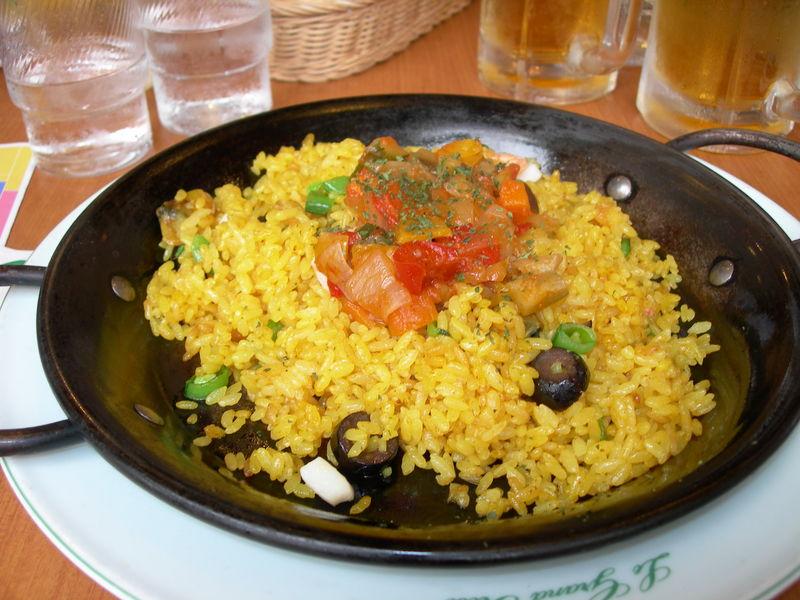

The Undisputed Birthplace
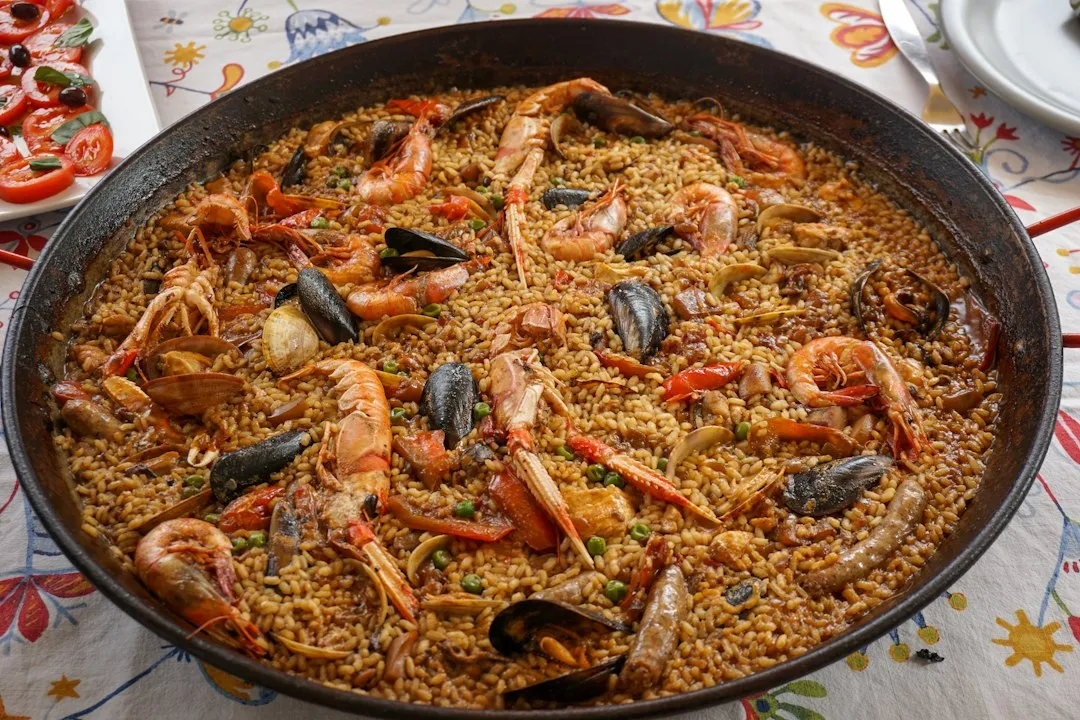
Valencia is the undisputed birthplace of paella, primarily due to the region’s long-standing history of rice production. There’s no real competing claim, no historical controversy about which city or province gets the honor. All experts agree that Valencia is undisputedly where paella originated.
Paella is from the Valencian Community (Comunidad Valenciana), an autonomous region on Spain’s eastern Mediterranean coast. Within this region, paella specifically originated in the area surrounding the Albufera, a shallow lagoon just south of the city of Valencia.
The Albufera: Where Rice and Water Meet
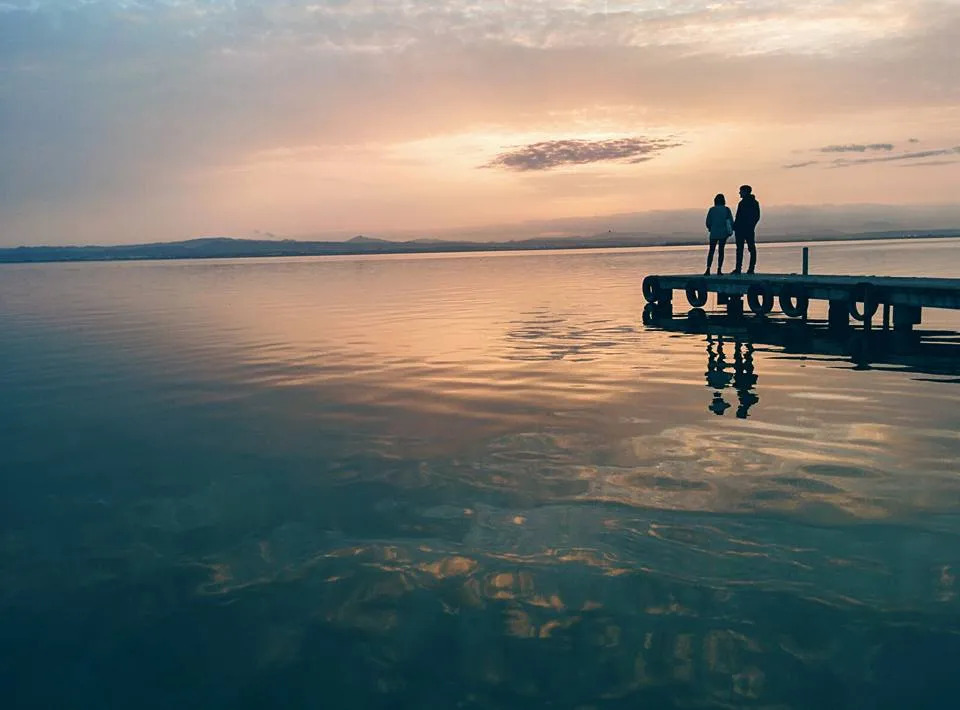
An urban oasis located south of Valencia, Albufera Natural Park is thought to be the birthplace of paella. This shallow coastal lagoon shaped almost everything about how the dish came to be, from the variety of rice grown to the culture of cooking outdoors over open fires.
On the southeastern coast of Spain, where the Turia River meets the Mediterranean Sea, the city of Valencia has been cultivating rice for over a millennium. First grown by the Moors in the nearby Albufera wetlands in the eighth century, rice has been part of Valencia’s history for over 1,000 years.
Rice cultivation in Valencia takes place in the area of L’Albufera de Valencia, which is a natural park and a special protection area. Today, that landscape is both an ecological sanctuary and the source of the grain that makes authentic paella possible.
The Moorish Roots of Valencian Rice
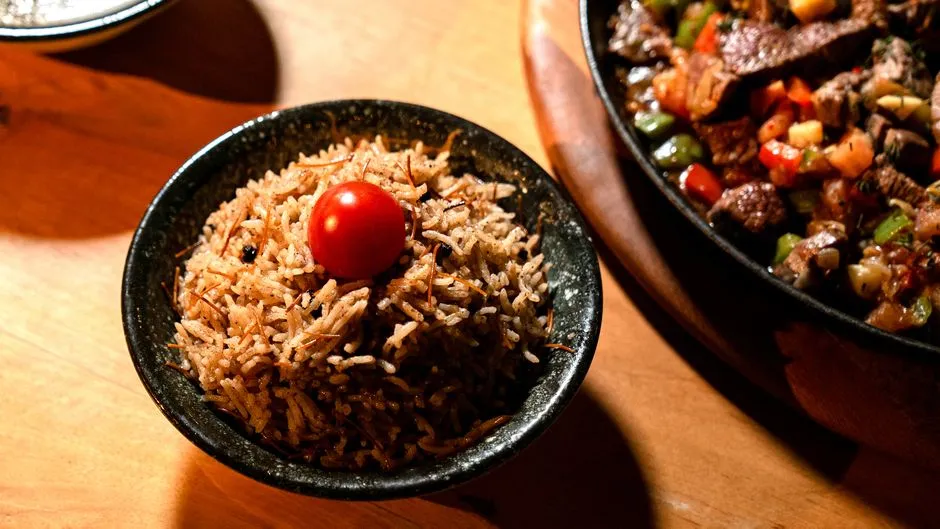
While paella has become synonymous with Valencia, its history can be traced back to Moorish influence in the 8th century when the Moors introduced rice to the region. Without that agricultural introduction, there would simply be no paella as we know it.
Valencia has been one of the most significant rice-producing areas in Spain since rice was brought by the Arabs. Indeed, the word arroz – rice in Spanish – is derived from Arabic. The dish paella is, in reality, a perfect union of two cultures in Spain: the Romans for the pan and the Arabs for the rice.
Farmers, Fields, and the First Paella
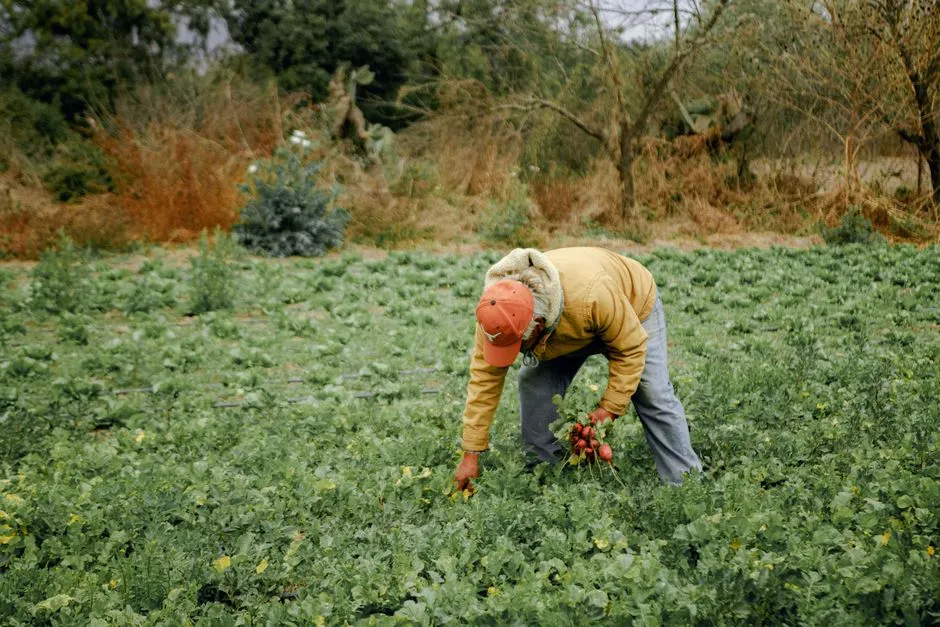
Originally, paella made in Valencia was a lunchtime meal for farmers and farm laborers. This wasn’t a celebration dish or a restaurant showpiece. It was practical, filling, and made from whatever was within arm’s reach of the rice paddy.
It was born in the farmhouses and rice paddies around the Albufera lagoon, where laborers cooked over open fires with whatever was at hand: chicken, rabbit, snails, green beans, and garrofon beans.
It was eaten straight from the paella with wooden spoons, each eater sticking to a triangular portion – like a slice of pizza – wide at the edge of the pan closest to them and coming to a point at the center of the communal vessel. That communal spirit remains central to how Valencians think about the dish to this day.
The Pan That Named the Dish
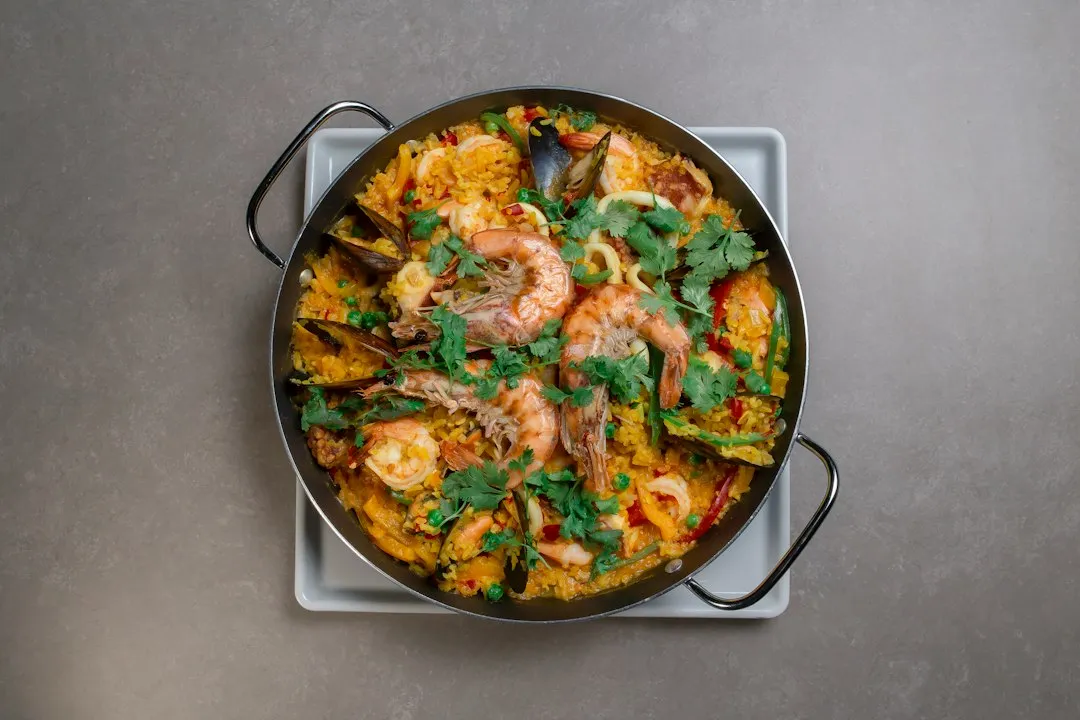
The word paella simply means “pan” in Valencian – the shallow, two-handled iron pan whose wide surface creates the socarrat, the coveted caramelised crust of rice at the bottom that distinguishes a masterful paella from a merely good one.
The name “paella” is directly related to the name of the container in which it is prepared. The word “paella” is of Latin origin and comes from the word “patella,” which means “small dish.” Over centuries, the name of the vessel quietly became the name of the food itself.
What Goes Into a True Paella Valenciana
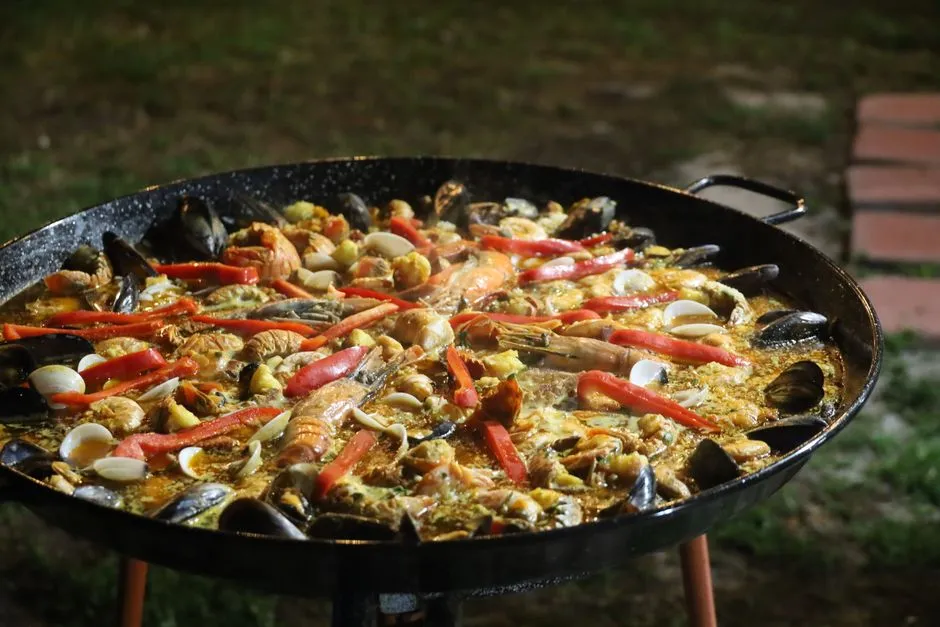
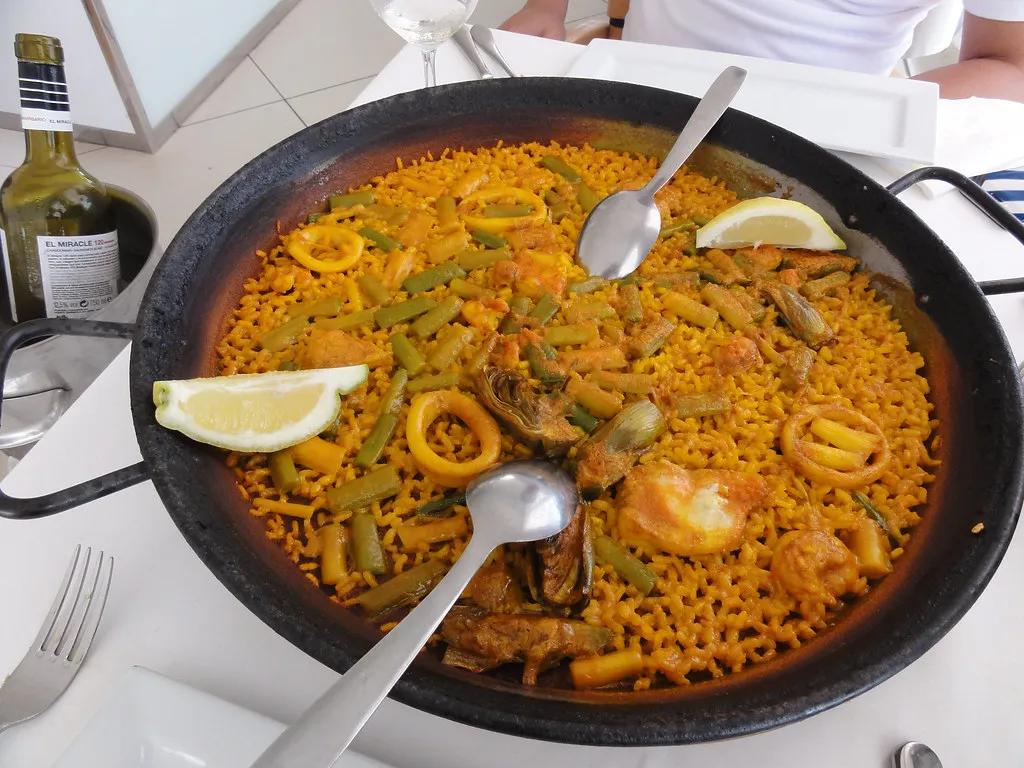
The traditional local version, paella Valenciana, is typically prepared with rice, chicken, rabbit, green beans, garrofó beans, saffron, and other regional seasonings. Nothing about this list is accidental. Each ingredient reflects what the Valencian countryside actually produces.
To obtain the name Paella Valenciana, the dish must adhere to specific standards, allowing only ten traditional ingredients: DOP rice, chicken, rabbit, Ferraura beans (a type of wide green bean), Garrófon beans (large white beans), tomato, olive oil, saffron, salt, and water.
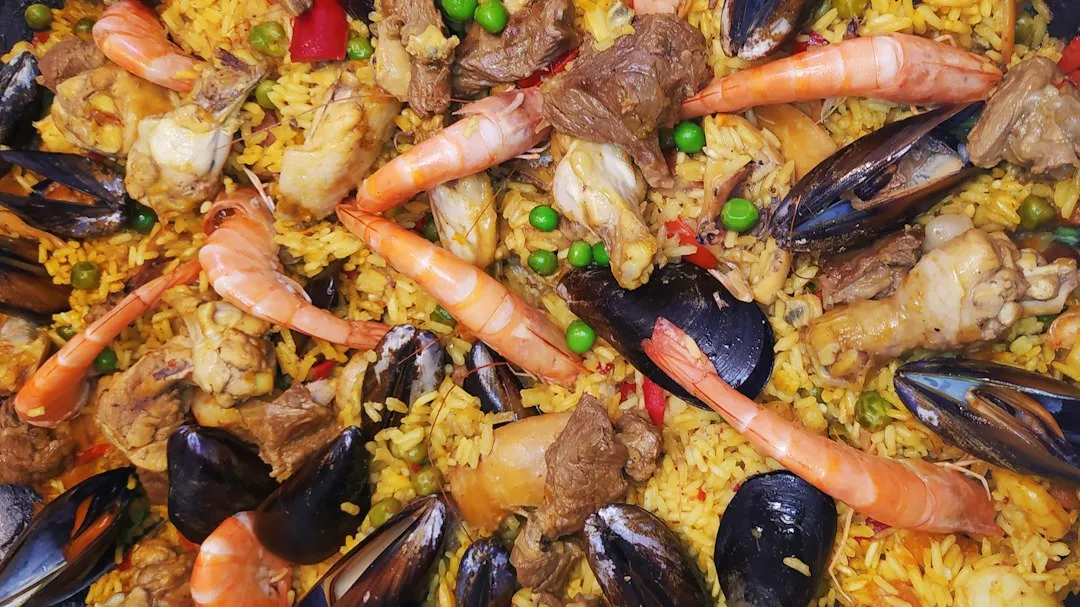
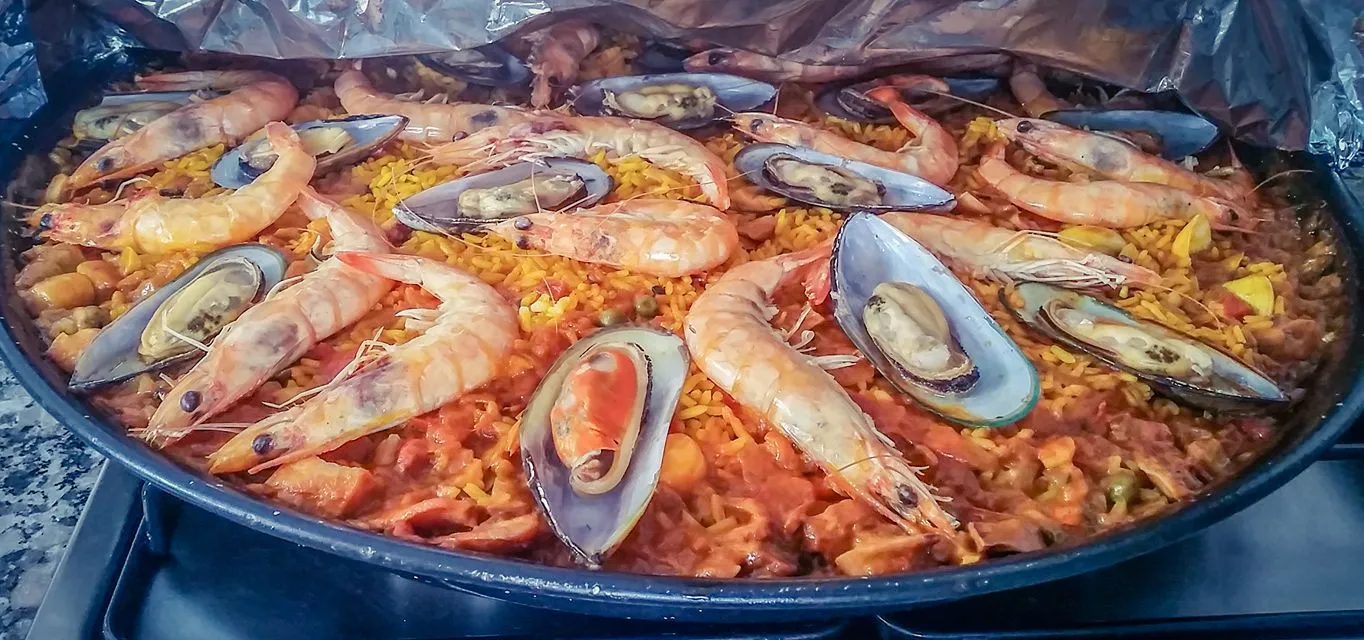
Authentic Valencian paella contains no seafood. The seafood paella familiar to many visitors is a later coastal adaptation. In Valencia itself, the original recipe is fiercely protected.
The Rice That Makes It Possible
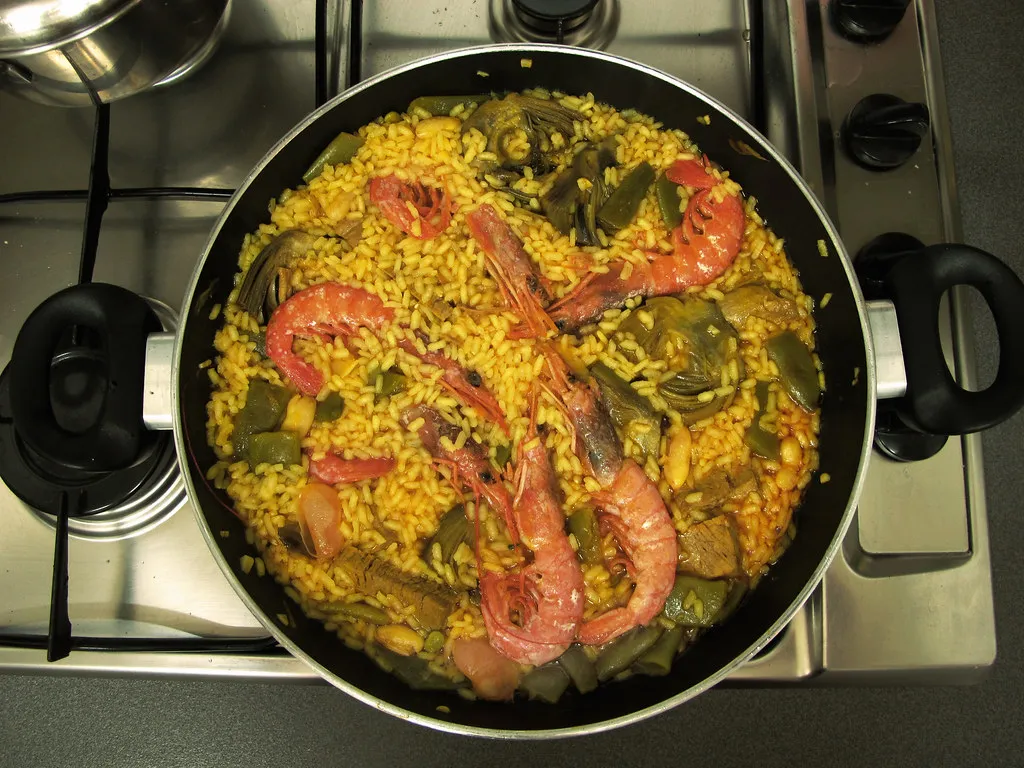
While recipes can vary, one thing that is non-negotiable when it comes to Valencian paella is the origin and quality of the rice. Valencian paella should be prepared with one of three highly absorbent rice varieties grown in Albufera Natural Park: Senia, Bomba, and Albufera.
The short-grain rice produced in Albufera is known for its high absorption capacity, making it ideal for dishes where the rice should take on the flavors of the other ingredients – an essential characteristic of a good paella. For that reason, it’s often called “paella rice.”
Since 1988, rice from Albufera has been protected under the D.O.P. Arroz de Valencia certification, which guarantees both its quality and origin. That certification matters. It ensures the grain arriving in your pan comes from the same fields where the dish was born.
From the Fields to the World Stage
At the end of the 18th century, paella was a well-known dish all around Spain along with other European countries. In the 1800s, you were able to order “Arroz a la valenciana” at restaurants in Belgium, and in 1896, Eugène Lix from France, one of the earliest videographers in the world, filmed instructions on how to cook a Valencian paella. That is a remarkable trajectory for a farmworker’s lunch.
Paella acquired international recognition at the beginning of the 20th century, especially as the Valencia region started to attract tourists. Mass tourism in the 1960s accelerated that reach enormously, turning a regional staple into something the entire world now recognizes.
Official Cultural Protection
Paella – the iconic Valencian rice dish made with fish, meat, or vegetables – has been officially recognised for its cultural importance. In October 2021, the local government in the Valencia region of Spain declared paella an Asset of Intangible Cultural Interest.
Decree 176/2021 of the Consell (the regional government) declared “Valencian paella, the art of bringing people together and sharing” an intangible Bien de Interés Cultural (a protected cultural asset). It was published in the DOGV (the regional official gazette) in November 2021 and in the BOE (Spain’s official gazette) on 15 March 2022.
The decree of recognition acknowledges the tradition and cultural significance of the preparation and tasting of paella, describing the dish as representative of “the art of joining and sharing.” Valencia is also looking to get it on the UNESCO World Heritage list.
Valencia Today: A Living Culinary Heritage
Thanks to 125 miles of bike lanes, pedestrian squares, and the fact that it was one of the first cities to monitor the carbon footprint of tourist activities, Valencia was recognised as the European Green Capital for 2024. The city carries its environmental awareness into how rice is cultivated as well, with the Albufera ecosystem carefully managed to preserve both biodiversity and agricultural tradition.
Valencia represents roughly 15 percent of the Spanish production of rice, spread over approximately 15 thousand hectares. That is a significant slice of national output, and it anchors Valencia’s food identity in something tangible and ongoing, not just historical.
Look for paella in the Malvarrosa beach district or the village of El Palmar on the Albufera lagoon, where the rice on your plate was grown in the paddy fields visible from your window. There are few places on earth where you can eat a dish while looking directly at the landscape that produced every ingredient in it.
A Dish That Belongs to a Place
What makes the story of paella genuinely compelling is how much it resists detachment from its origins. The history of paella perfectly illustrates how a simple peasant dish can evolve into a cultural and gastronomic symbol. Yet even after centuries of global spread, the dish keeps pulling back toward its source.
Paella used to be “the essence of simplicity, even austerity, with little meat and even less excess,” three anthropologists from Universidad Católica de Valencia wrote in a 2022 article published in the International Journal of Gastronomy and Food Science. That article surveyed home cooks in each of the region’s 266 towns on the basic ingredients of Paella Valenciana as passed down in their families. They found ten staple ingredients and another 50 that varied seasonally.
Valencia isn’t just the place where paella was invented. It’s the place where paella still makes the most sense – where the landscape, the culture, the lagoon, and the rice all exist together in a way that no other region can replicate. The dish didn’t just come from here. In many ways, it still lives here.
AI Disclaimer: This article was created with the assistance of AI tools and reviewed by a human editor.