
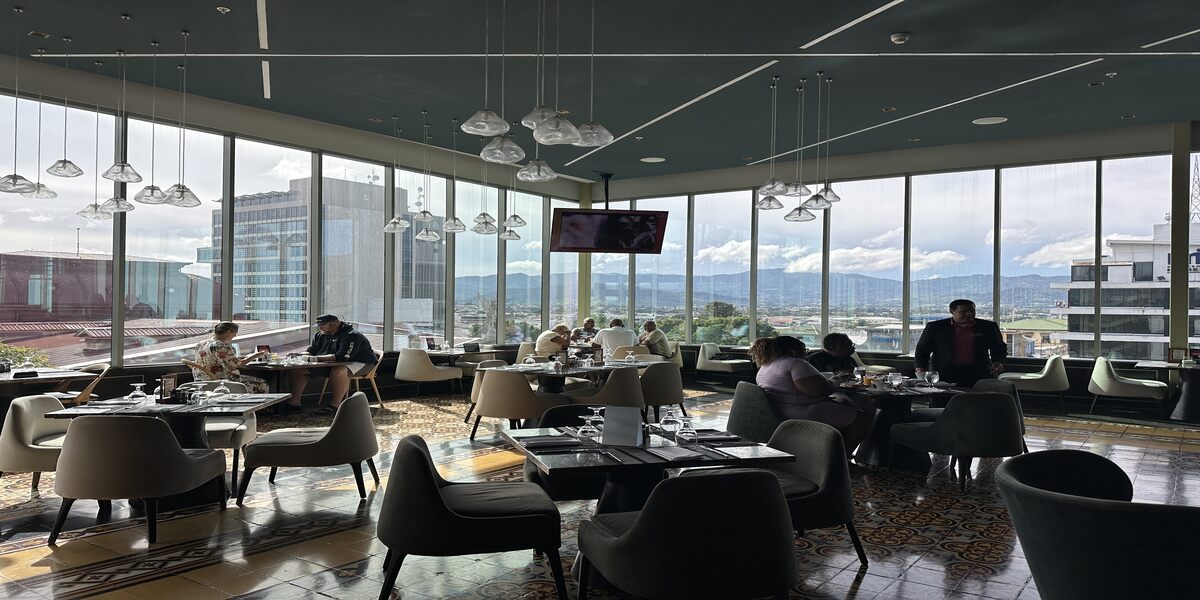

I set out from the Gran Hotel Costa Rica just before 9 a.m., joining people making their way to work on a bustling Monday morning in downtown San José. Staying on the shaded side of the street, I felt comfortable exploring amongst residents beginning their day, although by around 10:30 a.m., the heat was becoming more noticeable.
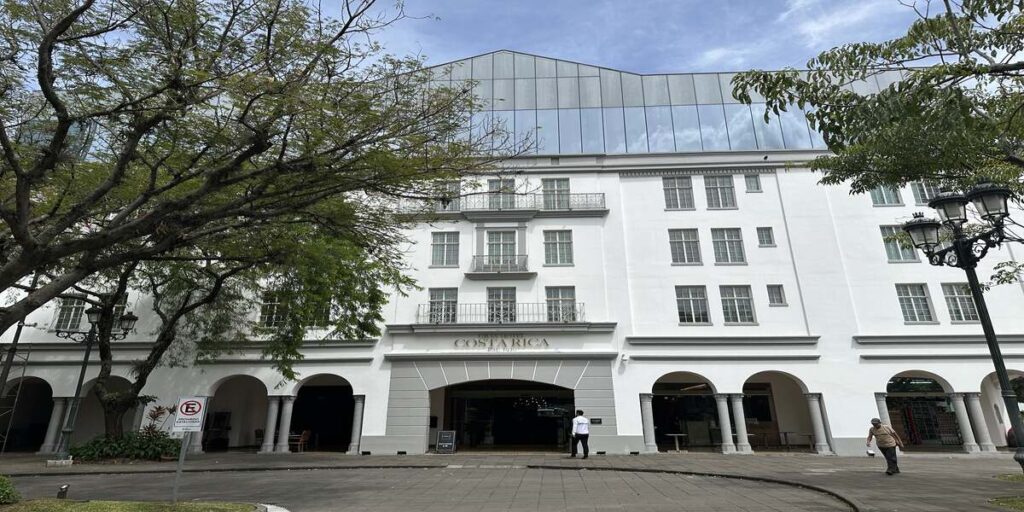
My walk took me past historic buildings, through public squares and into neighbourhood streets, with Chinatown adding another discovery on the way back. If you’re spending a day or two in San José, these places offer an introduction to the capital while getting your steps in and experiencing some of its daily life and offerings.
Getting to Know Costa Rica’s Highland Capital
San José sits in the Central Valley, surrounded by mountain ranges and volcanic highlands, with coffee-growing communities beyond the urban centres. At approximately 1,149 metres—or 3,770 feet—above sea level, its elevated setting contributes to a generally milder climate than Costa Rica’s lowland coasts.
A cool breeze accompanied parts of my walk, but the warming morning was a reminder that elevation doesn’t eliminate the need for shade and water. What I enjoyed most was being amongst people going about their day, with the landmarks providing reasons to pause along the way.
As the national capital, San José combines government services, commerce, museums and cultural institutions. Spending time here offers another perspective on a country whose forests, beaches and wildlife often dominate the travel conversation.
1. National Theatre
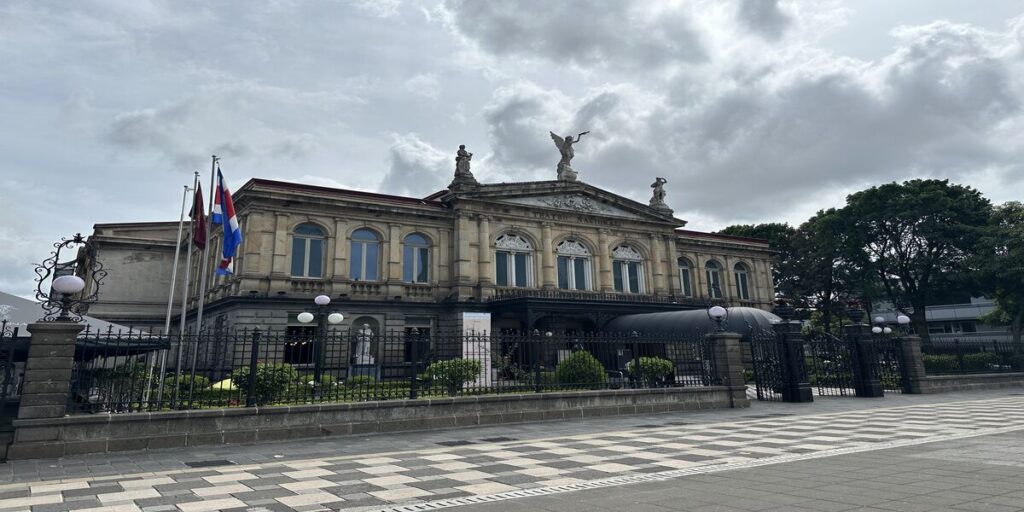
The National Theatre, beside the Gran Hotel, opened in 1897 and remains one of the capital’s defining cultural buildings. Take a guided tour to appreciate its interiors, including the ceiling artwork associated with coffee and bananas, crops closely connected with Costa Rica’s economic history.
One detail worth sharing is that its construction wasn’t funded exclusively by wealthy coffee producers, despite the frequently repeated story. According to the theatre’s historical account, the wider Costa Rican population ultimately contributed more than 90 per cent of the cost.
2. Plaza de la Cultura
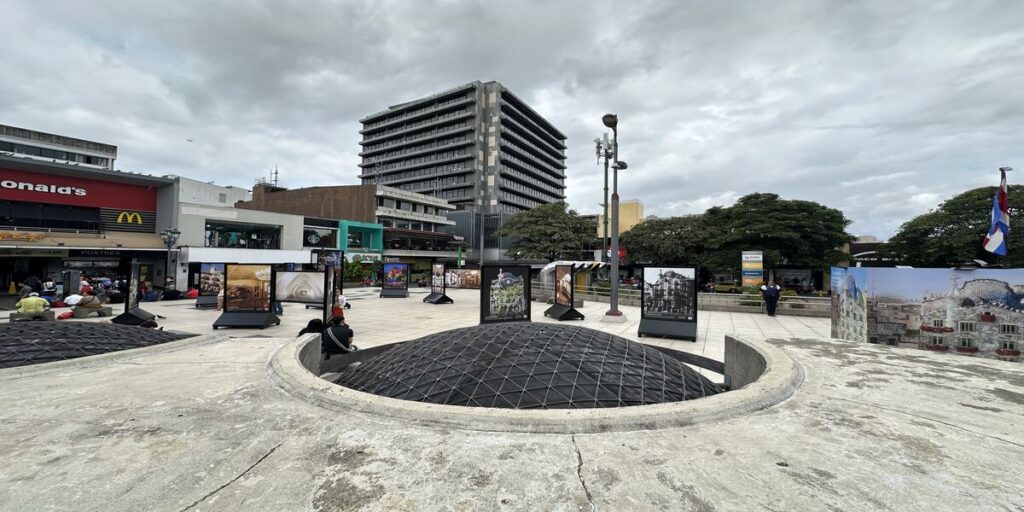
Beside the theatre, Plaza de la Cultura is both a public gathering space and the roof of an underground museum building. Opened in 1982, the complex was conceived partly to give the theatre greater architectural prominence while providing a home for collections and space for public enjoyment.
Pause here before heading below ground or continuing along Avenida Central. The contrast is memorable: an open city square above, with archaeological and numismatic collections beneath your feet.
3. Pre-Columbian Gold Museum
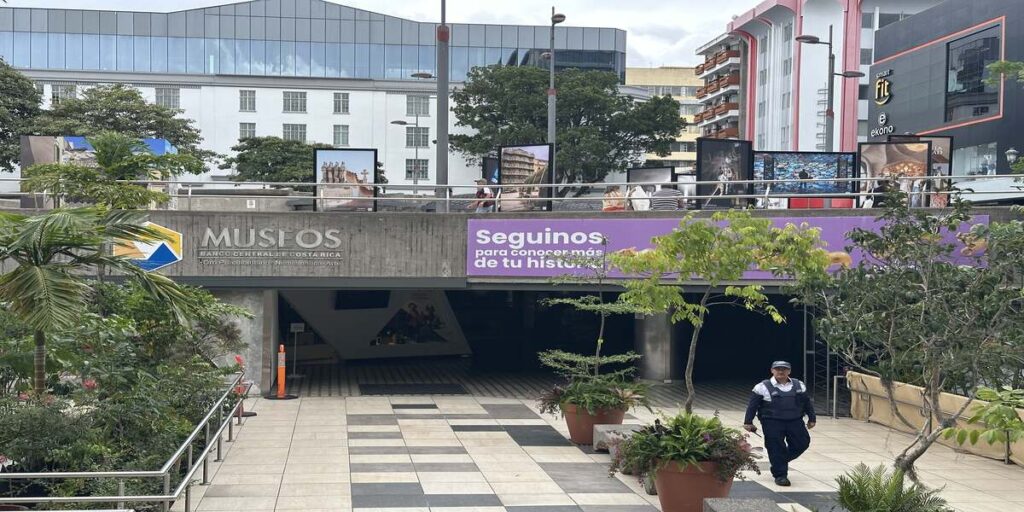
The Gold Museum explores the societies that inhabited what is now Costa Rica before European colonisation through gold, ceramics and stone objects. Its displays encourage visitors to look beyond the value of the material to the craftsmanship, social roles and beliefs associated with these objects.
Look closely for animal representations, including frogs, birds and felines, which appear in pre-Columbian goldwork. Recognising these forms makes the collection more approachable and offers a useful starting point for examining its intricate details.
4. Metropolitan Cathedral and Parque Central
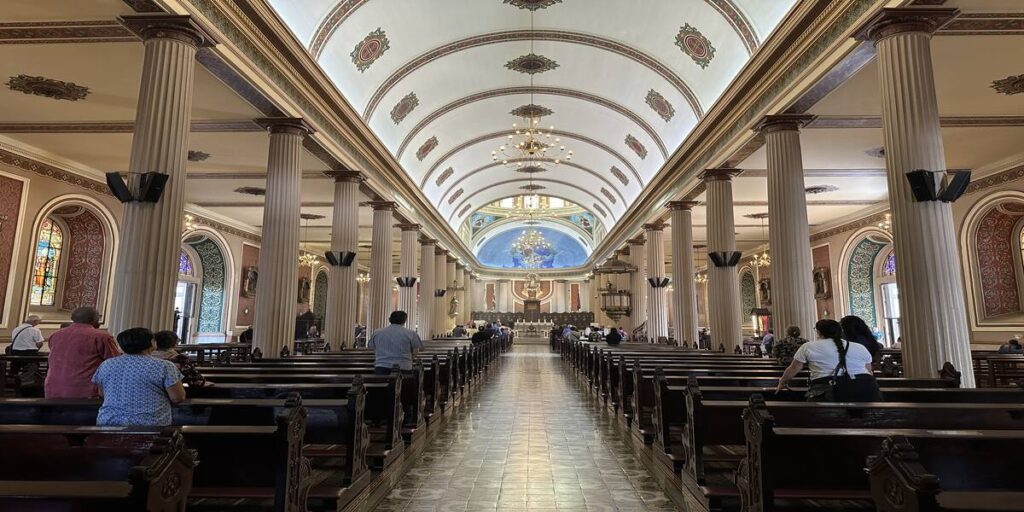
Facing Parque Central, the Metropolitan Cathedral traces its origins to an eighteenth-century chapel, with rebuilding and alterations shaping the structure seen today. By 1878, the church had been reconstructed in brick, and it received its historic architectural heritage designation in 1998.
Visit quietly when services and access permit, then cross to Parque Central for a different view of the building. The park is recognised as the capital’s oldest public space, giving this small area a particularly long connection with city life.
5. Avenida Central
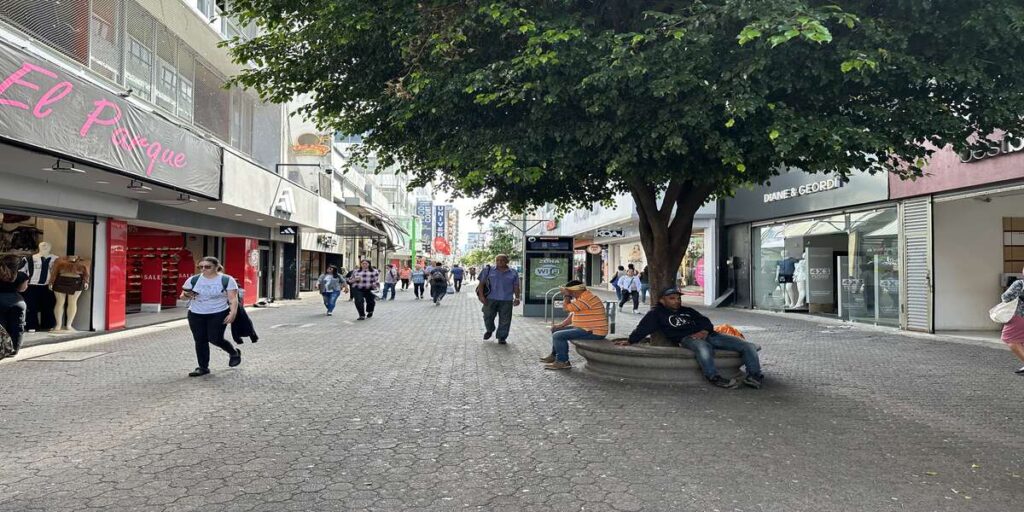
Avenida Central’s pedestrian boulevard is the outdoor shopping street beside the Gran Hotel, distinct from the enclosed Mercado Central farther west. Its position makes it a useful connection between downtown landmarks and a place to experience the movement of the working city.
Near the hotel, look for Las Arcadas, the covered architectural arcade beside Pasaje Dent. Declared an architectural monument in 1975, the arcade adds a historic detail that is easy to miss while looking at the surrounding shops.
6. Mercado Central
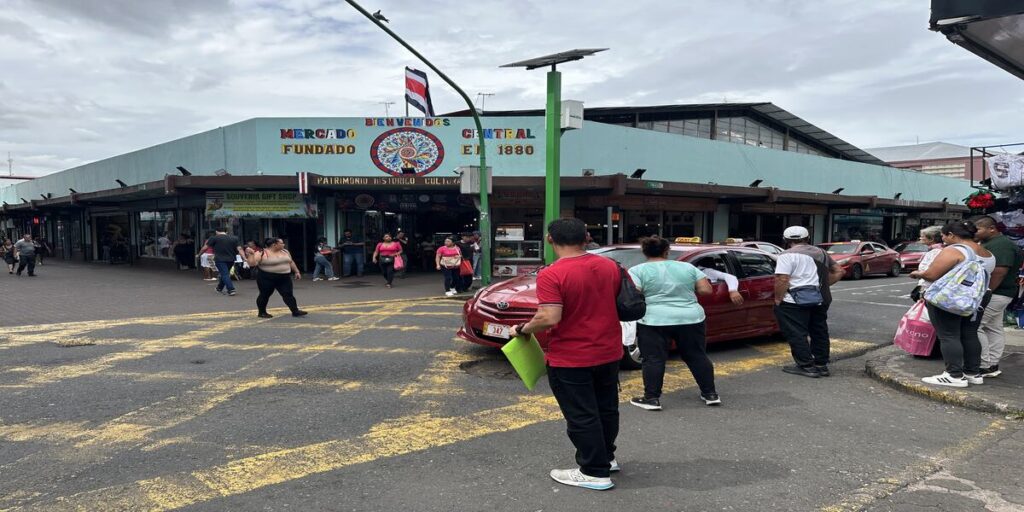
Established in 1880, Mercado Central brings stalls, shops and informal restaurants together inside a historic market. Find it between Calles 6 and 8, bounded by Avenida Central and Avenida 1, approximately a 10–15-minute walk west from the Gran Hotel.
The small restaurants known as sodas make this a worthwhile stop for travellers interested in everyday Costa Rican food. Browse first, ask what’s being served and leave time for a meal rather than treating the market solely as somewhere to buy souvenirs.
7. Historic Central Post Office
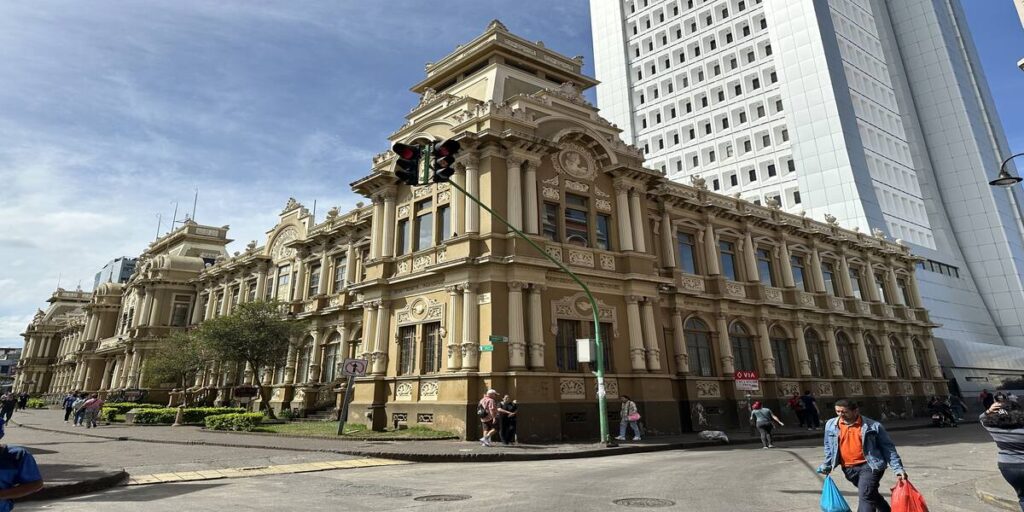
Completed in 1917, the Central Post and Telegraph Building predates the digital communications that now organise most travellers’ days. Its historic and architectural importance was formally recognised in 1980, and its façade rewards a pause even without an interior visit.
The building stands on Calle 2, between Avenidas 1 and 3, conveniently close to the market. It is a reminder that practical civic buildings can be as revealing as monuments when exploring a capital’s history.
8. Parque Morazán
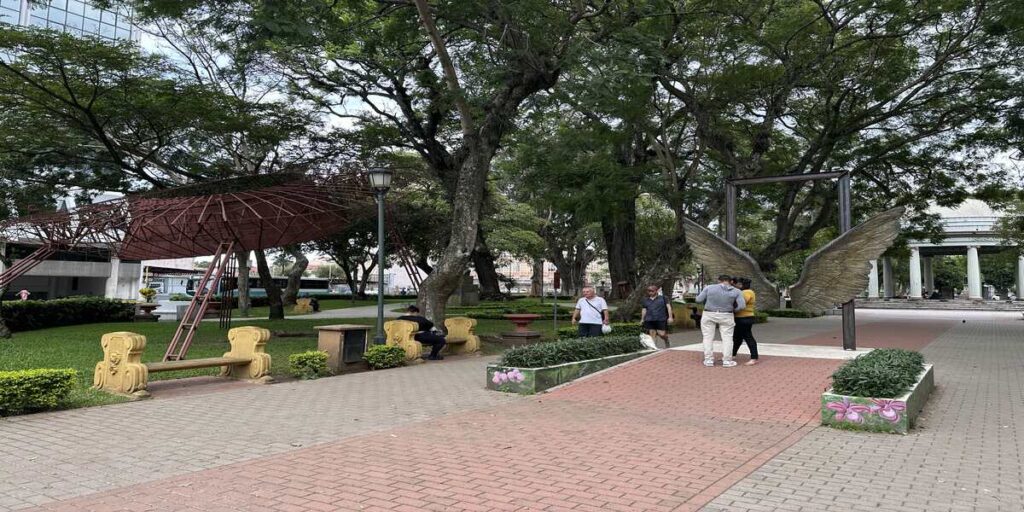
Parque Morazán offers a green pause between the commercial centre and the historic neighbourhoods to the north. Look for its Temple of Music, the distinctive pavilion designed by architect José Francisco Salazar Quesada and built in 1920.
Its construction was timed for Christmas and New Year celebrations, a fitting beginning for a structure associated with public gathering and music. Nearby, a large pair of sculpted wings provides a playful photo opportunity: stand between them so the wings appear to spread from your shoulders.
9. Barrio Amón
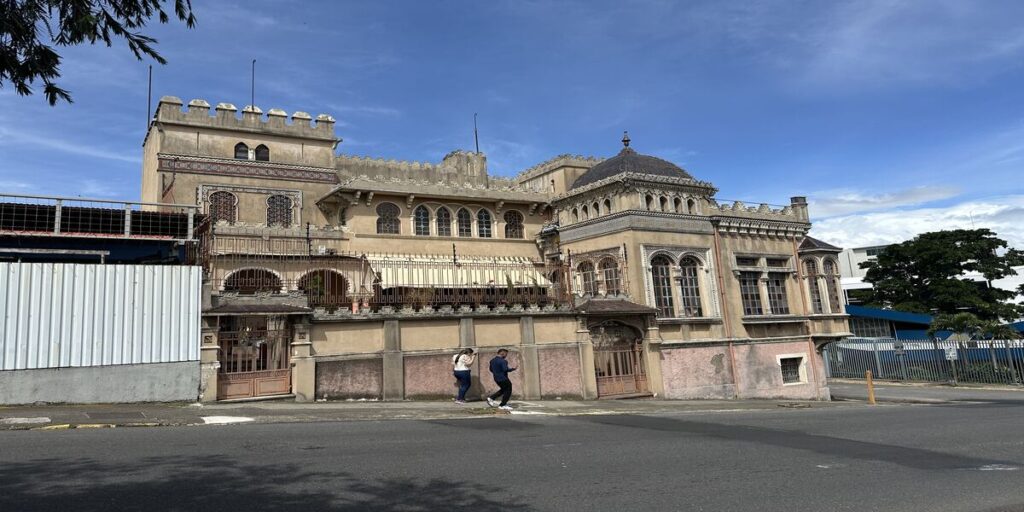
Barrio Amón’s historic houses reveal another side of the capital, with decorative façades, verandas and varied window details inviting closer attention. Along with neighbouring Otoya, the area preserves evidence of residential expansion for wealthy city families from the late nineteenth century into the early twentieth.
One landmark to seek out is Castillo del Moro, at Calle 3 and Avenida 13, whose crenellated towers, pointed windows and dome make it an unexpected sight on a residential street. Designed by architect Gerardo Rovira in the 1920s as a home for Spanish businessman Anastasio Herrero del Peral, its Moorish-inspired architecture makes this an especially memorable exterior stop.
Allow time to explore the surrounding streets, where historic residences share the neighbourhood with cultural organisations. Among them is TEOR/éTica, founded in 1999 and now occupying two houses at Calle 7 and Avenida 11, with a focus on contemporary art from Central America and the Caribbean.
10. Jade Museum and National Museum Area
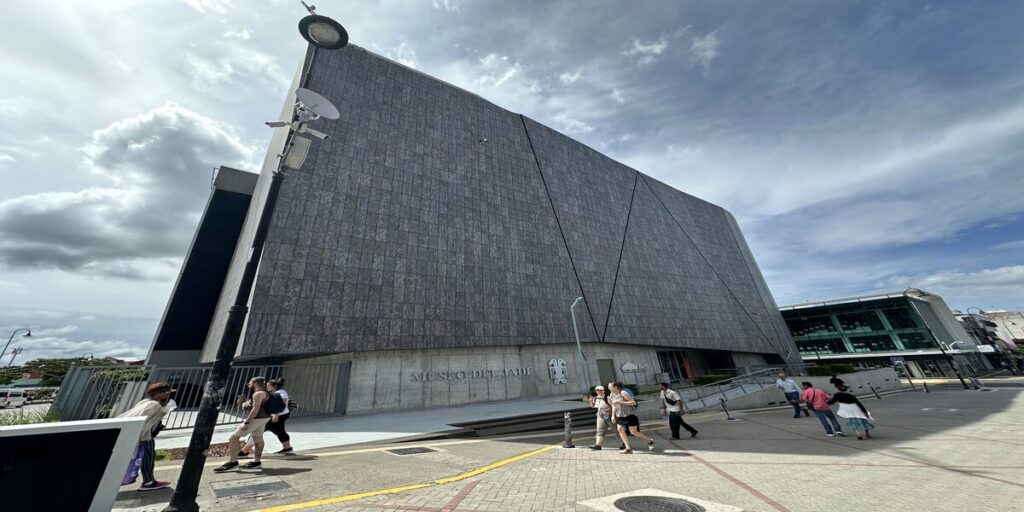
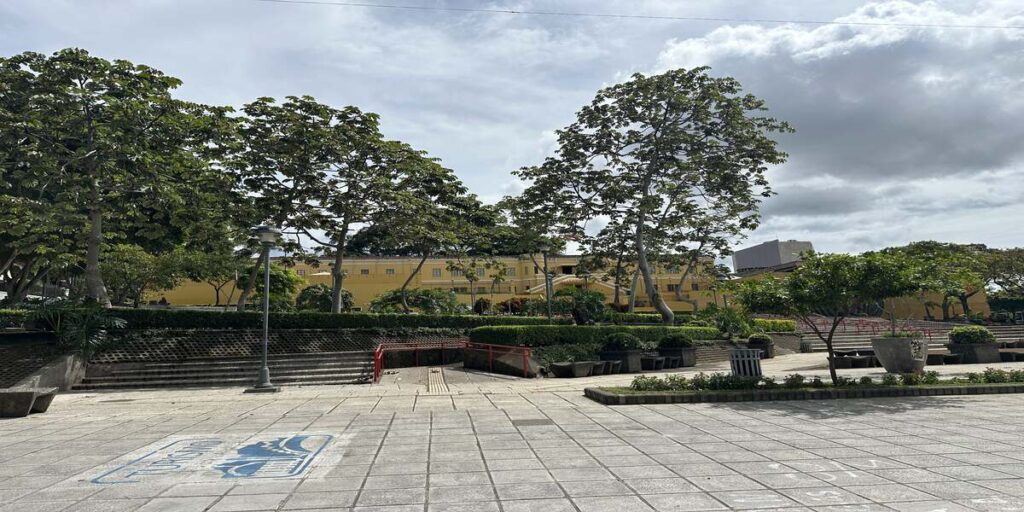
The Jade Museum is a rewarding introduction to Costa Rica’s Indigenous history, with ceramics, stone and other materials complementing its jade collection. First established in 1977, it moved into its current building in 2014, broadening the space available to present its archaeological collections.
It is particularly relevant if you’re continuing to Nicoya and its Chorotega communities, while remembering that the museum represents multiple regions and traditions. Treat the visit as broader context for learning from living communities, whose perspectives add something museum collections alone cannot provide.
Nearby, the National Museum occupies the former Bellavista barracks, a building associated with Costa Rica’s abolition of its army. Founded in 1887, the museum explores the country’s archaeology, natural history and national history, offering a broader introduction to Costa Rica from pre-Columbian societies to more recent chapters of its past.
11. Chinatown
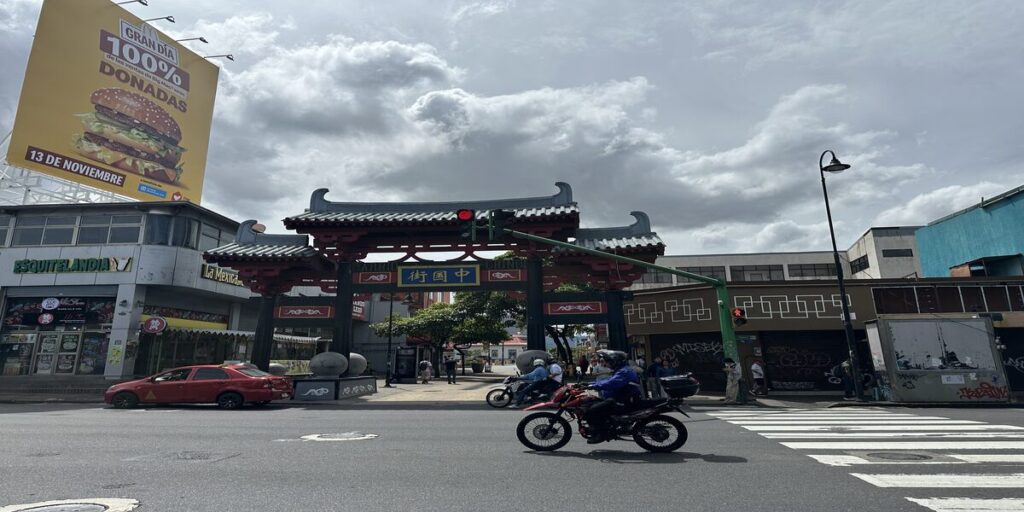
Before becoming Chinatown in 2012, this stretch was already known as Paseo de los Estudiantes, or “Students’ Promenade.” That name honours the students, teachers, workers and artisans who participated in protests against the Tinoco dictatorship, adding another historical layer to the neighbourhood.
Takeaway
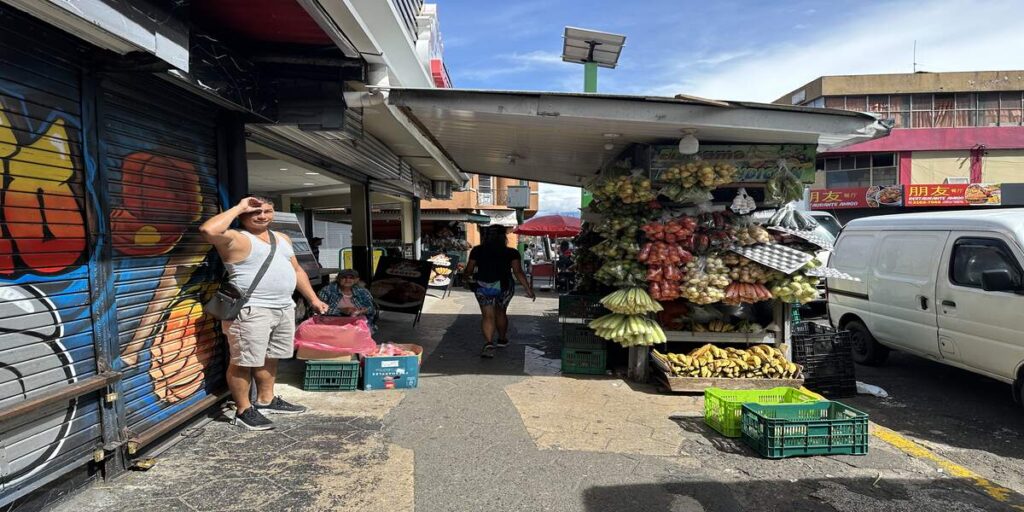
A day or two in San José offers time to appreciate Costa Rica through its architecture, Indigenous heritage, food and everyday urban life. Walking gave me room to notice what lay between the landmarks, and those ordinary encounters became an enjoyable part of the experience.
Useful Tips
Start early, wear comfortable shoes and carry water, sun protection and a light rain jacket. Choose a few museum interiors across your available days, leaving room for meals and spontaneous stops.
Check current hours before visiting: the National Museum closes on Mondays, and the Jade Museum requires identification when processing admission. Explore during daylight, keep belongings secure and ask permission before photographing people or their businesses.
As with every destination, I encourage travellers to tread lightly and leave places better than they found them. Respect cultural wildlife and stay on designated paths, observing them from a distance. We are visiting their home.
Disclosure: This trip was hosted by Costa Rica Tourism Board, but all reflections, opinions, and editorial content are entirely my own.
Photo Credit Disclosure: All photographs featured in this article were taken by Helen Hatzis. Some images have been cropped and/or resized to meet the formatting and technical requirements of Trip Jaunt’s syndication partners.