
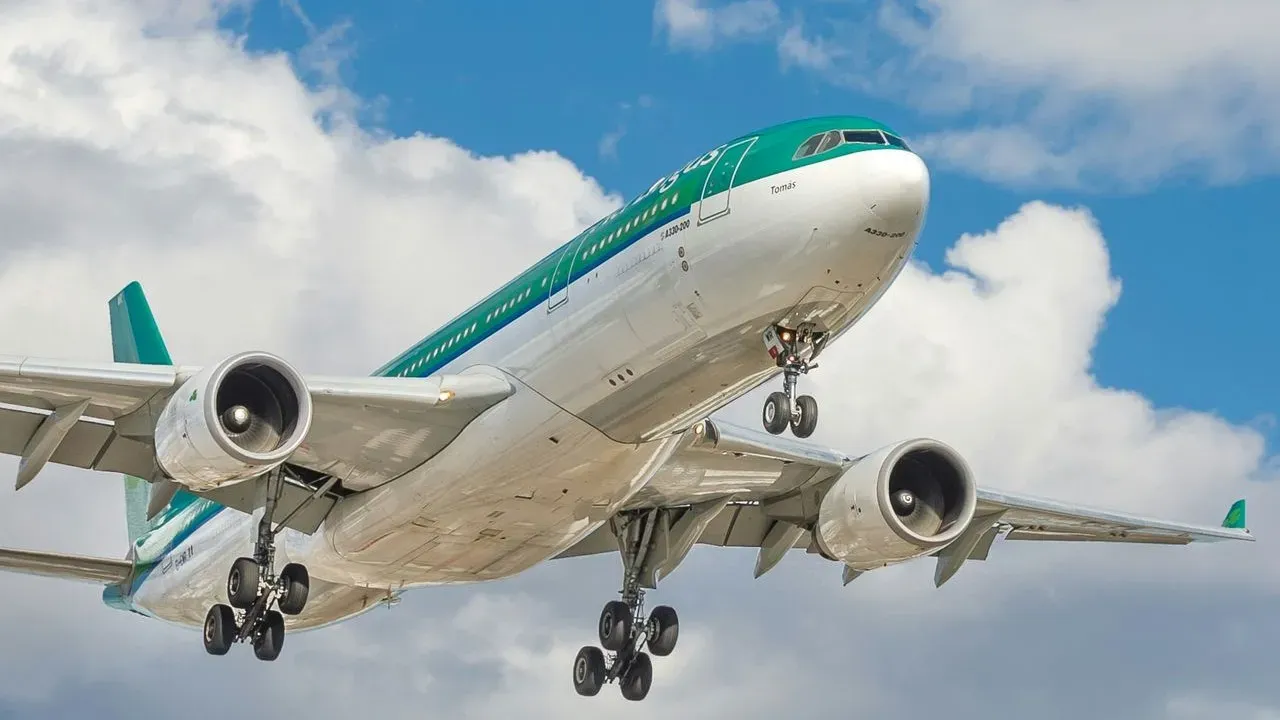

Travelers crossing the Atlantic to Ireland may soon have a new option between coach and business class. Aer Lingus plans a nose-to-tail refit of ten of its Airbus A330 jets, and the program adds a premium economy cabin for the first time in the airline’s history. The changes also replace its business class suites and refresh the economy seats, which the carrier describes as one of its most significant investments in the onboard experience in more than a decade ([1]). For US passengers bound for Dublin, the update touches nearly every stage of the flight.
A middle cabin arrives for the first time
Premium economy has spread widely among airlines over the past decade. It appeals to travelers who want more room and better service but do not want to pay for business class. Aer Lingus is entering that category later than many of its competitors, yet its plan is detailed. The cabin will use four rows of Recaro R4 seats in a 2-3-2 arrangement, giving 28 seats in total. Each seat offers a footrest, privacy wings at the head, 38 inches of pitch, and 8 inches of recline.
Service sets the cabin apart from economy. Passengers can expect a three-course meal, drinks throughout the flight, amenity kits, bedding, and noise-reducing headphones. At launch, fares are expected to start at €700 each way, roughly $768, which places the cabin between the two existing classes.
Business class moves to closing doors and a fully flat bed
The business cabin is the most visible change. Its 28 suites sit in seven rows in a 1-2-1 layout, so every passenger has direct aisle access. That is two fewer seats than the current A330-300 offers, but the existing cabin uses rows of two and three seats in a configuration that many travelers find cramped. The new Collins Elevation suites include closing privacy doors, a feature the airline has not offered before. Each seat converts into a 78-inch fully flat bed and includes wireless charging and USB-C ports.
Dining will also receive attention. The airline intends to highlight seasonal Irish ingredients alongside contemporary cooking influences, although it has not yet shared a menu. A self-service bar with drinks and snacks will be available in the cabin, giving travelers a place to pause during long overnight crossings.
Economy gets new seats and a snack station
The economy cabin keeps its 2-4-2 layout but receives new seats with six-way adjustable leather headrests. Every seat will have a 4K screen with Bluetooth connectivity for headphones, along with USB-C charging. A new snack station will offer light bites after the main meal service, which should suit passengers who sleep through the first service and wake hungry.
The palette leans on greens and whites, with customized mood lighting that echoes the airline’s identity. Aer Lingus also said it will continue offering free Starlink Wi-Fi on the refurbished aircraft, a welcome continuation for travelers who rely on connectivity during the flight.
Timing, routes, and what remains open
The first refurbished aircraft is scheduled to enter service on October 1, 2027, on flights EI104 and EI105 between Dublin Airport and New York’s John F. Kennedy International Airport ([2]). The new cabins will extend to additional North American routes as more aircraft are completed ([3]). It was not immediately clear what would happen to the two A330s outside the program.
The table below summarizes the three cabins as described in the announcement.
| Cabin | Layout | Key features |
|---|---|---|
| Premium Economy | 28 seats, 2-3-2 | Recaro R4 seats, 38-inch pitch, fares from €700 each way |
| Business Class | 28 suites, 1-2-1 | Closing privacy doors, 78-inch fully flat bed |
| Economy | 2-4-2 | New seats, 4K screens, snack station |
Aer Lingus has not published a firm completion date for all ten aircraft, so the rollout will likely unfold over time ([4]). Travelers planning a trip to Ireland in the years ahead should confirm the cabin configuration for their specific flight closer to departure. Even so, the direction is clear: a more layered cabin choice and updated seats for the airline’s transatlantic customers, with Ireland as the destination at the end of the journey.
AI Disclaimer: This article was created with the assistance of AI tools and reviewed by a human editor.