
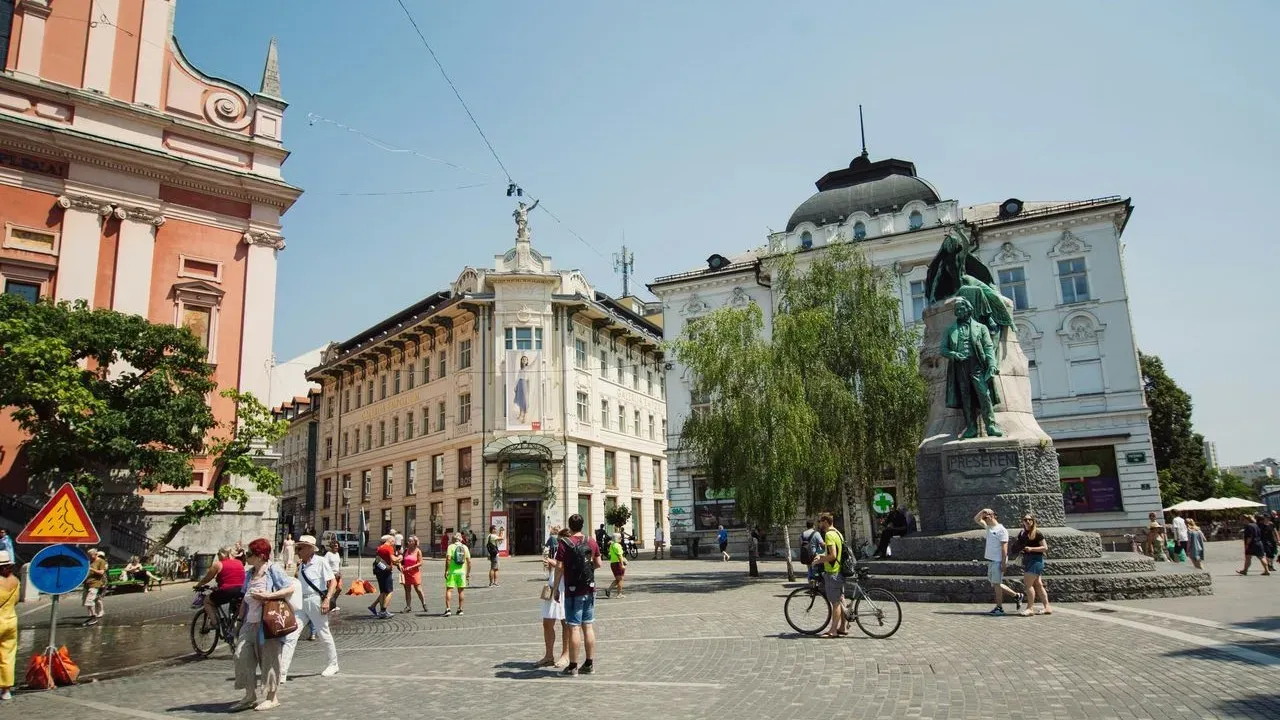

Ljubljana welcomed its visitor with a river that runs quietly through the center and a castle perched on a hill above colorful streets. A series of flight disruptions had already trimmed the planned schedule, leaving just one evening at the start of the trip and one full day at the end. Even so, the compact capital revealed its character through local guidance, green spaces, and an evening rhythm that lingers after dark. The experience offered clear lessons on how to shape a short stay around the city’s most distinctive features.
The Riverside Setting That Sets the Pace
The Ljubljanica flows narrower than many expect, bordered by trees and low platforms where restaurants place tables at water level. Pedestrian paths line both banks, and the surrounding streets form a walkable historic core of cobblestones, market stalls, and buildings in soft pastels. Church steeples rise above the scene, while the castle remains visible from most vantage points. The atmosphere stays social rather than hurried, with residents and visitors alike lingering outdoors well into the evening.
July brought no sense of overcrowding. The city felt lived-in rather than staged for visitors, allowing time to notice small details such as the way light falls on the water or the steady movement of small boats. This unhurried quality makes the riverfront an ideal place to begin any visit, whether arriving by foot or settling in with a drink as the day lengthens.
Seeing the City by Bike with Local Insight
A three-hour bicycle tour led by a resident guide provided an efficient way to connect major sites while learning the city’s layered history. The route began at the pink Franciscan Church of the Annunciation on Prešeren Square and moved through a scale model that clarified how the castle, river, and surrounding districts fit together. Stops included the bronze doors of the Cathedral of St. Nicholas, a hidden fountain in Locksmith Alley, and the Monument to Edvard Kocbek in Park Tivoli, where a small second figure represents the writer’s conscience.
Further along, the group reached Dragon Bridge and its legend of Jason and the Argonauts, then continued to the botanical gardens and several traditional beehives. Slovenia maintains a strong beekeeping tradition, with roughly one in every two hundred residents keeping hives and thousands located within Ljubljana itself. The tour also passed the cultural center at Križanke before ascending the rooftop of Nebotičnik, the 1933 building once the tallest in the Balkans, for panoramic views that include the Julian Alps on clear days. The guide arranged local refreshments and pointed out the building’s distinctive spiral staircase on the way down.
The Autonomous Art District and Its Nighttime Energy
AKC Metelkova mesto stands out as a former military barracks transformed by artists and activists into a self-managed cultural zone. Murals cover the buildings, and sculptures made from reclaimed materials line the grounds. Small studios open to visitors at times, and a skate park occupies part of the space. The area operates under a clear guideline: photographs of working artists are discouraged, while images of the evolving walls are welcomed.
By night the district shifts into a music and performance hub, with activity continuing until early morning. The same tour concluded at Center Rog, a repurposed bicycle factory now housing workshops, studios, a library branch, and a café. These stops illustrated how Ljubljana balances its historic core with contemporary creative expression, giving visitors a fuller picture of daily life beyond the riverfront.
Practical Adjustments for a Return Visit
With more time available, the castle would receive a dedicated morning slot reached by funicular, allowing an hour or more to explore the grounds and enjoy the elevated perspective. The morning produce market under the colonnade offers fresh items and artisan goods, while the painted beehive panels represent a distinctive folk-art tradition worth seeking in greater depth at nearby collections. A river cruise paired with a walking tour provides complementary views of the water and surrounding architecture.
Side streets away from the main riverfront hold additional dining options in quieter squares. One evening spent crossing the river led to rows of alfresco tables and conversations with locals that extended naturally into the night. For those arriving after physical activity elsewhere in Slovenia, a traditional Thai massage offers a restorative pause before continuing onward. Day trips to sites such as Lake Bled or Postojna Cave remain feasible when Ljubljana serves as a base.
The Lasting Impression of a Compact Stay
Two days proved sufficient to trace the city’s main threads: its green setting, its public art, and its evening social life. The bike tour in particular wove together history, daily customs, and unexpected details that a longer visit could expand upon. Ljubljana’s scale allows visitors to move between these elements without pressure, leaving room to sit with coffee or gelato and observe the unhurried flow of the place.
The experience underscored how even a shortened itinerary can open a genuine connection when guided by local knowledge and an openness to the city’s own rhythm. Slovenia’s capital rewards that approach with a quiet confidence that lingers well after departure.
AI Disclaimer: This article was created with the assistance of AI tools and reviewed by a human editor.