


Most passengers board a flight without giving much thought to what’s already been decided hours before they settle into their seat. Fuel, of all things, is one of the most consequential decisions made before every single departure, and the people making it work largely out of sight, in operations centers far from any boarding gate.
Airline dispatchers are the unsung architects of flight planning. They calculate everything from weather exposure to emergency diversion scenarios, and the amount of fuel loaded onto an aircraft reflects dozens of intersecting variables, not just the distance from Point A to Point B. On certain routes, that extra fuel is not incidental. It’s intentional, required, and sometimes surprisingly significant.
The Dispatcher’s Role in Fuel Decisions
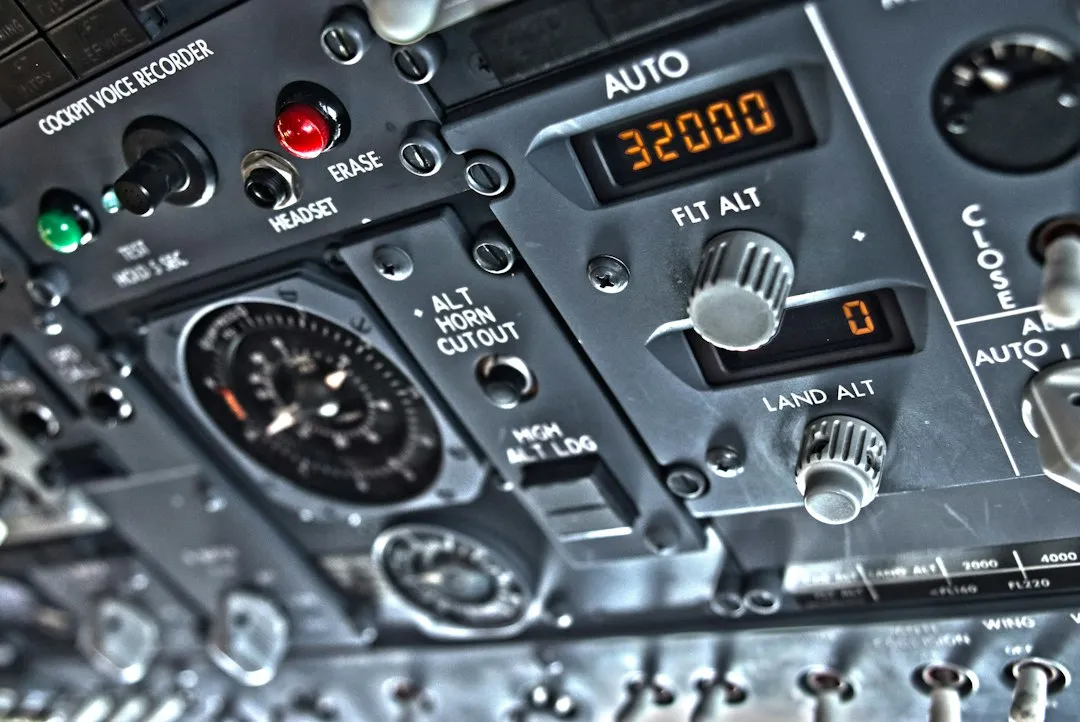
In the United States, the fuel load for every commercial flight must be agreed upon by two people: the dispatcher and the captain. This shared responsibility is not ceremonial. Both parties carry legal accountability for the decision, which means the conversation before departure is a genuine technical consultation, not a formality.
Licensed dispatchers provide a recommendation to the captain before every departure, but a pilot has final say on the exact amount of fuel based on the assessment of the itinerary. Fuel is ultimately the responsibility of the pilot in command, per Part 121 of the Code of Federal Regulations. That legal clarity shapes how disputes, when they happen, get resolved.
Dispatchers calculate the fuel needed for a flight based on aircraft performance, presence of Minimum Equipment List items, planned route, weather conditions, and all legal reserves for contingency, holding, alternate, and other requirements. The output is a flight plan that must satisfy both regulatory minimums and real-world operational safety.
Regulatory Minimums Are Just the Starting Point
Regulations require airlines to carry fuel beyond the basic trip fuel to cover contingencies: unexpected routing changes, stronger headwinds than forecast, a missed approach and diversion to an alternate airport, and a protected final reserve. These requirements form the legal floor, not the operational ceiling.
Legal minimums have killed pilots who treated them as targets rather than floors. In commercial aviation, that lesson has been formalized. Carriers build internal policies that sit above the regulatory baseline, and dispatchers routinely plan to those higher standards.
The FAA establishes minimum fuel reserves under two primary regulations, but these are legal minimums, not recommended planning targets. Experienced pilots carry more. On routes with known complexity, the margin above the minimum can be substantial.
Weather Is the Single Biggest Variable

There are a number of factors that pilots consider beyond the standard calculations based on distance and time from point A to B. Firstly, the weather is a factor for every flight, as fuel consumption increases with more adverse conditions. That consideration applies to both the primary destination and the list of alternate airports in case of diversion. Bad weather is one of the most common reasons why a captain may request to pump extra gas onto the plane before takeoff.
The largest meteorological factor in making fuel calculations is the wind speeds found in weather reports. Global weather models are used by flight planning computers around the world to update forecasts on fixed schedules, with the regular update averaging every six hours. These models use three-dimensional wind vector grids to calculate headwind or tailwind components, which are then used to find the exact fuel burn for any given flight.
Because diversion scenarios may unfold many hours after departure, dispatchers must also account for the decreasing reliability of weather forecasts over time. Conditions expected twelve hours in advance inevitably carry greater uncertainty than those forecast for the next hour, making long-haul fuel planning progressively more dependent on judgment as well as calculation.
Contingency Fuel and the Five Percent Rule

Trip fuel covers the planned route to the destination. Contingency fuel amounts to at least five percent of trip fuel, intended for unexpected routing or weather changes. Alternate fuel covers the journey from the destination to a designated alternate airport after a missed approach. Final reserve fuel provides thirty minutes of holding at 1,500 feet above the alternate.
That final reserve is never intended to be used. Extra fuel beyond it is discretionary fuel added by the dispatcher or captain for specific conditions. Think of those layers as nested buffers, each one protecting a different phase of a potential emergency.
The final reserve fuel is the absolute minimum fuel required for an aircraft to remain airborne safely. For an aircraft with turbine engines, this is the fuel required to fly for thirty minutes at holding speed at 1,500 feet above the alternate aerodrome. That number is non-negotiable regardless of route or airline.
ETOPS Routes Demand a Completely Different Fuel Calculus

When flying over oceans or remote regions, standard alternate rules break down because there are no airports nearby. For twin-engine jets flying legs that take them hours away from any airfields, dispatchers must list ETOPS en-route alternates. That means planning for the extreme scenario of flying at 10,000 feet all the way to a remote airfield in the event of an engine failure or cabin depressurization.
Under FAA regulations, an ETOPS aircraft must carry fuel sufficient to hold at 1,500 feet above field elevation for fifteen minutes upon reaching an ETOPS Alternate Airport and then conduct an instrument approach and land. This is over and above all standard reserves already onboard.
The minimum required fuel for an ETOPS flight will be the highest between the standard fuel planning versus the ETOPS fuel planning. The standard fuel planning is composed of taxi fuel, trip fuel, contingency fuel, alternate fuel, holding fuel, and any discretionary fuel. ETOPS planning does not replace that foundation. It adds to it.
Airspace Restrictions and Geopolitical Rerouting
Dispatchers must now plan routes avoiding restricted zones while maintaining fuel efficiency and passenger comfort on longer journeys. Since the closure of certain Eurasian airspaces in recent years, this has become one of the most operationally demanding shifts in long-haul flight planning.
Northern routes via Scandinavia require air traffic control clearances from multiple nations and add roughly 1,100 to 1,400 additional miles. Southern routes via Middle Eastern gateways depend on daily political stability assessments and may face sudden restrictions. Each alternative routing carries its own distinct fuel burden.
Far-eastern routing via Pacific corridors adds more than 2,200 miles but remains the most fuel-efficient option for certain carriers maintaining partnerships with Pacific Rim nations. Every reroute decision ultimately lands back on the dispatcher’s fuel sheet.
Discretionary Fuel: When Judgment Overrides the Algorithm

The extra load is technically called discretionary fuel. It’s the quantity the commander requests above what the flight plan calculates, usually added when the pilot has better knowledge of what the flight may actually encounter. It’s one of the few areas of airline operations where individual professional judgment carries more weight than the computer model.
Dispatchers and captains can add extra fuel for specific circumstances, including forecast conditions worse than usual, known delays at the destination, or passenger loads that make the aircraft heavier than typical. All three of those factors can compound on the same flight, which is precisely when discretionary fuel earns its name.
Although the airline wants to save as much money as possible on gas, the safety of the flight is ultimately the most important factor, and the captain’s judgment is virtually never questioned if they deem the dispatcher’s estimate too low. That’s an important cultural safeguard built into the system by design.
Why Extra Fuel Actually Costs More Fuel
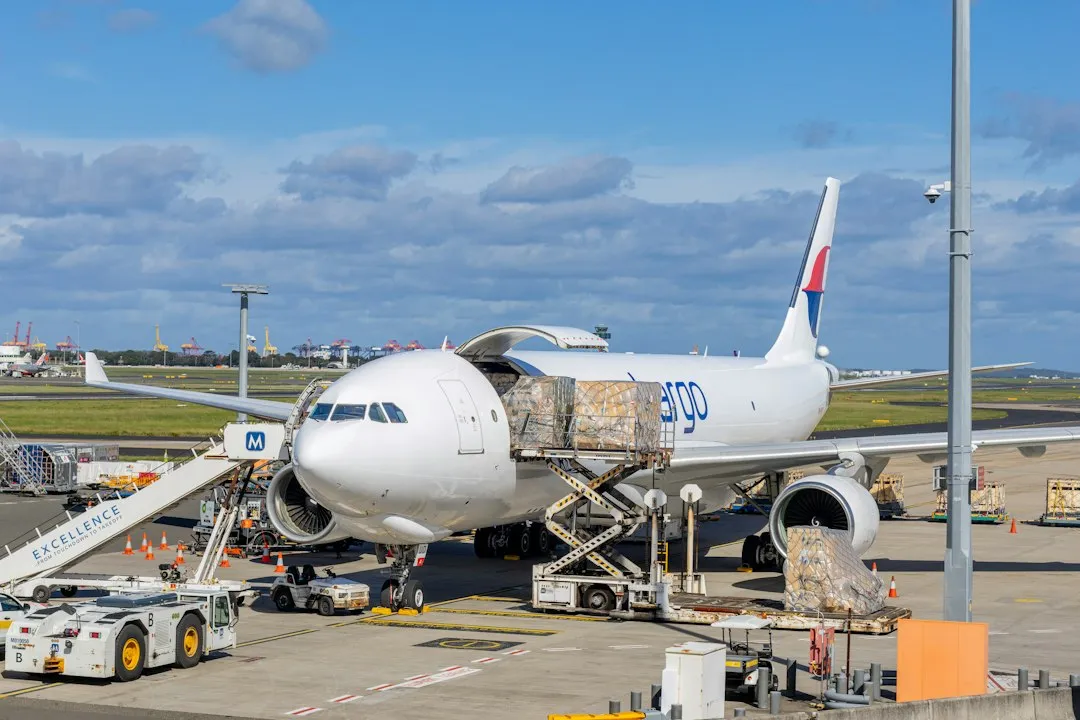
Carrying extra fuel adds weight to the aircraft, increasing fuel consumption and total emissions. Fortunately, advances in data analysis have made it possible to optimize the additional fuel needed while maintaining high safety standards. This is one of the more counterintuitive dynamics in aviation. Extra fuel burns more fuel, so the calculation has to be precise.
Planning the right amount of extra fuel before the flight is not an easy task. Too little creates safety risk. Too much creates unnecessary weight, higher operating costs, and greater carbon output per flight. Dispatchers are essentially trying to thread that needle every single day.
The aviation industry’s growing interest in sustainable aviation fuel adds another dimension to this tension. The surge in conventional jet fuel prices is colliding with the cost of meeting new mandates for sustainable aviation fuel, and industry forecasts indicate that global SAF production will increase in 2025 and 2026 but still represent well under one percent of total fuel demand, at a price that is several times higher than fossil alternatives. That financial pressure makes accurate fuel planning even more consequential.
Known Airport Delays and Congested Destinations
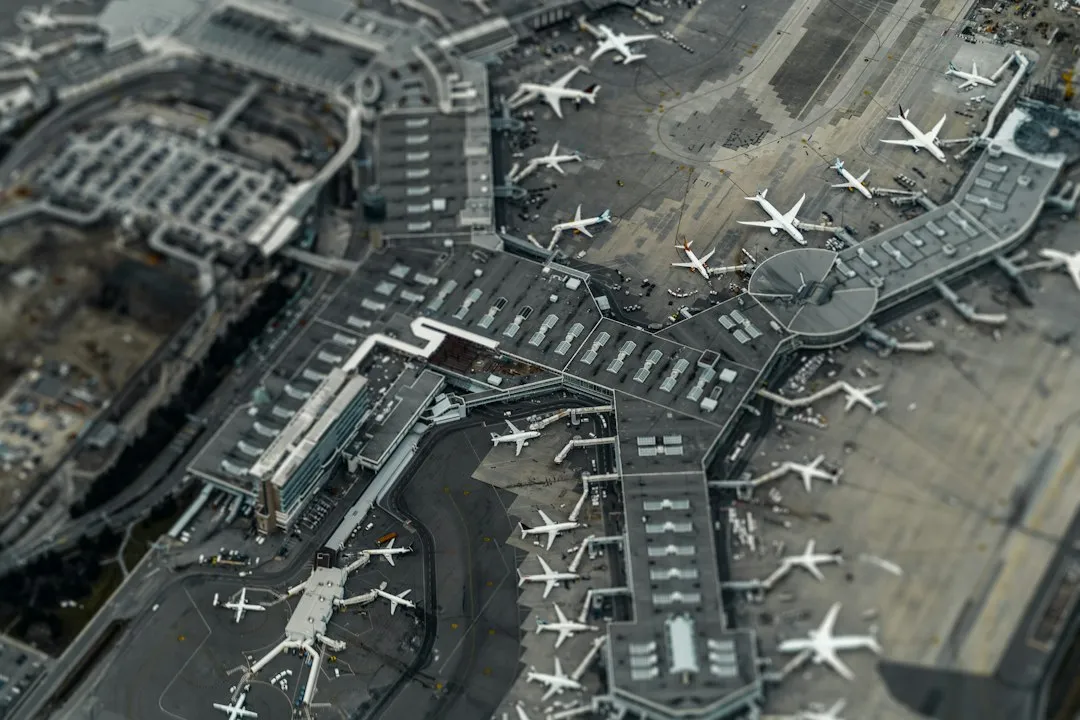
Dispatchers don’t just think about the air. They track what’s happening on the ground at the destination. Airports with chronic congestion, known holding patterns, or high diversion rates require extra fuel buffers that have nothing to do with the flight path itself.
Modern airspace is more crowded today than the day that regulation was written, and a thirty-minute delay can be considered a short one these days. Routes into busy hub airports during peak travel periods regularly see aircraft holding for extended periods before being cleared to land, and a good dispatcher anticipates that before the plane even leaves the gate.
Two aircraft of the same type may depart with noticeably different fuel loads despite flying identical routes on different days, simply because changing winds, alternate availability, or forecast confidence alter the balance between regulatory compliance and operational prudence. That variability reflects genuine real-world complexity, not inconsistency.
Long-Haul vs. Short-Haul: A Fundamentally Different Problem
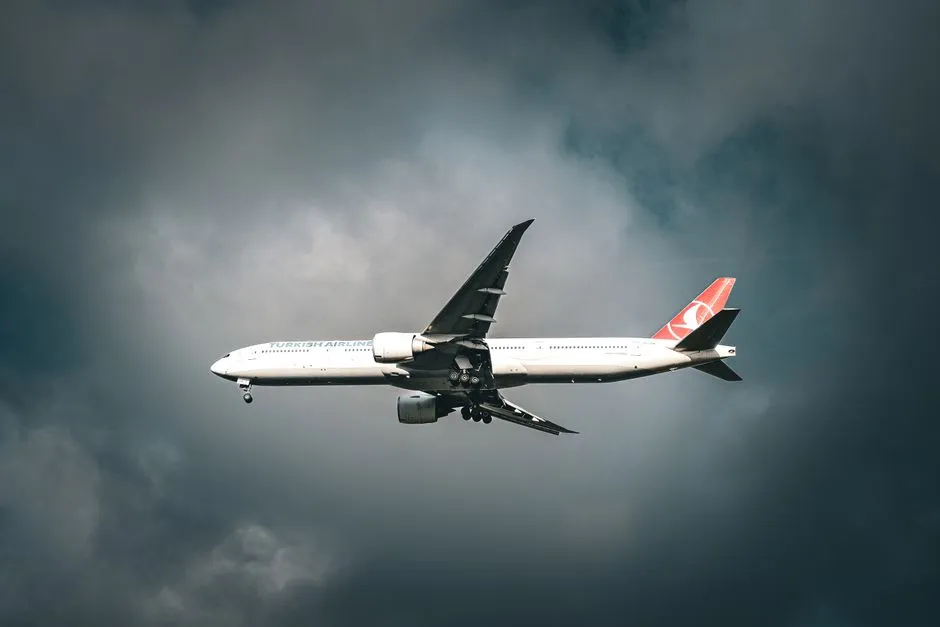
Crews flying long-haul ETOPS routes carry ETOPS-specific fuel to cover a critical-point diversion, and they watch forecast reliability degrade the longer the flight runs, since a forecast made twelve hours before landing is inherently shakier than one made forty-five minutes out. Short-haul routes don’t face anything remotely close to that level of forecast degradation.
On a ninety-minute domestic hop, a weather forecast made three hours before departure is still reasonably reliable at landing time. On a fourteen-hour oceanic crossing, the forecast made before departure may bear little resemblance to actual conditions near the end of the flight. The fuel buffer exists precisely to absorb that uncertainty.
The next time a captain announces a slightly longer taxi route or an unusual airport diversion on a long-haul flight, there’s a decent chance it traces back to a fuel decision made hours earlier: a re-evaluated contingency figure, an ETOPS alternate held in reserve, or a discretionary top-up justified by one unreliable forecast. None of those decisions are visible from the passenger cabin.
The Bigger Picture

Fuel planning in commercial aviation is a discipline that sits at the intersection of regulation, meteorology, geopolitics, aircraft engineering, and human judgment. Dispatchers work through all of it before the boarding door opens. The extra fuel on your flight isn’t a sign that something went slightly wrong in planning. It’s the proof that planning went exactly right.
What makes the system genuinely impressive is not any single rule or reserve requirement, but the layered nature of the whole thing. Each buffer protects against a different failure mode, and the people managing it do so quietly, flight after flight, route after route. Passengers rarely know, and that’s really the point.
AI Disclaimer: This article was created with the assistance of AI tools and reviewed by a human editor.