

In Arvada, Colorado, a circle of veterans is mourning one of its own. Al Jennings, a World War II Marine who fought in the Battle of Iwo Jima and watched the American flag go up atop Mount Suribachi, has died at the age of 100 ([1]). His life spanned the wartime Pacific, decades of civilian work, and a quieter final chapter spent among the friends he made after the war.
A teenager who switched branches
Jennings did not set out to be a Marine. His parents had to sign a permission slip for him to join the service at a young age, and his original plan was the Navy, so that his mother would have a child in each branch. An older brother who served in the Marines teased him that he was too scrawny for the Corps, and Jennings changed course and enlisted as a teenager ([2]).
By the time he reached Iwo Jima, he was 20. Another of his brothers was fighting in the same battle, a coincidence that Jennings later described without dwelling on it. Asked about his time in the war, he offered a plain account of duty: “We just (did) the job the best we could and if something happens, it happens.”
The island and the fight
The battle that Jennings survived was one of the most grueling episodes of the Pacific war. Military planners expected a quick victory, but the fighting on the small island stretched across 36 days. Nearly 7,000 Marines were killed and about 20,000 more were wounded, making it the deadliest battle in Marine Corps history ([3]).
Jennings came ashore at Red Beach 2 on February 19, 1945, serving with Company I of the 3rd Battalion, 26th Marines, part of the 5th Marine Division. Before that landing, he had trained in Hawaii with the 28th Marines at Camp Tarawa, preparing for the assault. Veterans who knew him later recalled his path from that training ground to the beaches, a route that many of his comrades did not return from.
Decades after the war
After his discharge, Jennings built a career as a truck driver. In retirement, he became one of the early leaders of a veterans’ luncheon group in Arvada, Cooper’s Troopers, which was started by Ed Cooper. For many years he served as the group’s program emcee, first at a series of restaurants and later at the Wilmore-Richter American Legion Post 161 in Arvada, where the group now meets.
His birthday celebration drew attention beyond the veterans’ hall. A 16-year-old who had asked a local television station to help her meet a World War II veteran was introduced to Jennings at his party. The group had planned to honor him at its monthly meeting, and the teenager’s request fit neatly into that gathering ([4]). For a young visitor, it was a direct connection to a history often seen only in textbooks.
Where this history can be seen
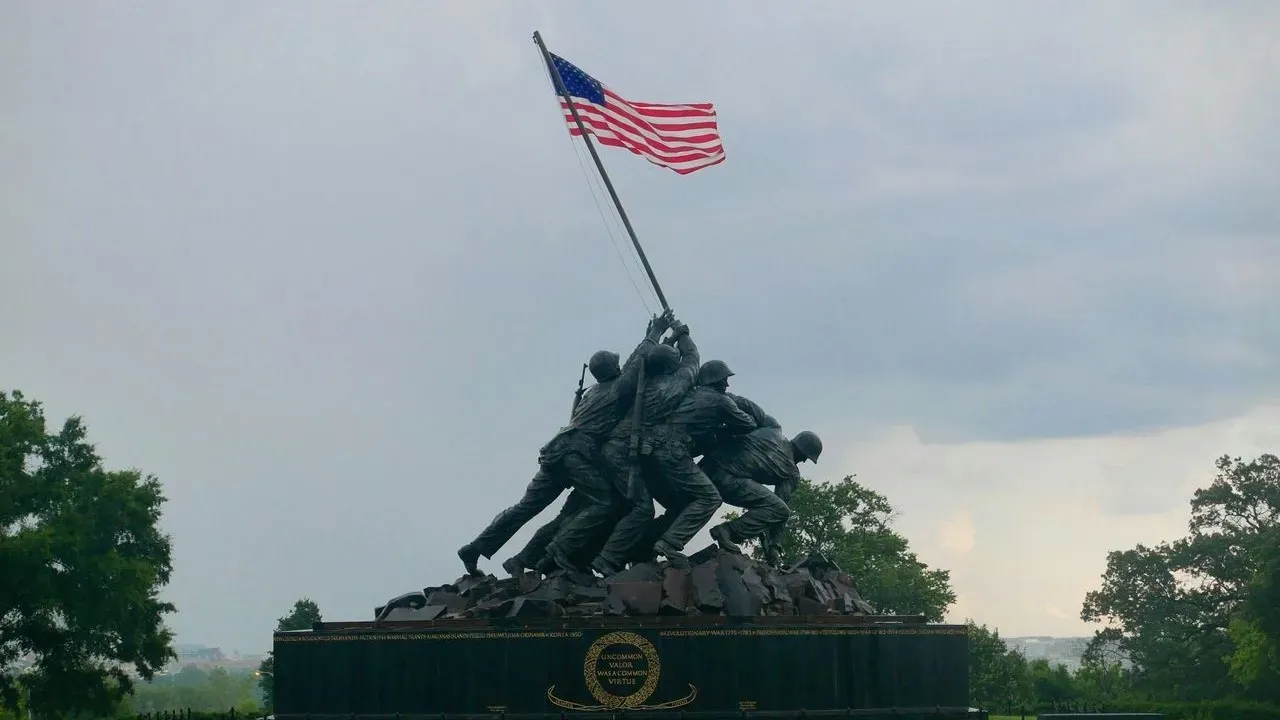
Travelers who want to understand the Iwo Jima story can start with places that keep it in view. The Marine Corps War Memorial in Arlington, Virginia, sits near Arlington National Cemetery and depicts the flag raising on Mount Suribachi. The National WWII Museum in New Orleans offers a broader view of the war in the Pacific and in Europe, with artifacts and personal accounts from those who served.
Visits like these carry the most meaning when they include time for listening. Local veterans’ posts, museum oral history programs, and community gatherings like the Arvada luncheon give visitors a chance to hear the story from the people who lived it. Approached with patience and respect, those conversations can be as memorable as any monument.
Jennings’s life offers a measured reminder of what that history asks of us. He was a teenager who wanted to serve, a young Marine who landed on a hard-won island, and a neighbor who spent his later years encouraging others to gather and remember. His death closes a personal chapter, but the stories he shared in Arvada continue to reach the people who hear them.
AI Disclaimer: This article was created with the assistance of AI tools and reviewed by a human editor.