
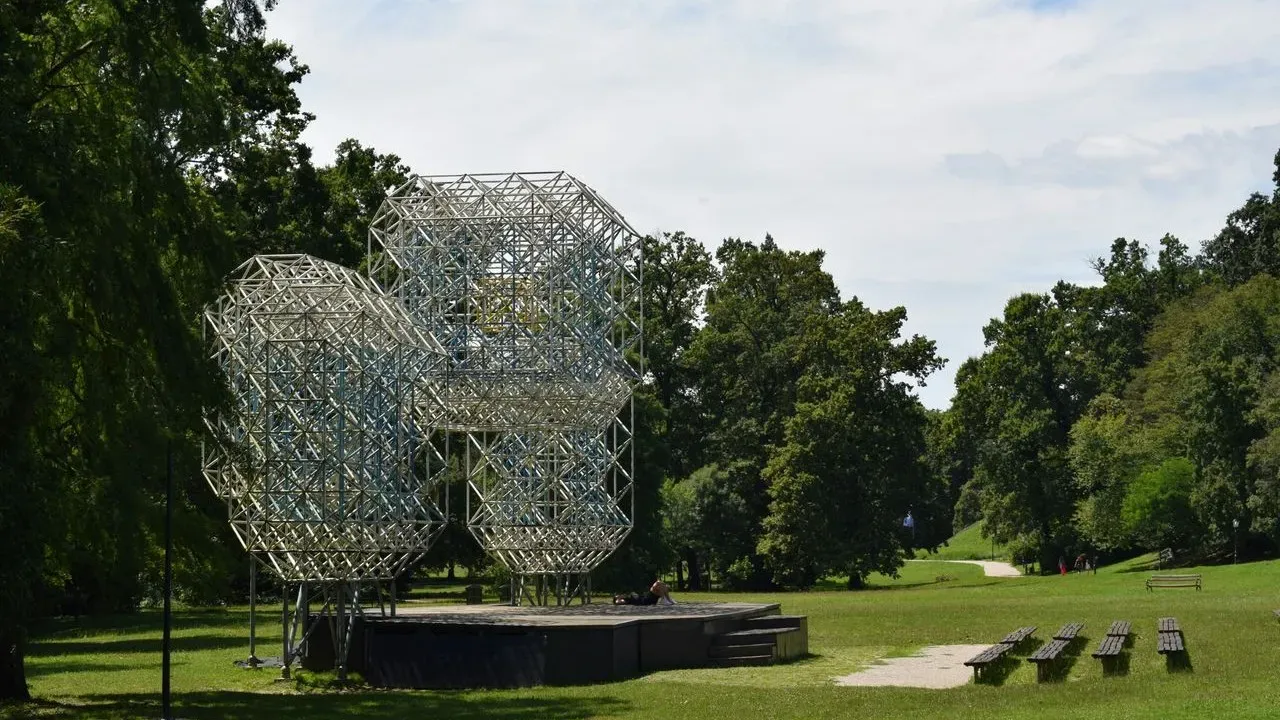

New York’s Hudson Valley welcomed a familiar name in the art world this month. Anne Reeve began her role as senior curator at Storm King Art Center on November 1, moving from the Hirshhorn Museum and Sculpture Garden in Washington, D.C. The 500-acre outdoor museum has long drawn visitors for its sweeping landscape and collection of monumental sculpture. Her arrival follows a major capital project and the departure of her predecessor, Nora Lawrence, who now serves as executive director. ([1])
From a Civic Garden to a Vast Landscape
Reeve spent years overseeing modern and contemporary sculpture at the Hirshhorn. She guided the curatorial side of Hiroshi Sugimoto’s redesign of the museum’s sculpture garden, a project that reopened the day before she departed for Storm King. That four-year effort, supported by $68 million in investment, transformed a compact 1.3-acre site on the National Mall into a more welcoming civic space while honoring its architectural and artistic legacy. The shift to Storm King places her amid 500 acres of fields, hills, and woodlands in New Windsor, New York. Yet the core questions remain consistent. How does a sculpture change when viewed from different angles? How do nearby works and the surrounding environment shape the experience? At the Hirshhorn those relationships unfold within a dense urban setting. At Storm King, light, weather, and seasonal growth become active participants in the encounter.
Working Alongside a Curator Who Knows the Site
Reeve has reported to curators throughout her career, including Emily Wei Rales at Glenstone and Melissa Chiu at the Hirshhorn. She now works under Nora Lawrence, who shaped Storm King’s program for years before becoming executive director. That shared background brings practical advantages. Both understand the slow, iterative nature of commissioning site-specific work and the vulnerability artists bring to large-scale projects. Lawrence’s earlier commissions, such as those with Arlene Shechet and Martin Puryear, demonstrated how outdoor sculpture can respond to the land itself. Reeve noted that this institutional knowledge creates a strong foundation for ambitious new installations. The continuity allows the museum to build on its history without repeating it.
Balancing Growth with the Spirit of Discovery
Attendance at Storm King has risen steadily, reaching 125,000 visitors in 2025. Many arrive without prior museum habits, drawn by the chance to wander freely across open ground. From a curatorial standpoint, the challenge lies in preserving that sense of gradual discovery even as more people arrive. The site’s scale offers natural flexibility. Visitors can spend extended time with a single work or move between related pieces over long distances. Recent projects illustrate the possibilities. Kevin Beasley’s large-scale installation in Tippet’s Field incorporated resin, clothing, plants, and farm tools to explore the layered history of the American landscape. Such works sit comfortably alongside the permanent collection while offering fresh perspectives. The goal remains to give artists time and resources to create pieces that feel integral to the place rather than temporary additions.
What Visitors Can Expect
Reeve has long been interested in how outdoor environments expand the possibilities of sculpture. At Glenstone she helped present Janet Cardiff and George Bures Miller’s sound installation that turned an actual woodland into part of the artwork. Similar expanded approaches – sound, performance, living materials, and ecological processes – continue to interest her. At Storm King, the landscape already supports this kind of thinking. Past commissions have used textiles, understated forms, and even performance to complicate ideas of permanence and monumentality. Visitors who walk the grounds will continue to encounter both the historic collection and newer works that respond directly to the setting. The experience rewards slow movement and repeated visits across seasons. The move from a concentrated civic garden to a rural expanse highlights how different scales can serve the same fundamental purpose: inviting people to slow down and notice how art and place shape one another. Storm King’s open invitation to explore remains its greatest strength.
AI Disclaimer: This article was created with the assistance of AI tools and reviewed by a human editor.