

Few places on the American coast compress as much history into a single afternoon as the southern tip of Point Loma. A travel writer recently ([1])described the site’s mix of exploration history, lighthouse architecture, coastal fortifications, and tidepools. The monument that holds them together, Cabrillo National Monument, sits on a peninsula that has shaped how San Diego Bay has been navigated, defended, and studied for nearly five centuries.
A Landing That Opened the Coast
The story starts with a sailor from outside the region. In 1542, Juan Rodriguez Cabrillo climbed out of his boat and onto shore, becoming the first European to set foot on what is now the West Coast of the United States. The expedition had sailed from the Mexican coast, and Cabrillo sailed up the coast and came ashore at the sheltered harbor of present-day San Diego on September 28, 1542.
His voyage carried consequences that extended well beyond one bay. Though the San Salvador stayed only six days in San Diego harbor, this journey and future Spanish journeys to the area would shape southern California’s complex history. The monument also acknowledges the other side of that history. Its fact sheet lists Juan Rodríguez Cabrillo’s exploration and its impact on indigenous communities as a subject of interpretation. The Kumeyaay people have lived along this coast for far longer than any European expedition, and their connection to the land deserves a place in any visit.
Visitors should first stop at the kiosk at the trailhead and visitors can find a dedicated statue and museum displays inside the Visitor Center. In 1949, a 14-foot tall statue of Cabrillo was erected. The park was formally created earlier, dedicated on October 14, 1913, and its visitor center was built decades later, constructed in 1963-1967.
The Lighthouse and the Military Years
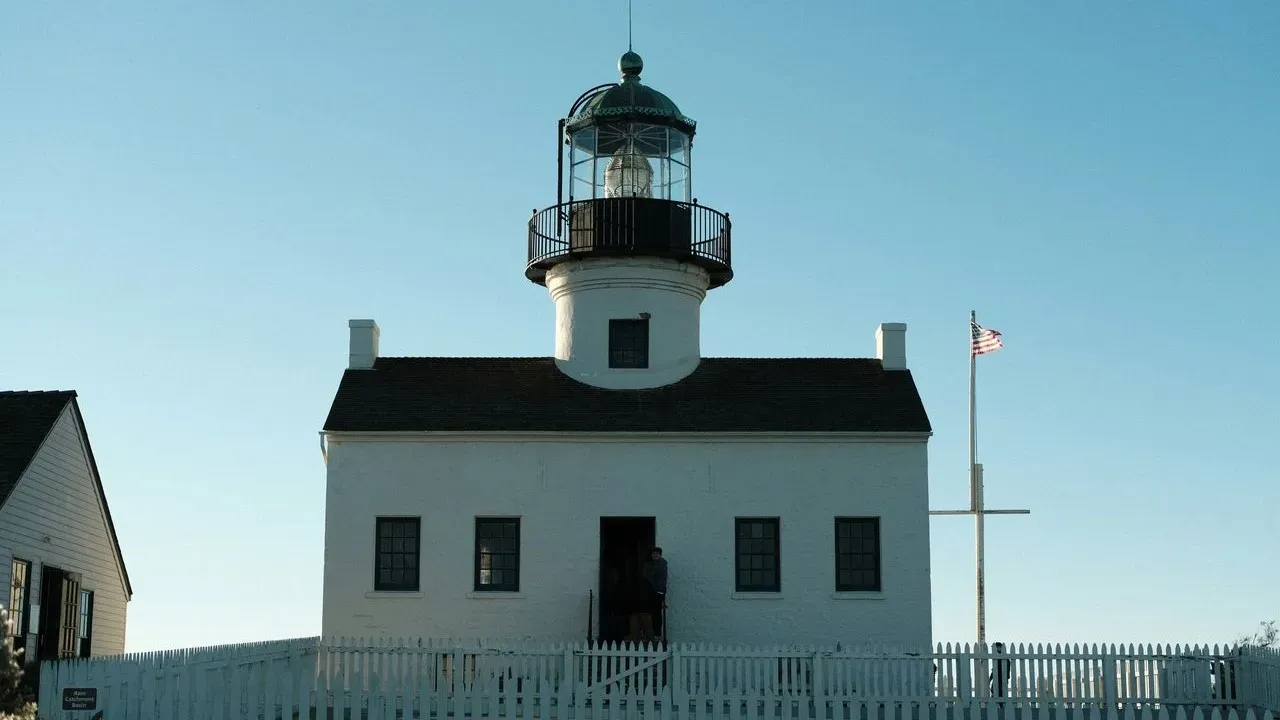
The Old Point Loma Lighthouse is the monument’s most photographed landmark, but its survival was not guaranteed. Although the Old Point Loma Lighthouse is now one of the main draws for visitors to CNM, its very existence was once questioned and it was neglected and threatened with demolition at different times in its history. Its longevity makes it a useful reminder that preservation usually takes sustained attention. The lighthouse is a San Diego icon since 1854.
The surrounding land carries a military story as well. The monument is a more than 144-acre historical site that stands on the grounds of the Fort Rosecrans Military Reservation. Cabrillo National Monument, as the site became known, was operated by the US Army until the National Park Service assumed control in 1933. The park’s mission today includes protecting these structures, which the monument describes as maritime and military cultural resources. Visitors can explore the military history exhibit and the other museums on site to see how the point was used for coastal defense across the twentieth century.
Tidepools That Change With the Tide
Below the bluffs, the rocky shoreline offers a different kind of history, one measured in tides rather than centuries. The rocky intertidal area, also known as the tidepools, is a popular attraction at Cabrillo National Monument, drawing over 350,000 visitors annually. As the tide shifts from high to low, pools of seawater are left behind among the rocks, creating tidepools.
Protecting that ecosystem is a shared responsibility. Everything is protected in the park. That means nothing can be taken or disturbed in the park. Rangers encourage a simple approach. Tidepool critters may seem indestructible, but they are very sensitive to disturbances. When observing wildlife, look but please don’t touch. Fishing is not permitted in the monument, which is also protected by a state marine protection area.
Practical tips for a responsible visit:
- An hour before and an hour after the peak of the low tide is a great timeframe to explore. A tide of 0.7 or below should expose the tidepools.
- The best time to see tidepools at Cabrillo National Monument is December through March.
- Wear closed-toe shoes with good tread, since the rocks can be slick.
- Parking fills up quickly on weekends. Arriving early helps.
- There is no cell service or WiFi in the coastal area. Download maps and tide information before heading down.
- Check the official park site for current hours, closures, and road conditions before you leave.
A Single Visit, Many Layers
What makes the monument memorable is how these pieces fit together within walking distance. A visitor can begin with the story of a 1542 landing, move on to a nineteenth-century lighthouse and a Cold War-era coastline of defenses, and finish on the rocks watching anemones and sea stars in a tidepool. The monument is open for day use only, which encourages a slower pace and a full afternoon.
The experience asks for a light touch. Staying on marked paths, leaving every shell and stone where it lies, and giving wildlife space all help preserve a site that has been shaped by many cultures and many tides. Those small choices may be the most meaningful way to honor the coastline that Cabrillo first saw.
AI Disclaimer: This article was created with the assistance of AI tools and reviewed by a human editor.