
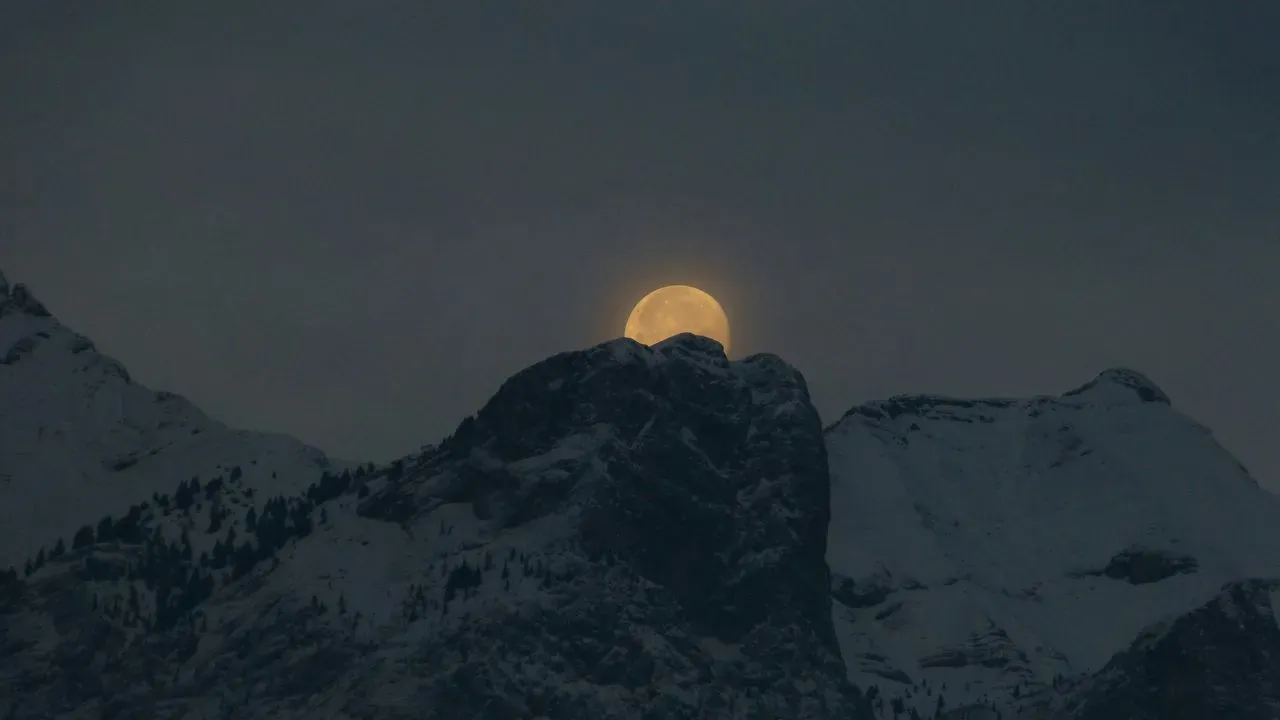

Stargazers in New York can expect the Beaver supermoon to light up the city skyline soon after dusk, a quiet break from the Thanksgiving rush ([1]). The full moon falls on Tuesday, November 24, two days before the holiday, and it opens a sequence of closely spaced supermoons. Anyone planning to step outside should know which part of the evening matters most.
The moonrise window matters more than the peak
The moon reaches full illumination at 9:53 a.m. Eastern on Tuesday, when most people are at work or school. It will be below the horizon at that moment, so the evening view is what counts ([2]). Observers should not worry about missing the exact instant, because the moon looks essentially full for most of the night. Some observers may not notice any real change in brightness between the peak and the rest of the evening ([3]).
Timing the rise is the practical part. Here is what to plan around for the first two evenings:
- Monday, November 23: the moon climbs in the east as the sky darkens, and it still appears full on this evening.
- Tuesday, November 24: moonrise in New York falls at about 4:16 p.m., shortly before sunset at 4:32 p.m. ([4]).
- Wednesday, November 25: the moon appears almost completely lit, and its closest approach to Earth comes that afternoon.
Why this moon looks so large
The name comes from the calendar and the animals. November’s full moon is traditionally called the Beaver Moon, a reference to the season when beavers are busy preparing for the cold months ahead ([5]).
A supermoon occurs when a full moon falls near the closest point in the moon’s elliptical orbit around Earth. Supermoons can look up to 13 percent larger and 30 percent brighter than the smallest full moon of the year ([6]). Low on the horizon, a full moon can take on an orange-red tint, which is part of why the moonrise draws so much attention ([5]). The color depends on the sky and air at each location, so the view will vary from one neighborhood to the next.
Viewing without special equipment
No telescope is required. A clear eastern horizon is the main requirement, and nearby trees, buildings, or hills can delay the moment the moon appears above the edge of the view ([5]). Those planning to watch from the city may find a park edge, a waterfront, or an elevated walkway with an open view to the east the most useful spot. Arriving about 15 minutes before sunset gives time to find a position before the sky changes color.
The moon keeps moving after it rises. By around 10 p.m., it climbs toward the southeast, so the sky remains worth a second look after dinner ([5]). Warm layers are wise, since late November evenings in the city cool quickly.
Thanksgiving week and the supermoons ahead
Thanksgiving falls on Thursday, November 26. Even if clouds interfere early in the week, the moon should still look roughly 98 percent illuminated on Thanksgiving night ([7]). That gives families who gather later in the week another chance to look up.
This Beaver Moon is also the first in a run of supermoons that continues into early 2027 ([7]). For a holiday week filled with travel and noise, a few minutes spent watching the moon rise over the skyline may be one of the simplest ways to slow down. All it asks is a clear view to the east and a warm coat.
AI Disclaimer: This article was created with the assistance of AI tools and reviewed by a human editor.