
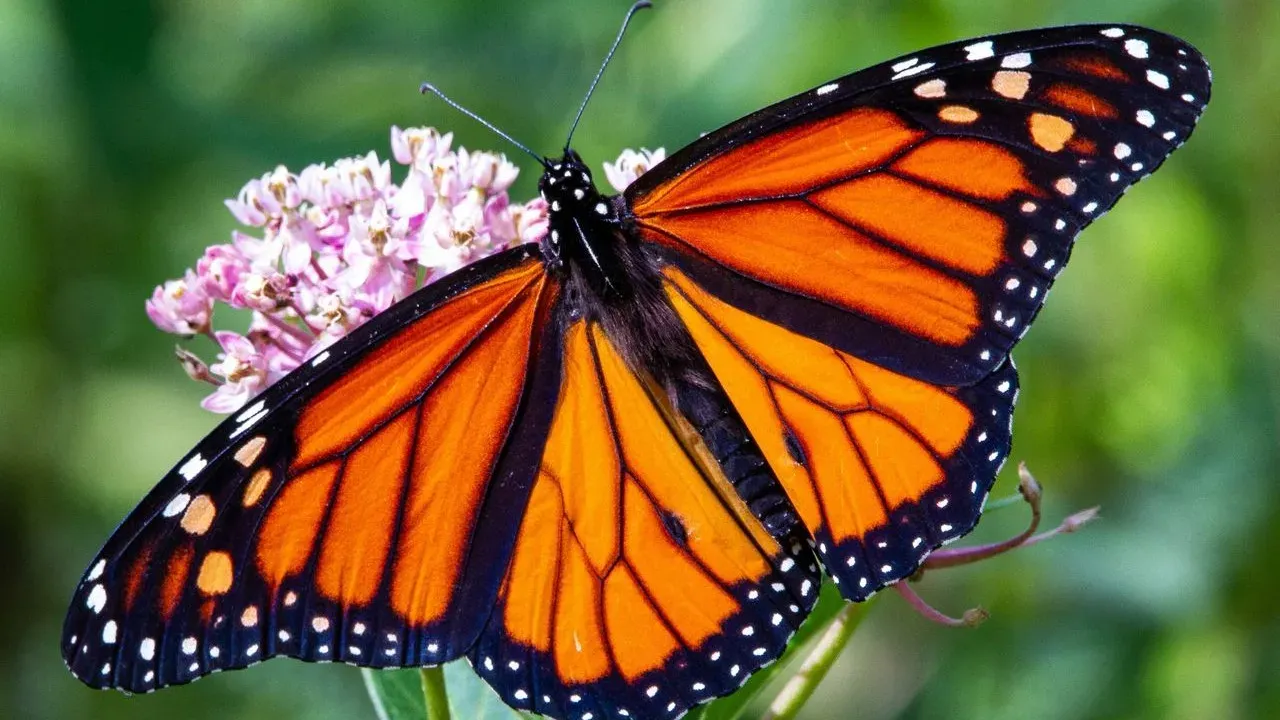

California’s western monarch butterflies are facing another difficult season. The California Department of Fish and Wildlife reported that early counts show roughly 6,000 monarchs overwintering along the coast, and officials describe the population as “perilously” low for a second year in a row ([1]). Those groves have long drawn visitors, so the numbers also raise a practical question about how people can enjoy them without adding pressure.
A Population Far Below Its Past
Monarch numbers have swung sharply in recent years. ([2])For the three winters before this one, more than 200,000 western monarchs gathered along the coast, sheltering in tall tree groves from November to February. The population had reached an all-time low of fewer than 2,000 in the winter of 2020, and it rebounded only briefly before falling again in 2024. ([3])
The longer trend is steeper still. The western population has fallen by more than 95 percent since the 1980s, when millions of butterflies wintered in California. In late 2024, federal wildlife officials proposed listing the species as threatened and designating critical habitat in the state’s overwintering range. ([4])
Scientists also stress that counts can vary considerably from one season to the next. Insect populations often rise and fall from year to year, so a single early tally does not settle the question on its own. ([5])The fuller picture usually emerges once the season’s count is complete.
What matters now: the 6,000 figure is an early count, the species is still under federal review, and the most useful thing visitors can do is keep their distance and leave the clusters undisturbed.
Where the Clusters Gather Each Winter
Western monarchs spend the colder months along a long stretch of coast, from Mendocino County south into northern Baja California, Mexico. The most recent completed count, carried out between fall 2025 and early 2026, found about 12,260 monarchs across roughly 250 sites in California. ([3])Set against that figure, the early reading for this season is a meaningful drop.
Several groves are open to the public. The Goleta Butterfly Grove at Ellwood Mesa is open from sunrise to sunset with no admission fee, although the city accepts donations for its docent program. ([6])The Pacific Grove Monarch Sanctuary is the largest overwintering site for the species in Monterey County, where monarchs arrive in large numbers from November through January. ([7])
The migration also supports nearby communities. One local estimate puts annual visits to sites including Pismo State Beach’s monarch grove at more than 80,000 people. ([2])That level of interest is a reason for thoughtful visiting habits, since busy sites carry the most pressure.
Visiting Without Disturbing the Butterflies
A good visit depends mostly on restraint. Monarchs are sensitive to disturbance, and the simplest habits make the biggest difference.
- Keep a respectful distance and bring binoculars for a closer look. ([8])
- Never touch or try to catch a monarch. Handling is prohibited under California law unless part of a government-approved research study. ([7])
- Stay on marked trails and boardwalks to protect the habitat. ([8])
- Take trash and food waste home, since leftovers can attract animals that prey on monarchs. ([7])
- Never release captive-raised monarchs at a grove, because doing so can spread disease and disrupt natural migration. ([9])
Timing matters as well. Monarchs can fly once temperatures reach about 55 degrees Fahrenheit, so warmer, sunny hours bring more movement. On colder days, visitors are more likely to see tight clusters hanging from the branches, which can be just as memorable. ([8])
Supporting the Groves Beyond the Visit
Protecting the overwintering sites that remain is widely regarded as one of the most effective ways to help western monarchs. ([10])Planting native milkweed, which the caterpillars need, also matters, though tropical milkweed should be avoided because it can interrupt migration. ([10])
Anyone spending time outdoors can contribute data. Sightings logged through the Western Monarch Milkweed Mapper or iNaturalist help researchers learn where the butterflies travel, which can guide future conservation work. ([10])For travelers, a visit becomes a small act of stewardship when it is paired with patience, a steady distance, and a willingness to support the local groups that keep these groves open.
AI Disclaimer: This article was created with the assistance of AI tools and reviewed by a human editor.