
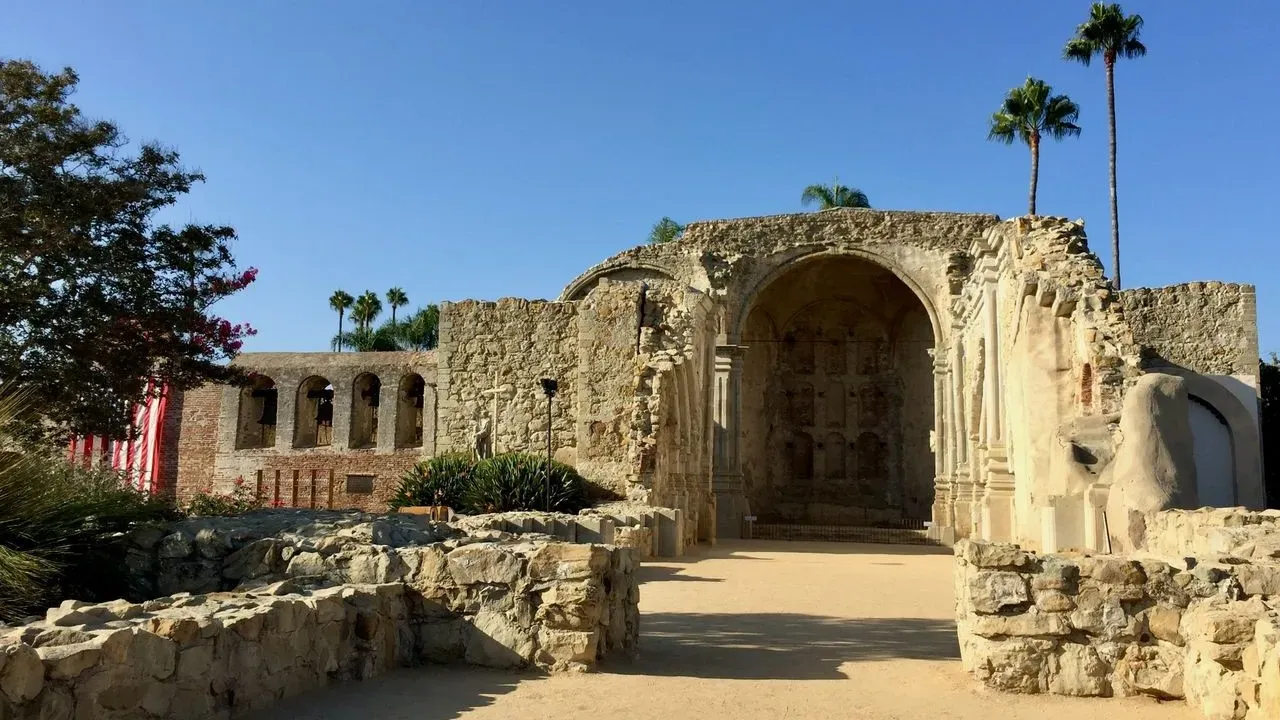

San Juan Capistrano preserves one of the most intact examples of early California settlement in the Los Rios Historic District. Founded in 1776 as part of the Spanish mission system, the neighborhood has retained its core layout and many original structures for nearly two and a half centuries. Roughly 50 miles south of downtown Los Angeles, the district sits within easy reach of the state’s largest urban center yet maintains a distinct sense of continuity with its colonial past.
Founding and Early Development
The Spanish established Mission San Juan Capistrano in 1776 as the seventh in a chain of missions along the California coast. The Los Rios area grew directly alongside the mission as a residential and agricultural zone for workers and families connected to the settlement. Adobe homes, simple chapels, and irrigation systems took shape in the late eighteenth century, creating a compact community that supported the mission’s operations. Over the following decades the district absorbed influences from Mexican and early American periods while retaining much of its original footprint. Land records and surviving buildings document continuous occupation through the nineteenth century. This layered history remains visible in the mix of architectural styles that coexist along the narrow streets.
Distinctive Architecture and Setting
Mission-era adobes stand alongside later wooden and brick structures, many shaded by mature trees that line the lanes. The low, thick-walled buildings feature small windows and simple doorways typical of early California construction. Gardens and open spaces between homes reflect the agricultural origins of the settlement. The overall scale stays modest, with most streets still narrow enough to evoke their original purpose. Lush vegetation softens the edges of the historic buildings and provides a living counterpoint to the solid adobe walls. This combination of built form and natural growth creates a cohesive visual character that has changed little in its essential outlines.
Life in the District Today
Residents continue to occupy many of the historic homes, blending daily routines with the preservation of older structures. Local businesses operate from adapted buildings, offering goods and services that serve both the community and visitors. Walking the streets reveals ongoing maintenance of the adobes and careful additions that respect the existing scale. The district functions as a living neighborhood rather than a static museum. Families maintain properties passed down through generations, while newer residents contribute to the upkeep of the shared streetscape. This active use supports the continued viability of the historic fabric. – Original adobe residences from the mission period
– Later nineteenth-century homes that expanded the settlement
– Remnants of early irrigation channels and garden plots
– Small chapels and community buildings tied to mission life
– Mature tree canopy that has grown with the neighborhood
Reaching the District
Travelers from Los Angeles can reach San Juan Capistrano by car in under an hour via major freeways. Public transit options include regional rail lines that stop near the mission grounds. Once there, the Los Rios area lies within a short walk of the mission complex itself. Parking remains limited inside the district, so visitors often arrive on foot or by bicycle from nearby lots. The compact layout rewards slow exploration on foot, allowing time to notice details in the building materials and plantings. Respect for private residences helps maintain the neighborhood’s character for those who live there. The Los Rios Historic District demonstrates how a small community can carry forward centuries of layered history while remaining part of everyday life. Its proximity to Los Angeles makes that continuity accessible without requiring long journeys.
AI Disclaimer: This article was created with the assistance of AI tools and reviewed by a human editor.