
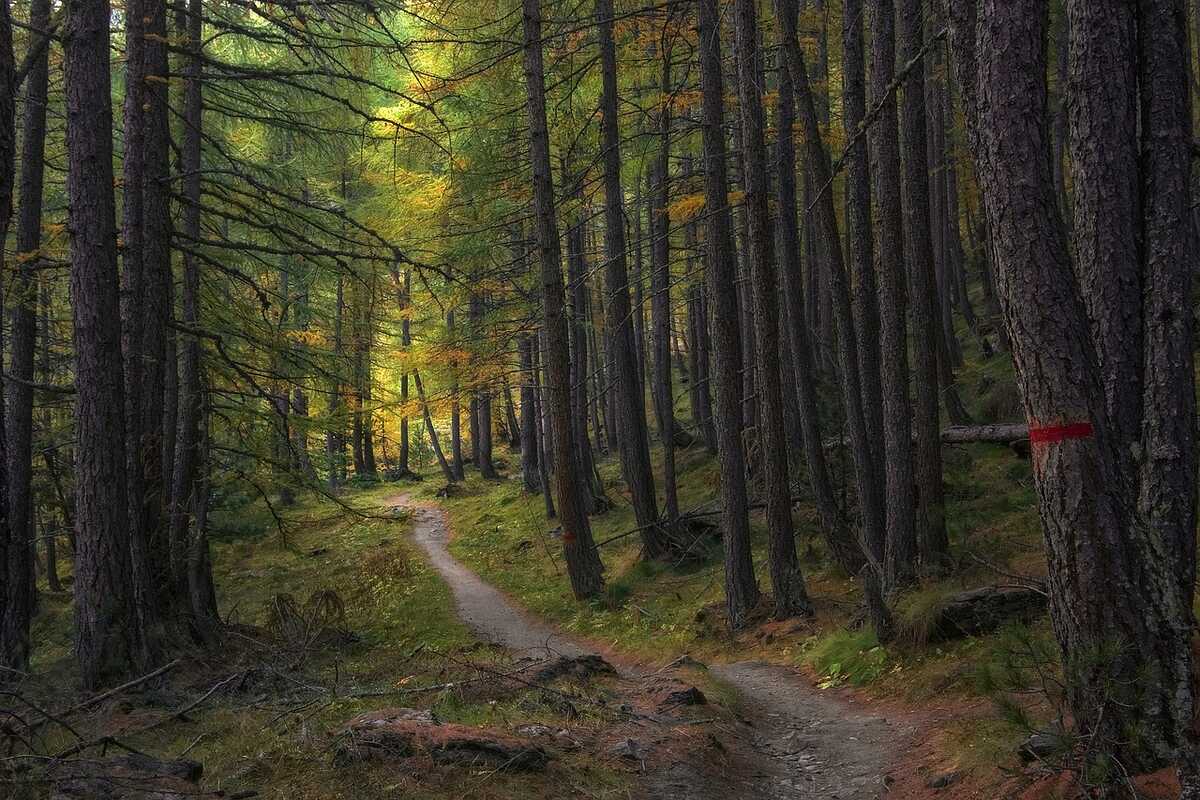

A volunteer’s hike around Canada’s smallest province sparked a walking route that helped complete the world’s longest trail network.
Prince Edward Island’s Island Walk officially placed PEI on the map of the world’s great long-distance routes when it opened in 2021. The route covers 707 kilometres and loops entirely around the island province, taking approximately 32 days to complete at a pace of 20 to 25 kilometres per day. The Island Walk is also a meaningful piece of a much grander puzzle. The Trans-Canada Trail’s vision was always to connect all ten provinces and three territories in Canada through a multi-use national trail for outdoor recreation. PEI’s contribution to that vision, channelled through the Island Walk and the Confederation Trail beneath it, helped knit a country together one red-dirt road at a time.
The Trans-Canada Trail (TCT) is Canada’s national trail network, managed by the registered charity of the same name. It offers a wide range of activities through urban, rural, and wilderness settings – along greenways, waterways, and roadways – reaching every province and territory and connecting all three of Canada’s coastlines. Kilometre 0 sits at Cape Spear in Newfoundland, the most easterly point of continental North America, and the network stretches north to Tuktoyaktuk on the Arctic Ocean. It is the physical expression of a national idea: that this vast, complicated, beautiful country belongs to the people who walk, paddle, ski, and cycle through it.
How Long is the Trans-Canada Trail?
Answering this question precisely is harder than it looks, because the trail has kept growing. On August 26, 2017, the Trans-Canada Trail celebrated its connection goal of over 24,000 kilometres of routes from coast to coast to coast. That was the headline moment – the trail linked three oceans and every jurisdiction in Canada, all within the year of Canada’s 150th anniversary of Confederation. Between September 2016 and June 2021, it was known as the Great Trail, though the name was ultimately changed back to Trans Canada Trail. The creation of the trail was born of Canada’s 125th anniversary celebrations in 1992.
Related Videos:
Since that 2017 milestone, the trail has continued to expand. As of 2025, the Trans-Canada Trail is 29,000 kilometres long. It is 100% connected but not complete, with new sections still being developed. The 24,000 km figure referenced in the article’s headline marks the historic moment of full connection, the specific achievement that confirmed Canada’s trail as the longest trail network in the world. For travellers asking how long the Trans-Canada Trail is in kilometres, the honest answer is: it was 24,000 km when it was first connected from coast to coast to coast in 2017, and it has grown significantly since. The trail is, in the best possible sense, a living project.
Spanning nearly 30,000 kilometres and touching every province and territory, the Trans-Canada Trail connects thousands of communities and reaches more than 80% of Canadians within 30 minutes of where they live. That last figure is the one that stays with me. This is not a remote wilderness route that demands weeks of planning and specialised gear to access. For most Canadians, a portion of the Great Trail Canada is barely a short drive from their front door.
What is the Island Walk in Canada?
The Island Walk is often called Canada’s own Camino, and it was created by Bryson Guptill, who completed and drew inspiration from the challenging Spanish pathways. The Island Walk is a roughly 700-kilometre trek around Prince Edward Island. Guptill, a former president of Island Trails Inc. – a Prince Edward Island-based not-for-profit dedicated to non-motorized trails – came back from the Camino de Santiago in Spain in 2016 with an idea that, to most people, would have sounded impractical. “In 2016, my partner, Sue, and I went over to Spain and hiked the Camino de Santiago,” Guptill recalls, adding that “a subsequent walk on Portugal’s Rota Vicentina trail sharpened and affirmed this early vision of a pilgrimage route for PEI.”
After completing a scouting adventure over 31 days in 2019, Guptill and his companions began mapping the route – piecing together pre-existing pathways, seldom-used dirt roads, and, when necessary, stretches of public highways to create the Island Walk. Four Islanders walked the route in that first scouting trip: Bryson Guptill, Nora Wotton, Marion Grant, and Dan Grant. What began as a volunteer’s curiosity became, within a few years, one of the most written-about walking routes in North America.
The route itself is a careful composition of surfaces and scenery. The Island Walk is a 700-kilometre route around the circumference of PEI. It uses the Confederation Trail (350 km), red dirt roads and paths (175 km), and the shoulder of quiet secondary roads (175 km). The Confederation Trail, for those unfamiliar, is PEI’s section of the Trans-Canada Trail – a converted rail corridor that runs 449 kilometres from one end of the island to the other. At 449 kilometres in length, PEI’s Confederation Trail is lined with close to 250 interpretive panels in English and French. The Island Walk grafts onto this backbone and then ventures where rail lines never went – out to the coast, along red-sand beaches, through fishing villages where the boats still go out before dawn.
The Trail That Completed a Country
PEI holds a particular distinction within the Trans-Canada Trail story. The first province to have completed its designated section of the trail was Prince Edward Island. That happened long before the Island Walk existed – but it established PEI as an early and committed partner in the national project. When the Island Walk launched in 2021, it built on that foundation by creating a walking-specific route that circumnavigated the entire island, putting PEI’s coastal and pastoral landscape on full display for the first time as a unified journey.
Related Videos:
The Island Walk completes the Great Trail across Canada in a meaningful sense because it adds a dedicated, civilian-designed walking circuit to a province whose Trans-Canada Trail section had previously been primarily a rail trail. It did this without federal mandate, without a large budget, and without a corporate sponsor. The Island Walk was designed by some volunteers from Island Trails who decided they wanted to walk around PEI instead of doing the Camino de Santiago pilgrimage route in Spain. That human-scale origin is part of what makes it resonate so strongly with visitors.
The media attention that followed the official launch has been substantial. The Island Walk has been featured in several high-profile publications, including the New York Times, BBC Travel, Travel + Leisure Magazine, The Globe and Mail, and National Geographic. AFAR magazine listed the Island Walk as one of the top 12 best places to travel in the world for 2023. For a volunteer-built trail on Canada’s smallest province, that is a remarkable level of recognition. It speaks not only to the route’s beauty but to a broader cultural moment: travellers are looking for depth over speed, for places where walking pace is the right pace.
Does the Trans-Canada Trail Go Through All Provinces and Territories?
Yes – and this is one of the trail’s defining qualities. The Trans-Canada Trail’s vision was to have a multi-use national trail connecting all ten provinces and three territories in Canada. That vision was achieved with the 2017 connection, which brought together forested paths, canoe routes, urban walkways, converted rail lines, and stretches of secondary highways into one connected network stretching from the Atlantic to the Arctic to the Pacific. The Northwest Territories is where the Trans-Canada Trail meets the Arctic Ocean. The land-based trail comes through the Yukon up the Dempster Highway and into the NWT, where it continues north through the Mackenzie Delta to Tuktoyaktuk, the most northern point on the Trans-Canada Trail.
Each province and territory contributes a different character to the whole. Spanning every province and territory, the trail links nearly 430 separate trail sections, each an ecological and cultural gem in its own right – from urban to wilderness, waterway to roadway. It passes through historic settlements, showcases the railway’s legacy of trestles and tunnels, and follows paddling routes that supported First Nations for generations. No single trail in the world contains that range of geography, culture, and history within one connected route.
Hiking all 10 provinces and 3 territories along the Trans-Canada Trail remains one of the most extraordinary undertakings in adventure travel. The 2023 documentary film 500 Days in the Wild portrays the efforts of photographer Dianne Whelan to travel the entire length of the trail – a journey that took her six years and covered the full scope of the country. Most people, of course, will experience the trail in sections. That is entirely the point. The Canadian hiking trail was always intended as something Canadians live alongside, not only attempt end-to-end.
Walking PEI: What to Expect on the Island Walk
Accommodation is available in towns and villages along the route, and luggage transfer services can often be arranged so walkers only need to carry a light daypack. This makes the trail accessible to a wider range of travellers, including those who prefer not to hike with a full backpack. That is not a small thing. The Island Walk is genuinely accessible. It requires commitment and reasonable fitness, but it does not require technical skill, mountaineering experience, or a gear budget the size of a small mortgage.
The Island Walk can be undertaken in full as a 32-day experience, but participants can also opt to complete sections of the route. The average stay is two weeks. Approximately 25 per cent of participants complete the route over two weeks as a cycling trip, while the rest choose to walk. September is the busiest month, when the weather is still warm and the summer crowds have thinned. The shoulder season appeal is one of the walk’s strongest economic arguments – “people spend more time on the island and really get to experience its beauty and charm in depth,” Guptill says, adding that the walk “caters to the shoulder season – May, June, September and October – so it prolongs the tourist season for local businesses.”
The scenery captures the essence of Prince Edward Island, from red sandstone cliffs and white sandy beaches to sweeping ocean views that alternate with peaceful farmland. The province is only 225 kilometres long and less than 50 kilometres wide – small enough that you are never far from the sea, but varied enough that no two days on the trail feel the same. The island’s iron-rich soil gives the dirt roads their famous rust-red colour. The light here, especially in late summer, has a quality that painters have been trying to capture since Lucy Maud Montgomery was alive to see it.
The trail passes through Charlottetown – where the Confederation discussions of 1864 shaped the country that eventually built this trail – and through Summerside, as well as dozens of smaller communities. Along the way, walkers pass through communities where local cafés, seafood restaurants, and cosy inns provide welcome places to rest and recharge. “The stories that we’re getting back, which are really quite touching, is people coming back the year after they do the walk to visit with the folks that hosted them when they were here,” Guptill says. That is the sign of a route that works. Not just a trail that is scenic, but one that builds something between travellers and the places they pass through.
The Island Walk’s community impact has been measurable. In a recent year, the walk generated close to 10,000 bed nights of accommodation – roughly equivalent to the number of bed nights created during the 2023 Canada Winter Games hosted on PEI. For a volunteer-run organisation operating on limited resources, those numbers represent genuine economic change in communities along the route. Betty Hope Gibbons, an avid walker from Ontario who completed the full walk at 85 years old, enjoyed the experience so much that she dedicated her time to getting rest benches installed along the route – and secured donations for 25 of them.
For those who want to walk the Island Walk on their own terms, the official Island Walk website offers itineraries, route maps, and information on sections, accommodations, and luggage transfer services. The route is marked clockwise with signage at regular intervals, and registration – while voluntary – adds a useful safety element, as participants log their planned itinerary in advance.
If you’re already drawn to slow travel and the kind of walking that changes how you see a place, this piece on the Peggy’s Cove experience in nearby Nova Scotia offers a companion portrait of Maritime Canada’s layered depth.
Read More: Peggy’s Cove is Famous for a Reason, but that’s not the Whole Story
Before You Go
The Trans-Canada Trail and the Island Walk both reward a particular kind of traveller – one who is willing to slow down and let a place arrive at its own pace. The numbers are genuinely remarkable: The Great Trail spans 24,000 kilometres and touches over 15,000 communities. The Island Walk contributes 707 of those kilometres, winding around an island that takes about 32 days to circumnavigate on foot. Together, they represent one of the most coherent arguments ever made for Canada as a walking destination.
What stays with me about this story is not the scale – though the scale is undeniable – but the origin. A retired civil servant in Charlottetown walked the Camino, came home, looked at his island differently, and built something that has now drawn walkers from New Zealand, the United States, and every Canadian province. “For me, these long-distance walks are all about making connections,” Guptill says. “Connections with nature and the beauty of this Island, and connections with the friendly and welcoming people who live here.” That is not a press release. That is a man who built a trail because he believed in what walking does to people. The Trans-Canada Trail, at its best, is exactly that: a national project made of thousands of individual acts of belief.
If you are thinking about the Island Walk, the best time to go is late May through early October, with September offering the sweetest combination of weather and quiet. Start in Charlottetown. Arrange luggage transfer if you can. Talk to everyone you meet. The benches are there because an 85-year-old from Ontario walked the whole thing and then went back to make it better. That spirit is worth showing up for.