
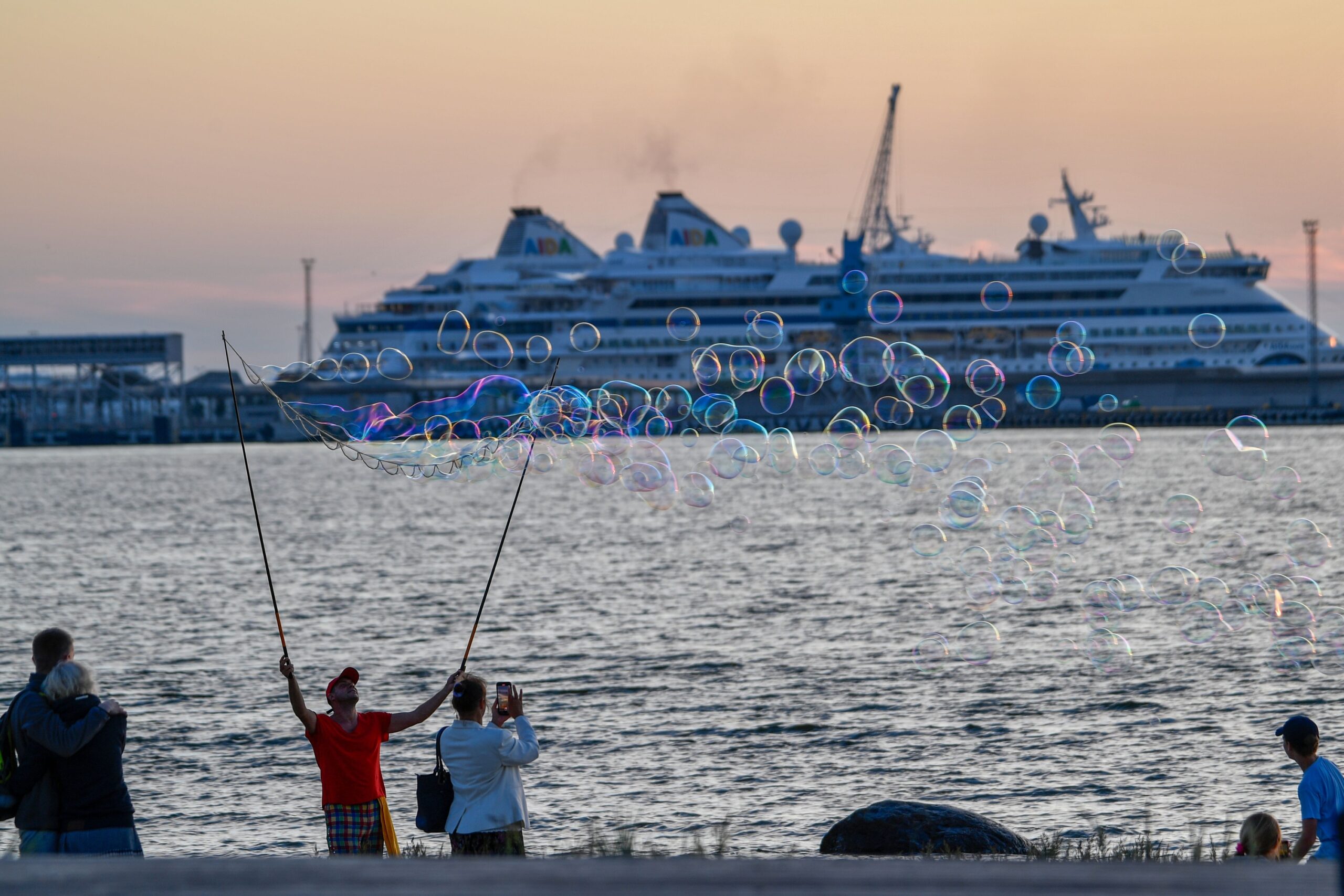

Most people board a cruise ship and drift toward the nearest open seat minutes before the curtain rises. It works, but it’s rarely the ideal vantage point. The difference between a good show and a truly memorable one often comes down to where you’re sitting, not what’s on stage.
People who actually perform on these ships, night after night, develop an instinctive understanding of which seats catch every lighting cue, every aerial move, and every punchline. Their perspective is worth paying attention to. Here’s what the seating picture really looks like across ten of the most common cruise ship entertainment formats.
Main Theater Broadway-Style Productions: The Center Mezzanine Sweet Spot
Cruise ship Broadway productions feature elaborate shows with singers, dancers, and actors performing full musicals, with Royal Caribbean staging productions like Mamma Mia! and Grease in their main theaters, while Disney Cruise Line presents works like Beauty and the Beast and Frozen: The Musical. These are full-scale shows, and they deserve full-scale sightlines.
On ships with multi-level theaters, the center mezzanine section is consistently the most rewarding place to sit. Structural columns in cruise ship theaters can impede visibility if you’re in the wrong seat, and paying attention to those columns is essential since they may only block a portion of the stage.
Many theaters also position the sound and lighting booth within the seating area, which creates some glow and can be distracting, particularly for those with sensitive peripheral vision who should avoid seats close to that booth. Choosing the center mezzanine, a few rows back from the front rail, lets you take in the full choreography without craning your neck or fighting a booth’s glow.
Aqua Theater Diving Shows: Rows 5 Through 10, Centered

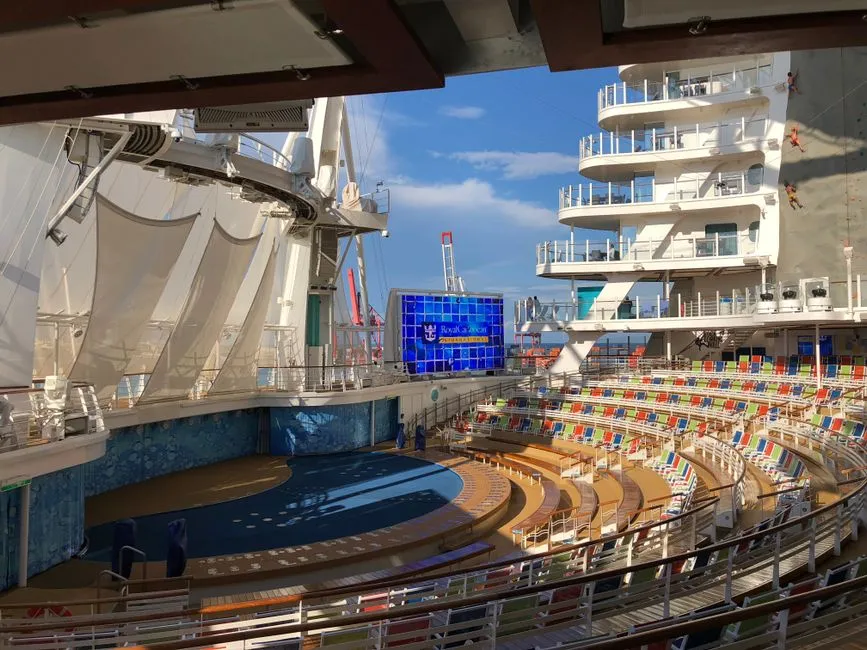
Royal Caribbean’s AquaTheater is a 600-seat open-air amphitheater with a pool stage at the stern of Oasis-class and Icon-class ships, hosting diving, acrobatic, and synchronized swimming shows that are among the most visually spectacular performances at sea.
The AquaTheater amazes with synchronized swimming and high-diving acrobatic shows, with performers diving from up to 30 feet into the pool. That height matters when you’re choosing your seat. Too close, and you’re looking up at an awkward angle during the dives. Too far back, and the finer acrobatic details disappear.
Rows closest to the pool may get splashed, which some passengers love and others prefer to avoid. The sweet spot for both spectacle and comfort falls in the central rows of the mid-section, where the arc of each dive lands perfectly within your natural line of sight.
Ice Shows: Arrive Early and Sit Rinkside Mid-Level

Royal Caribbean’s ice shows run two to three times per cruise and are free, with the venue holding approximately 700 to 900 guests, meaning shows fill up quickly on sea days, so arriving at least 20 minutes early is strongly advised.
Ice shows present a unique spatial challenge. Unlike a traditional stage, the action flows across a full rink surface in every direction. Sitting too close to the ice places much of the choreography outside your immediate viewing angle. The mid-level seats at the center of the rink offer the widest field of view, capturing spinning skaters, lifts, and formation work without having to constantly swivel your head.
Rinkside seats offer proximity and atmosphere, but the center mid-level rows give you the geometry to see the show as it was designed to be seen, from above the ice surface rather than level with it.
Cirque-Style Aerial Shows: Close to Center, Not the Front Row
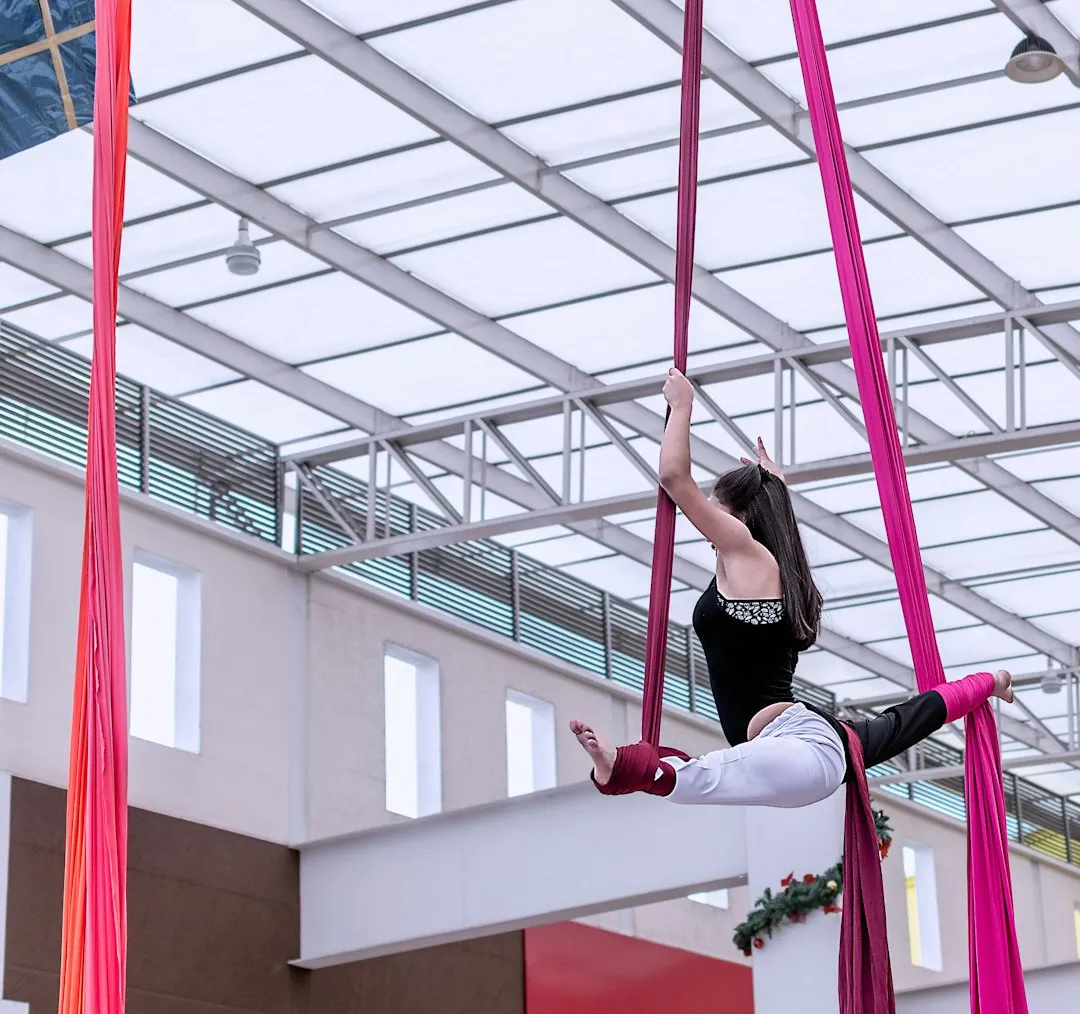
MSC Cruises offers a purpose-designed theater with a 360-degree stage, aerial rigging, and seating for approximately 450 guests, and many fans consider the at-sea shows more immersive because of the close proximity to the performers.
Norwegian Cruise Line’s Cirque Dreams is a circus-style performance with aerialists, contortionists, and gravity-defying acts. For these shows, the front row is actually one of the least ideal spots. Aerial work happens above the stage, and sitting directly beneath an aerial rig means you spend much of the show looking nearly straight up.
Cirque du Soleil shows on MSC are included in the cruise fare but require a reservation, with seating that is assigned, and popular show times selling out within the first few hours of boarding. Book early and aim for the central block, three to five rows from the stage, where aerial, acrobatic, and floor work all exist in your natural field of vision simultaneously.
Comedy Clubs: Sit Closer Than You Think

Carnival’s Punchliner Comedy Club presents a mix of family-friendly and adult-only acts, while Norwegian Cruise Line’s Levity Comedy Club serves up performances from some of the best comedians in the industry. These venues are a completely different animal from the main theater.
Royal Caribbean offers comedy shows in dedicated venues on most ships, with two shows nightly: a clean set early in the evening and an adults-only set later, though the venue can feel crowded due to its smaller size. In a comedy club, the relationship between performer and audience is everything. Unlike a Broadway production where you want an overview, a stand-up set rewards proximity.
Comedians and single performers can be viewed satisfactorily from the front rows. Sitting in the first three or four rows keeps you inside the energy of the performance and makes the experience feel personal rather than like watching someone on a small screen from the back of a crowded room.
Production Variety Shows with LED Screens: Not Too Close

Carnival’s Playlist Productions uses LED screens and special effects to enhance the singing and dancing on stage, with a range of themed shows covering Motown, R&B, and rock-inspired performances aboard each equipped ship. These shows are designed to be experienced as a complete visual package.
When LED screens form a major part of the spectacle, sitting in the first two rows defeats the purpose. The screens are designed to be seen from a distance where the full image resolves properly, similar to how a cinema screen looks blurry when you’re seated in the front row. A position roughly one-third of the way back from the stage, at center, lets both the live performance and the digital elements work together as intended.
On Anthem of the Seas and other Quantum Class ships, the Two70 entertainment venue combines virtual concerts, robotics, aerial shows, and video projection, providing technology-enhanced spectacles. In these multi-format venues, the designed sightline is almost always from the center of the room at a moderate distance, where all the moving parts resolve into a coherent whole.
Live Music Lounges and Piano Bars: Sit Along the Side, Near the Instrument
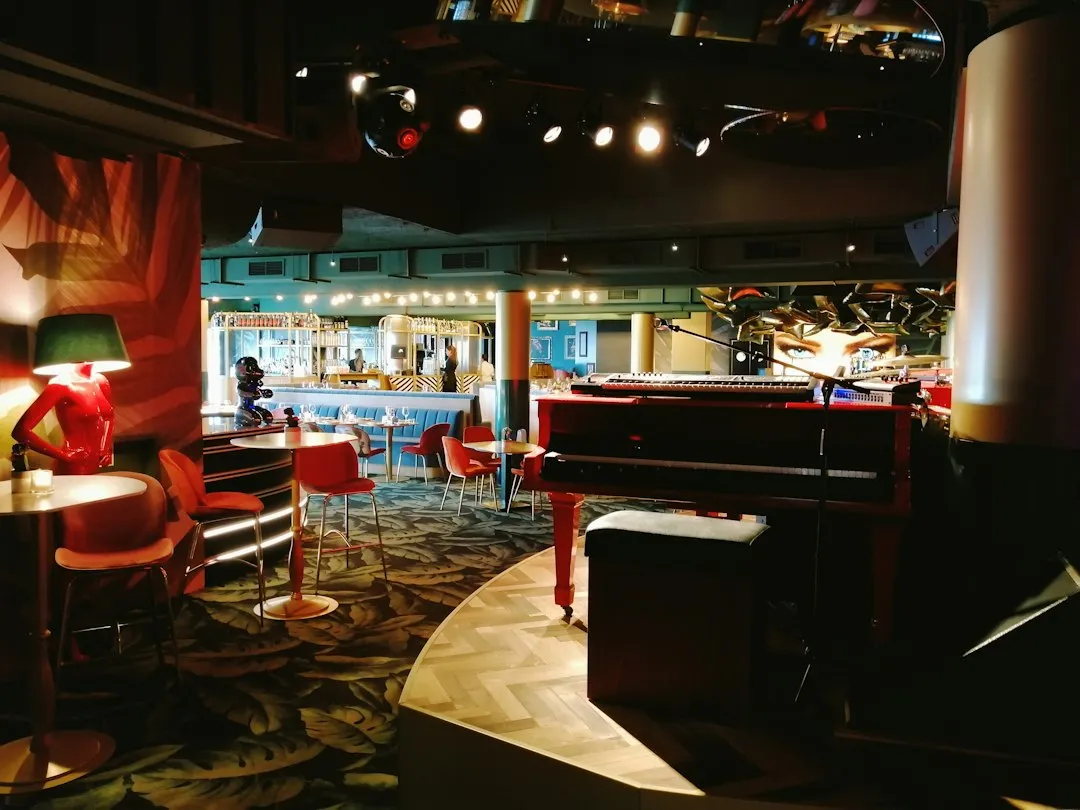
From dueling piano bars to jazz lounges and rock bands in the atrium, music pulses through cruise ships day and night, with Carnival’s Piano Bar 88, Royal Caribbean’s Music Hall, and Norwegian’s Syd Norman’s Pour House among the standout venues.
Lounge shows have a different logic than theater shows. Here, the experience is social as much as it is musical, and proximity to the performer creates a sense of intimacy that you simply can’t replicate from across the room. In venues like the Schooner Bar, the seats under the mast, by the portholes, or right beside the grand piano offer a particularly warm and involving position.
The best seats in a piano bar or jazz lounge are usually the ones closest to the instrument, along the side rather than directly in front. You’re close enough to read the performer’s expression, catch the dynamics in the playing, and feel genuinely part of the room.
Game Shows and Interactive Entertainment: Front and Center, Always

Carnival emphasizes live music, production shows, and comedy, with fleetwide piano bars, Punchliner Comedy Club, and Family Feud game shows among its flagship entertainment offerings. Game shows on cruise ships operate on a fundamentally different logic than any other type of performance.
The goal isn’t passive observation, it’s participation, or at least the realistic possibility of it. Hosts will frequently pull audience members from the front rows for challenges, demonstrations, or contestant slots. Various seats in front of the stage host nightly karaoke performances and all-day trivia competitions, making their proximity to the action directly relevant to how much fun you’ll have.
Sitting at the front and center in a game show context isn’t about having the best viewing angle. It’s about being in the game itself, or at least close enough to feel the energy when someone from three seats away wins a prize.
Booking and Reserving the Best Seats: Strategy Matters

Royal Caribbean is the only cruise line with Tony Award-winning Broadway productions, and these Broadway at Sea shows can fill up fast. Knowing the ideal seat is only useful if you can actually secure it before someone else does.
Some cruise lines offer pre-booking options where guests can reserve seats online weeks before their sail date, while other shows operate on a first-come, first-served basis, requiring guests to arrive early at the theater to claim their preferred position. The strategy depends on the cruise line, but the principle is constant: plan ahead.
Early or late shows tend to be less crowded compared to prime-time evening shows, and choosing off-peak showtimes gives you a better chance of securing better seats while also avoiding the crowds that typically form for popular evening performances. Flexibility with timing is one of the most underused tools in a cruise traveler’s planning kit.
Visiting the Venue Before Showtime: The Simple Habit That Changes Everything
Almost every piece of practical wisdom from those who know cruise ship theaters well comes back to one straightforward habit: visit the venue before the show. It’s important to take time to explore the layout of each theater, especially as many newer ships are changing the layout, and visiting in advance to scope things out makes a genuine difference.
Cruise ship performance spaces range from concert-style stages seating 200 to 600 people on smaller ships, to more traditional proscenium-style theaters on larger vessels like Royal Caribbean’s biggest ships, which seat more than a thousand guests. No two venues are identical, and assumptions made from one ship rarely transfer cleanly to another.
Whether it’s Broadway-style productions, stand-up comedy, stunt shows, or movie nights, the key practical advice is to check the daily schedule and reserve seats for popular shows as early as possible to access the full variety of experiences on offer. Doing a quick walkthrough in the afternoon, noting where the columns are, where the booth sits, where the sightlines open up, takes five minutes and consistently pays off when the lights go down.
The Takeaway

The best seat for a cruise ship show isn’t a universal answer. It shifts depending on the format, the venue, the ship, and what kind of experience you’re after. A diving show rewards height and center. A comedy set rewards closeness. An aerial production rewards the middle distance. These are distinct spatial problems with distinct solutions.
What the performers know, and what experienced cruisers eventually discover, is that a few minutes of advance thinking turns a decent evening into a genuinely great one. The show is the same regardless of where you sit. How much of it reaches you is up to you.
AI Disclaimer: This article was created with the assistance of AI tools and reviewed by a human editor.